
Talk about a great movie trilogy and people usually rush toward battles, car chases, superheroes, gunfights, fantasy quests, or franchise spectacle. That makes sense, but it also misses something huge. Some of the greatest trilogies ever made do not rely on action at all. You’ll shortly find out why.
This list, however, is about trilogies that prove cinema does not need constant movement to feel enormous. A child growing up in Bengal. A man trying to remain decent during wartime and so much more but simple. These trilogies stay with you because they understand life across chapters, and that is something even the loudest franchises often struggle to do.
6 'The Human Condition Trilogy' (1959–1961)
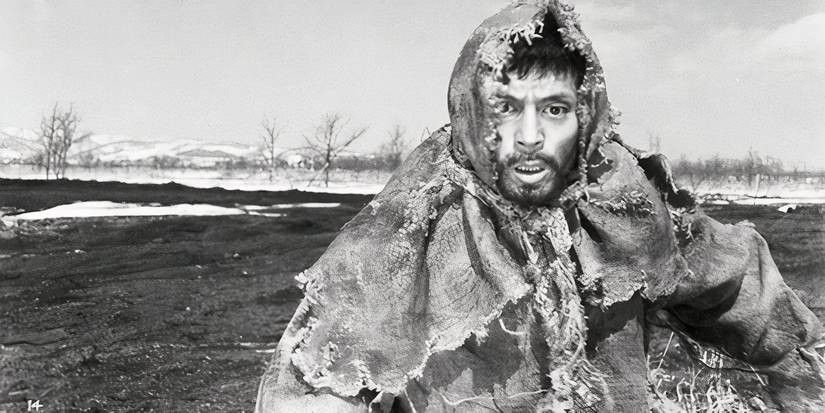 Image via Shochiku
Calling The Human Condition a trilogy almost feels too small for what Masaki Kobayashi made. Across No Greater Love, Road to Eternity, and A Soldier’s Prayer, the films follow Kaji (Tatsuya Nakadai), a Japanese pacifist trying to hold onto his conscience as imperial Japan crushes people through labor camps, military discipline, war, and surrender. Kaji is never allowed the comfort of simple goodness and wants to do the right thing, then keeps discovering how little room the system gives him to do it.
The trilogy is exhausting in the right way. Every film forces Kaji into a harsher version of the same question: how does a decent person behave when obedience is treated as survival? In the labor camp, he tries to protect Chinese prisoners while still serving an abusive structure. In the army, he learns that moral refusal can become another form of punishment. In the last film, defeat does not bring relief and leaves him wandering through hunger, suspicion, and ruin. It is one of the greatest non-action trilogies because its scale is spiritual, political, and human all at once.
5 'The Koker Trilogy' (1987–1994)
 Image via Janus
Abbas Kiarostami’s Koker films are the kind of trilogy that can sound tiny until you actually sit with them and realize how much they are doing. Where Is the Friend’s House? begins with a boy trying to return his classmate’s notebook before the other child gets in trouble. That simple act becomes a whole moral universe. A child’s promise, an adult world that barely listens, village paths, doors, voices, and repeated refusals all create suspense from responsibility rather than danger.
Then Kiarostami does something extraordinary with the next two films. And Life Goes On follows a filmmaker searching for the children from the first film after the 1990 earthquake in Iran. Through the Olive Trees then looks at the making of a scene from that second film, focusing on a young man who loves a woman who refuses to answer him. The trilogy keeps moving between fiction and reality without turning cold or clever for its own sake. It is tender, curious, and deeply humane. The miracle is how much emotion Kiarostami finds in ordinary persistence: a boy with a notebook, a director on a road, a young man walking after an answer he may never get.
4 'The Apu Trilogy' (1955–1959)
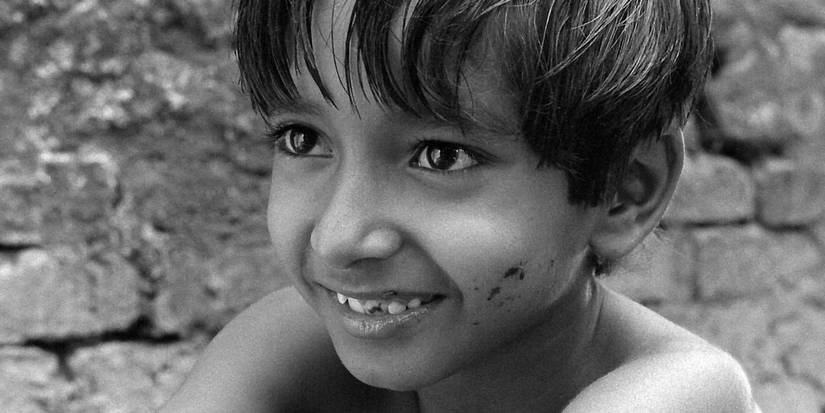 Image via Aurora Film Corporation
Apu’s life does not feel written for cinema. It feels remembered by cinema. Satyajit Ray begins with Pather Panchali, where Apu is a child in rural Bengal, watching his sister Durga (Uma Dasgupta), his mother Sarbajaya (Karuna Banerjee), his father Harihar (Kanu Banerjee), and the small details of poverty, play, hunger, rain, and wonder around him. The film never treats childhood as cute decoration. It understands how children notice everything before they understand what anything costs.
Aparajito and Apur Sansar then follow Apu through education, grief, independence, marriage, fatherhood, and loss. The devastating part is how naturally life keeps asking him to leave someone behind. His mother wants him near but also wants him to become more than the village can offer. His marriage to Aparna (Sharmila Tagore) begins almost accidentally, then becomes one of the most delicate love stories ever filmed. Later, his pain makes him fail the person who needs him most. Ray’s trilogy is gentle without being soft. It earns tears through patience, detail, and complete respect for ordinary lives. Few trilogies make growing up feel this beautiful and this unforgiving.
3 'The Godfather Trilogy' (1972–1990)
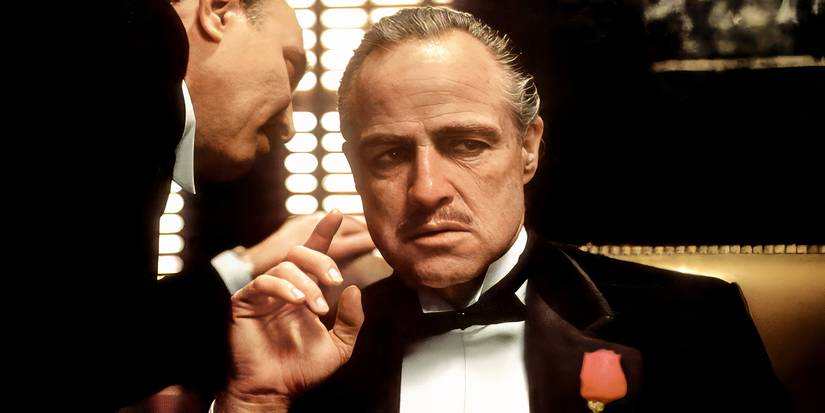 Image via Paramount Pictures
The first two Godfather films are so towering that the third has spent decades being treated like an apology. That reaction is understandable, but the trilogy as a whole still gives one of cinema’s most complete portraits of power destroying a family from the inside. The first film watches Michael Corleone (Al Pacino) move from outsider son to the man who can close a door on Kay (Diane Keaton) and everything she thought she understood about him. The second film turns that victory into something lonelier, colder, and more unforgivable.
The third film is uneven, no serious fan has to deny that, yet its existence matters to the full shape of Michael’s punishment. He is older, richer, more publicly respectable, and still unable to remove the violence from what he built. Michael’s performance changes across the trilogy in a way that is painful to track: guarded war hero, controlled successor, isolated ruler, desperate father seeking forgiveness. Vito’s immigrant rise and Michael’s moral collapse speak to each other across generations. The weddings, baptisms, family meals, Senate hearings, betrayals, business meetings, and final losses all belong to one tragedy. It is a trilogy about family devotion turning into family ruin.
2 'The Three Colours Trilogy' (1993–1994)
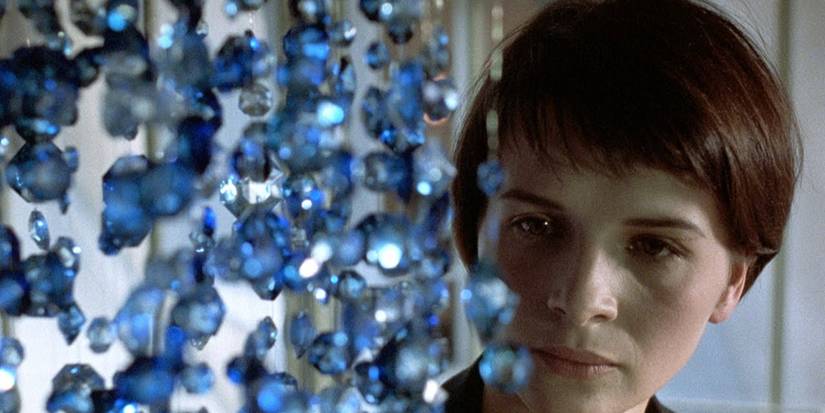 Image via mk2 Diffusion
Krzysztof Kieślowski built three films around the French ideals of liberty, equality, and fraternity, and somehow made them feel intimate instead of academic. Blue gives us Julie (Juliette Binoche), a woman who loses her husband and child and tries to remove herself from emotional life. Julie makes that withdrawal feel physical: the silence, the swimming pool, the unfinished music, the objects she keeps, the people she tries to avoid. Liberty becomes painful because freedom from attachment can look a lot like emptiness.
White shifts into bitter comedy and humiliation as Karol (Zbigniew Zamachowski), a Polish hairdresser, tries to regain status after his marriage to Dominique (Julie Delpy) collapses. Its idea of equality is bruised, petty, funny, and revenge-driven. Then Red brings the trilogy to its most generous place through Valentine (Irène Jacob), a model who develops an unexpected bond with a retired judge who spies on his neighbors. Their connection has warmth, sadness, and one of Kieślowski’s most moving views of chance. The trilogy is brilliant because the three films do not simply illustrate ideas. They test them against grief, pride, loneliness, desire, and coincidence until the concepts become emotional experiences.
1 'The Before Trilogy' (1995–2013)
 Image via Columbia Pictures
This is the greatest non-action trilogy because almost nothing big happens in the usual sense, and somehow everything important happens. Jesse (Ethan Hawke) and Céline (Julie Delpy) meet on a train in Before Sunrise, spend one night walking through Vienna, and talk with the intensity of people who know the deadline makes honesty easier. Jesse and Céline make the connection feel young, curious, pretentious in the way young people often are, and completely sincere. You believe they could remember that night forever because the film makes you feel every minute becoming precious.
Before Sunset is even more miraculous. Nine years later, they meet in Paris, older and more careful, with their lives shaped partly by what they did and did not do after Vienna. The conversation has regret under every joke. In Before Midnight, romance has become partnership, parenting, resentment, fatigue, and history. The trilogy refuses to protect the fantasy. That is why it is so powerful. Jesse and Céline are thrilling together, then difficult together, then honest enough to hurt each other properly. Across eighteen years, Richard Linklater and those performances create one of cinema’s great studies of love as memory, choice, argument, timing, and daily work. It’s so relatable too. No explosion could ever compete with that.

Before Sunrise
Release Date January 27, 1995
Runtime 101 minutes
Director Richard Linklater
Writers Kim Krizan, Richard Linklater







 English (US) ·