
 Image via Samuel Goldwyn Films

Published Apr 5, 2026, 5:42 PM EDT
Sign in to your Collider account
Jason Statham has spent so much of his career being treated like a reliable action machine that some of his best work gets flattened into another solid Statham movie and left there. That does a real disservice to the stretch of his career where he kept finding projects that let him do more than throw punches, glare through a windshield, drive fast, or walk away from explosions in a sharp coat.
That’s where these six stand out. Each of these found a slightly different way to use Statham’s range. And in every case, the movie around him actually knew what kind of pressure to put on that presence. These are not necessarily the biggest Jason Statham titles, per se. And they are not the ones people quote first. But they are the ones that people forgot, and yet, the cult-favoritism subreddits don’t skip a day in proving why they’re finest.
6 ‘Homefront’ (2013)
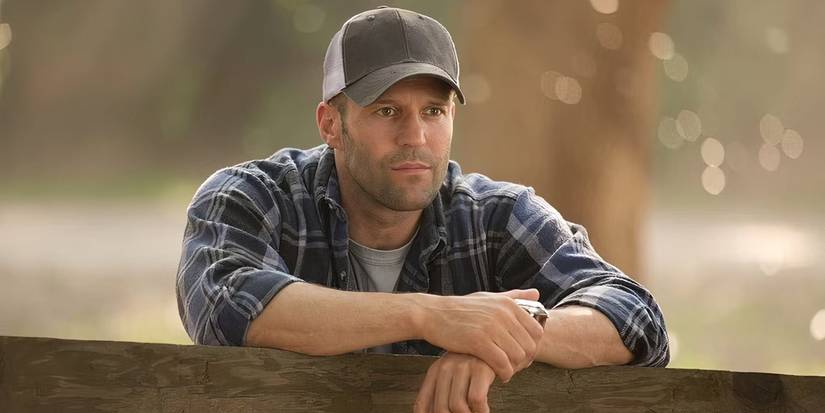 Image via Open Road films
Homefront understands that Phil Broker (Jason Statham) is not trying to prove anything. He is trying to disappear. That matters. Because a lot of action movies hand their lead a quiet town and a daughter and use that as a thin excuse before the violence starts. No offense to Liam Neeson and Gerard Butler here. But Homefront actually makes that setup feel lived in. Broker is a former DEA agent carrying real fatigue, not a superhero waiting to be activated. His relationship with Maddy (Izabela Vidovic) gives the movie a center strong enough to make every later escalation hit harder, especially because the trouble begins with something small and painfully ordinary: a schoolyard fight, a humiliated parent, and a chain reaction of pride, stupidity, and local rot.
That slow poisoning of the town is what makes the film better than people remember. Gator Bodine (James Franco) is a twitchy, dangerous local operator whose ego and unpredictability make him hard to contain and he is the criminal mastermind in the film. Cassie (Kate Bosworth) feels like part of the same damaged ecosystem. Even the tension inside Broker’s house has weight because the movie never forgets that his daughter is the reason he is vulnerable in the first place. Then violence finally kicks into gear. Homefront lingers and it is not just a Statham beatdown movie. Full stop.
5 ‘Blitz’ (2011)
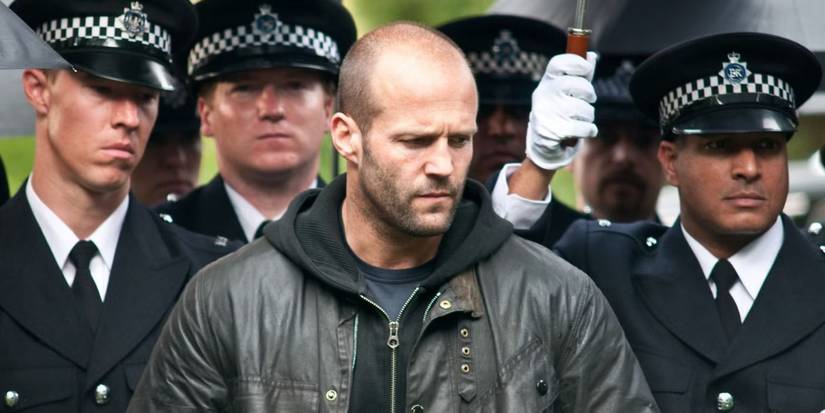 Image via Lionsgate UK
Blitz has one of the nastiest tones of any Jason Statham movie, and that ugliness is exactly why it works. Brant, his character, is already compromised, already abrasive, already the kind of cop whose methods are a problem even before a serial killer starts targeting police officers. And the film does not soften him. It lets him stay difficult, which makes the entire story more interesting. And Blitz isn’t necessarily a film about Brant’s goodness but about a city full of damaged people, brittle authority, tabloid spectacle, and institutional embarrassment, all being forced into the open by a killer who wants attention as much as blood.
What lifts Blitz above forgotten-cop-thriller status is how mean and specific it feels. Porter Nash (Paddy Considine) gave the movie a completely different energy from Brant, and that contrast mattered. Nash is precise where Brant is blunt, contained where Brant is volatile, and their uneasy professional orbit gives the film texture it badly needs. Then there’s Weiss (Aidan Gillen) — who is memorable because he is petty, performative, pathetic, and vicious in a way that suits the film’s worldview. The whole thing feels grubby, angry, and unromantic about police work, celebrity, and violence. That makes Blitz a better movie than its reputation suggests.
4 ‘Safe’ (2012)
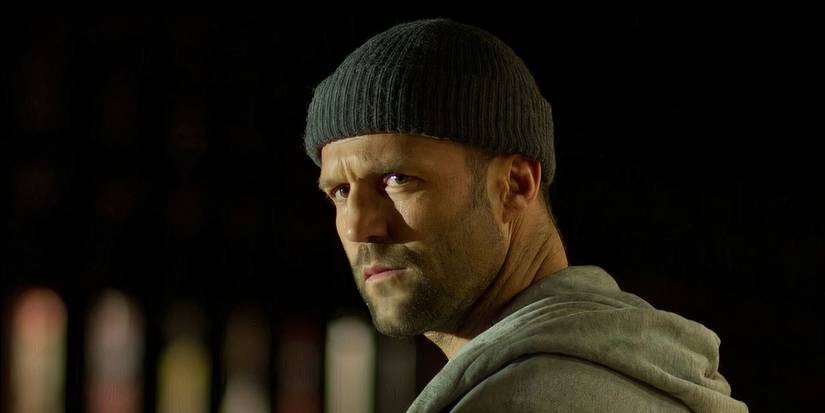 Image via Lionsgate
Safe is one of the purest examples of how effective Statham can be when a movie gives him emotional motivation without turning him sentimental. Statham plays Luke Wright, a wreck, a former elite cage fighter whose life has been methodically destroyed by the Russian mob. His wife is dead, his purpose is gone, and he is moving through New York like a man who no longer thinks survival means anything. He’s basically Max Payne. Then he sees Mei (Catherine Chan), a mathematically gifted child being hunted by gangsters, corrupt cops, and powerful Chinese Triad figures because of what she knows. That encounter gives the movie its pulse.
The movie turns Manhattan into a battlefield crowded with competing predators, then drops Statham in the middle of it with a clear objective and no illusions. The plot keeps moving money, codes, loyalties, and betrayals around Mei, but the real hook is watching Luke cut through systems that are all dirty in different ways. The Russians are vicious, the Triads are disciplined, the police are compromised, and politicians are part of the same rot. And that’s precisely why Safe is one of Statham’s best urban action thrillers, lean and hard and much smarter than people gave it credit for.
3 ‘Crank’ (2006)
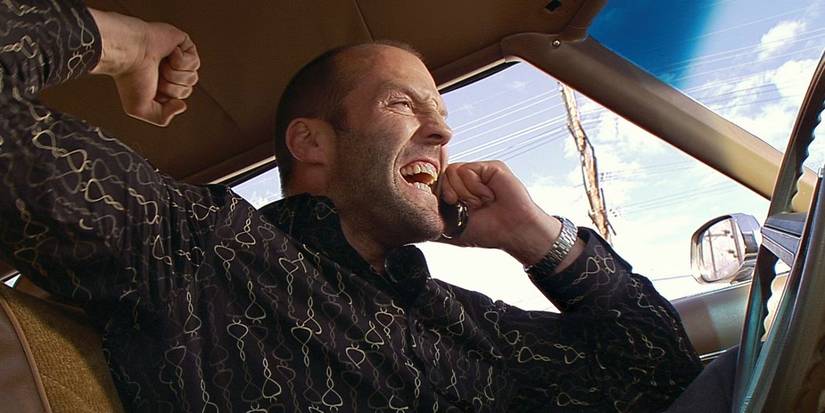 Image via Lionsgate
There is nothing polite about Crank, and that is why it still feels alive. It’s Red Bull mixed with morphine with a sprinkle of nicotine. Chev Chelios (Jason Statham) wakes up poisoned, learns he has been injected with a synthetic drug that will kill him if his adrenaline drops, and the movie never really sits down again. That premise is insane, but Crank commits to it so completely that it becomes its own kind of precision machine. It is filthy, loud, reckless, and deliberately ridiculous, yet it never feels random. Every choice serves the same engine: keep Chev moving, keep his heart rate up, keep the city screaming around him as he tries to find the men who did this.
A lesser actor would have let the film collapse into gimmickry. Statham gives it shape by playing Chev with just enough sincerity underneath the mania. He is funny because he is furious. He is compelling because even in the middle of the film’s most unhinged set pieces, you can feel the desperation pushing him forward. Eve (Amy Smart) is not just there to decorate the chaos either; her presence helps underline how badly Chev’s life has spun off its axis. What makes Crank almost perfect is that it understands its own trashy brilliance down to the bone. It does not apologize, it does not step back, and it never tries to reassure viewers that it is smarter than the material. It just keeps escalating until the whole movie feels like one sustained act of cinematic bad behavior.
2 ‘Revolver’ (2005)
 Image via Redbus Film Distribution
Revolver is probably the most divisive film on this list, but that divisiveness is part of why it remains fascinating. Jason Statham as Jake Green is smug, frightened, spiritually cornered, and slowly forced into a confrontation that has less to do with beating a visible enemy than understanding the voice inside him that keeps leading him toward vanity, panic, and self-destruction. On top of it, this is a Guy Ritchie film. He turns the whole film into a game of ego, illusion, criminal theater, and psychological warfare, and whether every piece lands is almost beside the point. It is reaching for something stranger than the average crime movie ever tries.
The reason I keep defending Revolver is that it gets under your skin once you stop demanding that it behave normally. Dorothy Macha (Ray Liotta) brings the right kind of loud insecurity to the crime-boss role, but the real force of the movie is in how it destabilizes Jake’s sense of control. The scenes with Avi (André 3000) and Zach (Vincent Pastore) are full of instruction, manipulation, and mystery, and the film keeps asking whether Jake is being protected, used, enlightened, or dismantled. That uncertainty is the point. Statham is surprisingly good at playing a man whose personality turns out to be thin armor over fear. Revolver is messy, yes, but it is the kind of mess made by a movie with actual ambition. It is trying to crack open identity, ego, and power through a gangster framework.
1 ‘The Bank Job’ (2008)
 Image via Lionsgate
If there is one forgotten Jason Statham movie that deserves to be pulled out of the pile and shown real respect, it is The Bank Job. Terry Leather is one of the best roles of his career. Statham was sharp, opportunistic, worried, and just credible enough here as a working-class operator who gets lured into something much bigger than he understands. The setup is beautiful in its simplicity: a bank heist that looks manageable at first, then slowly reveals layers involving criminals, police corruption, political interests, and deeply compromising secrets. That expanding sense of danger is what gives the movie its grip. Every time Terry thinks he has identified the real problem, another one appears above it.
The brilliance of The Bank Job is that it keeps its feet on the ground while widening the stakes. The crew dynamics matter. The robbery logistics matter. The panic after the break-in matters. And the deeper conspiracy works because it is filtered through people who are not master spies or elite assassins. They are regular crooks realizing they have stumbled into a structure of power far uglier than they expected. Statham is excellent here because he never overplays Terry’s toughness. He lets calculation, fear, and survival instinct carry the performance. More than anything, it proves that Statham did not only have the tools to headline action movies but to anchor a genuinely first-rate ensemble thriller when the script gave him room to think as well as hit.
Collider Exclusive · Oscar Best Picture Quiz
Which Oscar Best Picture
Is Your Perfect Movie?
Parasite · Everything Everywhere · Oppenheimer · Birdman · No Country
Five Oscar Best Picture winners. Five completely different visions of what cinema can be — and what it can do to you. One of them is the film that was made for the way your mind works. Ten questions will figure out which one.
🪜Parasite
🌀Everything Everywhere
☢️Oppenheimer
🐦Birdman
🪙No Country for Old Men
FIND YOUR FILM →
01
What kind of film experience do you actually want? The best movies don't just entertain — they leave something behind.
ASomething that pulls the rug out — that makes me think I'm watching one kind of film and then reveals I'm watching another entirely. BSomething overwhelming — funny, sad, absurd, and genuinely moving, all at once. CSomething grand and weighty — a film that makes me feel the full scale of what I'm watching. DSomething formally daring — a film that pushes what cinema can even do. ESomething lean and relentless — pure tension with no wasted frame.
NEXT QUESTION →
02
Which idea grabs you most in a film? Great films are driven by a central obsession. What's yours?
AClass, inequality, and what people are willing to do when desperation meets opportunity. BIdentity, family, and the chaos of trying to hold your life together when everything is falling apart. CGenius, moral responsibility, and the catastrophic weight of a decision you can never take back. DEgo, legacy, and the terror of becoming irrelevant while you're still alive to watch it happen. EEvil, chance, and whether moral order actually exists or if we just tell ourselves it does.
NEXT QUESTION →
03
How do you like your story told? Form is content. The way a story is shaped changes what it means.
AGenre-twisting — I want it to start in one lane and migrate into something completely different. BMaximalist and genre-blending — comedy, action, drama, sci-fi, all in one ride. CEpic and non-linear — cutting between timelines, building a mosaic of cause and consequence. DA single unbroken flow — I want to feel like I'm living it in real time, no cuts to safety. ESpare and precise — every scene doing exactly what it needs to do and nothing more.
NEXT QUESTION →
04
What makes a truly great antagonist? The opposition defines the protagonist. What kind of opposition fascinates you?
AA system — invisible, structural, and almost impossible to fight because it has no single face. BThe self — the ways we sabotage, abandon, and fail the people we love most. CHistory — the unstoppable momentum of events that no single person can stop or redirect. DThe industry — the machinery of culture that chews up talent and spits out irrelevance. EPure, implacable evil — a force so certain of itself it becomes almost philosophical.
NEXT QUESTION →
05
What do you want from a film's ending? The final note is the one that lingers. What do you want it to sound like?
AShock and inevitability — a conclusion that recontextualises everything that came before it. BEarned emotion — I want to cry, laugh, and feel genuinely hopeful, even if the world is a mess. CDevastation and grandeur — an ending that makes me sit in silence for a few minutes after. DAmbiguity — something that leaves enough open that I'm still thinking about it days later. EBleakness — an honest refusal to pretend the world is tidier than it actually is.
NEXT QUESTION →
06
Which setting pulls you in most? Where a film takes place shapes everything — mood, stakes, what's even possible.
AA gleaming modern city with a hidden underside — beauty masking rot, wealth masking desperation. BA collapsing suburban life that opens onto something infinite — the multiverse of a single ordinary person. CThe corridors of power and science at a world-historical turning point — where decisions echo for decades. DThe grimy, alive chaos of New York and Hollywood — fame as both destination and trap. EVast, indifferent landscape — desert and highway where violence arrives without warning or reason.
NEXT QUESTION →
07
What cinematic craft impresses you most? Every great film has a signature — a technical or artistic element that makes it unmistakable.
AProduction design and mise-en-scène — every frame composed to carry meaning beneath the surface. BEditing and tonal control — the ability to move between registers without losing the audience. CScore and sound design — music that becomes inseparable from the dread and awe of what you're watching. DCinematography as performance — the camera not recording events but participating in them. ESilence and restraint — what's left unsaid and unshown doing more work than any dialogue could.
NEXT QUESTION →
08
What kind of main character do you root for? The protagonist is the lens. Who you choose to follow says something about you.
ASomeone smart and resourceful who makes increasingly dangerous decisions under pressure. BSomeone overwhelmed and ordinary who turns out to be capable of something extraordinary. CA brilliant, tortured figure whose gifts and flaws are inseparable from each other. DA self-destructive artist whose ego is both their superpower and their undoing. EA quiet, principled person trying to make sense of a world that has stopped making sense.
NEXT QUESTION →
09
How do you feel about a film that takes its time? Pace is a choice. Some films sprint; others let tension accumulate slowly, deliberately.
AI love a slow build when I know the payoff is going to be seismic — patience for a devastating reveal. BGive me relentless momentum — I want to feel breathless and emotionally spent by the end. CEpic runtime doesn't scare me — if the material demands three hours, give me three hours. DI want it to feel propulsive even when nothing is technically happening — restless energy throughout. EDeliberate and unhurried — I want dread to accumulate in the spaces between the action.
NEXT QUESTION →
10
What do you want to feel walking out of the cinema? The best films leave a mark. What kind of mark do you want?
AUnsettled — like I've just seen something I can't fully explain but can't stop thinking about. BMoved and energised — like the film reminded me what actually matters and gave me something to hold onto. CHumbled — like I've been in the presence of something genuinely important and overwhelming. DExhilarated — like I've just seen cinema doing something it's never quite done before. EHaunted — like a cold, quiet dread that stays with me for days.
REVEAL MY FILM →
The Academy Has Decided Your Perfect Film Is…
Your answers have pointed to one Oscar Best Picture winner above all others. This is the film that was made for the way your mind works.
Parasite
You are drawn to films that operate on multiple levels simultaneously — that begin in one genre and quietly, brilliantly migrate into another. Bong Joon-ho's Parasite is a film about class, desire, and the architecture of inequality that manages to be darkly funny, deeply suspenseful, and genuinely shocking across a single extraordinary running time. Your instinct is for cinema that hides its true intentions until the moment it's ready to reveal them. Parasite is exactly that — a film that rewards close attention and punishes assumptions, right up to its devastating final image.
Everything Everywhere All at Once
You want it all — and this film gives you all of it. The Daniels' Everything Everywhere All at Once is one of the most maximalist films ever made: action comedy, multiverse sci-fi, family drama, existential crisis, and a genuinely earned emotional core that sneaks up on you amid the chaos. You are someone who responds to ambition, who doesn't want cinema to choose between being entertaining and being meaningful. This film refuses that choice entirely. It is overwhelming by design, and its overwhelming nature is precisely the point — because the feeling of being crushed by infinite possibility is exactly what it's about.
Oppenheimer
You are drawn to cinema on a grand scale — films that understand history not as a backdrop but as a force, and that place their characters inside that force and watch what happens. Christopher Nolan's Oppenheimer is a film about the terrifying gap between what we can do and what we should do, told with the full weight of one of the most consequential moments in human history behind it. You want your films to feel important without feeling self-important — to earn their ambition through sheer craft and the gravity of their subject. Oppenheimer does exactly that. It is enormous, complicated, and refuses easy comfort.
Birdman
You are drawn to films that foreground their own construction — that make the how of the filmmaking part of the what it's about. Alejandro González Iñárritu's Birdman, shot to appear as a single continuous take, is cinema examining itself through the cracked mirror of a fading actor's ego. You respond to formal daring, to the feeling that a film is doing something that probably shouldn't be possible. Michael Keaton's performance and Emmanuel Lubezki's restless camera create something genuinely unlike anything else — a film that is simultaneously about creativity, relevance, self-destruction, and the impossibility of ever truly knowing if your work means anything at all.
No Country for Old Men
You are drawn to cinema that trusts silence, that refuses to explain itself, and that treats dread as a form of meaning. The Coen Brothers' No Country for Old Men is a film about the arrival of a new kind of evil — implacable, arbitrary, and utterly indifferent to the moral frameworks we use to make sense of the world. It is one of the most formally controlled films ever made, and its controlled restraint is what makes it so terrifying. You want your films to haunt you, not comfort you. You are not interested in resolution if resolution would be dishonest. No Country for Old Men is honest in a way that most cinema never dares to be.
↻ RETAKE THE QUIZ

The Bank Job
Release Date March 7, 2008
Runtime 112 Minutes
Director Roger Donaldson
Writers Dick Clement, Ian La Frenais
-

-

Saffron Burrows
Martine Love
-

Stephen Campbell Moore
Kevin Swain
-







 English (US) ·