

Published Nov 4, 2026, 9:01 PM EST
Dhruv is a Lead Writer in Screen Rant's New TV division. He has been consistently contributing to the website for over two years and has written thousands of articles covering streaming trends, movie/TV analysis, and pop culture breakdowns.
Before Screen Rant, he was a Senior Writer for The Cinemaholic, covering everything from anime to television, from reality TV to movies.
After high school, he was on his way to become a Civil Engineer. However, he soon realized that writing was his true calling. As a result, he took a leap and never looked back.
A long line of sci-fi thrillers with body horror twists begin their stories with a widespread infection. There is something truly disturbing about a virus or otherworldly parasite creeping under one's skin and taking over all bodily autonomy. In some of these sci-fi thrillers, the core appeal lies in how far they are willing to go with their portrayal of twisted body horror.
In others, it is the thematic depth of the body horror that matters more. One of Netflix's best sci-fi thrillers, surprisingly lands the perfect balance between the two. It not only features disturbing visuals of what the human body can turn into after a parasitic alien infects it, but also turns body horror into a hard-hitting metaphor.
The show in question, Parasyte: The Grey, is based on Hitoshi Iwaaki's manga and its anime adaptation of the same name. Despite only having a 6-episode runtime, the Netflix sci-fi show does an incredible job of translating its source material's body horror and narrative depth to the small screen. It also carefully elevates itself above most live-action anime adaptations by unfolding more as a spin-off to its manga.
Body Horror Is A Powerful Metaphor In Parasyte: The Grey
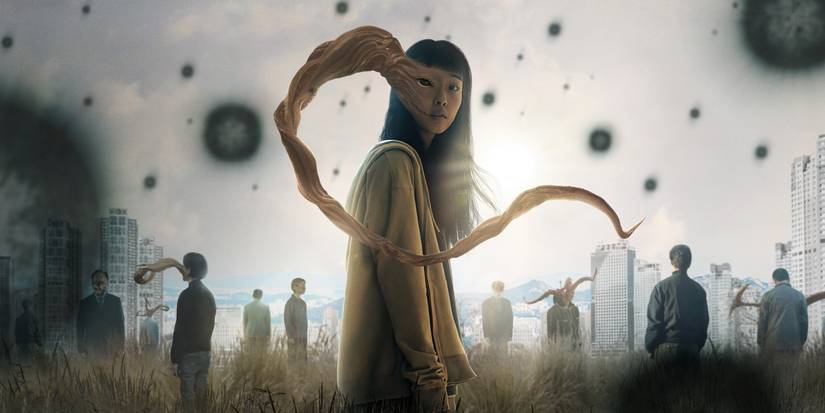
In its opening moments itself, Parasyte: The Grey walks through a terrifying sequence where alien parasites fall out of the sky. These parasites then invade the bodies of their human victims primarily by entering through their ears. With what follows, the series highlights all the twisted mutations the parasitic invasions can trigger in the human body and make it look completely monstrous and non-human.
These malformed mutations can alone instill fear and disgust in viewers. However, the show's true terror lies in how it turns its body horror into a powerful metaphor. The main character in Parasyte: The Grey, Su-in, is portrayed as a traumatized woman whose parasite, Heidi, is only able to control her for 10 minutes per day.
Su-in is otherwise portrayed as a timid woman. However, when her parasite takes over, half her face turns into tentacles with razor-sharp appendages that punish anyone who tries to harm her. With this, the show draws a clear contrast between her human self and her more primal, violent side. Every time her parasite takes over, the violent mutations it triggers become a reflection of Su-in's own darkness and fury.
In most alien invasion shows and movies, humans struggle to overcome the overarching threat through sheer military force. The opposite happens in Parasyte: The Grey. When the aliens feel threatened by the human military, they carefully use their hosts to infiltrate everything from local churches to political institutions.
This becomes a disturbing portrayal of how the aliens' physical consumption of the human mind and body is a mere reflection of how individuals are expected to erase all personal autonomy in exchange for security from state.
Parasyte: The Grey Leaves No Stone Unturned With Its Body Horror Visuals
 Image via Netflix
Parasyte: The Grey has a fascinating story to tell. However, it does not purely rely on thematic depth to keep viewers intrigued. The Netflix sci-fi show is also packed with disturbing and almost realistic visuals of face-splitting tentacles and entire human bodies turning into deformed, abstract monstrosities.
Netflix's Parasyte: The Grey is not the first adaptation of the original manga. A Japanese movie from 2014 also adapted the source material and was also followed up with a sequel. From a narrative standpoint, the Japanese movie is far closer to the manga than the Netflix series. Despite this, the Netflix series comes off as a more superior take on the manga and the anime.
The reason being that Parasyte: The Grey has more room for creative liberties because of its spin-off approach. Even its change of setting to South Korea makes room for a fresh cultural perspective on a familiar story. These changes in the Netflix series also allow it to give the original anime's body horror a more unique spin.
In the anime, the manga, and the movie, the main character Shinichi Izumi's parasite, Migi, resides in his hand. The Netflix K-drama makes its main character's mutually dependent relationship with her parasite far more horrifying by showing how it lives on one side of her head. Even with a limited budget, the sci-fi series also brilliantly captures how the parasite manipulates her face while trying to protect her.







 English (US) ·