
 Image via Warner Bros.
Published Jun 21, 2026, 2:49 PM EDT
Sign in to your Collider account
Hollywood has been a little obsessed with remakes lately, and to be fair, the idea isn't always bad. The best remakes attempt to introduce well-loved stories to a whole new generation and breathe fresh life into a familiar concept. However, science fiction is a genre where that approach becomes a little more complicated. That’s because sci-fi films aren't just memorable because of their plots.
They're products of a specific moment in time because they reflect how people imagined the future, technology, and humanity itself. Trying to modernize those ideas often strips away the very sense of wonder that made them special in the first place. There’s no denying that certain stories can benefit from being reimagined, but these six classic sci-fi movies are so close to perfection that nobody wants to see them being remade.
1 ‘Blade Runner’ (1982)
 Image via Warner Bros.
Ridley Scott’s Blade Runner has practically defined the sci-fi genre, so remaking it would just be a waste of time. The masterpiece is set in a dystopian version of Los Angeles and follows former police officer Rick Deckard (Harrison Ford), a retired “blade runner” tasked with hunting down a group of escaped replicants, bioengineered humans created to serve in off-world colonies. The futuristic manhunt gradually evolves into something far more thoughtful as Deckard’s pursuit forces him to question the very nature of humanity itself. Now, Blade Runner’s greatness goes beyond the central conflict. The film creates a distinct atmosphere that many other films in the genre have tried and failed to recreate.
Scott presents Los Angeles as a rain-soaked city with towering neon advertisements and a sense of unease beneath all the technological advancement. This world feels both futuristic and yet strangely believable, which only adds to Blade Runner’s immersive quality. More importantly, the film constantly blurs the line between humans and replicants and challenges the audience to ask questions about identity. The replicants are far more nuanced than typical sci-fi villains, and Roy Batty remains one of the most compelling antagonists the genre has ever produced. This compelling narrative results in a finale that is philosophical and tragic in ways that make it absolutely unforgettable. That kind of magic just can’t be recreated.
2 ‘Alien’ (1979)
 Image via 20th Century Studios
Alien is another sci-fi classic, directed by Ridley Scott, that has truly stood the test of time. The film follows the crew of the commercial spaceship Nostromo after they investigate a mysterious distress signal and unknowingly bring a deadly extraterrestrial organism aboard their ship. The routine mission slowly turns into a nightmare as the crew realizes they are trapped in deep space with a creature they know nothing about. What’s interesting is how well the film understands the fear that comes from sheer anticipation. The alien creature remains hidden for much of the runtime, and that creates the central sense of tension because the audience never knows when it might appear.
Even decades later, very few sci-fi horror films manage suspense with this level of confidence, not to mention Alien’s impeccable visuals featuring extremely realistic biomechanical creature designs that redefined what science fiction could look like on the big screen. Sigourney Weaver's legendary portrayal of Ripley, an ordinary crew member forced into an impossible situation, is also a huge reason behind the film’s long-lasting success. All in all, Alien remains a pop culture phenomenon that is definitive of its time, which is why it should be preserved instead of remade.
Collider Exclusive · Sci-Fi Survival Quiz Which Sci-Fi World Would You Survive? The Matrix · Mad Max · Blade Runner · Dune · Star Wars
Five universes. Five completely different ways the future went wrong — or sideways, or up in flames. Only one of them is the world your instincts were built for. Eight questions will figure out which dystopia, galaxy, or desert wasteland you'd actually make it out of alive.
💊The Matrix
🔥Mad Max
🌧️Blade Runner
🏜️Dune
🚀Star Wars
TEST YOUR SURVIVAL →
01
You sense something is deeply wrong with the world around you. What do you do? The first instinct is often the truest one.
APull on every thread until I understand the system — then figure out how to break it. BStop asking questions and start stockpiling — food, fuel, weapons. Questions don't keep you alive. CKeep my head down, observe carefully, and trust no one until I know who's pulling the strings. DStudy the patterns. Every system has a rhythm — learn it, and you learn how to survive it. EFind the people fighting back and join them. You can't fix a broken galaxy alone.
NEXT QUESTION →
02
In a world of scarcity, what resource do you guard most fiercely? What we protect reveals what we believe survival actually requires.
AKnowledge. If you understand the system, you don't need resources — you can generate them. BFuel. Everything else — movement, power, escape — runs on it. CTrust. In a world of fakes and informants, a truly reliable ally is rarer than any commodity. DWater. And after water, information — the two things empires are truly built on. EShips and credits. The galaxy is big — you survive it by being able to move through it freely.
NEXT QUESTION →
03
What kind of threat keeps you up at night? Fear is useful data — if you're honest about what you're actually afraid of.
AThat reality itself is a lie — that everything I experience has been constructed to keep me compliant. BA raid. No warning, no mercy — just the roar of engines and then nothing left. CBeing identified. Once someone with power decides you're a problem, you're already out of time. DBeing outmanoeuvred — losing a political game I didn't even know I was playing. EThe Empire tightening its grip until there's nowhere left to run.
NEXT QUESTION →
04
How do you deal with authority you don't trust? Every dystopia has a power structure. Your approach to it determines everything.
ASubvert it from the inside — learn its rules well enough to weaponise them against it. BIgnore it and stay out of its reach. The further from any power structure, the better. CAppear to comply while doing exactly what I need to do. Visibility is the enemy. DManoeuvre within it carefully. You can't beat a system you refuse to understand. EResist openly when I have to. Some things are worth the risk of being seen.
NEXT QUESTION →
05
Which environment could you actually endure long-term? Survival isn't just tactical — it's physical, psychological, and very much about where you are.
AUnderground bunkers and server rooms — cramped, artificial, but with access to everything that matters. BOpen wasteland — brutal sun, no shelter, constant movement. At least the threat is honest. CA dense, rain-soaked city where you can disappear into the crowd and nobody asks questions. DMerciless desert — extreme heat, no water, and something enormous living beneath the sand. EThe fringe — backwater planets and busy spaceports where the Empire's attention rarely reaches.
NEXT QUESTION →
06
Who do you want in your corner when things fall apart? The company you keep is the clearest signal of who you actually are.
AA tight crew of believers who've seen behind the curtain and have nothing left to lose. BOne or two people I'd trust with my life. Any more than that and someone talks. CNobody, ideally. Alliances are liabilities. I work alone unless I have no choice. DA community bound by shared hardship and mutual survival — people who need each other to last. EA ragtag team with wildly different skills and total commitment when it counts.
NEXT QUESTION →
07
Where do you draw the line — if you draw one at all? Every survivor eventually faces a moment that tests what they're actually made of.
AI won't harm the innocent — even the ones who'd report me without hesitation. BI do what I have to to protect the people I've chosen. Everything else is negotiable. CThe line shifts depending on who's asking and what's at stake. DI draw a long-term line — nothing that compromises my people's future, even if it'd help now. ESome lines, once crossed, can't be uncrossed. I know which ones they are.
NEXT QUESTION →
08
What would actually make survival worth it? Staying alive is one thing. Having a reason to is another.
AWaking others up — dismantling the illusion so no one else has to live inside it. BFinding somewhere — or someone — worth protecting. A reason to keep moving. CAnswers. Understanding what I am, what any of this means, before time runs out. DLegacy — shaping the future in a way that outlasts me by generations. EFreedom — for myself, for others, for every world still living under someone else's boot.
REVEAL MY WORLD →
Your Fate Has Been Calculated You'd Survive In…
Your answers point to the world your instincts were built for. This is the universe your temperament, your survival instincts, and your particular brand of stubbornness were made for.
The Matrix
You took the red pill a long time ago — probably before anyone offered it to you. You're a systems thinker who can't help but notice the seams in things.
- You're drawn to understanding how the system works before figuring out how to break it.
- You'd find the Resistance, or it would find you — your instinct for spotting constructed realities is the machines' worst nightmare.
- You function best when you have access to information and the freedom to act on it.
- The Matrix built an airtight prison. You'd be the one probing the walls for the door.
Mad Max
The wasteland doesn't reward the clever or the well-connected — it rewards those who are hard to kill and harder to break. That's you.
- You don't need comfort, community, or a cause larger than the next horizon.
- You need a vehicle, a clear threat, and enough fuel to outrun it — and you're good at all three.
- You are unsentimental enough to survive that world, and decent enough — just barely — to be something more than another raider.
- In the wasteland, that distinction is everything.
Blade Runner
You'd survive here because you know how to exist in moral grey areas without losing yourself completely.
- You read people accurately, keep your circle small, and ask the questions others prefer not to answer.
- In a city where humanity is a legal designation rather than a feeling, you hold onto something that keeps you functional.
- You're not a hero. But you're not lost, either.
- In Blade Runner's world, that distinction is everything.
Dune
Arrakis is the most hostile environment in the known universe — and you are precisely the kind of person it rewards.
- Patience, discipline, and political awareness are your core strengths — and on Arrakis, they're survival tools.
- You understand that the long game matters more than any single victory.
- Others come to Dune and are consumed by it. You'd learn its logic and earn its respect.
- In time, you wouldn't just survive Arrakis — you'd begin to reshape it.
Star Wars
The galaxy far, far away is vast, loud, and in a constant state of violent political upheaval — and you wouldn't have it any other way.
- You find meaning in being part of something larger than yourself — a cause, a crew, a rebellion.
- You'd gravitate toward the Rebellion, or the fringes, or whatever pocket of the galaxy still believes the Empire's grip can be broken.
- You fight — not because you have to, but because standing aside isn't something you're capable of.
- In Star Wars, that willingness is what makes all the difference.
↻ RETAKE THE QUIZ
3 ‘2001: A Space Odyssey’ (1968)
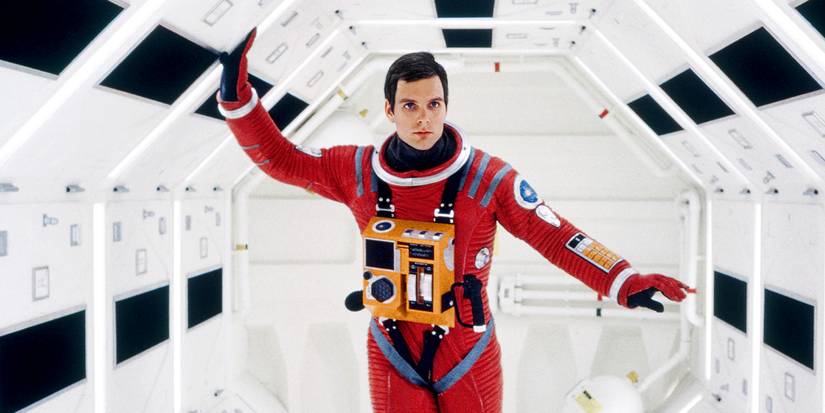 Image via Metro-Goldwyn-Mayer
Stanley Kubrick’s 2001: A Space Odyssey is a philosophical epic that follows humanity’s relationship with a mysterious black monolith that keeps appearing at pivotal moments throughout history. The story begins in the prehistoric past before jumping centuries into the future, where a crew of astronauts aboard the Discovery One spacecraft embarks on a mission to Jupiter alongside the advanced artificial intelligence HAL 9000. HAL's gradual conflict with astronauts Dave Bowman (Keir Dullea) and Frank Poole (Gary Lockwood) is the film’s primary source of tension.
As the story progresses, the line between man and machine begins to blur, and the fact that HAL is often more emotional than the astronauts themselves is one of the most fascinating parts of the film. At the same time, Kubrick prioritizes visual storytelling over exposition and allows viewers to interpret many of the film’s biggest questions for themselves. That approach could easily have been frustrating, but it gives 2001: A Space Odyssey its unique, timeless quality. The film is designed to immerse its viewers in the vastness of the cosmos while also delivering a hard-hitting narrative that challenges the audience’s perceptions at every step. That kind of experience is lightning in a bottle.
4 ‘Metropolis’ (1927)

Image via Parufamet
Metropolis is basically the foundation of the sci-fi dystopian genre. The film, directed by Fritz Lang, is a silent sci-fi classic that takes place in a futuristic city divided by class. The wealthy elite live in towering skyscrapers above ground, while workers are forced to do manual labor beneath the city in harsh conditions to keep society functioning. The story follows Freder (Gustav Fröhlich), the son of Metropolis' powerful ruler, who begins questioning the system after meeting Maria (Brigitte Helm), a compassionate young woman who advocates for unity between the classes. However, things escalate when a scientist creates a robotic duplicate of Maria, who unleashes chaos across the city. It’s actually remarkable how visionary Metropolis feels nearly a century later.
Many of the concepts that audiences now associate with science fiction, including sprawling futuristic cities, humanoid robots, and stories about technology's impact on society, can be traced back to this film. The film conveyed its sense of modernity and futurism through massive machines and towering skyscrapers while also keeping its narrative grounded in the relationship between humans and technology. In many ways, Metropolis is the blueprint for several other sci-fi classics, which is exactly why a remake of the film would not just be unnecessary but also disrespectful to its influence.
5 ‘Akira’ (1988)
 Image via Toho
Akira is Katsuhiro Otomo’s cyberpunk masterpiece set in Neo-Tokyo, a sprawling futuristic city built after a catastrophic explosion destroyed the original Tokyo decades earlier. The story follows biker gang leader Shotaro Kaneda (Mitsuo Iwata) and his troubled best friend Tetsuo Shima (Nozomu Sasaki), whose life changes forever after a mysterious accident awakens immense psychic abilities within him. This street-level story about teenage delinquents quickly spirals into a massive conflict involving government experiments, political unrest, military conspiracies, and powers that threaten the fate of the entire city. What makes Akira so special is how the film’s vision of Neo-Tokyo feels so lived in. Even decades later, the level of detail in the animation remains astonishing.
More importantly, the film understands that spectacle means nothing without a strong character at the center of it. Tetsuo’s transformation from an insecure teenager constantly living in Kaneda’s shadow into someone consumed by unimaginable power remains one of the most compelling character arcs in science fiction. At the same time, Kaneda’s refusal to give up on his friend gives the film an emotional backbone beneath all the chaos. The film also arrived at a perfect moment in history and went on to influence anime, video games, and major Hollywood productions. Its imagery, themes, and visual style have been referenced countless times, but nothing else has managed to replicate the feeling of watching Akira for the first time.
6 ‘They Live’ (1988)
 Image via Universal Pictures
John Carpenter’s They Live is one of the most unique sci-fi films of the 1980s, and a remake would have a nearly impossible task trying to capture what made the original so memorable. The film follows a drifter named Nada (Roddy Piper) who arrives in Los Angeles looking for work and a fresh start. However, after discovering a mysterious pair of sunglasses, he realizes that the world around him is not what it seems. The glasses reveal subliminal messages in advertisements, magazines, and billboards, while also showing that the ruling classes are actually aliens disguised as ordinary humans.
This leads Nada on a quest to expose the conspiracy and save humanity before it’s too late. Now, They Live is entertaining on multiple levels. The film is an entertaining sci-fi action flick with memorable one-liners and exhilarating fight sequences. Beneath that, though, the premise delivers sharp social commentary about consumerism and the influence of mass media. The film’s central idea is simple, yet incredibly hard-hitting, which just goes to show how brilliant the storytelling is. It's the kind of concept that immediately sticks with viewers and has only become more relevant with age. They Live’s mix of satire, sci-fi, action, and humor is so distinct that it would be incredibly difficult to even try to replicate.

They Live
Release Date November 4, 1988
Runtime 93 minutes
Director John Carpenter








 English (US) ·