
 Image via MovieStillDB
Published Jul 12, 2026, 6:00 PM EDT
Dani Kessel Odom (they/them) is an autistic lead writer and TV critic who covers sci-fi shows like Doctor Who and Pluribus, fantasy shows like The Magicians and Percy Jackson, and horror of all kinds. They also cover Marvel and DC TV shows and movies, with a robust knowledge of comic books. Their TV reviews can be found on Rotten Tomatoes.
Dani is also part of ScreenRant's books team, using their fiction writing and literature studies as the backbone for their book analyses.
They have covered events, such as the Denver Fan Expo. Professionals in the field, such as Damien Leone and Lucy Hale, have shared their articles. Their review of Ponies was quoted in the show's TV trailer.
In university, they majored in English Writing with a minor in psychology. They have always had a passion for analyzing TV and movies, even taking filmography and scriptwriting classes in university. They also studied and participated in onstage and onscreen acting extensively from the ages of 7 to 18.
Aside from working at Screen Rant, Dani has worked as a freelance editor and writer over the past decade, often in a ghostwriting capacity.
Sign in to your ScreenRant account
The low fantasy subgenre can do magic systems just as well as high fantasy, and these six shows prove it. As the fantasy TV genre has continued to expand, more low fantasy shows have pushed the boundaries of what's expected. Traditionally, low fantasy meant stories set in our world, rather than an alternate world. A more modern definition distinguishes low fantasy as magical stories set in worlds where magic and intelligent supernatural monsters are rare, while high fantasy is magical stories set in worlds where magic is a fundamental and influential force.
No matter which definition you use, high fantasy gets more recognition and praise for its best magic systems. However, this is a bit of a misnomer. The Witcher fits both definitions of high fantasy, and its magic system is poorly defined, with limitations and power scaling that are completely arbitrary. Game of Thrones, which has a high fantasy setting and a low fantasy story, is wildly inconsistent with the magic it depicts. In contrast, these six low fantasy TV series demonstrate that the subgenre can feature consistent, well-defined magic systems.
Rather than using one classification system or the other, I’ve selected shows using both the traditional and modern definitions. Each section clarifies which definition it falls under, with the former labeled "low fantasy setting" or "high fantasy setting" and the latter labeled "low fantasy story" or "high fantasy story."
6 A Discovery Of Witches
Low Fantasy Setting With High Fantasy Story

In A Discovery of Witches, a witch named Diana Bishop, removed from the hidden magical world, works as a historian at Oxford’s Bodleian Library and discovers a betwitched manuscript. She must dive into the hidden supernatural underbelly of society and form an unlikely alliance with a vampire named Matthew Clairmont to protect the book and learn about its cryptic contents. The story takes place in the real world, where witches, vampires, and daemons secretly live alongside humans. However, the supernatural underbelly of society is populated by magic users and creatures, making it the norm throughout most of the show.
From Westeros to Middle-Earth to the Continent · Eight Questions How Well Do You Know Fantasy TV? “The night is dark and full of terrors.”
🪨Game of ThronesWinter is coming
👑Rings of PowerOne ring to rule
🗡️The WitcherToss a coin
⚢Wheel of TimeThe Pattern weaves
👻The SandmanLord of Dreams
UNROLL THE SCROLL →
01
HBO’s Game of Thrones — the pop-culture juggernaut that made fantasy TV prestige — premiered with the episode “Winter Is Coming.” Across eight seasons it picked up a record 59 Emmy wins. In which year did its first episode air?
A2009 B2011 C2013 D2014
✓ Correct! 2011 — April 17, to be exact. The unaired pilot was so notoriously poor (after a friends-and-family screening, novelist George R.R. Martin reportedly told showrunners David Benioff and D.B. Weiss they had a real problem) that nearly all of it was reshot before broadcast. The retooled premiere immediately became HBO’s biggest hit since The Sopranos. The series ran 73 episodes across eight seasons through 2019.
✗ Wrong. The answer is 2011. 2009 is when the original pilot was filmed (and largely reshot). 2013 is when Season 3’s Red Wedding episode aired. 2014 is when Season 4’s “The Watchers on the Wall” reset what TV could do with effects. GoT debuted April 17, 2011.
NEXT →
02
Game of Thrones, House of the Dragon and the upcoming A Knight of the Seven Kingdoms are all adapted from the sprawling A Song of Ice and Fire universe. Name the author whose unfinished novels (the next book has been pending since 2011) underpin every adaptation.
ABrandon Sanderson BGeorge R.R. Martin CPatrick Rothfuss DJoe Abercrombie
✓ Correct! George R.R. Martin (born 1948). The first ASOIAF novel A Game of Thrones came out in 1996; the most recent in the main sequence (A Dance with Dragons) in 2011. The Winds of Winter is now over 13 years overdue. Martin has remained heavily involved in the HBO universe through House of the Dragon, the upcoming A Knight of the Seven Kingdoms (2026), and an in-development Aegon’s Conquest series.
✗ Wrong. The answer is George R.R. Martin. Brandon Sanderson is the Cosmere/Stormlight Archive author (and the writer Robert Jordan’s estate hired to finish Wheel of Time). Patrick Rothfuss is the Kingkiller Chronicle author with his own infamous-publication-delay reputation. Joe Abercrombie writes the First Law series. ASOIAF is Martin’s.
NEXT →
03
Netflix’s The Witcher (2019–) adapted Andrzej Sapkowski’s novels with a lead actor who’s a famously hardcore fan of the source material — he wore the white wig, did much of his own swordplay, and personally pushed back against Lauren Schmidt Hissrich’s scripts before departing after Season 3. Name him.
AHenry Cavill BLiam Hemsworth CAidan Turner DSam Heughan
✓ Correct! Henry Cavill. He played Geralt of Rivia for three seasons before exiting in 2022 over creative differences with the show’s writers’ room (the books-vs-show approach being the open wound). Liam Hemsworth was announced as his replacement and takes over from Season 4 (2025). Cavill’s exit was widely treated as a major moment of fan-vs-streamer tension and contributed to the late-2022/2023 Netflix-fantasy-slate scrutiny.
✗ Wrong. The answer is Henry Cavill. Liam Hemsworth replaces him as Geralt from Season 4 (2025) onward. Aidan Turner played Kili in The Hobbit films. Sam Heughan is Outlander’s Jamie Fraser. The Witcher’s original Geralt is Henry Cavill, through Seasons 1–3.
NEXT →
04
House of the Dragon — the Game of Thrones prequel chronicling the Targaryen civil war known as the Dance of the Dragons — is set how long before the events of the original series?
A~50 years B~100 years C~200 years D~500 years
✓ Correct! Approximately 200 years before A Game of Thrones (172 years before Robert’s Rebellion, more precisely). The series adapts material from George R.R. Martin’s Fire & Blood (2018), a fictionalised in-universe history of the Targaryen dynasty. House of the Dragon premiered in August 2022, drew 9.99 million viewers across HBO’s simultaneous-platform debut and Season 2 followed in 2024 with the Battle of Rook’s Rest as its climactic setpiece.
✗ Wrong. The answer is ~200 years. The Targaryen kings featured (Viserys I, Aegon II, Rhaenyra) reign during the Dance of the Dragons (129–131 AC), which is roughly 172 years before Robert’s Rebellion in the original series. Martin’s Fire & Blood is the in-universe history that the show mines for source material.
NEXT →
05
The Lord of the Rings: The Rings of Power — reportedly the most expensive TV series ever made, with a five-season commitment from its streamer at well over $1 billion total budget — is set in Middle-earth’s Second Age, thousands of years before The Hobbit. Which streaming service is it on?
ANetflix BHBO Max CAmazon Prime Video DApple TV+
✓ Correct! Amazon Prime Video. Amazon paid $250 million just for the rights from the Tolkien Estate in 2017, then committed to a five-season run with reported per-season budgets of $400–$465 million on Season 1 alone. Showrunners J.D. Payne and Patrick McKay were given access to the appendices of The Lord of the Rings (specifically the Second Age material) but not The Silmarillion proper, leading to many adaptation choices that have divided Tolkien purists.
✗ Wrong. The answer is Amazon Prime Video. Netflix has The Witcher and Sandman. HBO Max has Game of Thrones and HotD. Apple TV+ has Foundation. Rings of Power is Amazon’s flagship original drama and reportedly its single biggest production-budget bet.
NEXT →
06
Amazon’s The Wheel of Time (2021–) is adapted from a 14-novel epic fantasy series running from 1990 to 2013. The series’ original author died in 2007 after completing only 11 of the planned books; Brandon Sanderson was hired by the estate to finish the final three. Who was the original author?
ARobert Jordan BTerry Brooks CRaymond E. Feist DTerry Pratchett
✓ Correct! Robert Jordan — pen name of James Oliver Rigney Jr. He started The Wheel of Time in 1990 with The Eye of the World and worked on the series for 17 years before dying of cardiac amyloidosis in 2007 with three books left to go. His widow Harriet McDougal hired Brandon Sanderson, then a young Mistborn-era novelist, on the strength of a eulogy he wrote for Jordan; Sanderson finished the series across The Gathering Storm, Towers of Midnight and A Memory of Light.
✗ Wrong. The answer is Robert Jordan (James Oliver Rigney Jr.). Terry Brooks wrote the Shannara saga. Raymond E. Feist wrote the Riftwar Saga. Terry Pratchett wrote the Discworld series. The Wheel of Time is Jordan’s, with Brandon Sanderson finishing the last three books from his notes.
NEXT →
07
Netflix’s The Sandman (2022–) adapts a beloved 75-issue DC/Vertigo comic that ran 1989–96 about Morpheus, the Lord of Dreams, and his troubled siblings — the Endless. Whose comics is the show based on?
AAlan Moore BGrant Morrison CNeil Gaiman DMike Mignola
✓ Correct! Neil Gaiman. The 75-issue Sandman ran at DC’s mature-readers Vertigo imprint from 1989 to 1996 (with later spinoffs Sandman: Overture, etc.) and is widely cited alongside Watchmen and Maus as proof of comics’ literary potential. Gaiman’s direct involvement was central to the Netflix show’s development. Note that ongoing public controversies around Gaiman from 2024 onward have shaped the show’s future and Season 2’s framing.
✗ Wrong. The answer is Neil Gaiman. Alan Moore wrote Watchmen, V for Vendetta and From Hell. Grant Morrison wrote Doom Patrol, The Invisibles and All-Star Superman. Mike Mignola is the creator of Hellboy. Sandman is Gaiman’s.
NEXT →
08
Netflix’s Shadow and Bone (2021–23) wove together the Shadow and Bone trilogy (Alina Starkov, the Sun Summoner) with the Six of Crows duology (Kaz Brekker’s Crows heist crew). Both source novel series are set in the same imagined Tsarist-Russia-coded fantasy world. Whose books are they?
ASarah J. Maas BLeigh Bardugo CCassandra Clare DMarie Lu
✓ Correct! Leigh Bardugo. Her Grishaverse spans the Shadow and Bone trilogy (2012–14), the Six of Crows duology (2015–16), the King of Scars duology (2019–21) and various short fiction. Netflix’s adaptation merged plotlines from the two main series simultaneously and was cancelled after two seasons in 2023, with a Six of Crows-focused spinoff that had been in development at one point also abandoned.
✗ Wrong. The answer is Leigh Bardugo. Sarah J. Maas writes the Throne of Glass and ACOTAR series (the latter has a Hulu show in development). Cassandra Clare writes the Shadowhunters Chronicles (which also got a TV adaptation, on Freeform 2016–19). Marie Lu writes Legend and Warcross. The Grishaverse is Leigh Bardugo’s.
REVEAL MY RATING →
The Maester’s Verdict · Final Tally Your Realm Standing
🪨
/ 8
Lord of the Realm — or smallfolk in the keep?
⤴ ANOTHER RAVEN
Threads hold the A Discovery of Witches universe together, and weavers can manipulate and weave them to create magic. Each spell includes different weaving patterns and knots. However, weavers are exceptionally rare. Most magic-users in the TV show are traditional witches, who are born with elemental affinities and the capacity to do magic. They aren’t capable of creating magic spells, just performing. A small subsect also possesses specialized gifts that are genetically passed down by mothers.
The magic system in the TV show A Discovery of Witches also has clear limits. Witches have to study and practice to successfully perform magic. Elemental spells can only be cast by witches with that connection. After they’re woven together, spells have a shelf life. The threads wear down over time and fray when the magic is used, meaning they exist only for a finite time.
5 Death Note
Low Fantasy Setting With Low Fantasy Story
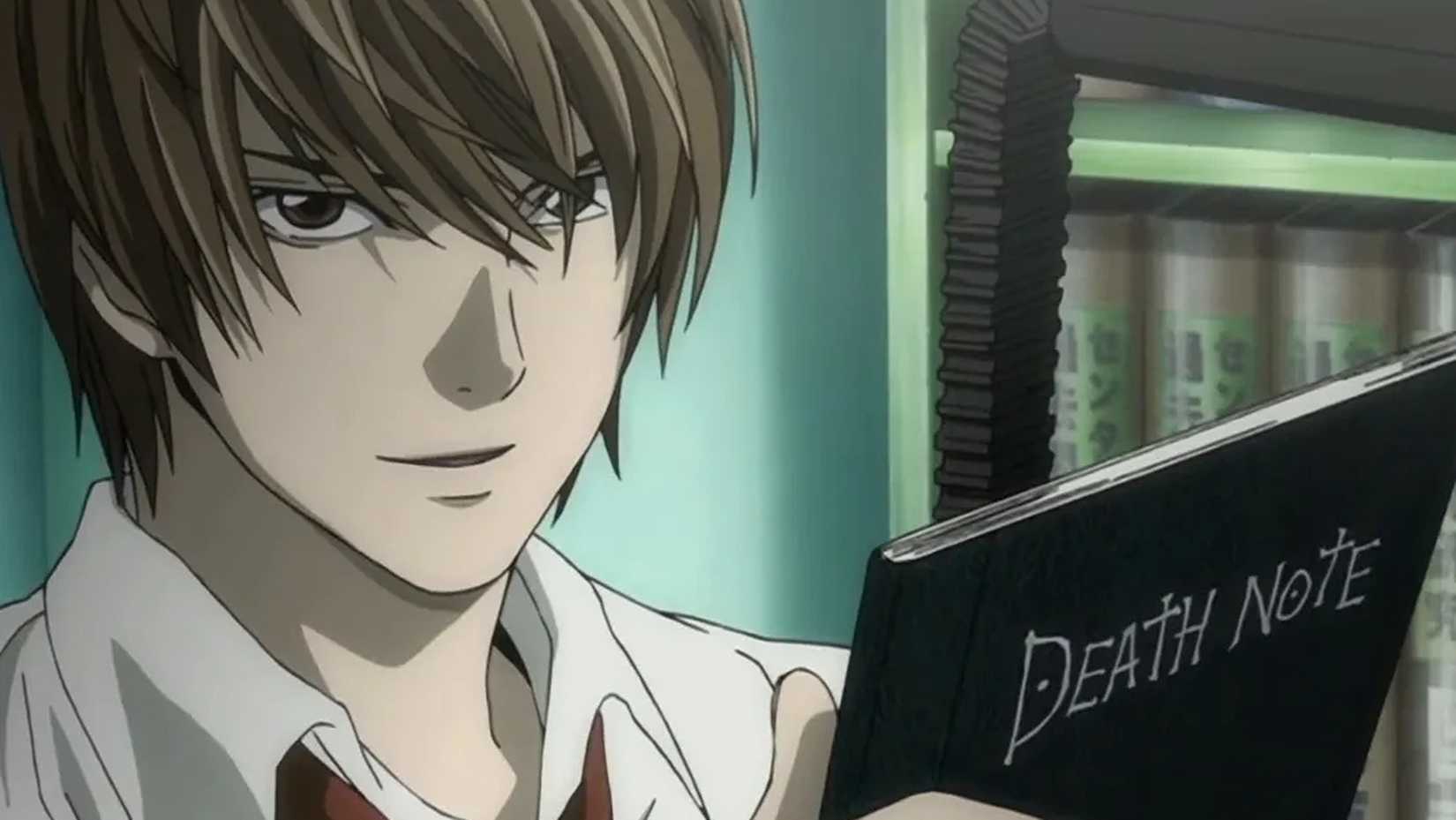
The anime Death Note is an absolute masterclass in hard magic systems. The story follows a high school anti-hero named Light Yagami, who finds a book that lets him kill anyone whose name is written in it. He decides to use the tome to kill all the criminals and evil individuals from the world. At first glance, the magic system sounds extremely simple. Write down a name, and they die. However, the Death Note notebook comes with plenty of rules and conditions.
A writer must visualize the face of their intended victim while writing the name to make it effective. Once a name is written properly, it cannot be reversed. If a writer visualizes the target's face but writes the name incorrectly four times, the Death Note becomes ineffective against them.
A target will die by a heart attack 40 seconds after the name is written without the writer including a cause and time of death. After the initial cause and time of death are written, the details can be expanded within six minutes and 40 seconds. The cause of death must be physically possible for the individual in question; otherwise, it will be a heart attack. Additionally, a death note cannot kill anyone younger than 780 days or older than 124 years. These are just a handful of the many, many rules of the magic system in Death Note.
4 Shadow And Bone
High Fantasy Setting With Low Fantasy Story

The Shadow and Bone TV show is a wainscot, gaslamp fantasy set in a secondary world. The story follows an orphaned young woman named Alina Starkov, who has the rare ability to summon light, making her a target of political and magical groups seeking to weaponize her powers. The world of Ravka resembles 19th-century Imperial Russia in both technology and development. A very small percentage of the population are Grisha, aka people capable of magic, and the story is driven more by geopolitics and human conflict. However, the magic system is surprisingly detailed.
Grisha study the Small Science, a form of magic that involves manipulating matter and molecules. The types of Grisha in Shadow and Bone include Corporalki, who can manipulate the human body; Etheralki, who can manipulate and control the classical elements; and Materialki, who can manipulate physical materials and chemicals. This is broken down into smaller categories that Grisha specialize in.
Each type has its own limitations. For example, characters who can harm internal organs must be within sight of their victims, and characters who can change folks’ appearances must be able to move their hands. This makes the magic feel structured and rule-bound. Between the compelling story and great magic system, this show is worth watching.
3 The Uncanny Counter
Low Fantasy Setting With Low Fantasy Story
Set in a fictional Korean town that functions like any other real-life place, the Netflix K-Drama The Uncanny Counter follows a group of humans who fall into comas and are possessed by guardian spirits from the Yung plane, an energy plane between life and death. This heals their bodies and minds and gives them superpowers. They disguise themselves as noodle shop employees, but they really have taken on the job of demon hunting. Technically, The Uncanny Counter’s magic system is medium-hard, but it’s still surprisingly well-defined.
For starters, the Counters’ abilities come from the connection to Yung energy, and they are clearly defined and limited, unlike many comic book superheroes. They don’t play fast and loose with the rules. A Counter’s effectiveness in fighting an evil spirit is determined by the amount of Yung and physical energy spent. These two forms of energy, combined, function like mana. They can boost their abilities by drawing a “territory,” which increases Yung energy within a limited space.
Meanwhile, evil spirits possess humans who have either killed someone already or have intense homicidal urges. Every time their host human murders another person, the spirit consumes the soul. The more souls they consume, the more power they gain, with power levels ranging from Level 1 to Level 4.
2 The Magicians
Low Fantasy & High Fantasy Mix
 Image via MovieStillsDB
Rather than being strictly high or low fantasy, The Magicians expertly blends the two. The show follows a group of students at the upstate university in New York called Brakebills, a graduate school for magic. As they work to master their skills, they discover that the fictional world of Fillory, from the Fillory and Further children’s books, is real and in serious danger without their help. Rather than sticking to one location or the other, The Magicians masterfully jumps back and forth between them, connecting their stories. Additionally, it boasts an incredibly detailed magic system.
In this show, magic is a water-like resource granted by the gods that is technically infinite but can be turned on, off, or limited at will. Magicians gain access to magic through the Wellspring. Each magician has a specialty discipline. To cast, magicians have to learn complex finger and hand movements, as well as spells written in dead languages. Magic is intense and rigorous. Small mistakes in the hand shapes can have serious consequences, including maiming and killing people.
Magic also comes at a price. Many difficult spells require self-harm, human flesh and blood, or animal sacrifice. On top of that, magic is stronger when a magician channels intense negative emotions and trauma. To make matters worse, magic is highly addictive, and it’s difficult if not impossible to quit.
1 Constantine
Low Fantasy Setting & Low Fantasy Story

The dark fantasy/horror show Constantine follows John Constantine, a man with a haunted past who works as an exorcist and occult detective. This TV show is the only low fantasy story on this list with a soft-to-medium magic system, but it stands out from other soft magic because it’s not based on vibes or wand-waving. The magic system of the DC Vertigo series is grounded in detailed occult and ritual magic, and it’s clear there are rules, even if we, as the audience, don’t know what they are. Some folks are born with the instinctive ability to wield magic, but most have to work for it. Acquired magic users, like Constantine, have to spend years studying, training, memorizing incantations, finding artifacts, and learning the rituals. Nothing is simple. Even under the best circumstances, hubris and small technical mistakes can mess up spellwork. The Newcastle Incident is the perfect example of the terrible consequences that can come from magic gone wrong. Plus, every spell comes at a high cost, taking a physical and mental toll on the caster.
John Constantine is mostly an acquired magic user, but he has an innate passive ability called Synchronicity Wave Travel, which bends luck and probability in his favor.
Another aspect of the magic system that makes it feel more tangible is its use of specific disciplines and types of magic from religions and cultures around the world. This includes blood oaths, wards, runes, elemental magic, capnomancy, and many others. The surly detective also uses alchemy circles and real-life demonology in his detective work. The multicultural approach is even reflected in the spell ingredients, such as salt, holy water, blood, cemetery dirt, bones, or adder stones. Ultimately, Constantine created a great, albeit softer, magic system by presenting magic as a discipline, assigning real consequences, and drawing on elements of real occultism.



 English (US) ·