
 1 hour ago
7
1 hour ago
7

Published Oct 7, 2026, 9:00 AM EDT
The follow up to The Witness is dense, meticulously designed, and full of contradictions
 Image: Thekla Inc./Arc Games
If you gave me five years to review Order of the Sinking Star, I still don’t think that would be enough time. The enormous new puzzle game from Thekla, a studio led by Braid creator Jonathan Blow, has been proudly touted as a “500-hour” game ahead of its launch. After a month with it, I’m still not confident that eye-popping claim is an exaggeration. I feel like I’ve barely scratched the surface of a game filled with intertwining secrets and brain-busting puzzles that have haunted my waking hours.
Usually, that kind of setup would precede a bit of praise for an ambitious game with a tremendous amount of value for any players who think about games in dollars and cents. Truth be told, I don’t know if I mean it as a compliment — but it’s also not not a compliment. More than 20 hours of on-and-off play, casually poking into my save file every night like I would a book of crossword puzzles, has revealed an exceptionally complicated game that eludes firm criticism at every turn. Is it a masterpiece or an exercise in exhaustion? Ask me again next month and my answer might be different. Ask me again next year and it certainly will be.
An intricate achievement
Order of the Sinking Star is the open-world puzzle game to end all open-world puzzle games. The gargantuan project essentially remakes several indie Sokoban games (a term used to describe a specific style of box-pushing puzzles), and then combines their mechanics. It’s meant to be a celebration of world-class puzzle design, one built with a spirit of collaboration and reinvention in mind. The reality of its dramatic development is a different story, but let’s take the game at face value to start, because there’s enough to unpack there as is.
The creative vision behind Order of the Sinking Star is brilliant, if not ingenious. Thekla is building on the bones of some top-notch games and uniting them into one aesthetically cohesive package that unfolds across a sprawling top-down grid. That makes the early hours of the adventure, where you’re simply figuring out the rules of four different games, undeniably terrific.
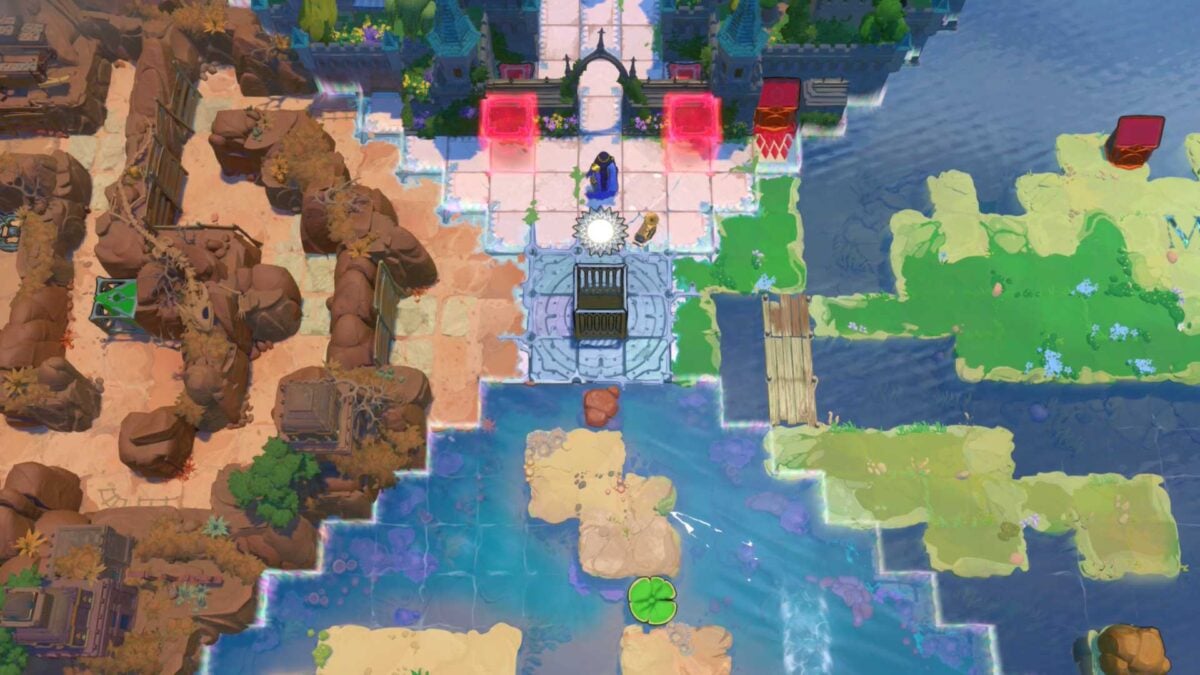
 Order of the Sinking Star screenshotImage: Thekla Inc./Arc Games
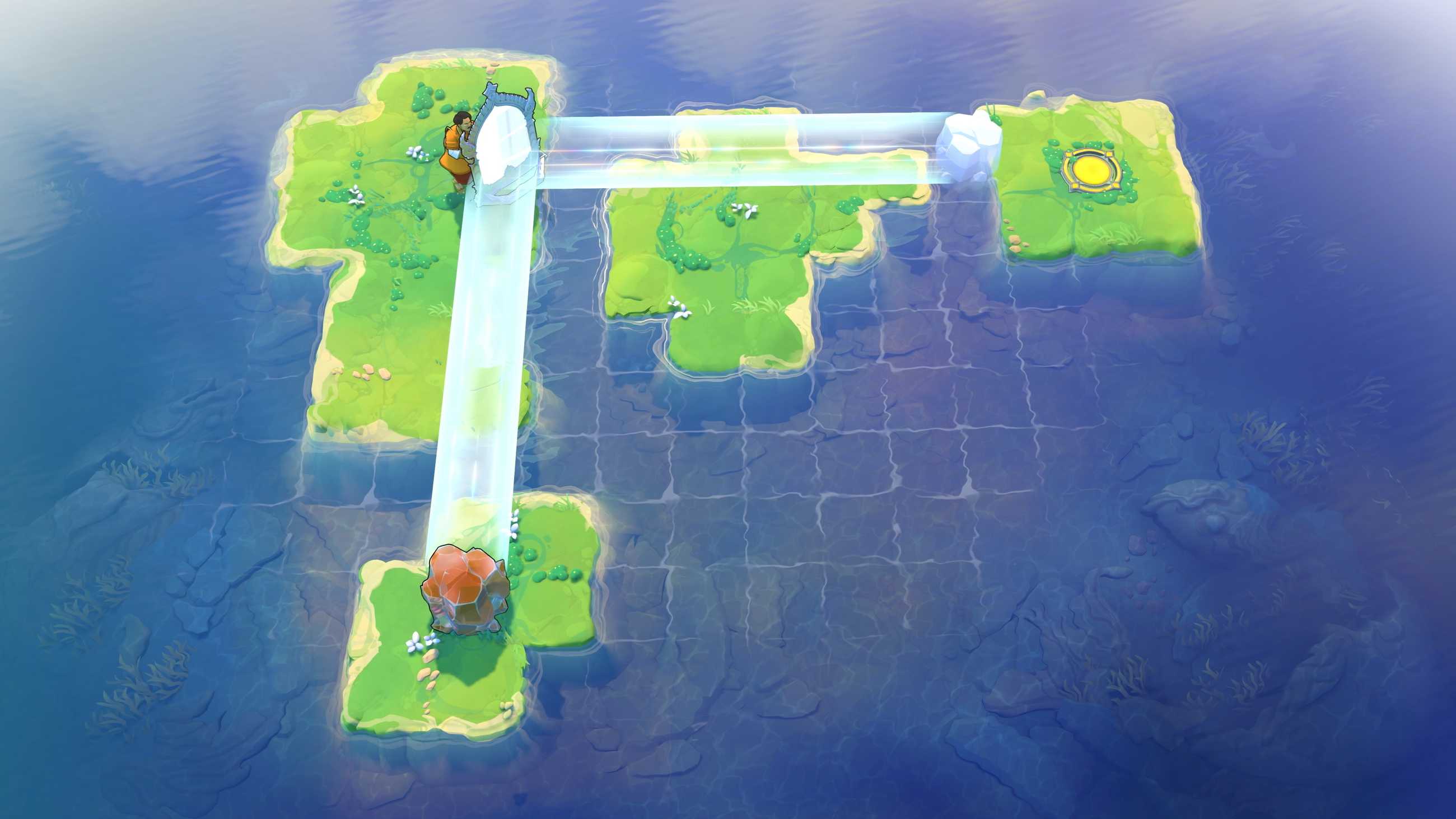
Go east on the clouded open-world map, and you’ll enjoy a riff on designer Alan Hazelden’s Mirror Isles, an indie game that had players traversing islands by teleporting through well-positioned mirrors. Go west instead, and you’ll wind up in a rework of Silver Spaceship Software’s Promesst, a game that’s built around collecting gems by activating colored laser beams with distinct powers. North sends you to a riff on Jonah Ostroff’s Heroes of Sokoban (which sees you control multiple heroes who can push, pull, switch places with moveable blocks, and more) while south is occupied by a realm based on Hazelden’s Skipping Stones to Lonely Homes (which reimagines Sokoban as a rock-skipping puzzler). All of those games, freshly reworked by Thekla, function as satisfying puzzle campaigns apart from the larger project.
The twist — or at least the first twist — is that Order of the Sinking Star uses those great games as foundations for new puzzles. Between the overworld’s cardinal directions, you’ll soon discover that the mechanics of each game start to combine. When you explore your way into the northeast section of the map, you’ll discover puzzles that combine the mechanics found in Mirror Isles and Heroes of Sokoban. Northwest, meanwhile, combines the laser beams and gems of Promesst with Heroes of Sokoban’s block-pushing.
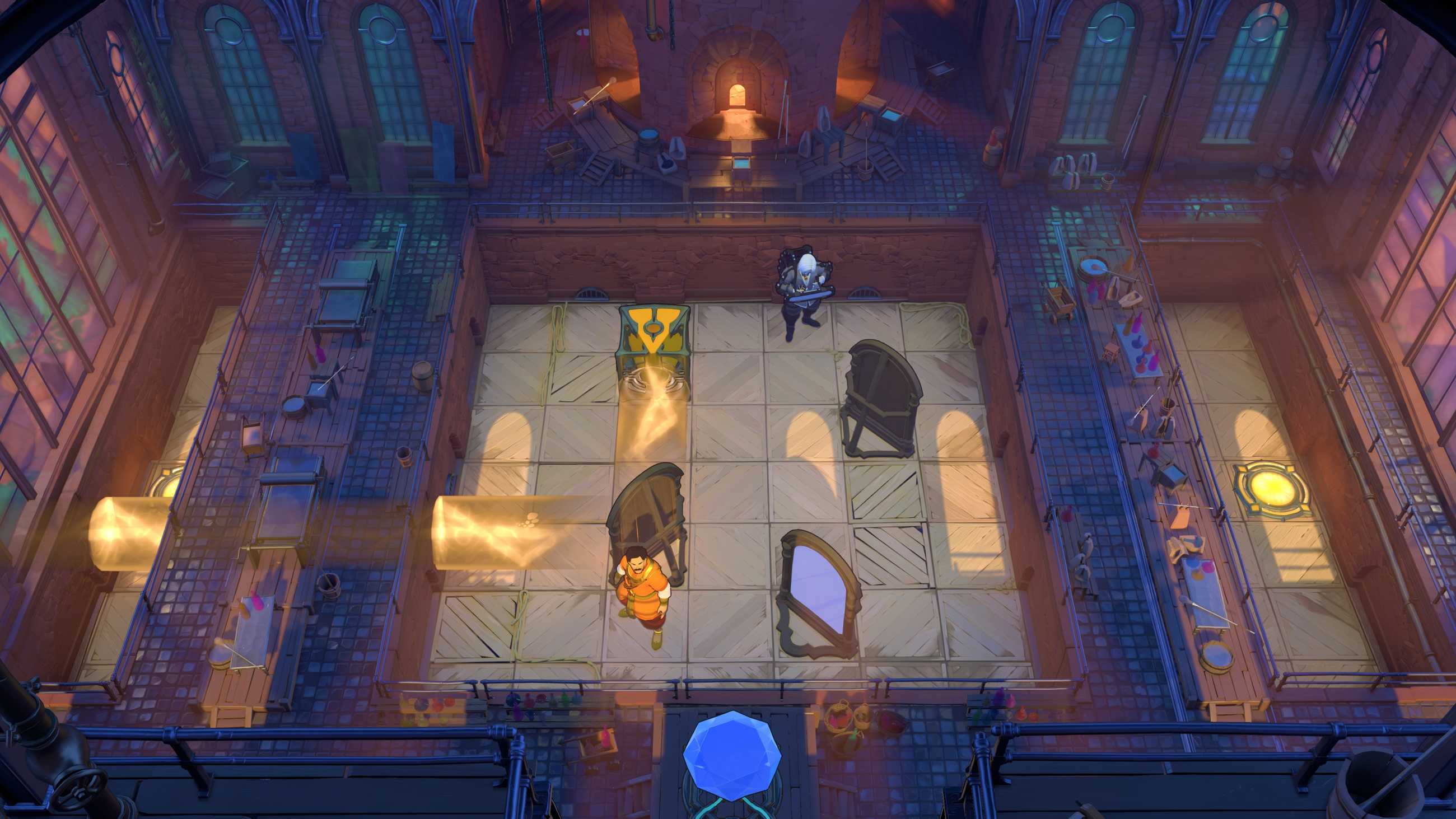
Here again, I can’t dispute how strong the puzzle design is. Ideas from completely different games find themselves in perfect harmony, a testament to the Thekla team’s collective ability to find a universal thread in all the games it is adapting and link them together. Some of the more exceedingly clever puzzles almost have the reinventive energy of Super Mario Maker levels. One highlight uses a dragon and mirrors that reflect its fiery breath to put you in a race against time as you try to rescue a party member before he is eviscerated. Another tosses you into a grid full of monsters and has you teleporting them around to position them in a way that they will all kill one another. Both puzzles involve mirrors and monsters, remixed to the point that Thekla discovers new rules within established games.
 Order of the Sinking Star screenshotImage: Thekla Inc./Arc Games
All of these puzzles are stitched together by a grand overworld that is an original puzzle unto itself. Some of my favorite moments in Order of the Sinking Star thus far have come from unfogging the enormous map by solving puzzles contained within traditional chambers, allowing me to unlock something on the top layer that takes me to a new area. With how open-ended it all is, there’s plenty of space to unearth a bunch of paths and jump between them when you get stumped on a puzzle somewhere.
There is significantly more to Order of the Sinking Star than that, though — and I can’t possibly speak to all of it at this stage. Despite playing north of 20 hours, I’m still very much in the surface layer of the game, working toward completing a primary quest that is another puzzle in itself. Much of the game is laid out in abstract terms, leaving you to deduce what strange symbols or red pedestals mean. All of it feels like a logical continuation of 2016’s The Witness, Thekla’s genre-defining open-world puzzler that considered how to teach players new rules without saying them outright. There’s so much that I’ve yet to learn in Order of the Sinking Star, and so many deep secrets I’m eager to uncover.
Whether or not I’ll ever get to these points is another story, because no game has ever left me feeling more tired after each session than this one.
Trust and exhaustion
While Order of the Sinking Star is brilliant on a puzzle-to-puzzle level, its grander design ethos opens up some intersecting design critiques that crisscross just the same as the overworld’s intricate pathways. From the jump, you need to know that it’s an expert-level puzzle game. Whereas The Witness was fairly approachable thanks to its tactile line-drawing mechanic, the Sokoban format involves a lot of brain-racking to crack complicated puzzles built around orders of operations. Sometimes you’ll know what to do conceptually, but spend an hour trying to work out the execution. There are eureka moments to be found, but so many puzzles hinge more on mental endurance.
That’s normal for the genre, but it’s something that compounds with the enormous scope of the project. If Order of the Sinking Star really is 500 hours long, know that much of that time will be spent staring at puzzles that seem impossible to solve for hours. And your reward for finally completing a hard puzzle? An even harder puzzle! Whereas many puzzle games are built around an ebb and flow of complexity, one that dials the challenge back down anytime it introduces a new rule, Order of the Sinking Star feels like it’s in constant escalation. I’ve found very little mental relief so far as I constantly bash my head through walls with no clear payoff in sight.
 Order of the Sinking Star screenshotImage: Thekla Inc./Arc Games
The only thing that you could call payoff is the storytelling stitched into the puzzles, but that’s not exactly a great prize. Throughout the primary puzzle chambers, you’re treated with some intersecting stories that get at the larger mystery of the island you’re on, but also function as contained fables. None of the writing is terribly engaging thus far, leaving me little motivation to push through a puzzle to find out what happens next. (The review build I played also featured some truly awful placeholder voice acting. That dialogue will be replaced with human acting in the final version, but it’s another element that leaves me hesitant to definitively critique the game in good faith.)
None of this would be much of a problem if puzzles were leading you into constant eureka moments that gave you a breakthrough elsewhere in the world. That’s part of the magic behind The Witness, where one simple revelation can turn something that seemed incomprehensible on the other side of the map into an easy solution. Order of the Sinking Star doesn’t really work that way, at least not so far. Solutions feel more self-contained outside the four central paths; no matter how many puzzles I solve, I’m pretty much going to wind up stuck all the same on one that hinges on precise execution.
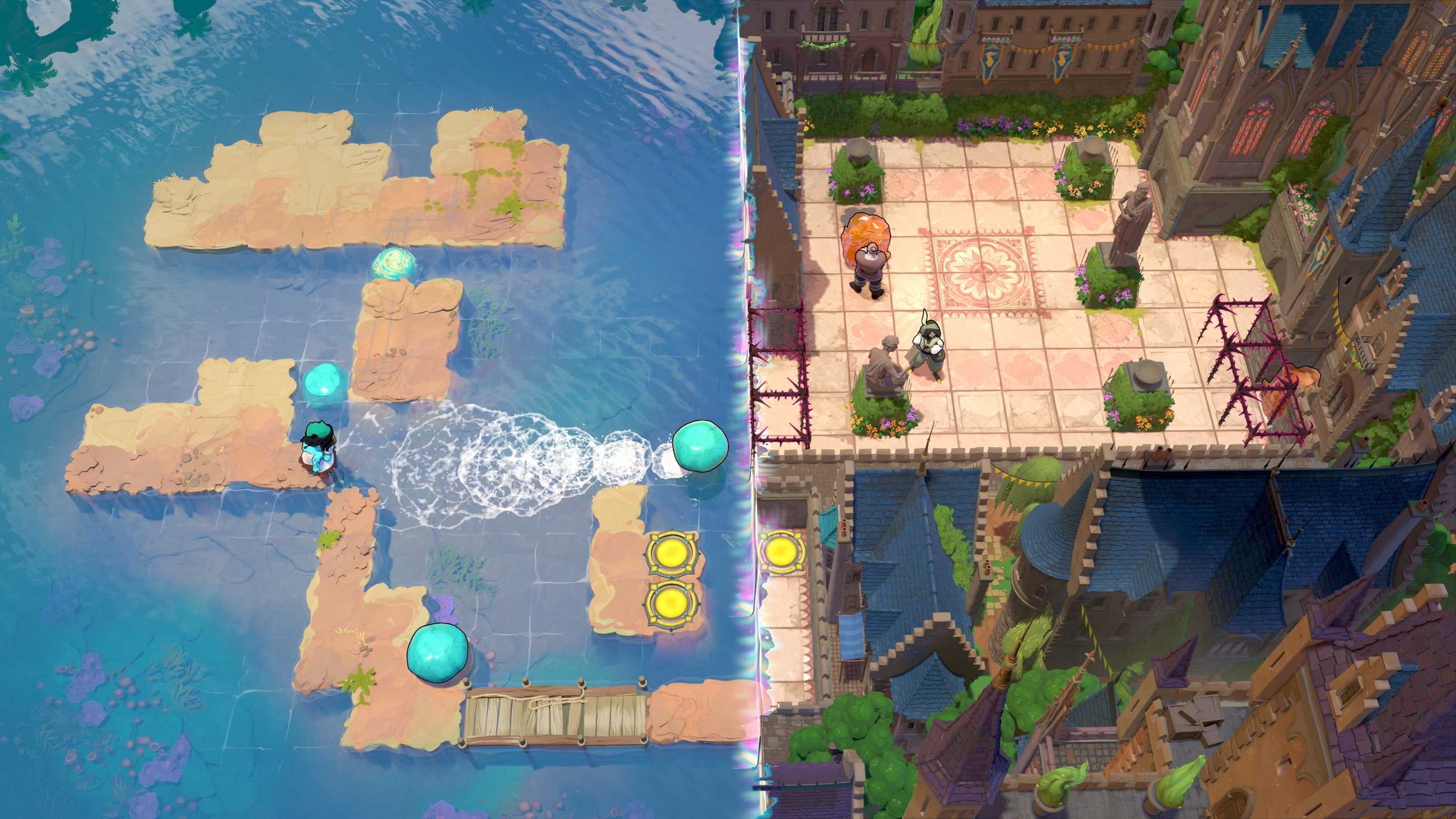
It doesn’t help that it’s not always clear why you’re stuck on a puzzle. Is it because you have yet to crack the solution? Or is it because you’ve made a move that has rendered it impossible to solve? A reset button and step-rewinder let you roll back any obviously wrong move, but sometimes those tools only help so much. In the excellent segment inspired by Promesst, you’ll complete a series of intersecting puzzles set in an underground map rather than individual puzzles in singular chambers. I spent a lot of time scratching my head in one before realizing that I’d seemingly just screwed something up 30 minutes prior and didn’t realize it, forcing me to start over from the top. Currently in my save file, I’m similarly stuck in the section riffing on Skipping Stones to Lonely Homes, a puzzle game that has players pushing stones across water to traverse islands. Did I make a wrong move, or am I just not seeing the obvious solution? I don’t know!
Puzzle games are built on trust. You always need to be certain that a game is meticulously designed so you’re never funneled into a dead end, or never faced with a solution that should work but doesn’t. In its quest to make an enormously complex game, Thekla seemingly traded in laser-focused precision for scale. I can see the benefits of the trade-off. Order of the Sinking Star feels like an enormous puzzle book meant for players to pick away at over years, rather than in a few sittings. Part of why I haven’t poured 100 hours in yet, even with a month of lead time, is that I was most comfortable playing it a little at a time when my brain felt up for a challenge. As a long-term game that I’d want to come back to over an extended period, it’s a fantastic proposition. But my ultimate opinion on the tradeoff will be determined by how big the game’s first bug patch is.
The elephant in the room
The issue of trust in puzzle games also extends outside the confines of the screen itself. Since its official reveal, Order of the Sinking Star has been tangled up in an unusual controversy. Several of the creators whose games were licensed for the project have since distanced themselves from it, due to statements made by Jonathan Blow, whose famously outspoken persona has turned political in recent years. His social media posts, which have praised President Donald Trump and dabbled in COVID-19 conspiracies, received backlash from developers including Alan Hazelden, who has since confirmed that any profits he receives from the game will go towards supporting underprivileged developers.
Sometimes it’s hard to know exactly what to do with behind-the-scenes drama like this. It’s a story that’s sure to alienate potential players, but is it something that has any tangible weight on the game? The art is the art, and it should be able to stand apart from the person who created it, right? (Never mind the fact that Order of the Sinking Star is not a “Jonathan Blow game;” it’s the collective product of Thekla, a talented studio that deserves as much credit as the star developer attached to it.)
Order of the Sinking Star begs to be challenged as much as it challenges you.
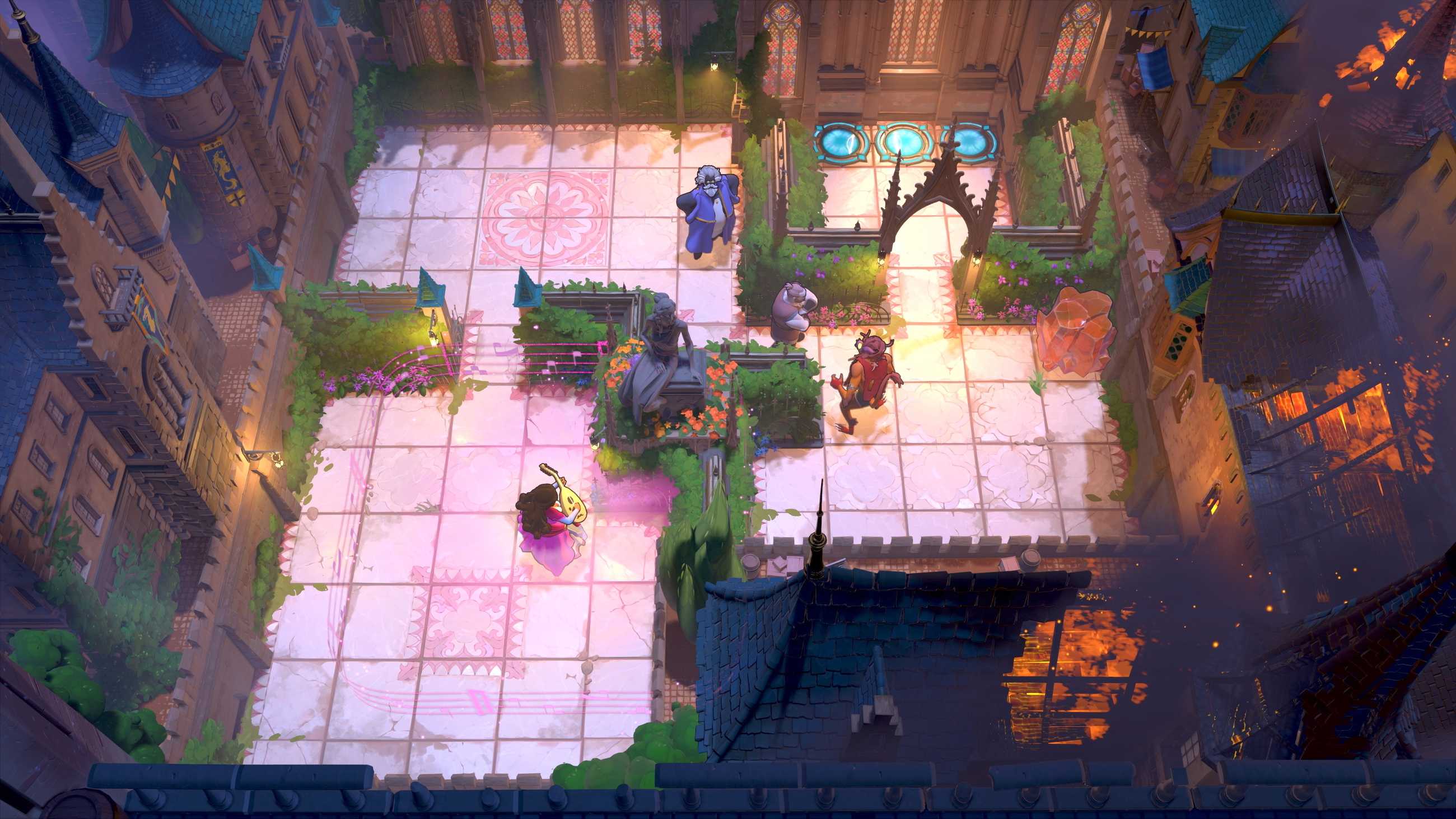
And yet, it’s difficult to entirely ignore the situation only because it feels so inextricable from the meta-narrative that gives the project its potential power. Order of the Sinking Star’s themes are tied to its actual development story. It’s a game, in part, about creativity through collaboration; by uniting thinkers whose unique ideas about puzzle design shaped the Sokoban genre, Order of the Sinking Star teaches us the value of embracing one another’s differences. That’s explicitly baked into the standout Heroes of Sokoban-inspired section of the game, as it’s centered on characters whose different powers help one another solve otherwise impossible problems.
For one, that idea comes across as hollow given that it doesn’t exactly match Blow’s stated worldview. Blow hasn’t been shy about criticizing the video game industry’s push for inclusive hiring, saying that it dilutes a merit-based structure that he believes games require to deliver high-quality experiences. Even putting aside the fact that there’s no hard data to back up what ultimately lands as a vibes-based viewpoint, the idea is certainly at odds with the core idea of Heroes of Sokoban, which posits that there is value in assembling a team of people who come from different walks of life.
 Order of the Sinking Star screenshotImage: Thekla Inc./Arc Games
Even if you’re willing to ignore that, there’s another foundational contradiction built into the development of the project. In order to fully buy into Order of the Sinking Star’s message, we have to believe in the idea of Blow assembling an Avengers of Sokoban. That story of great minds coming together to make a genre masterpiece ties directly into the meta layer created by a game about mashing games together. What does it mean that those developers weren’t actually involved with creating the mechanic-mixing puzzles, as Blow confirmed to me ahead of the game’s launch? What does it mean that those creators instead distanced themselves from the project because of a belief system that appears to be incompatible with the game?
I’m not raising these points to get a dig in on Blow for a perspective I personally disagree with; I’m more highlighting it to raise why I don’t exactly feel comfortable giving a final word on Order of the Sinking Star without seeing every corner of it. This is a game created with meticulous intention. Every puzzle is designed the way it is for a reason. Every step you take matters. I also have to believe that every line of writing matters too. How can I confidently engage with something like this without solving every puzzle, and hearing every word it has to say? It again comes down to that fractured trust: I’m less likely to give the benefit of the doubt to a game I know to be built on contradictions that are as challenging to square as any puzzle.
 Free sign-up
Get Polygon’s Wishlister newsletter
A weekly cheat sheet to what you’ll eventually love to play. No buying, no commitment — just saving for later.
Sign up freeFree. Unsubscribe anytime.
For a lot of players, I reckon none of this will matter. So long as the puzzles are well-designed — and they really are, gripes about overarching structure aside — who cares what happens off-screen? Order of the Sinking Star is undeniably an impressive feat built for loyal fans of a niche puzzle genre. But if it sounds like I’m overthinking it, I truly believe that’s because Blow is too. His games, and the work of the Thekla team more broadly, often feel like philosophical debates wrapped in metaphorical puzzles. The process of untangling a series of interconnected challenges, searching for the elusive payoff at the end of a mental gauntlet, is a fitting way to represent a quest for truth and understanding in the universe.
Order of the Sinking Star begs to be challenged as much as it challenges you. It asks you to interrogate its design arguments from as many angles as possible, pushing it in every direction the same way you would a box in a Sokoban puzzle. I question whether its fragile ideas stand up to scrutiny, and that questioning arguably is the game. We would be doing Order of the Sinking Star a disservice to end the conversation with “cool puzzles.” I’m sure that’s one thing Blow and I could both agree on.
Order of the Sinking Star will be released Oct. 8 on Nintendo Switch 2, PlayStation 5, and Windows PC. The game was reviewed on Steam Deck using a prerelease download code provided by Arc Games. You can find additional information about Polygon’s ethics policy here.




 English (US) ·