
In Star Trek, commanding a starship requires more than just courage; it requires a high degree of intelligence and decision-making skill to outmaneuver alien threats, untangle spatial anomalies, and navigate the razor-thin line of Federation diplomacy. The most iconic captains are defined by their intellect, with the ability to win against impossible odds and solve complex riddles with ease.
The smartest figures in Starfleet history have demonstrated their intellectual strength in different ways: through deep philosophical insight, diplomatic chess, improvisational tactical brilliance, and extensive scientific expertise. When it comes to command, true intellect lies in adaptability, the ability to absorb information quickly, outwit formidable foes like the Borg or Romulans, and make decisions that save entire civilizations.
Whether concerning historical scholarship, complex astrophysical equations, or unparalleled psychological insight, five legendary commanders stand distinct from the rest. Among the five, these leaders stand as the absolute best of the bunch when it comes to intellectual prowess, and this piece highlights them as such.
Captain James T. Kirk
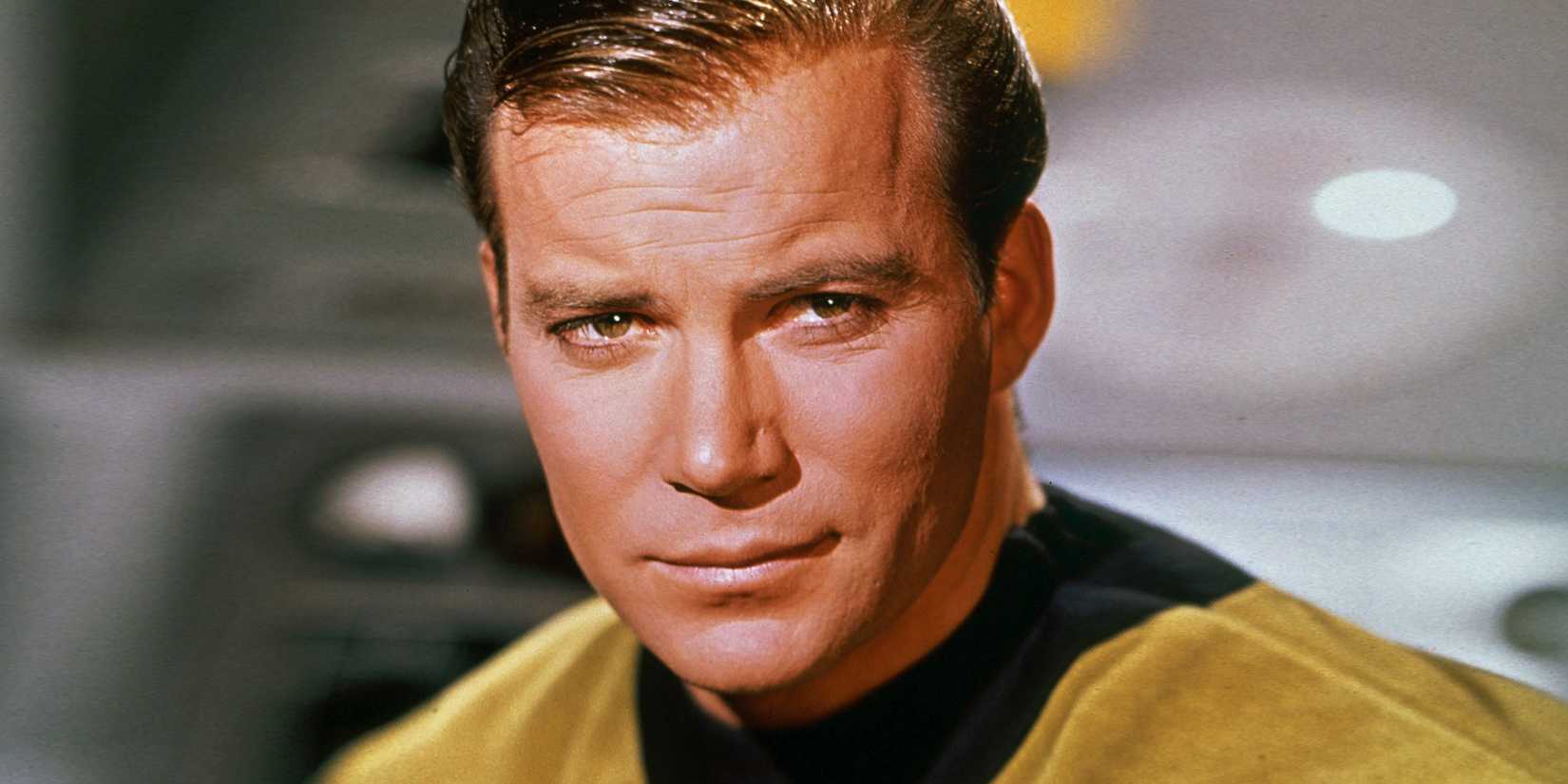
Captain Kirk is the quintessential captain and leader who was instrumental in many of Starfleet’s successes. At first glance, he could be mistaken for merely a charismatic, bare-knuckle brawler. Still, in reality, he is remembered in Starfleet Academy history as “a stack of books with legs,” reflecting his intellectual prowess before ever taking command.
Kirk’s intelligence lies in his expert improvisational skills and lightning-fast thinking in the heat of a crisis. His tendency to bend the rules to do what’s right is a quality that endeared him to both fans and all the members of his crew. Despite his recklessness, he always found a way to come out on top.
With his quick thinking, he was famously able to reprogram the Kobayashi Maru simulation because his mind fundamentally rejects the concept of a “no-win scenario”. He excels in scenarios that seem overwhelming against him, playing high-stakes spatial chess to turn the tide of battle with cunning tactics and sheer mental agility.
Time and again, without fail, Kirk employed advanced psychological warfare, bluffing, and unorthodox geometry to prevail against enemies with superior firepower. Whether facing the Romulan Commander in “Balance of Terror” or Khan Noonien Singh in the Mutara Nebula, Kirk overcame great obstacles with unconventional methods most others would never think of.
Ultimately, Captain Kirk has an unmatched ability to employ unpredictable tactics to force skilled opponents outside of their comfort zones. He has a rare kind of fluid intelligence that enables him to pick up brand-new scientific phenomena on the fly and detect a flaw in his opponent’s logic before they even realize they’ve made a mistake.
Captain Benjamin Sisko

Benjamin Sisko’s intellect is often understated because of his presence, passion, and moral compass; however, he is one of the sharpest analytical and multidisciplinary minds in Starfleet history. Before taking command of Deep Space Nine, Sisko established himself as an elite starship designer who helped engineer the U.S.S. Defiant to counter the Borg threat.
His intricate understanding of starship mechanics, orbital dynamics, and offensive weapon systems gives him a mechanical intelligence that sets him apart from other commanders, who must rely solely on their technical staff. He was a key player when the Dominion War threatened the very existence of the Alpha Quadrant, serving as Starfleet’s premier grand strategist and theatre commander.
Sisko’s mind works like a grandmaster on a three-dimensional chessboard, thinking ahead to enemy moves, logistical bottlenecks, and fleet maneuvers months before they appear on long-range sensors. His superior intellect led him to conceive the daring retaking of the station in Operation Return and the political deception that drew the Romulan Empire into war.
Consequently, Sisko’s intelligence is a premier example of pragmatism refined to an absolute platform. He is shown to be extremely resourceful, able to excel in multiple fields, a quality that makes him an indispensable member of any crew he is a part of. His intelligence is therefore a perfect fusion of engineering precision, military genius, and realpolitik.
Captain Kathryn Janeway

As a former science officer who rose through the ranks via the technical track, Kathryn Janeway serves as the gold standard of scientific intellect in command. When her ship accidentally flung thousands of light-years away into the heart of the Delta Quadrant, she used her technical skills to ensure her crew’s survival against overwhelming odds.
Janeway’s mind is a powerhouse of physics, temporal mechanics, and quantum theory. She worked with Seven of Nine and Chief Engineer B’Elanna Torres to invent new technologies, re-engineer Borg nanoprobes, and devise defenses against species that Starfleet had never encountered, such as Species 8472. Her hands-on problem-solving was emblematic of her ability to handle both executive decisions and advanced equations.
Conclusively, her intelligence is anchored by a perfect balance of scientific expertise and relentless adaptability, which enabled her to lead a single ship through thousands of uncharted horrors and bring her crew home. She is an exemplary fusion of the methodical precision of an investigator and the unyielding resolve of a commander.
Captain Jean-Luc Picard
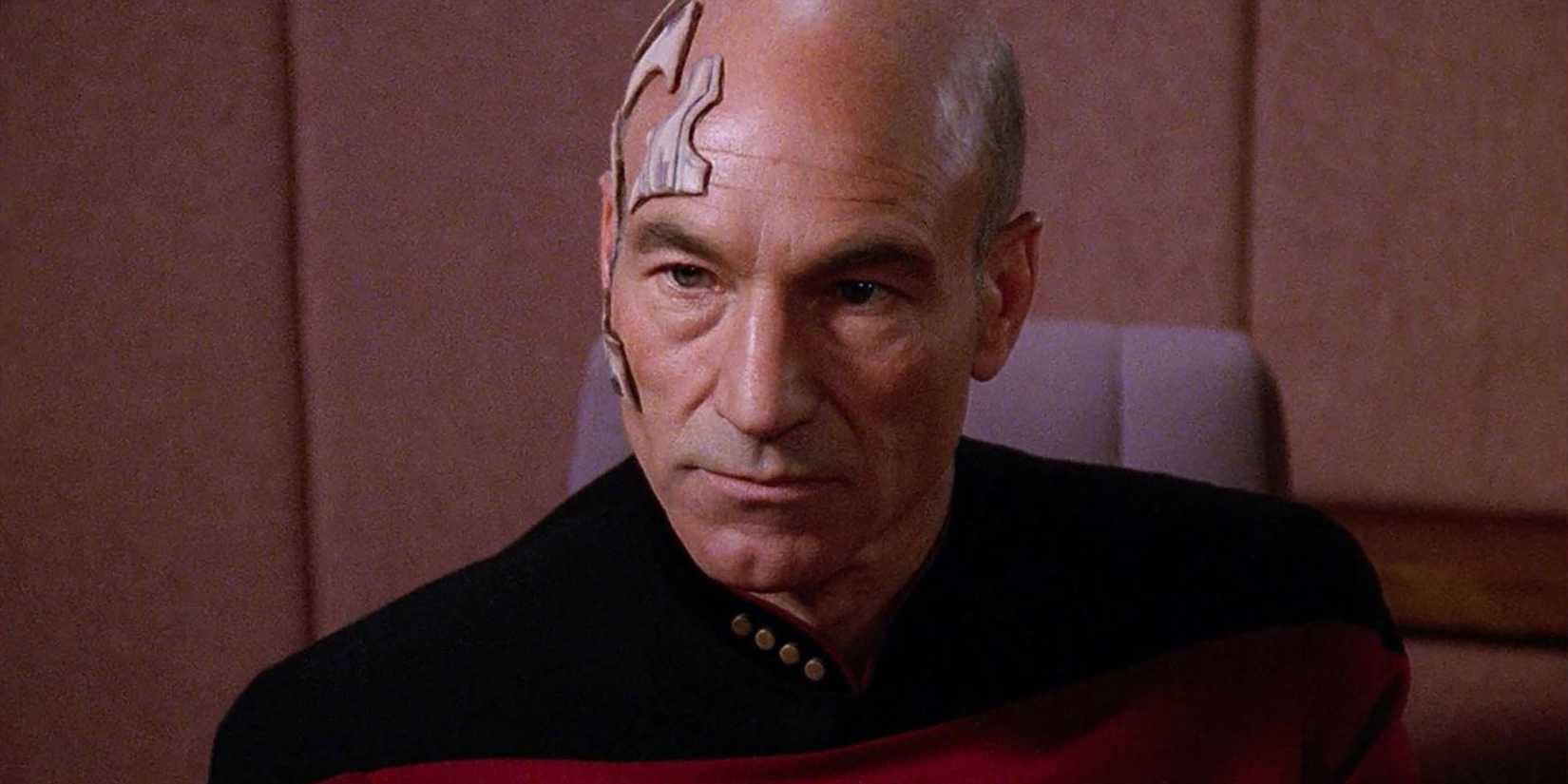
Captain Jean-Luc Picard is the pinnacle of Starfleet leadership and has saved not only numerous worlds and civilizations but also the known universe. His intellect cannot be understated; it is as vast as it is multifaceted. Not satisfied with being strictly a master tactician, he is proficient in archaeology, history, literature, quantum physics, and galactic law.
His comprehensive depth of knowledge allows him to navigate and solve complex crises that would leave the average commander helpless. The unending devotion to knowledge and understanding that Picard embodies is why he can come up with diplomatic solutions to intergalactic problems and approach every situation with sound logic.
Moreover, despite his vast knowledge, he shows wisdom and humility by never failing to rely on his team when necessary. He created the “Picard Maneuver," a warp-speed tactical move still taught at Starfleet Academy. He famously defeated the Borg, the Q Continuum, and countless hostile empires through sheer intellectual prowess.
His actions and achievements show he is a tactical genius who avoids aggressive conflict. He relies on foresight, misdirection, and a keen understanding of his opponent’s psyche. His intellect is matched by emotional and philosophical skill, enabling him to unravel complex moral dilemmas and negotiate peace between warring worlds with reason, logic, and deep insight into the human condition.
Captain Spock

Spock made his mark as the Enterprise’s brilliant science officer, and his eventual promotion to captain was well deserved in Star Trek II: The Wrath of Khan. The promotion and eventual popularity are largely due to his intelligence. His ludicrously high IQ, accompanied by his Vulcan knowledge and heritage, has been invaluable in many dire situations.
As a result of his Vulcan heritage, Spock processes data like a living computer, calculating tactical trajectories, mathematical variables, and spatial probabilities in seconds. His intellect isn’t strictly academic, and as a captain, Spock combines his unparalleled scientific expertise with his intricate knowledge of Vulcan philosophy.
Furthermore, Spock assessed threats without ego, fear, or hesitation, ensuring every decision optimized mission success and crew survival. His ability to stay composed under pressure means he can solve even the most difficult problems in the harshest situations. Where other commanders may falter from fear or pride, Spock remains focused entirely on cold, objective facts.
However, what sets Spock apart from other pure intellectuals is his evolving emotional intelligence. Over decades, Spock learned to factor “illogical” human behavior into his strategic thinking after serving alongside humans like James T. Kirk and Leonard McCoy. He isn’t merely a living computer; he can process and understand human emotions, and he can outthink computer algorithms as well.
Created by Gene Roddenberry
First Film Star Trek: The Motion Picture
First TV Show Star Trek: The Original Series
First Episode Air Date September 8, 1966
Cast William Shatner, Leonard Nimoy, George Takei, Nichelle Nichols, Deforest Kelley, James Doohan, Walter Koenig, Jonathan Frakes, Patrick Stewart, Michael Dorn, Marina Sirtis, Gates McFadden, Brent Spiner, LeVar Burton, Wil Wheaton, Avery Brooks, Nana Visitor, Rene Auberjonois, Alexander Siddig, Cirroc Lofton, Armin Shimerman, Colm Meaney, Terry Farrell, Kate Mulgrew, Robert Beltran, Roxann Dawson, Jeri Ryan, Robert Duncan McNeill, Robert Picardo, Ethan Phillips, Garrett Wang, Jolene Blalock, Connor Trinneer, Dominic Keating, Scott Bakula, Linda Park, John Billingsley, Anthony Montgomery, Chris Pine, Zachary Quinto, Simon Pegg, Zoe Saldana, Karl Urban, John Cho, Chris Hemsworth, Benedict Cumberbatch, Anton Yelchin, Idris Elba, Sonequa Martin-Green, Mary Wiseman, Doug Jones, Anthony Rapp, Wilson Cruz, Oyin Oladejo, Emily Coutts, Jess Bush, Christina Chong, Anson Mount, Ethan Peck, Rebecca Romijn, Michelle Yeoh
TV Show(s) Star Trek: The Original Series, Star Trek: The Animated Series, Star Trek: The Next Generation, Star Trek: Deep Space Nine, Star Trek: Voyager, Star Trek: Enterprise, Star Trek: Discovery, Star Trek: Short Treks, Star Trek: Picard, Star Trek Lower Decks, Star Trek: Prodigy, Star Trek: Strange New Worlds, Star Trek: Starfleet Academy
Star Trek is one of pop culture's biggest multimedia franchises, spanning multiple movies, TV shows, books, comics, video games, and various other media. The franchise was created by Gene Roddenberry and started with the 1960s TV series starring William Shatner and Leonard Nimoy. Over the decades, several equally popular series have come out since as Star Trek: The Next Generation and Star Trek: Discovery.




 English (US) ·