
 2 hours ago
5

Published Nov 13, 2026, 4:00 AM EST
The best sci-fi stories come in groups of three
 Image: Polygon
Sign in to your Polygon.com account
Trilogies are a popular book format for a reason. Apart from naturally satisfying the rule of three, they also naturally mimic the classic structure of a beginning, middle, and end. Trilogies allow writers to flesh out their worlds, creating enough breathing room for genre concepts and important events. The same logic is particularly true for science fiction. Dystopian sci-fi books like The Hunger Games use the trilogy structure to map out the painstaking moving parts of a rebellion, while the Broken Earth science-fantasy trilogy encompasses a massive supercontinent full of complex lore.
Of course, not all sci-fi trilogies are created equal. Plenty start strong only to flame out in book two or three, while others admittedly take a while to get good. But there are plenty of perfect trilogies, too. Polygon has rounded up five sci-fi book trilogies that are worth your time from start to finish. Check out the list below.
1 Sprawl Trilogy (1984-1988) by William Gibson
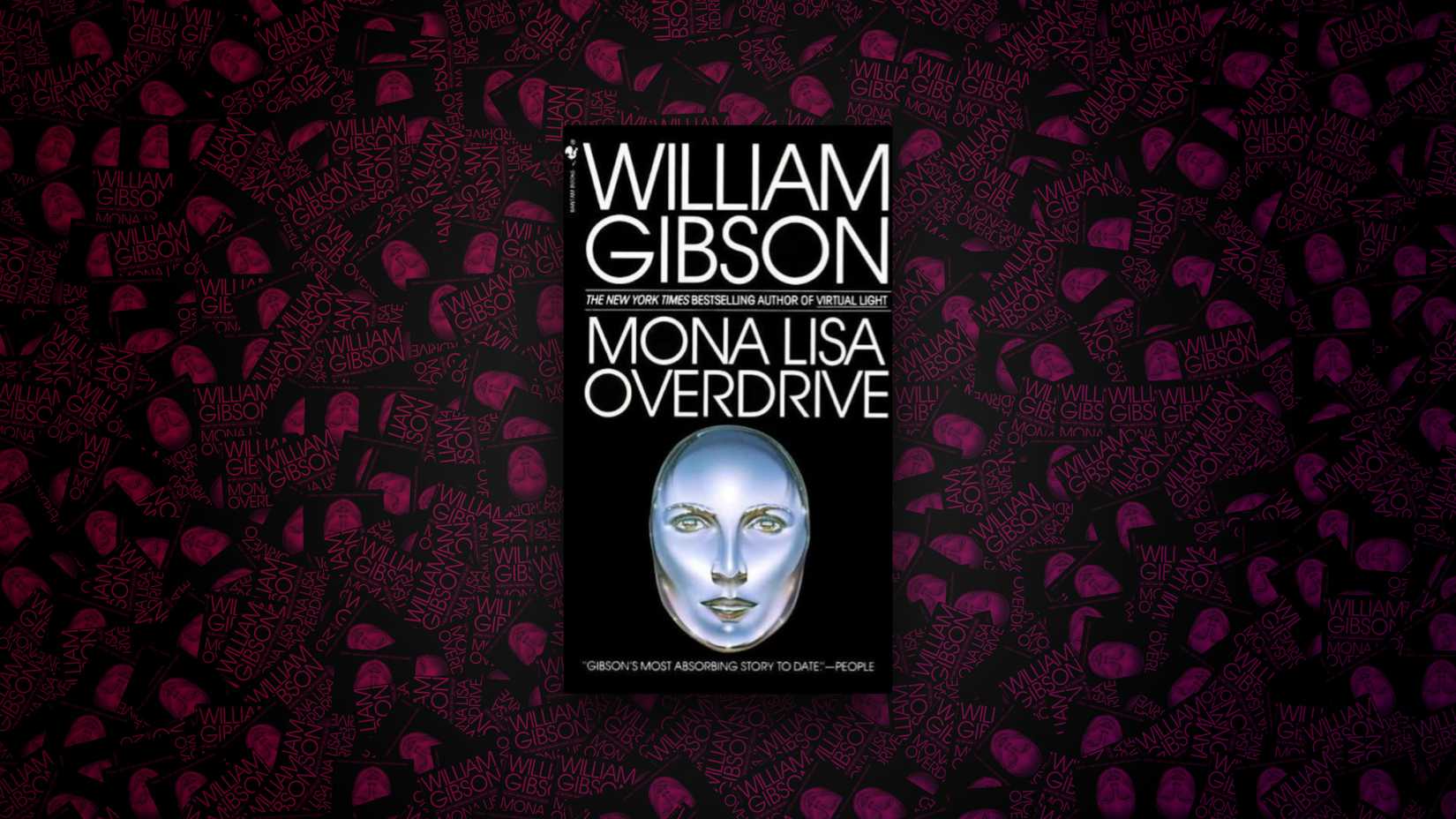 Image: Polygon
William Gibson’s Neuromancer is often at the forefront of brilliant cyberpunk book lists, given how foundational the text is for the genre. Its sequels, Count Zero and Mona Lisa Overdrive, tend to get overlooked in the process, even though these entries are as exceptional as Neuromancer. The first novel drops the reader in the midst of a bustling, neon-tinted city, where a console cowboy (hacker) named Case is forced into pulling off a heist in exchange for his continued survival. A sentient AI named Wintermute emerges as an antagonist, with Count Zero detailing the aftermath of the heist, and Mona Lisa Overdrive exposing the rotten core of a hyper-technological world.
Sprawl is the definition of “show, don’t tell.” This is a double-edged sword, as Gibson’s vivid prose can often feel more sensory than descriptive, making it unsuited for brisk reading. This doesn’t mean Sprawl isn’t immersive. On the contrary, it invites the reader to decipher context cues and retains interest with strong character portraits. Sprawl is also a bleak, uncompromising look at corporate oppression, a sentiment that has inspired the core conflict in everything from The Matrix to Cyberpunk 2077. This aspect is substantial enough, but Sprawl drives it home with a reflective ending that makes human presence irrelevant to the progress of machine intelligence.
2 Foundation Trilogy (1951-1953) by Isaac Asimov
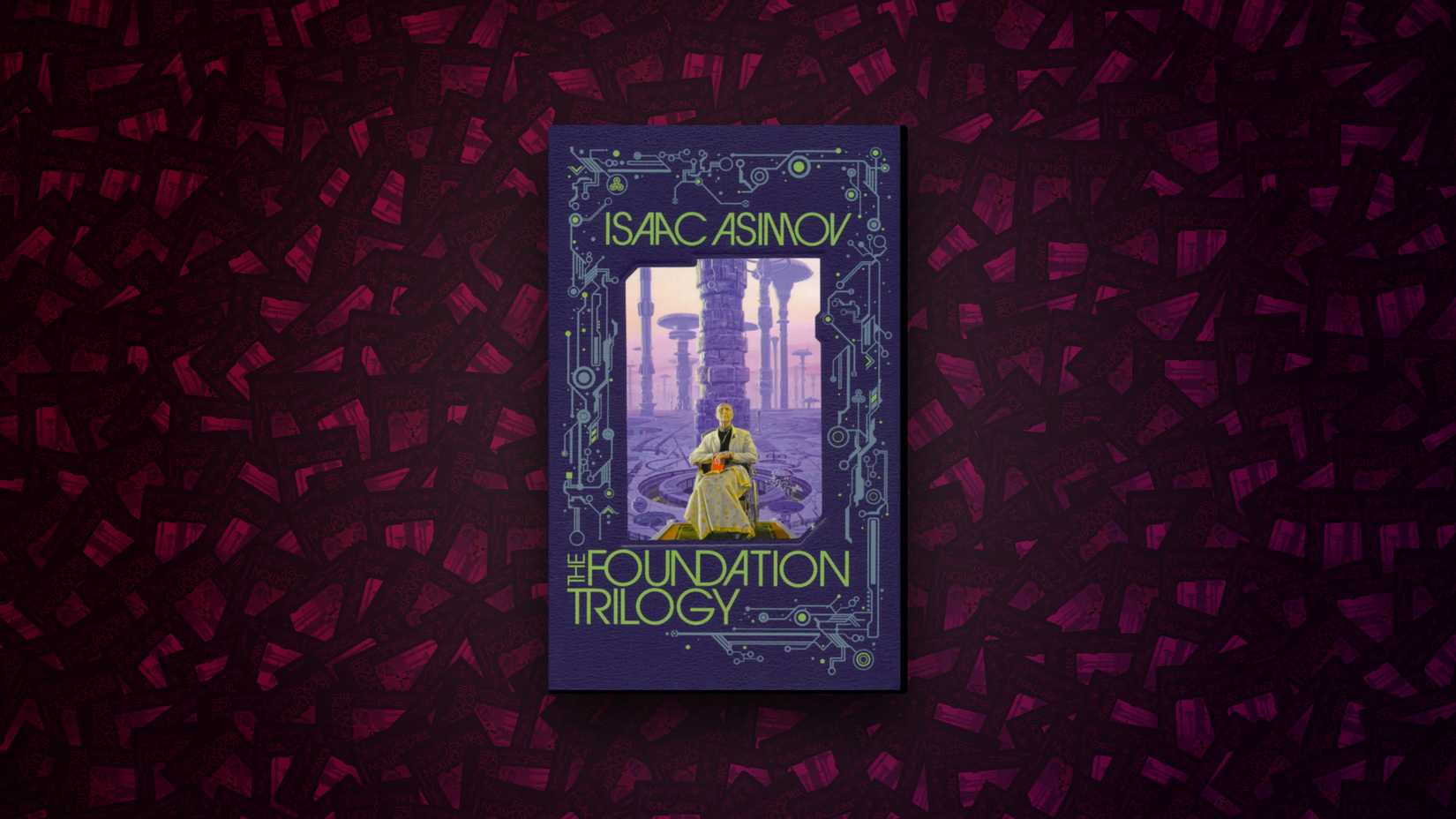 Image: Polygon
Although Isaac Asimov added two sequels and two prequels to the Foundation novel series after 1953, the core concept was conceived as a trilogy. These novels — Foundation, Foundation and Empire, and Second Foundation — are set in the final days of a Galactic Empire, where mathematician Hari Seldon uses a special technique called psychohistory to predict the future. Seldon foresees the fall of the Empire, a lengthy dark age, and the eventual rise of a second empire. He decides to shorten the projected number of years between the rise and fall of a dynasty.
Asimov’s narrative scope in the Foundation novels is massive. For Seldon, history becomes a malleable timeline instead of a fixed inevitability, which has its repercussions on the galaxy at large. The novels follow the fall of a 12,000-year-old Galactic Empire, which has been shaped by sociopolitical factors that cannot be erased by history on a whim. Seldon’s plan to shorten the duration of the dark age is grand and unprecedented, but it is one that causes repeated issues over time. The math, although solid, contains variables that were previously unaccounted for, turning the Foundation trilogy into a tense psychological mystery that plays by the rules of sci-fi.
3 Remembrance of Earth’s Past (2006-2010) by Liu Cixin
 Image: Polygon
Liu Cixin creates a dense, compelling case for the limits of human nature and how these limits can be overcome through cold logic. Cixin’s Three-Body Problem offers a solid base for this idea, which turns into a full-blown conversation about civilizational entropy and cosmic forces in The Dark Forest and Death’s End. These complicated events begin with a disillusioned young woman named Ye Wenjie, who dooms humanity by inviting an alien race known as the Trisolarans to invade the planet. As the Trisolarans experience a vicious cycle of destruction and rebirth due to the three suns that orbit their system, Earth becomes both a source of salvation and a target for colonization.
Remembrance of Earth’s Past is full of promising characters like Wang Miao and Luo Ji, but Cixin is more interested in representing humanity as a collective species. Although internal differences remain, humanity is fundamentally driven by a need to survive, but this impulse is short-term. This leaves us vulnerable to threats of a cosmic scale. Not only are we horribly underprepared to deal with such a crisis, but we are also destined to perish according to the laws of science. This fragility is at the core of Remembrance of Earth’s Past, which argues that the only way to adapt is to keep transcending at the cost of leaving our “human” identities behind.
4 Lilith's Brood (1987–1989) by Octavia E. Butler
 Image: Polygon
Formerly known as the Xenogenesis Trilogy, Octavia E. Butler’s Lilith’s Brood comprises Dawn, Adulthood Rites, and Imago. The story opens with a woman named Lilith being unable to recall her past, although she vaguely remembers a planet-wide catastrophic event and an accident that killed her family. Over time, Lilith realizes that an alien race known as the Oankali rescued a few survivors from an irradiated Earth, leaving humanity no choice but to evolve into a completely different species.
Lilith’s Brood is a radical inversion of traditional “first contact” sci-fi tales. Earth is already uninhabitable, so the Oankali aren’t interested in inheriting a new planet or ruling over its people. Instead, they propose a genetic trade, giving humans the choice to “upgrade” themselves, although this freedom to choose feels like an illusion. The Oankali perceive humanity as paranoid, self-destructive beings who are also capable of high intelligence and deep empathy. This contradiction is at the heart of the series, as we’re left to wonder whether a forced evolution makes humanity lose these traits to the point that they become unrecognizable in their own eyes.
5 Mars Trilogy (1992-1999) by Kim Stanley Robinson
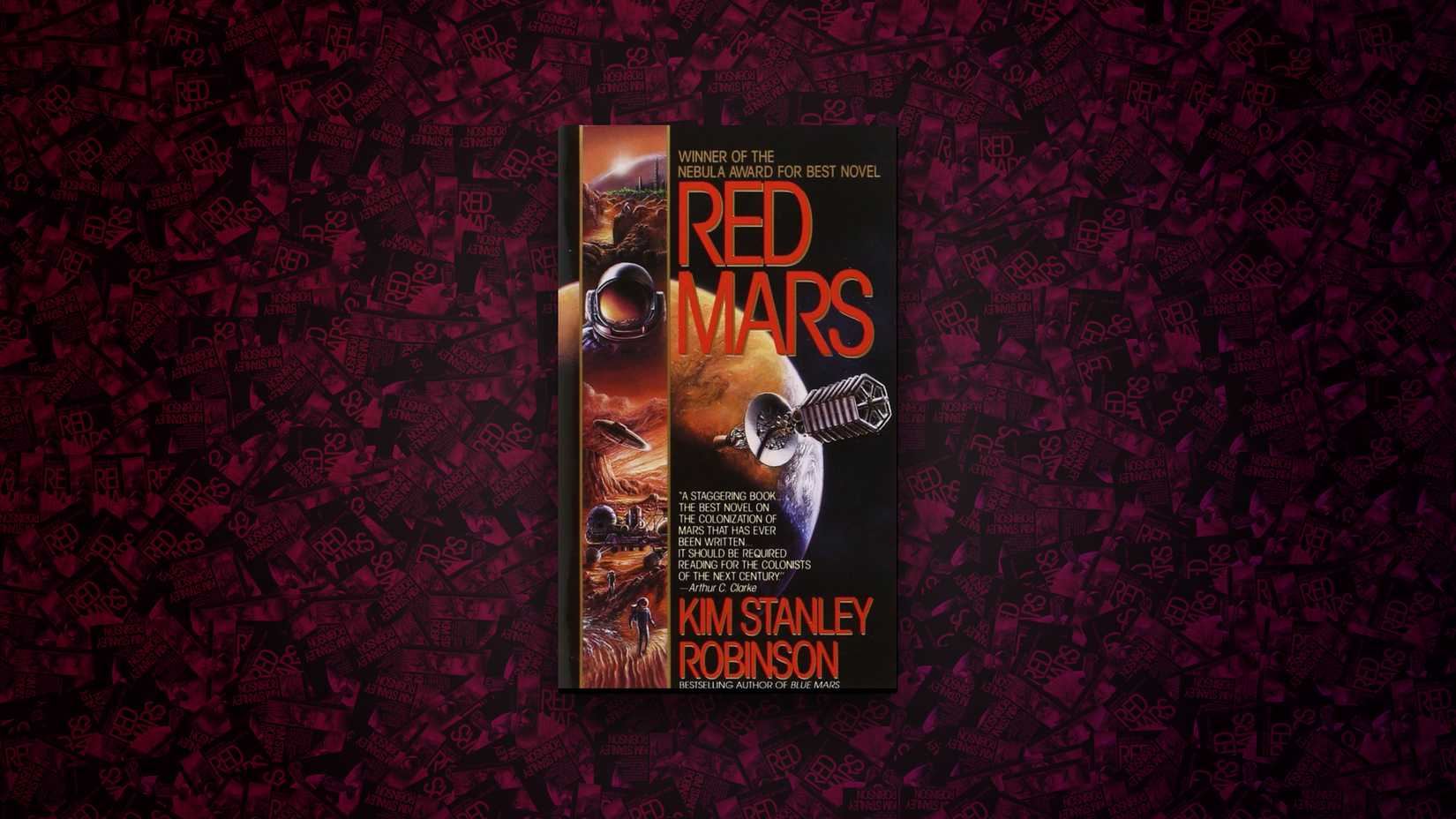 Image: Polygon
A sprawling look at the settlement and terraforming of Mars, Kim Stanley Robinson’s Mars Trilogy offers hard sci-fi realism. The science is mostly authentic, as Robinson is more preoccupied with the nuanced developments made on Mars while the condition on Earth deteriorates due to overpopulation and environmental disasters. The books (Red Mars, Blue Mars, and Green Mars) follow a group of colonists who are part of a joint American-Russian undertaking, and how they manage to build their first settlement on Mars and its hollowed-out moon.
The Mars Trilogy is a multi-generational look at the rise of a new society. Rebuilding society from scratch is no walk in the park; the planet’s terrain proves to be a challenge, along with continental ice-melt floods. There’s also the human aspect of it all, as such a high-stakes project comes with conflict. Even in the absence of conflict, humans are entangled in their own unique problems, which the books unravel with the same interest as they do the scientific aspects of the resettlement. A rapidly declining Earth also becomes the point of focus, as the comparatively utopian life on Mars reminds humans how they ruined a perfectly hospitable planet tailor-made for their survival.


 English (US) ·