
 4 days ago
3
4 days ago
3
There is a moment early in every photographer's journey when they realize that simply pointing a camera at something interesting does not automatically produce an interesting photograph. The gap between what we see with our eyes and what the camera captures can feel impossibly wide. We stand in front of a stunning landscape or a compelling portrait subject, press the shutter, and somehow the resulting image falls flat. The scene that moved us in person becomes mundane in the frame. While there are countless technical explanations for this phenomenon, one of the most overlooked culprits is deceptively simple: we are shooting from the wrong height.
The default posture of photography is standing upright with the camera raised to the eye. It feels natural because it is natural. This is how we navigate the world, how we observe our surroundings, and how we interact with other people. But photography is not about replicating natural observation. Photography is about transforming a three-dimensional experience into a two-dimensional image that somehow retains or even amplifies the emotional impact of the original moment. To achieve that transformation, we often need to abandon our comfortable, upright stance and explore the world from unfamiliar angles.
1. Eye Level Is the 'NPC' Perspective
Video game players will immediately understand the concept of the Non-Player Character, those background figures that populate virtual worlds without agency or significance. They exist to fill space, to make environments feel populated, to provide ambient activity without demanding attention. The NPC sees the world from a generic, unremarkable viewpoint because the NPC is, by definition, unremarkable. When you shoot at eye level, you are adopting the NPC perspective.
 Consider for a moment how homogeneous human vision actually is. The vast majority of adults experience the world from somewhere between five and six feet off the ground. This is the height from which we watch shop, walk through city streets, and attend social gatherings. Every single day, from the moment we wake up until the moment we go to sleep, we process visual information from this narrow band of elevation. The eye-level photograph shows the viewer exactly what they already see during every waking moment of their lives. It is, by definition, ordinary. The image may contain extraordinary content, but the perspective itself communicates nothing special about your intentionality as a photographer. You stood where anyone would stand and looked where anyone would look. The photograph becomes a record of presence rather than a demonstration of vision.
This is not to say that eye-level photographs cannot be powerful or successful. Plenty of iconic images were captured from standing height. But those images succeed despite their perspective, not because of it. They rely entirely on the strength of their content, their timing, their composition within the frame, or their technical excellence to overcome the inherent ordinariness of their viewpoint. When you choose a different angle, you give yourself an additional tool in your creative arsenal.
2. Eye Level Creates Cluttered Backgrounds
Stand up right now, wherever you are, and look straight ahead. What do you see behind the nearest person or object in your field of view? Unless you happen to be in an exceptionally well-designed space, you are probably looking at a chaotic jumble of visual information. In urban environments, this means parked cars, street signs, trash receptacles, store awnings, other pedestrians, and countless competing elements that have nothing to do with your intended subject. In natural settings, you might be looking at tangled underbrush, fence posts, distant buildings, or simply a cluttered mess of branches and foliage at various distances. The world at human eye level is visually noisy because that is where human activity concentrates.
Dropping to your knees or even lower immediately transforms your background options. Suddenly, the sky becomes available as a clean, uncluttered canvas behind your subject. This effect becomes even more dramatic when you pair a low shooting position with a wide-angle lens like a Canon RF 15-35mm f/2.8L IS USM or Sony FE 16-35mm f/2.8 GM II, which exaggerates the sense of scale and makes subjects appear to tower against expansive skies. Depending on the time of day and weather conditions, you might have access to deep blues, dramatic clouds, warm sunset gradients, or the soft gray of overcast light. None of these backgrounds contain parked cars or overflowing garbage bins. The simple act of lowering your camera position can eliminate hours of Photoshop work by removing distracting elements at the moment of capture rather than in post-processing.
The same principle works in reverse. Elevating your position and shooting downward replaces that cluttered horizontal background with the ground plane. Grass becomes a textured green backdrop. Pavement becomes a neutral gray surface. Sand, gravel, fallen leaves, or patterned flooring can all serve as simplified backgrounds that draw attention to your subject rather than competing with it. The key insight is that the visual complexity of most environments is concentrated at human height because that is where humans place objects and conduct activities. Moving your camera above or below that band of activity gives you access to cleaner, simpler backgrounds.
3. Angle Dictates Emotional Response
One of the most powerful and least discussed aspects of photographic composition is the psychological impact of camera angle on viewer perception. Filmmakers have understood this principle for over a century, using low angles to convey power and high angles to suggest vulnerability. Photographers have access to exactly the same toolkit, yet many never consciously deploy it.
When you photograph a subject from below their eye line, you are forcing the viewer to look up at that subject. This simple geometric relationship triggers deep-seated psychological associations with power, authority, and dominance. We look up at skyscrapers, at mountains, at authority figures seated on elevated platforms. The low-angle photograph transforms an ordinary person into a heroic figure, a corporate executive into a titan of industry, an athlete into a superhuman performer. This is why sports photographers spend so much time on their bellies at the edge of playing fields, often pairing that low position with a fast telephoto like the Nikon Z 70-200mm f/2.8 VR S to compress the background while maintaining that heroic upward perspective. The low angle does not just separate the athlete from the crowd; it elevates them to mythological status.
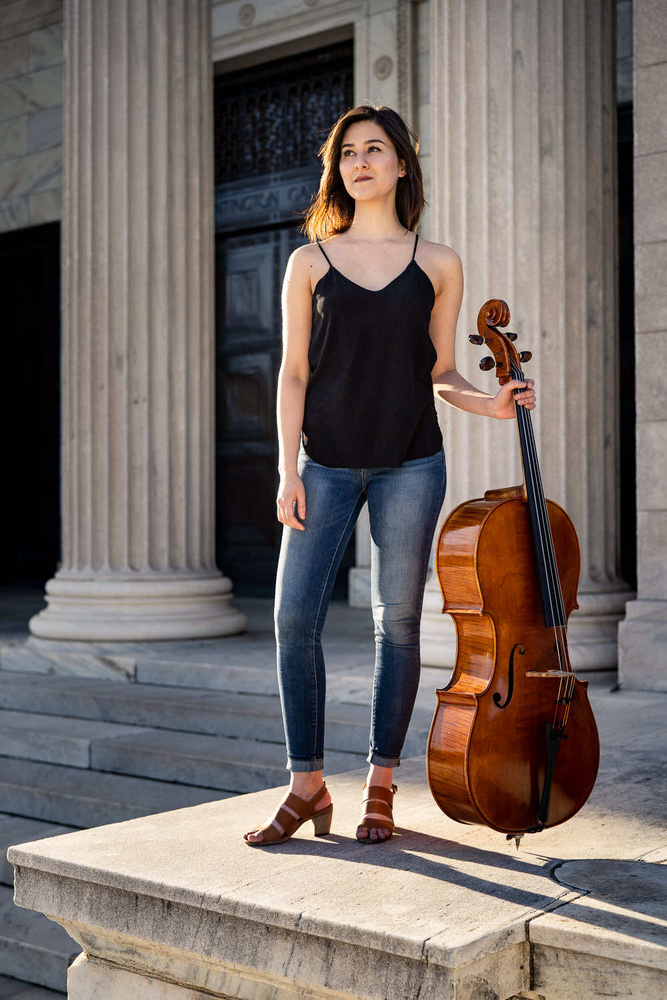 Conversely, photographing from above the subject's eye line reverses these associations entirely. Looking down on someone makes them appear smaller, more vulnerable, more approachable. This is the instinctive angle we use when photographing children and pets, partly because it matches their actual eye level but also because it reinforces the viewer's sense of protective affection toward the subject. High angles can make adults appear endearing, relatable, or emotionally accessible in ways that straight-on shots cannot achieve.
Eye level, by contrast, is emotionally neutral. It communicates neither power nor vulnerability, neither heroism nor approachability. This neutrality is sometimes exactly what a photograph requires, particularly in documentary contexts where the photographer wants to avoid imposing interpretive frameworks on the viewer. But in commercial, portrait, and creative photography, emotional neutrality is usually not the goal. You want the viewer to feel something specific when they look at your image. Camera angle is one of the most direct and reliable tools for shaping that emotional response.
4. Horizon Placement Creates Visual Separation
There is a specific compositional problem that plagues eye-level photography, and it involves the relationship between your subject and the horizon line. When you stand at normal height and photograph a standing subject, the horizon frequently intersects your frame at roughly the same level as the subject's head or upper body. This creates a visual merger that flattens the image and reduces the sense of depth and separation between subject and background.
The human visual system is remarkably sophisticated at interpreting depth cues and separating objects from their surroundings in real life. But photographs eliminate most of those depth cues, leaving only two-dimensional relationships between shapes and tones. When the horizon line cuts through your subject, you are creating a visual connection between the subject and the background that undermines the sense of separation. The subject becomes embedded in the environment rather than standing distinct from it.
By dropping to your knees or lower, you push the horizon line down in the frame. Your subject now appears above the horizon, silhouetted against sky rather than merged with distant trees or buildings. The visual separation becomes immediate and dramatic. The subject "pops" from the background not because of any post-processing technique, but because of simple geometric relationships within the frame. This is one of the easiest and most reliable ways to add visual impact to portrait and environmental photography, and it costs nothing but a few grass stains on your pants.
5. Non-Standard Angles Communicate Intentionality
There is a fundamental difference between a photograph that was taken and a photograph that was made. Snapshots are taken. They document presence, record moments, and serve as visual proof that the photographer was somewhere and saw something. There is nothing wrong with snapshots; they serve important personal and historical functions. But serious photography aspires to something more. A crafted photograph communicates that the photographer made deliberate creative decisions to shape the viewer's experience of the subject.
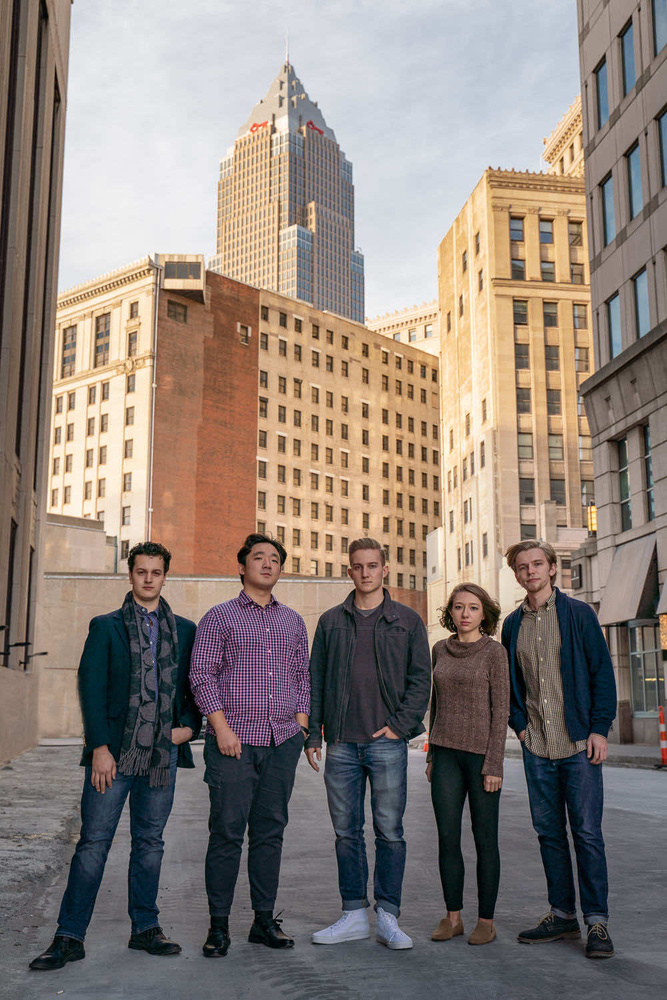 When you photograph from eye level, you are invisible as a creative presence. The viewer has no evidence that you did anything other than point and shoot. But when you get low, when you climb to an elevated position, when you choose an angle that obviously requires effort and intention, you announce your presence as a craftsperson. The viewer recognizes, perhaps subconsciously, that the photograph could not have been made by accident. Someone thought about this image. Someone worked to create it. That recognition of intentionality changes how the viewer engages with the photograph.
This principle extends to your relationship with your subjects as well. When you photograph someone while standing casually at your normal height, you are adopting the posture of a tourist or a casual observer. When you kneel, lie down, or climb to an elevated position, you are demonstrating commitment to creativity and vision. You are showing the subject that you take the photograph seriously, which often helps them take their role in the photograph more seriously as well. The photographer who moves and works and explores angles is the photographer who earns trust and collaboration from subjects.
Breaking the Habit
The eye-level default is a habit, and like all habits, it can be broken with conscious effort. Modern cameras with fully articulating screens, such as the Sony a7 V or Canon EOS R6 Mark III, make this easier than ever by allowing you to compose from ground level or overhead without contorting yourself into uncomfortable positions. The next time you raise your camera to your eye, pause before pressing the shutter. Ask yourself whether this particular image might benefit from a different perspective. Would the background be cleaner if you dropped lower? Would the subject appear more powerful or more approachable from a different angle? Is the horizon creating visual problems that a simple position change could solve?
You will not use alternative angles for every shot. Sometimes, eye level is genuinely the right choice for a particular image. But the decision should be conscious rather than automatic. Photography is the art of making choices, and camera height is one of the most fundamental choices available to you. Stop defaulting to the NPC perspective. Get low. Get high. Move. Explore. The world looks different from every angle, and your photographs should reflect that exploration rather than documenting the single, ordinary viewpoint that everyone already sees.





 English (US) ·