

Published Jun 16, 2026, 9:00 PM EDT
Nicholas Raymond is an author and journalist based out of Alabama, where he proudly roots for the Alabama Crimson Tide football team. A graduate of the University of Montevallo, he has a degree in mass communication with a concentration in journalism.
Some of the most enjoyable sagas associated with martial arts were told in two parts. When it comes to stories that span more than one film, the trilogy is arguably the most popular storytelling formula. And the martial arts genre does indeed boast some memorable trilogies. But there are also a host of adventures that were made for a two-part story, and therefore didn't need a third installment.
For one reason or another, a long list of entertaining martial arts duologies need no introduction. Jackie Chan delivered two of these, having made a single sequel each to Drunken Master and Project A. One of the most celebrated martial arts movies of the 21st century, received a sequel of comparable quality in The Raid 2.
However, dozens more two-part martial arts stories have flown under the radar, whether its due to their age, a lack of mainstream status, or seemingly unrelated titles. In the 1970s and 1980s in particular, all sorts of great old-school kung fu movies wound up with worthwhile sequels that continue the stories of their main characters. They may not be regarded as among the best martial arts films ever made, but they're certainly worth finding and watching at least once.
5 The One-Armed Boxer
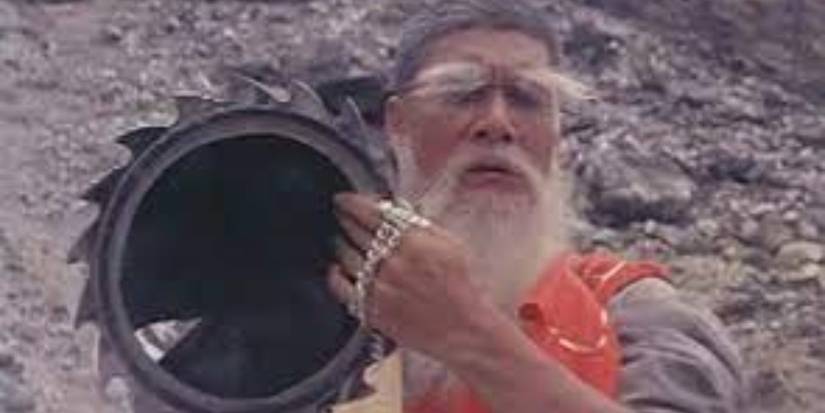
The One-Armed Boxer stars Jimmy Wang Yu as a martial arts student who loses his arm, his classmates, and his master to a team of evil assassins. As a result, Wang Yu's character has to learn new kung fu techniques and get revenge on each person involved in the massacre at his kung fu school.
Wang Yu returned as the One-Armed Boxer in The Master of the Flying Guillotine, a film that explored the unexpected consequences of his vengeful crusade in the first film. As it turns out, two of the assassins he killed has a powerful and deadly master, and now he's on the hunt for the One-Armed Boxer.
Seen together ine one sitting, the two Jimmy Wang Yu films offer a surprising mix of nearly every great trope tied to the genre. It takes the standard revenge plot, adds in a martial arts tournament, several bizarre villains, wild finishing moves, unique weapons and fighting styles, and, of course, a great training sequence.
4 The One-Armed Swordsman
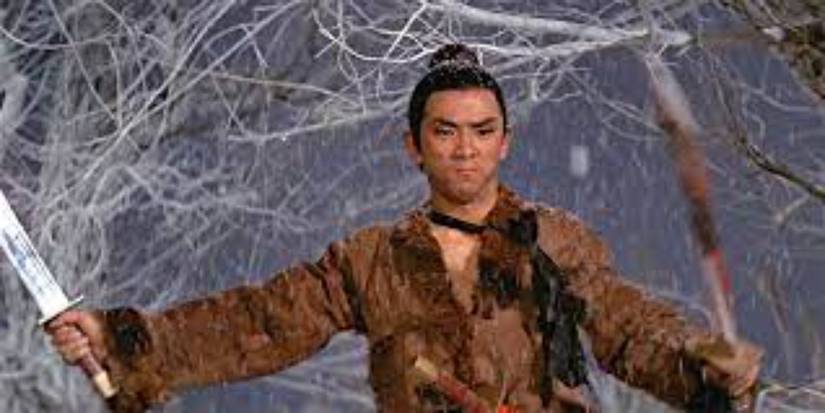
A key part of the blueprint for The One-Armed Boxer is Jimmy Wang Yu's role in the groundbreaking 1967 film, The One-Armed Swordsman. In The One-Armed Swordsman, Wang Yu plays a talented fighter who has to build his life anew when his arm is abruptly chopped off by a resentful woman he rejected. Later on, he relearns how to fight and eventually has to put his skills to the test to protect his former master's life.
The story is admittedly slowed down by a romance that occurs in the middle of the movie, but explodes into a series of intense battles and an epic final showdown when the hero has to cut through dozens of enemies. The way in which Wang Yu's character almost effortlessly slices down his opponents in rapid succession paved the way for more martial arts movies with one-man-army protagonists.
1971's The New One-Armed Swordsman isn't a sequel to The One-Armed Swordsman, but a remake of the original Wang Yu-led film, but with David Chiang playing a new character going through a similar experience.
Return of the One-Armed Swordsman continues the journey of the main character, this time with a more traditional, revenge-driven plotline. Although not as influential as its predecessor, the 1969 film adds a worthy, well-written chapter to the story of Wang Yu's Fang Gang.
3 Golden Swallow

One of the greatest female-led martial arts movies of all time was born when King Hu directed 1966's Come Drink With Me. In Come Drink With Me, Cheng Pei-pei plays Golden Swallow, a female swordswoman dressed up as a man who arrives in a small town on a quest to rescue her missing brother. Cheng Pei-pei's stunning performance - supported by some amazing choreography - turned her into the first female action star.
Cheng Pei-pei played the character a second time in a direct sequel to Come Drink With Me, simply Golden Swallow. Albeit with a different director in Chang Cheh, Golden Swallow builds on what Come Drink With Me started, weaving another grand wuxia tale centered on a male-and-female duo of martial arts heroes.
2 The Lady Hermit/Black Tavern

The Lady Hermit follows a young and ambitious female martial artist (Shih Szu) who seeks to learn from the best, a secretive and reclusive fighter played by Cheng Pei-pei. The two form a close, master-and-student bond, but it gradually becomes complicated by their feelings for the male lead (Lo Lieh). That conflict gets in the way of their shared goal, which is to defeat the evil martial arts master known as the Black Knight.
Love triangles don't always feel appropriate in martial arts movies, but The Lady Hermit makes the idea work exceptionally well via the humor that arises from their tense interactions. By balancing that light-hearted humor with intense action at the end, The Lady Hermit succeeds in being a fun, martial arts-filled ride.
Shih Szu's character returns in the equally entertaining Black Tavern, which sees a diverse group of characters gather at a tavern in the hopes of getting their hands on a vast amount of money. Black Tavern differs from The Lady Hermit significantly, favoring mystery over romance. But one thing that is consistent between both films is that each sports an incredibly powerful and menacing villain with a unique fighting style that forces multiple people to work together to stop him.
1 The Sentimental Swordsman
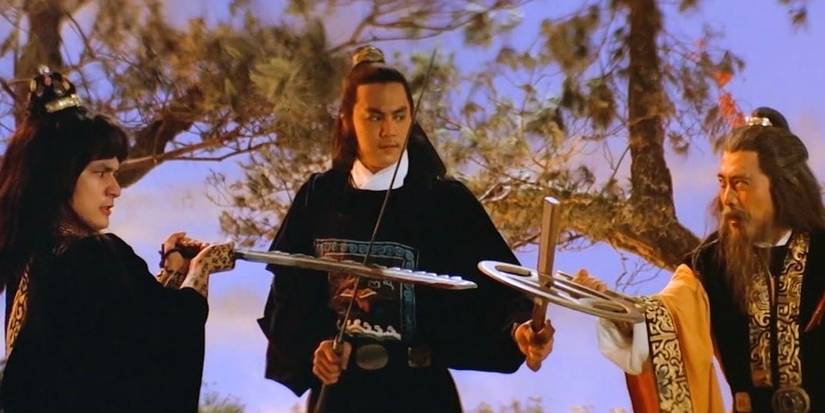
The Sentimental Swordsman is a 1977 martial arts period piece that stars Ti Lung and Derek Yee, two of the decade's top kung fu movie stars. In The Sentimental Swordsman, Ti Lung plays a talented swordsman whose honor has cost him happiness. After giving up the woman he loves to the swordsman who bested him, Ti Lung's Li Xuanhuan goes on an adventure with Yee's Ah Fei. The duo team up to solve the mystery of the elusive villain known as the Plum Blossom Bandit.
In 1983, Ti Lung starred in Perils of the Sentimiental Swordsman, but despite its title, it's not connected to the two aforementioned films.
Released in 1981, Return of the Sentimental Swordsman brings back Ti Lung and Derek Yee to reprise their respective roles, but starts the movie with both characters on different paths. But ultimately, their paths cross again, with the pair meeting a third fighter - played by Alexander Fu Sheng - which sets up an exciting showdown between two heroes, an anti-hero figure, and a villain.
Between the two of them, The Sentimental Swordsman films build a fully-realized world based on the works of wuxia novelist Gu Long. The various martial arts sects and techniques give both movies a certain sense of charm that makes the martial arts fight scenes and the story all the more enjoyable.




 English (US) ·