
 Image by Zanda Rice
Published Oct 11, 2026, 2:49 PM EDT
Lisa Nordin is an actress, writer, and fan of all things performing arts. Her favorite genres are Sci-Fi and Fantasy. She is a self-published author and enjoys exploring how fictional stories help define and qualify the human experience.
Sign in to your Collider account
The 1970s were an exciting time in cinema. The pivotal period, dubbed “The New Hollywood Era,” saw a wave of fledgling directors and actors rise to the forefront as older icons retired and left the silver screen behind. Some of the most influential talents emerged, and they would set the tone for how the 1980s and even later decades of moviemaking would be formulated. Directors like Francis Ford Coppola, Martin Scorsese, Mel Brooks, George Lucas, and Steven Spielberg took the industry to new heights and were given the freedom to let their creativity push the medium into new, uncharted territory.
Now is an ideal time to check out options from this groundbreaking era that are free to stream on Prime Video. From a dark comedy about a Mars mission hoax to one of the best satires of all time, Prime Video has a great selection to choose from. If you’re curious about this pivotal turning point in American cinema, or want to partake in some classic movie nostalgia, these are the five ‘70s movies that deserve to be rediscovered on Prime right now.
Note: These titles are currently available in the US; availability in other countries may vary.
1 'Monty Python and the Holy Grail' (1975)
 Image via MoviestillsDB
As the saying goes, necessity is the mother of invention. The extremely tight budget of $400K forced the filmmakers of Monty Python and the Holy Grail to come up with creative solutions that have only made the movie all the more iconic. If they had been given a budget big enough for horses, there never would have been the coconut bit. And instead of the middle of the movie being bogged down by montages or a costly excess of scenes, a book with various hands turning pages and the comical animations the TV series was known for were utilized, giving the film even more signature Monty Python flair.
Monty Python and the Holy Grail was one of the first fan-funded projects, and several of the more famous backers included rock musicians such as Pink Floyd, Led Zeppelin, and Jethro Tull. All of the original cast from the TV series signed on for the historical-themed romp, and fans of the show were not disappointed. Monty Python and the Holy Grail is irreverent, highly quotable, and uniquely clever. It has endless rewatchability and is as funny to watch now as it was upon its debut. Now is the perfect time to take advantage of its availability and enjoy this much-loved gem while it is free to stream on Prime.
2 'The Towering Inferno' (1974)
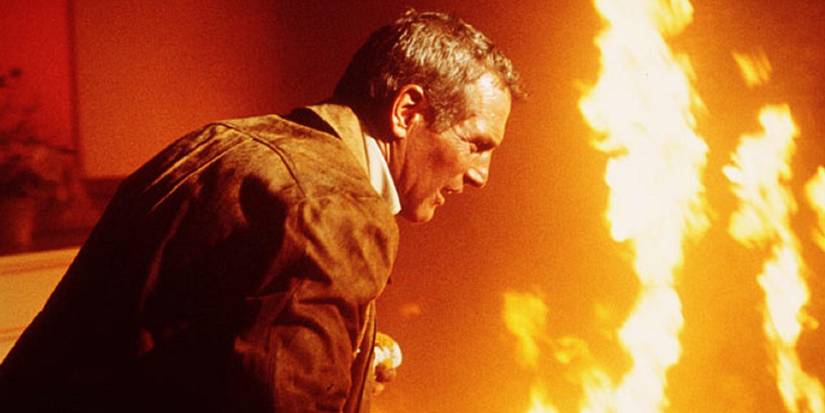 Image via 20th Century Studios
The OG skyscraper disaster movie, The Towering Inferno, has intense and perilously high stakes, literally. The plot involves a group of people who become trapped in a colossal skyscraper when a massive fire breaks out. There are many parallels to the well-known action movie Die Hard, and it is easy to see how influential The Towering Inferno was. Both movies involve a dangerous event in a tall glass building on the night of a party, and both feature a dynamic duo of heroes who try to save the day. In The Towering Inferno, rescue comes in the form of the building's architect, Doug Roberts (Paul Newman), and a fire chief named Michael O'Halloran (Steve McQueen).
The cast of The Towering Inferno is impressive and includes Hollywood legends Faye Dunaway, Fred Astaire, William Holden, and Richard Chamberlain. The action is heart-racing and feels palpable. Your palms may even start to sweat as the combination of heat and dizzying heights intensifies the already treacherous situations. If you want a solid adrenaline rush that is ablaze with drama, The Towering Inferno is your next watch.
Collider Exclusive · Oscar Best Picture Quiz
Which Oscar Best Picture
Is Your Perfect Movie?
Parasite · Everything Everywhere · Oppenheimer · Birdman · No Country
Five Oscar Best Picture winners. Five completely different visions of what cinema can be — and what it can do to you. One of them is the film that was made for the way your mind works. Ten questions will figure out which one.
🪜Parasite
🌀Everything Everywhere
☢️Oppenheimer
🐦Birdman
🪙No Country for Old Men
FIND YOUR FILM →
01
What kind of film experience do you actually want? The best movies don't just entertain — they leave something behind.
ASomething that pulls the rug out — that makes me think I'm watching one kind of film and then reveals I'm watching another entirely. BSomething overwhelming — funny, sad, absurd, and genuinely moving, all at once. CSomething grand and weighty — a film that makes me feel the full scale of what I'm watching. DSomething formally daring — a film that pushes what cinema can even do. ESomething lean and relentless — pure tension with no wasted frame.
NEXT QUESTION →
02
Which idea grabs you most in a film? Great films are driven by a central obsession. What's yours?
AClass, inequality, and what people are willing to do when desperation meets opportunity. BIdentity, family, and the chaos of trying to hold your life together when everything is falling apart. CGenius, moral responsibility, and the catastrophic weight of a decision you can never take back. DEgo, legacy, and the terror of becoming irrelevant while you're still alive to watch it happen. EEvil, chance, and whether moral order actually exists or if we just tell ourselves it does.
NEXT QUESTION →
03
How do you like your story told? Form is content. The way a story is shaped changes what it means.
AGenre-twisting — I want it to start in one lane and migrate into something completely different. BMaximalist and genre-blending — comedy, action, drama, sci-fi, all in one ride. CEpic and non-linear — cutting between timelines, building a mosaic of cause and consequence. DA single unbroken flow — I want to feel like I'm living it in real time, no cuts to safety. ESpare and precise — every scene doing exactly what it needs to do and nothing more.
NEXT QUESTION →
04
What makes a truly great antagonist? The opposition defines the protagonist. What kind of opposition fascinates you?
AA system — invisible, structural, and almost impossible to fight because it has no single face. BThe self — the ways we sabotage, abandon, and fail the people we love most. CHistory — the unstoppable momentum of events that no single person can stop or redirect. DThe industry — the machinery of culture that chews up talent and spits out irrelevance. EPure, implacable evil — a force so certain of itself it becomes almost philosophical.
NEXT QUESTION →
05
What do you want from a film's ending? The final note is the one that lingers. What do you want it to sound like?
AShock and inevitability — a conclusion that recontextualises everything that came before it. BEarned emotion — I want to cry, laugh, and feel genuinely hopeful, even if the world is a mess. CDevastation and grandeur — an ending that makes me sit in silence for a few minutes after. DAmbiguity — something that leaves enough open that I'm still thinking about it days later. EBleakness — an honest refusal to pretend the world is tidier than it actually is.
NEXT QUESTION →
06
Which setting pulls you in most? Where a film takes place shapes everything — mood, stakes, what's even possible.
AA gleaming modern city with a hidden underside — beauty masking rot, wealth masking desperation. BA collapsing suburban life that opens onto something infinite — the multiverse of a single ordinary person. CThe corridors of power and science at a world-historical turning point — where decisions echo for decades. DThe grimy, alive chaos of New York and Hollywood — fame as both destination and trap. EVast, indifferent landscape — desert and highway where violence arrives without warning or reason.
NEXT QUESTION →
07
What cinematic craft impresses you most? Every great film has a signature — a technical or artistic element that makes it unmistakable.
AProduction design and mise-en-scène — every frame composed to carry meaning beneath the surface. BEditing and tonal control — the ability to move between registers without losing the audience. CScore and sound design — music that becomes inseparable from the dread and awe of what you're watching. DCinematography as performance — the camera not recording events but participating in them. ESilence and restraint — what's left unsaid and unshown doing more work than any dialogue could.
NEXT QUESTION →
08
What kind of main character do you root for? The protagonist is the lens. Who you choose to follow says something about you.
ASomeone smart and resourceful who makes increasingly dangerous decisions under pressure. BSomeone overwhelmed and ordinary who turns out to be capable of something extraordinary. CA brilliant, tortured figure whose gifts and flaws are inseparable from each other. DA self-destructive artist whose ego is both their superpower and their undoing. EA quiet, principled person trying to make sense of a world that has stopped making sense.
NEXT QUESTION →
09
How do you feel about a film that takes its time? Pace is a choice. Some films sprint; others let tension accumulate slowly, deliberately.
AI love a slow build when I know the payoff is going to be seismic — patience for a devastating reveal. BGive me relentless momentum — I want to feel breathless and emotionally spent by the end. CEpic runtime doesn't scare me — if the material demands three hours, give me three hours. DI want it to feel propulsive even when nothing is technically happening — restless energy throughout. EDeliberate and unhurried — I want dread to accumulate in the spaces between the action.
NEXT QUESTION →
10
What do you want to feel walking out of the cinema? The best films leave a mark. What kind of mark do you want?
AUnsettled — like I've just seen something I can't fully explain but can't stop thinking about. BMoved and energised — like the film reminded me what actually matters and gave me something to hold onto. CHumbled — like I've been in the presence of something genuinely important and overwhelming. DExhilarated — like I've just seen cinema doing something it's never quite done before. EHaunted — like a cold, quiet dread that stays with me for days.
REVEAL MY FILM →
The Academy Has Decided Your Perfect Film Is…
Your answers have pointed to one Oscar Best Picture winner above all others. This is the film that was made for the way your mind works.
Parasite
You are drawn to films that operate on multiple levels simultaneously — that begin in one genre and quietly, brilliantly migrate into another. Bong Joon-ho's Parasite is a film about class, desire, and the architecture of inequality that manages to be darkly funny, deeply suspenseful, and genuinely shocking across a single extraordinary running time. Your instinct is for cinema that hides its true intentions until the moment it's ready to reveal them. Parasite is exactly that — a film that rewards close attention and punishes assumptions, right up to its devastating final image.
Everything Everywhere All at Once
You want it all — and this film gives you all of it. The Daniels' Everything Everywhere All at Once is one of the most maximalist films ever made: action comedy, multiverse sci-fi, family drama, existential crisis, and a genuinely earned emotional core that sneaks up on you amid the chaos. You are someone who responds to ambition, who doesn't want cinema to choose between being entertaining and being meaningful. This film refuses that choice entirely. It is overwhelming by design, and its overwhelming nature is precisely the point — because the feeling of being crushed by infinite possibility is exactly what it's about.
Oppenheimer
You are drawn to cinema on a grand scale — films that understand history not as a backdrop but as a force, and that place their characters inside that force and watch what happens. Christopher Nolan's Oppenheimer is a film about the terrifying gap between what we can do and what we should do, told with the full weight of one of the most consequential moments in human history behind it. You want your films to feel important without feeling self-important — to earn their ambition through sheer craft and the gravity of their subject. Oppenheimer does exactly that. It is enormous, complicated, and refuses easy comfort.
Birdman
You are drawn to films that foreground their own construction — that make the how of the filmmaking part of the what it's about. Alejandro González Iñárritu's Birdman, shot to appear as a single continuous take, is cinema examining itself through the cracked mirror of a fading actor's ego. You respond to formal daring, to the feeling that a film is doing something that probably shouldn't be possible. Michael Keaton's performance and Emmanuel Lubezki's restless camera create something genuinely unlike anything else — a film that is simultaneously about creativity, relevance, self-destruction, and the impossibility of ever truly knowing if your work means anything at all.
No Country for Old Men
You are drawn to cinema that trusts silence, that refuses to explain itself, and that treats dread as a form of meaning. The Coen Brothers' No Country for Old Men is a film about the arrival of a new kind of evil — implacable, arbitrary, and utterly indifferent to the moral frameworks we use to make sense of the world. It is one of the most formally controlled films ever made, and its controlled restraint is what makes it so terrifying. You want your films to haunt you, not comfort you. You are not interested in resolution if resolution would be dishonest. No Country for Old Men is honest in a way that most cinema never dares to be.
↻ RETAKE THE QUIZ
3 'Sunday Bloody Sunday' (1971)
 Image via Criterion Collection
Sunday Bloody Sunday is a candid look into the lives of a love triangle in London. The story revolves around a contemporary artist named Bob (Murray Head) and his love affairs with a divorced woman named Alex (Glenda Jackson) and a middle-aged male doctor named Daniel (Peter Finch). Bob is open about his love for both of them, and Alex and Daniel agree to some extent to accept the open relationship.
Sunday Bloody Sunday has several interesting observations about love, compromise, and loneliness. It features lovely cinematography, and the acting and direction are superb. While it wasn’t a box office success in the United States, Sunday Bloody Sunday received widespread critical acclaim and earned four Academy Award nominations.
It is either a story about love and how it should be free and unencumbered, or it is a story of compromise and manipulation.
Sunday Bloody Sunday can be understood from varying points of view. It is either a story about love and how it should be free and unencumbered, or it is a story of compromise and manipulation. Bob says that he cares for Alex and Daniel, but not enough to make him want to stay in London, as he prepares to move to New York to sell his art. Bob may have also zeroed in on these two individuals, both several years older than him, because he knew they were lonely enough that they wouldn’t demand all of him. As film critic Roger Ebert stated, “This is not a movie about the loss of love, but about its absence.” Sunday Bloody Sunday makes for a subtly melancholy romance, and it is one of the most celebrated '70s movies for free on Prime right now.
4 'Capricorn One' (1978)
 Image via Warner Bros.
Science fiction and conspiracy theory movies were reaching their zenith in the 1970s, and one immersive picture that combines the two is Capricorn One. In the movie, NASA officials realize that a malfunction on a planned mission to Mars could be catastrophic. With the threat of losing face and losing funding, they decide to fake everything: the mission, the landing, everything. The three astronauts involved, Charles (James Brolin), John (O.J. Simpson), and Peter (Sam Waterston), only find out at the very last second that they are being pulled from the mission, and they are whisked away to a remote location where fake footage of them is filmed. All seems to be convincing enough until a reporter named Robert Caulfield (Elliott Gould) intensifies his investigation of the project.
Many Americans believed that the Apollo 11 moon landing was faked. Capricorn One hits this nerve and plays it like a zither. The timing and release of the movie were crucial after political assassinations, conspiracies, and government mistrust were peaking. As Collider’s Liam Gaughan notes, “A post-Watergate America was much more willing to accept this as realistic than it would have been previously.”
Capricorn One is a well-suited watch for fans of historic sci-fi and political thrillers. It has strong moments of suspense and several twists and turns along the way. Who would have guessed that nearly five decades later the plot of Capricorn One would remain surprisingly relevant? As AI-generated content and deepfake instances grow, this seemingly odd and outlandish premise does not seem too far off.
5 'Hot Stuff' (1979)
 Image via Columbia/courtesy Everett Collection
Comedy fans should check out the slapstick riot that is Hot Stuff. Dom DeLuise stars as Ernie, a cop who is tired of all the chaos and just wants to retire. When the police captain recruits Ernie to be the lead in an undercover sting operation, he is less than enthused. The plan is to set up a shop that attracts criminals to sell their stolen goods, with Ernie posing as the business owner. The plan works to a dramatic extent, and a hilarious barrage of shenanigans and exciting circumstances take place.
Hot Stuff is a viewer favorite with an impressive 74% audience score on Rotten Tomatoes. It is full of laughs, and all of the cast are brilliant. Among the more whimsical and amusing parts of the movie, there are also solid action scenes with explosions, car chases, and more. There's even a sweet romance subplot! Hot Stuff is an audience favorite for a reason. It is a super fun 1970s buddy cop comedy and one of DeLuise’s best.

Hot Stuff
Release Date August 10, 1979
Runtime 91 minutes
Director Dom DeLuise
Writers Donald E. Westlake
-

Dom DeLuise
Ernie Fortunato
-

Suzanne Pleshette
Louise Webster
-
Jerry Reed
Doug von Horne
-
Ossie Davis
Captain John Geiberger




 English (US) ·