


Published Nov 16, 2026, 11:59 PM EST
An experienced Editor representing Canada via ScreenRant's Team Anime, J.R. has been reading manga since the first printing of Shonen Jump in North America. This passion drove him to write about anime, manga, and manhwa, having recently served as Lead Anime Editor for ComicBook.com.
Loneliness is a feeling that can feel inescapable just as much in childhood as it does later in life, and many iconic 20th century comic strips tapped into that for various reasons. Peanuts frequently touches on topics of vulnerability, exclusion, or feeling too intimidated to speak to the Little Red-Haired Girl. But for Calvin and Hobbes, it's a different beast when it comes to layered renditions of this classic human experience. Calvin's situation alone sparks plenty of discussion on his social life, and just how Hobbes fits into that as his stuffed tiger coming to life. But one character deserves special attention in this topic, and that's Susie Derkins.
Susie is one of the most recognizable major characters outside of Calvin's family, outwardly frustrated with him yet still drawn to him at the same time. Calvin's chaotic antics often grate against Susie's more diligent sensibilities, yet the two share a class and the occasional group assignment together. But one comic strip released on January 13, 1987 tells frankly more than expected about what Susie goes through, and reveals how she attempts to cope with it in Calvin and Hobbes, unleashing a surprisingly relatable, often sad look into how she really feels.
Susie Derkins' Lonely Outburst Is Still Tough To See 39 Years Later In Calvin and Hobbes
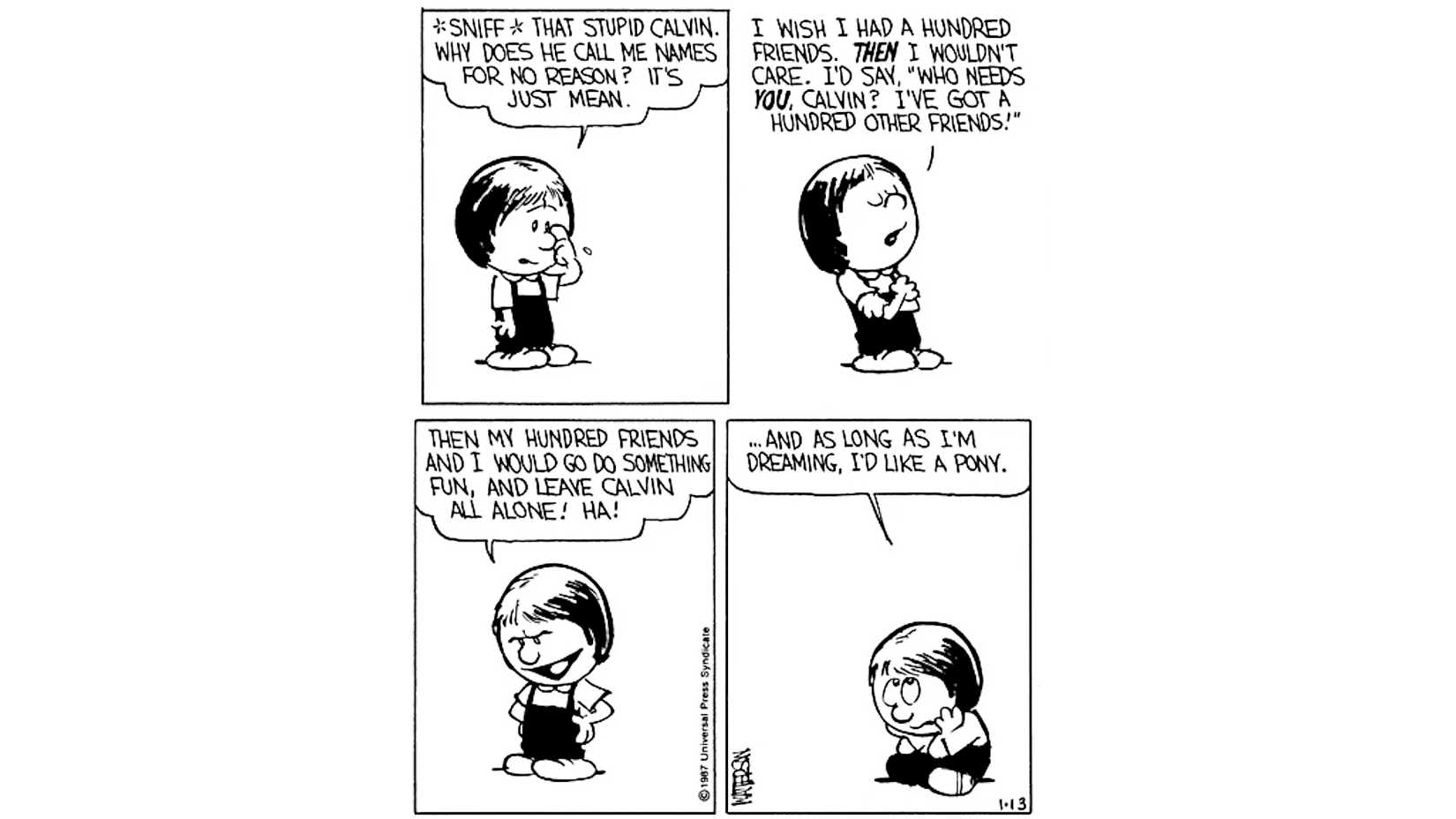
In a rare departure from the usual tendency to feature at least one or both Calvin and Hobbes in the eponymous comic strip, this weekday installment focuses squarely on Susie herself. Fed up with Calvin's insults, Susie laments about his behavior, visibly hurt by it, before concocting an elaborate scenario in which she makes 100 friends just to exclude him and go about their own merry way. But in a moment of vulnerability, the fantasy quickly dissipates, and Susie is left believing such a fantasy of having other friends is as far off as being spoiled by the gift of a pony. It's pretty heartbreaking, and for some kids, depressingly relatable.
Being a kid can be tough whether at home or on the playground. Seeing Susie in a quiet moment like this, rather than lashing out at Calvin for his flights of fancy, can be a bit jarring and telling of what it can be like to mostly only associate with Calvin, and while it's clear the two play well off each other, instances like this show it can take a toll. But it's important that in this instance, Susie does explicitly still refer to Calvin as her friend.
The Added Context Shows Just How Isolated Susie Is Without Calvin

This is part of a week-long arc which originally started with Calvin confirming to Hobbes that he called Susie a "booger-brain" after school, after which she went home crying. It's not Calvin's finest moment, and not even necessarily a targeted insult, but one she took personally nonetheless. She's allowed to, after all: it's rude name-calling, and they're both crucially about six years old. Hobbes acts as Calvin's conscience to coax him into apologizing, which he eventually attempts, blowing it the first time, before ultimately sticking the landing the second time around, swallowing his pride and acknowledging he hurt her feelings. Like the flip of a switch, Susie hilariously resumes her former antics, but with the two having made up.
Loneliness and solitude are reasonably treated as distinct from one another in Calvin and Hobbes, especially since its star duo tends to revel in the latter. Susie's sudden isolation in this story arc is a pretty clear distillation of how hurt she feels, and effectively wins over even the stubborn Calvin's sympathy in the end. When possible, the good ones will come along to swallow their pride, and apologize for calling each other booger-brains, or the many other hurtful things people might carelessly say even into adulthood. It's important to acknowledge how hurt feelings can lead to isolating oneself, especially if it's the result of a spat with friends or loved ones, so they can begin the healing process together.





 English (US) ·