Tasha Yar's Death Happens in a Subpar 'Star Trek: The Next Generation' Episode
The chief of security's departure occurred when Crosby asked to leave, feeling the scripts hadn't explored the intriguingly contradictory depth that drew her to the role. Gene Roddenberry agreed without animosity, but suggested a more dramatic exit than Tasha leaving for a post aboard another starship. Enter Armus (Ron Gans), a sludge-alien who eliminates her with blasé spite not even halfway through the episode's runtime.
Contemporary audiences must have reeled once the closing credits confirmed Tasha's premature demise. No major name from Star Trek: The Original Series had perished until Spock's (Leonard Nimoy) devastating, but temporary, exit in Star Trek II: The Wrath of Khan. What’s more, although Tasha partakes in a heroic rescue mission on the kidnapped Deanna Troi's (Marina Sirtis) behalf, she doesn't go out in a traditional blaze of glory. Roddenberry argued for the ruthless, unpredictable, and unceremonious fatality a security officer would encounter in the line of duty – no last-minute rescue, no deus ex machina resurrection.
While an interesting conceit on Roddenberry's part, applying a realistic argument to Star Trek's optimistic generation (no pun intended) causes thematic and tonal dissonance. Fan and critical consensus on "Skin of Evil" is that it is a piece weighed down by lethargic pacing, extra-nonsensical villain logistics, and an atmosphere devoid of urgent peril. Contextually, Tasha's graceless swan song is a symptom of the script's wider mishaps.
Tasha's Exit Influences Some of 'The Next Generation' Best Stories
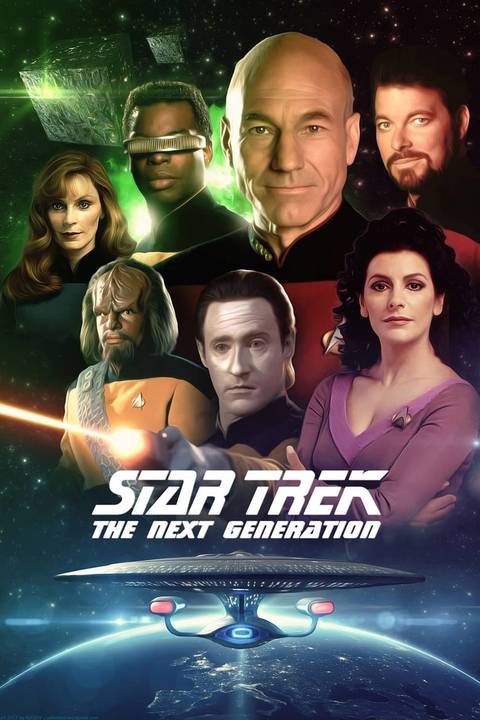
Nevertheless, the exceptional ripple effects created by The Next Generation's only unequivocal death gather steam until each new ramification weaves game-changing enhancements into the show's tapestry. Worf (Michael Dorn) assuming Tasha's role elevates him to the ensemble’s forefront, platforms his major internal arcs, and fleshes out Klingon culture for the first time — all of which cements his enduring fan-favorite status. Meanwhile, Tasha's brief tryst with Data (Brent Spiner) grants the android his first tangible brush with his gradually burgeoning emotions.
As for Tasha herself, Crosby reprises her role for Season 3's "Yesterday’s Enterprise," an enormously acclaimed alternate-universe scenario. The masterpiece's dramatic axis hinges upon retroactively restoring Tasha's agency and dignity, accessing her individual potential, and tapping into the reunited cast's synergy. The episode's self-aware, poignant sentimentality also helps prevent a woman's murder from either being swept under the rug or solely reduced to her impact on men. Crosby later returns for a three-episode arc as Tasha's half-Romulan daughter Sela, a wickedly melodramatic idea she originated.
Presumably, Tasha would’ve received the same three-dimensional treatment as the rest of the crew — albeit at a slower pace than her male co-stars, given Deanna and Beverly Crusher's (Gates McFadden) extended stretch of regressive stories. As it stands, Tasha's mishandled exit finally unlocks glimmers of the rich material Crosby had sought. Tasha's dimensionality bookends "Skin of Evil," starting with her and Worf discussing martial arts techniques and concluding with her pre-recorded hologram delivering personalized, bittersweet farewells to each of her colleagues-turned-friends. It's difficult to grow attached to an underdeveloped character with a too-brief tenure, but Crosby's sincerity and her co-stars' genuine tears compensate. True to form for this unique situation, the emotional impact might be delayed, but it reverberates.
Release Date
1987 - 1994-00-00
Network
Syndication
Showrunner
Gene Roddenberry
Directors
Cliff Bole, Les Landau, Winrich Kolbe, Rob Bowman, Robert Scheerer, Jonathan Frakes, Robert Wiemer, Gabrielle Beaumont, Alexander Singer, David Carson, Paul Lynch, Corey Allen, Patrick Stewart, Chip Chalmers, Joseph L. Scanlan, James L. Conway, Robert Lederman, Tom Benko, Timothy Bond, Robert Legato, Adam Nimoy, Robert Becker, David Livingston, LeVar Burton
-

-

Commander William T. Riker








 English (US) ·