
 Image via Warner Bros.
Published Sep 22, 2026, 11:26 PM EDT
Thomas Butt is a senior writer. An avid film connoisseur, Thomas actively logs his film consumption on Letterboxd and vows to connect with many more cinephiles through the platform. He is immensely passionate about the work of Martin Scorsese, John Ford, and Albert Brooks. His work can be read on Collider and Taste of Cinema. He also writes for his own blog, The Empty Theater, on Substack. He is also a big fan of courtroom dramas and DVD commentary tracks. For Thomas, movie theaters are a second home. A native of Wakefield, MA, he is often found scrolling through the scheduled programming on Turner Classic Movies and making more room for his physical media collection. Thomas habitually increases his watchlist and jumps down a YouTube rabbit hole of archived interviews with directors and actors. He is inspired to write about film to uphold the medium's artistic value and to express his undying love for the art form. Thomas looks to cinema as an outlet to better understand the world, human emotions, and himself.
The big winner of the 2026 Emmy Awards was television's breakthrough series of the year, Widow's Bay, which both wowed audiences and racked up major awards at the ceremony. The Apple TV comedy-horror show about a haunted coastal town and the helpless mayor (Matthew Rhys) trying to hold everything together felt familiar, but the confident execution of its daring high concept and tonal swings made it wholly original. Comedy and horror have been intertwined since the dawn of both genres on the big screen, as scares and laughs stem from the same nerves in our bodies. One of the templates of modern comedy-horror hybrids is nearly 40 years old, but it hasn't aged a day. You can't tell the story of Widow's Bay's success without acknowledging landmarks like Beetlejuice, Tim Burton's breakthrough 1988 film that shattered the line between farce and terror. Despite its imitators, and even a 2024 legacy sequel directed by Burton, nothing has ever touched the power of Beetlejuice, which has been one of HBO Max's top 10 most-streamed films for several weeks.
'Beetlejuice' Combines High Art and Popular Sensibilities
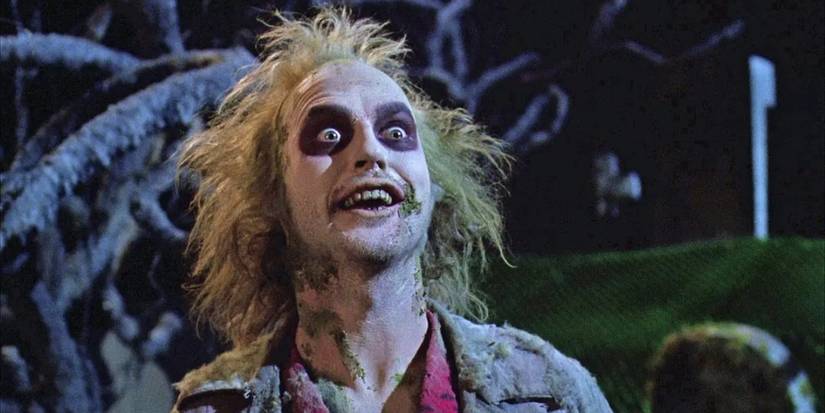 Image via Warner Bros. Pictures
Despite the towering legacy surrounding it today, Beetlejuice's premise and execution are shockingly simple and effortlessly structured. The Maitlands, a deceased couple sheltering in a nice small town residence, attempt to scare off the Deetzes, a frustrating family who have moved from the big city to purchase their home. Following this setup, what follows is 90 minutes of rollicking laughs, chills, and wildly inventive visual storytelling. Revisiting it all these years later, it's easy to forget the seamlessness of the story construction, as well as the sparse presence of its titular character, played by Michael Keaton in a career-changing role that proved he was a screen presence unlike any other. Beetlejuice is filled wall-to-wall with great scenes, from the iconic "Day-O" number in the dining room to Beetlejuice's first meeting with Adam (Alec Baldwin) and Barbara Maitland (Geena Davis). By the end, this skit-heavy film has the weight of a cinematic masterpiece.
Beetlejuice is a transformative experience for impressionable viewers and savvy film buffs alike, and the blend of Burton's fascination with German Expressionism and classic slapstick appeals to all audiences. The gothic imagery, canted angles, and heightened production design recall the indelible cinematography of F.W. Murnau's influential silent movies, notably Nosferatu. Infusing the cinema of Murnau or Fritz Lang with pop elements is Burton's special gift, and his second feature film is the most succinct outline of this flourish. Burton has walked in the footsteps of legendary animator Ray Harryhausen throughout his career, and Beetlejuice was a brilliant evolution of stop-motion animation and miniature sets.
Of course, Beetlejuice is a shotgun blast of sheer entertainment, fueled by the film's comedic influences, from the Looney Tunes and The Three Stooges. The surrealist imagery of German Expressionism perfectly suited the wacky hijinks inspired by the classic cartoon series, and the slapstick of the Stooges and the Marx Brothers added another element of absurdity. Burton, whose follow-ups, including Edward Scissorhands and Ed Wood, cemented his idiosyncratic style, recognized the particular cohesiveness between comedy and horror. Throughout Beetlejuice, your body is prompted to both laugh and shudder at some of the garish visuals and haunted themes. Even with such an ornate concept, the film operates like a well-oiled machine.
The Enduring Legacy of 'Beetlejuice'
Beetlejuice's seismic influence extends beyond other comedy-horror hybrids like Widow's Bay. Beetlejuice Beetlejuice, in 2024, reunited Burton with Michael Keaton, Catherine O'Hara, and Winona Ryder and had 36 years of build-up as a cultural artifact. Along with a cartoon series and a wave of merchandise lines, Beetlejuice's aesthetic and attitude defined an entire generation. Lydia Deetz, played by Ryder in a career-making turn, represented the rebellious, disaffected angst of teenage life and perfectly juxtaposed the WASP-y and conformist nature of the Maitlands. Burton's idiosyncratic style and worldview, including gothic imagery, alienated outsiders, dissection of the idyllic American suburb, and an anarchic spirit, were firmly cemented in just his second feature.
Buried under all the zany charisma and farcical set pieces is a melancholic streak that has made Beetlejuice thrive as something more than an inventive comedy-horror experiment. The film taps into the vulnerable souls of teens and young adults who feel misunderstood, and Lydia's curious fascination with death and the afterlife is equally morbid and enlightening. Most impressive of all, Beetlejuice lacks any self-importance when reflecting on these themes. Because the film is so refined and immaculately constructed, this leaves room for the audience to interpret greater meanings into this absurdist story. All these years later, with countless imitators, the juice is forever loose.
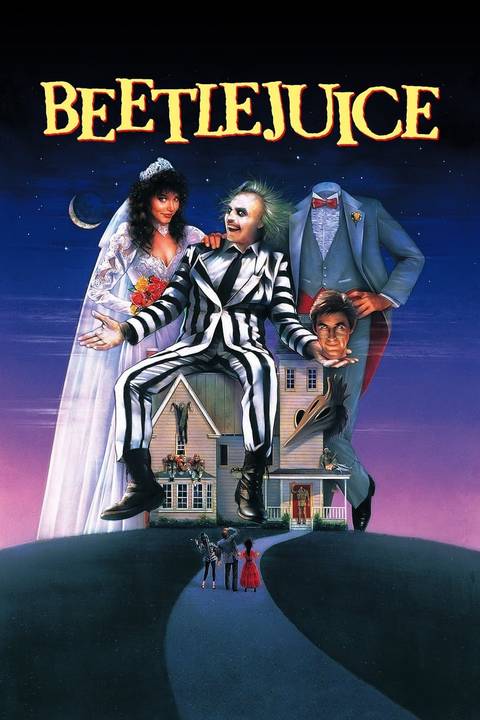
Beetlejuice
Release Date March 30, 1988
Runtime 92 minutes
Writers Michael McDowell, Warren Skaaren, Larry Wilson



 English (US) ·