
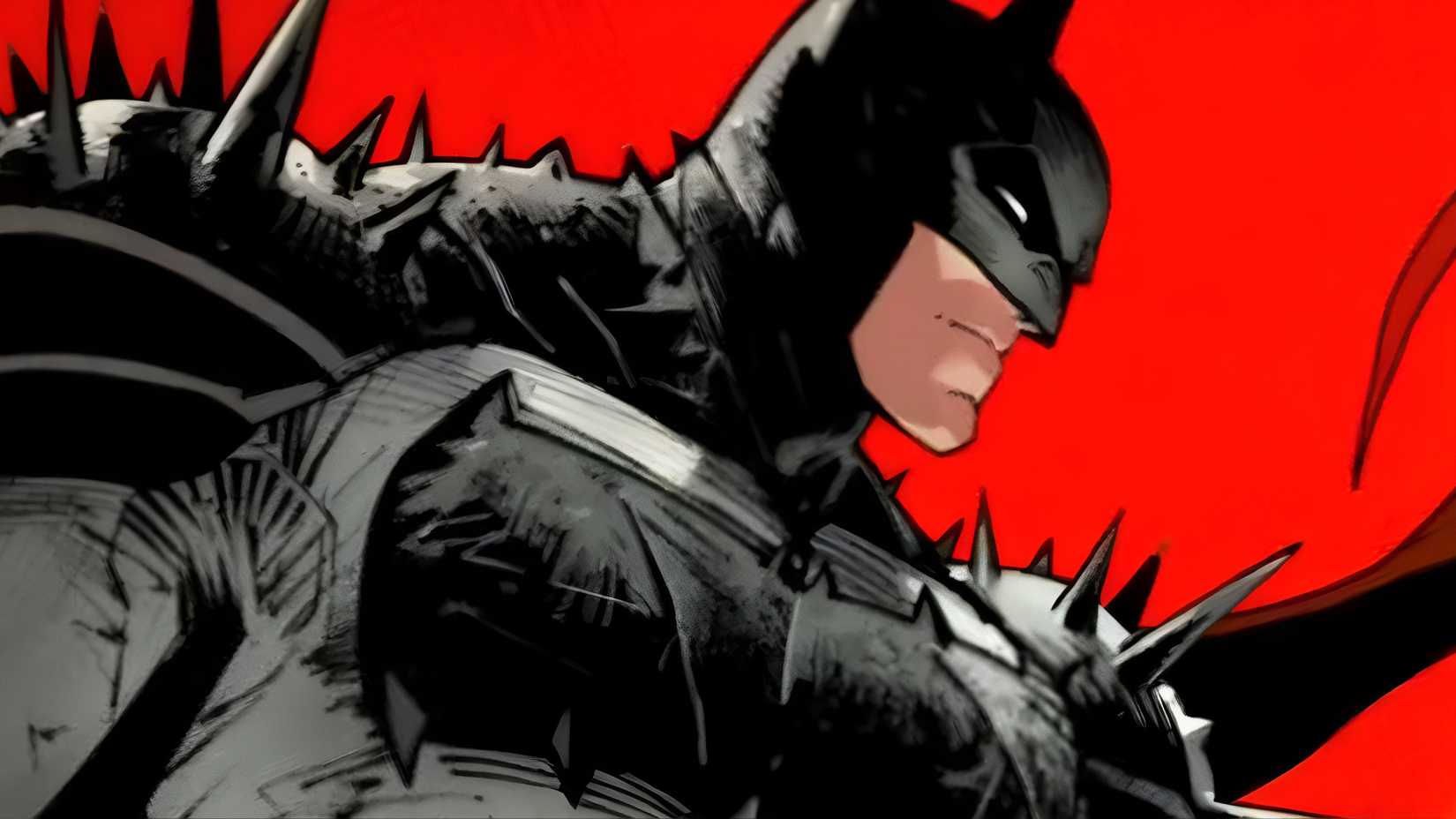
In a stunning moment of irony, DC Comics' new reboot universe has the bones to reignite discussion around one of comics' most renowned feuds. DC's Absolute Universe imprint has made waves by reimagining familiar heroes with darker, utterly different origins, and it's been producing gold straight out the gate since its launch in 2024: both Absolute Batman and Absolute Wonder Woman were nominated for Eisner Awards, with the latter winning. Since then, the universe has expanded, with new stories for beloved DC mainstays like Superman, Green Lantern, and Catwoman.
Recent developments like the return of Animal Man in Absolute Green Lantern call to mind the impact of two of comics' long-standing greats, and the bitter dispute between them: Alan Moore and Grant Morrison. Alan Moore and Grant Morrison represent two utterly different approaches to superhero comics, and the tension between their respective outlooks has never been clearer than in the new Absolute Universe.
Alan Moore And Grant Morrison Established Two Different Ways Of Seeing Comics

Alan Moore and Grant Morrison's feud dates back to the late 1980s, but crystallized in 1990 when Morrison accused Moore of mining Robert Mayers' Superfolks for inspiration. Since then, there have been accounts, accusations, and dismissals volleyed by either party for the better part of 30 years. Nonetheless, Alan Moore and Grant Morrison have more in common with one another than the specter of their apparent animosity would project.
Both were pivotal figures in the "British Invasion" of American comics in the '80s and '90s; both are practicing magicians (alongside the "Last War of Albion", Moore and Morrison's supposed feud has come to be called the "Wizard War"); both cite anarchism as a guiding philosophy; both have regularly deployed postmodern and deconstructive methods in their work; both are considered among DC's greatest writers of all time.
What makes the question of their apparent feud so interesting is how two such convergent writers became vectors for such different approaches to superhero comics. Once one strips away the personal scaffolding and attacks relevant only to their relationship, Alan Moore and Grant Morrison are still left embodying very different ideas about what superheroes can be and do in the real world.
The stereotype of Moore's work is that Moore tends to veer toward the more cynical side of things. His major works, like Watchmen, V for Vendetta, and The Killing Joke, tend to target either the concept of superheroes themselves or the way that their protagonists fit into broader society. The ultimate goal is less to posit the world via his heroes than to use them as vessels to comment on the ideological machinery of their worlds and the superhero genre itself.
The primary example given for showing Moore's deconstructive ethos with superheroes is typically Watchmen. In interviews, Moore has even cited the piece directly as a deconstruction of the superhero. But the most striking example of Moore's approach to superheroes is actually his forgotten Twilight of the Superheroes pitch, which took aim specifically at the superhero mythos itself, as well as the idea of the "superhero as myth" proper.
In that pitch, one can find traces of complaints Moore would return to many decades later in describing his qualms with the superhero industry, an ideological distinction tracing back at least to his days working on Captain Britain when he upended Marvel continuity with Mad Jim Jaspers: that superheroes existed to tell stories for children which, in its commercialization and endless churn, represented the peak of a consumeristically lost innocence, as it were.
Indeed, over time, Moore has come to entirely detach himself from superheroes and his impact on comics writing; the edgy stories he once carefully told would become a template for ironically cynical grimdark stories of little actual political substance. Morrison (who uses they/them pronouns) stands in stark contrast, latching onto the superhero mythos as a means of inspiration.
Perhaps the most readily available example of this can be found in Morrison's All-Star Superman, now considered one of the most universally beloved comics of all time. While Morrison built upon a deconstruction of Superman premised around the superhero's actions in light of their imminent death, they nonetheless used that as a foundation for a broader mission: showing how superheroes like Superman can remain a source of hope not in lieu of but specifically in spite of missions to undermine the foundations underlying the superhero genre altogether.
Famously, Morrison cited their later JLA work as an exercise in taking the superhero at face value and showing "something great and inevitable within us all" in their 2011 book Supergods: What Masked Vigilantes, Miraculous Mutants, and a Sun God from Smallville Can Teach Us About Being Human.
This supposed idealism and sincerity has become a broader mode of reaction to the deconstructionist impulses of the '80s onward: when superheroes are stripped to their bare foundations and played straight, people like Morrison try to show that certain ideals they represent are worth maintaining. There's a certain optimism to their work that stands in opposition to Moore's own intense disillusionment with superheroes, the comics industry, and the role of both today.
For Moore, heroes are a vessel to make broader social observations; for Morrison, identifying with heroes offers a restorative opportunity to respond to those observations.
Absolute Universe Complicates The Moore And Morrison Dichotomy
What makes this debate particularly delectable is that Moore and Morrison likewise express the belief in words and storytelling as a kind of magic. Whether through Moore's Jerusalem or Morrison's The Invisibles, through distinct mechanisms, both advance the idea that imagination and creativity themselves are a means of existential change. Moore expressed this particularly well in the documentary The Mindscape of Alan Moore with words Morrison would likely agree with:
Magic in its earliest form is often referred to as “the art”. I believe this is completely literal. I believe that magic is art and that art, whether it be writing, music, sculpture, or any other form is literally magic. Art is, like magic, the science of manipulating symbols, words, or images, to achieve changes in consciousness. The very language about magic seems to be talking as much about writing or art as it is about supernatural events. A grimmoir for example, the book of spells is simply a fancy way of saying grammar. Indeed, to cast a spell, is simply to spell, to manipulate words, to change people's consciousness.
It's precisely where words have the potential to effect change that Absolute Universe comes into play, because the words used and stories told become so important. With its darker origins for its protagonists, Absolute Universe encounters two hurdles that Moore and Morrison, respectively, have established. The first hurdle is creating an apparently dark superhero story that actually has substance, rather than using dark storytelling as set-dressing: AU has so far done this. Whether in Absolute Batman or Absolute Catwoman, for example, AU has emphasized class conflict, ideological disputes, and broader existential crises as their essential driving forces.
The second hurdle, then, is Morrison's emphasis on the value of optimism in the face of those demands—and whether an affirmation of superheroes themselves and superheroes as myth is justifiable, as Moore once challenged.
Absolute Universe doesn't deconstruct its heroes so much as it asks how they can exist differently. The classic dynamic of Batman and Joker moves from being a rich vigilante heir versus a criminally insane aberration to one of a blue-collar engineer versus a baron. Absolute Wonderwoman's origins in Hell give her a very different moral outlook from her traditional characterization.
Nonetheless, the Absolute Universe asserts that the idealistic core of these heroes remains, ultimately erupting intact despite their disparate soils. The message becomes that an essential heroism arises nonetheless: something worth clinging to. Rather than taking its heroes at face value, Absolute Universe takes a different position of inverting their origins and roles and examining whether they might emerge unscathed.
But at that juncture, either creator might endeavor to ask whether the supposed binary between idealism and cynicism is stable itself; furthermore, they might ask whether these same dichotomies, which still set superheroes up for success by contrasting them with clearly identifiable evils, aren't just a mirror image of existing dynamics. In other words: does the moral core change, and if so, to what extent?
DC's Absolute Universe works well when set in conversation with these two comics giants who have commented on the exact things the imprint seems to be doing, because the questions which arise are genuinely interesting: is heroism affirming oneself, including personal flaws, as a means to change the world? Is the comfort of the duality of good and evil potentially dangerous, no matter how obfuscated and no matter whether Batman is blue-collar or an uber-rich vigilante?
Above all, the imprint prods at an essential question: does the binary between Morrison's supposed idealism and Moore's supposed cynicism even hold up? Through its dark optimism, Absolute Universe directly contrasts with both viewpoints as a third term. Are idealism and cynicism so naturally opposed, or does that opposition itself work upon a field of assumptions that ultimately serves to produce stories that cater to readers' comforts and discomforts?
These questions are pressing, important, and steeped in a long tradition of comics' deconstruction from the inside by genius writers like Alan Moore and Grant Morrison. What's at stake is whether it matters where a superhero comes from, a question that DC Comics' Absolute Universe seems primed to interrogate.




 English (US) ·