
 3 weeks ago
43
3 weeks ago
43
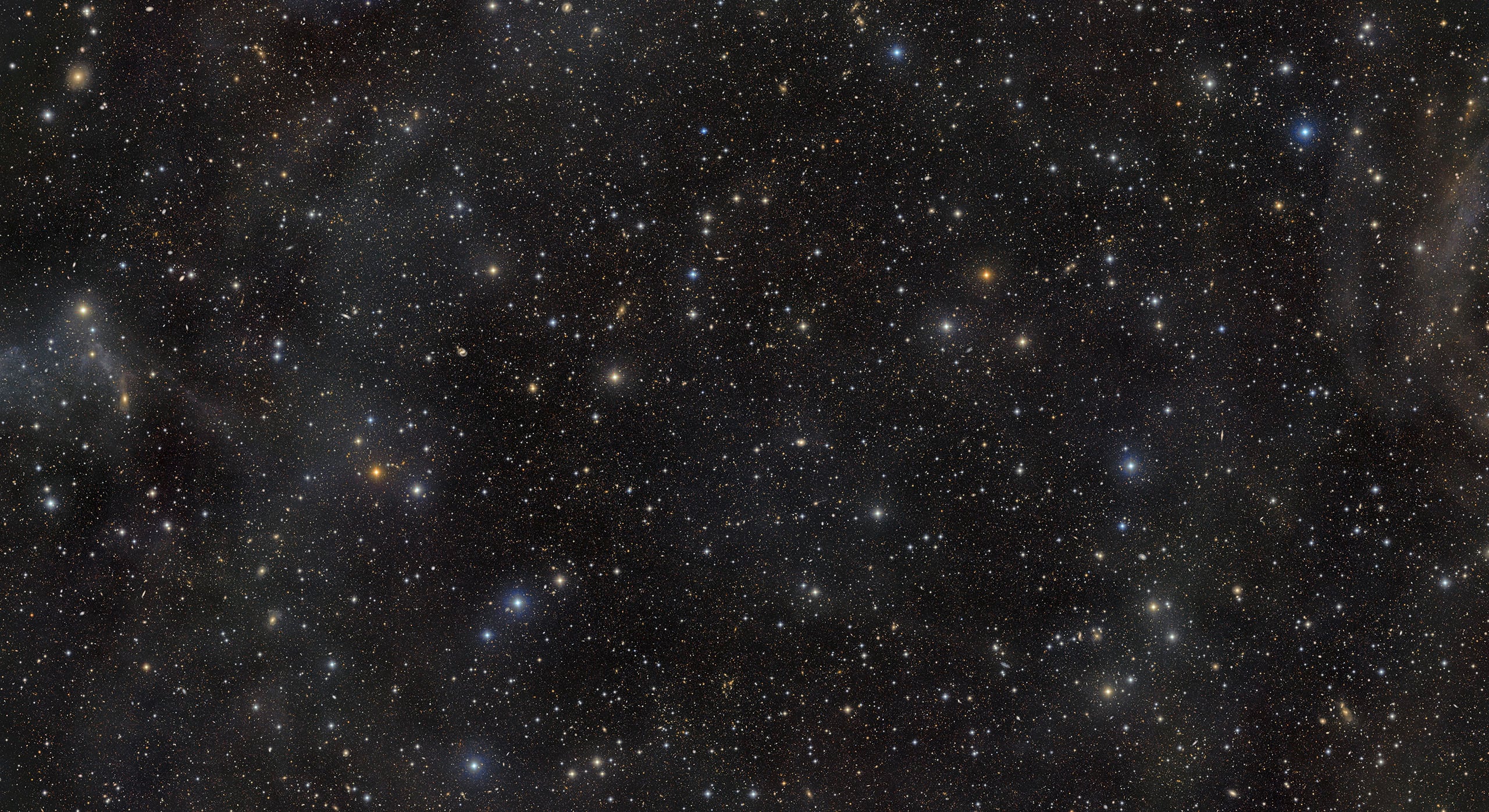 Rubin Looks Deep Into a Famous Cosmic Field
A new image from the NSF-DOE Vera C. Rubin Observatory’s 3200-megapixel LSST camera features hundreds of thousands of distant galaxies across its many pixels, delivering a spectacular view of one of the most observed patches of the Universe.
As mentioned, the image was captured using the 3.2-gigapixel LSST Camera, the largest digital camera in the world. The camera just recently began its primary mission, during which it will capture 700 super high-resolution photos every single night for a decade.
The LSST Camera’s ginormous image sensor comprises 189 individual CCDs, precisely arranged on a huge raft. In total, the camera weighs around 6,600 pounds (3,000 kilograms) and is roughly the size of a small car. The LSST Camera is mounted to the 8.4-meter Simonyi Survey Telescope.
The newly shared image was created by stacking hundreds of individual observations and features more than half a million galaxies. To put that absurd statistic into perspective, consider that the Milky Way’s visible boundary is up to 120,000 light-years across, although scientists think the total outer boundary including dark matter may be 1.9 million light-years across. Even though the Milky Way is larger than many dwarf galaxies that comprise much of the Universe’s galactic catalog, it boggles the mind to think about just how much distance and time are on display in LSST’s new photo.
This particular patch of the night sky is known as the COSMOS field, which stands for Cosmic Evolution Survey Deep Field. The venerable Hubble Space Telescope focused on this patch of the sky from 2003 to 2005, and it has been a widely studied part of the sky since then. Scientists selected it because it is observable both from the ground, like with LSST, and from space, like with Hubble, and it features over two million identified galaxies of all types and ages. It’s like a space laboratory for studying galaxies.
Since COSMOS has been studied so much, it is also an excellent reference point for contemporary studies. The Rubin Observatory’s LSST Camera, thanks to its unprecedented resolution, is adding its own data to the mix, providing new insights and additional data to track how galaxies change over time.
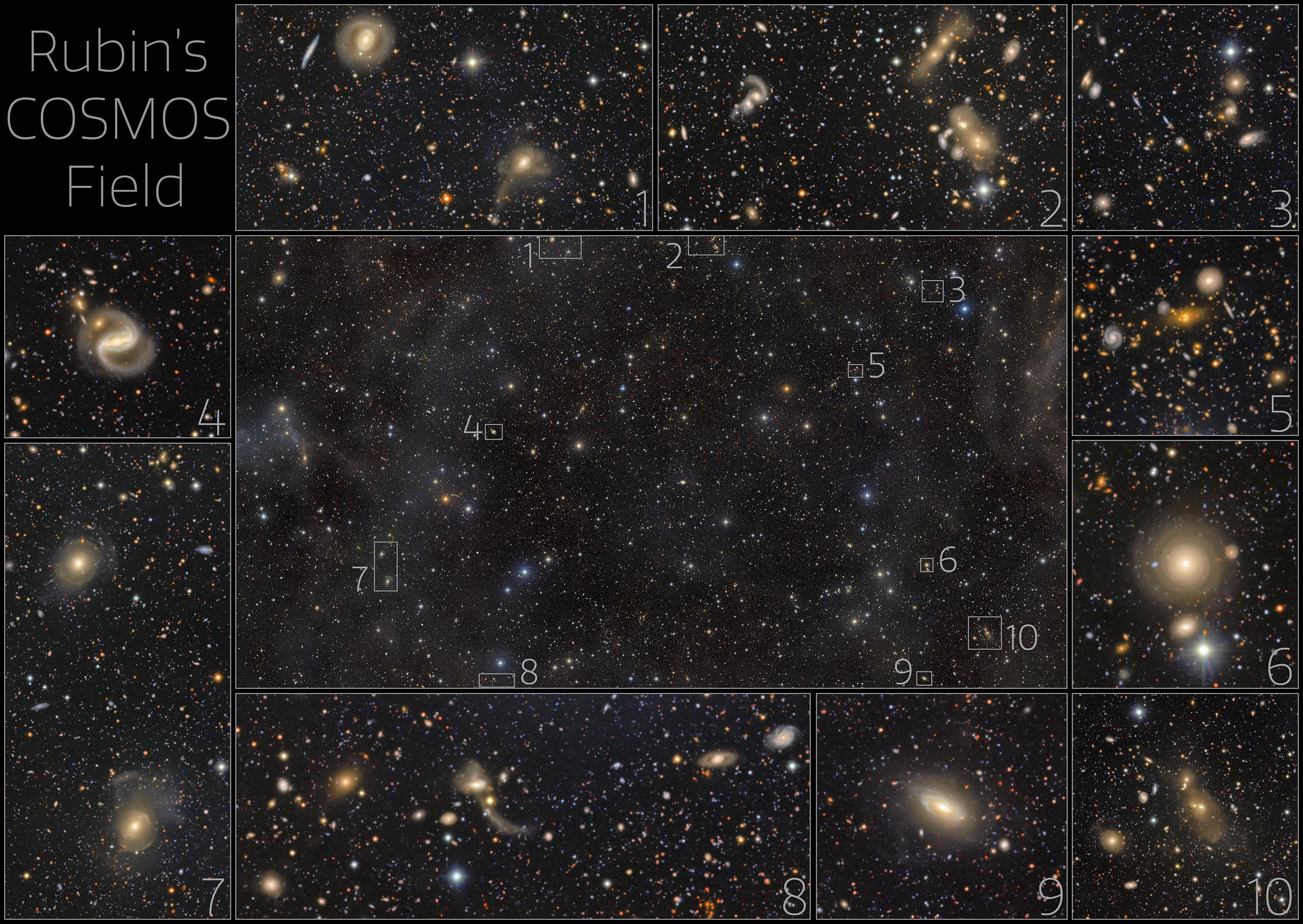 Rubin Looks Deep Into a Famous Cosmic Field (selected excerpts)
The time factor is a significant focus for the LSST Camera. It will image COSMOS many times during its mission, providing valuable information about how different deep-space objects change over time.
“The COSMOS deep image is just the beginning for Rubin in this region. Repeated visits to the field over the next few years will demonstrate the power of our survey design for discovery by providing our science community with a huge number of transient and variable objects like supernovae and other explosive transients for follow-up and detailed study,” says Bob Blum, Director of Rubin Observatory at NSF NOIRLab.
“The COSMOS field is a very important one for LSST science,” adds Phil Marshall, Deputy Director of Rubin Observatory at SLAC.
“Its wealth of prior observations, and its repeated targeting both during commissioning and as one of the LSST’s deep fields, will make it very valuable as a testing ground for scientists as they get ready to take on the survey data.”
Image creditsNSF–DOE Vera C. Rubin Observatory/NOIRLab/SLAC/AURA. Full-resolution photos are available to download from NOIRLab. Please note that the largest one is around 10GB, so it may take a while to download.





 English (US) ·