
 Image via Sanage Publishing House LLP
Published Aug 12, 2026, 5:29 PM EDT
Jeremy has more than 2700 published articles on Collider to his name, and has been writing for the site since February 2022. He's an omnivore when it comes to his movie-watching diet, so will gladly watch and write about almost anything, from old Godzilla films to gangster flicks to samurai movies to classic musicals to the French New Wave to the MCU... well, maybe not the Disney+ shows.
His favorite directors include Martin Scorsese, Sergio Leone, Akira Kurosawa, Quentin Tarantino, Werner Herzog, John Woo, Bob Fosse, Fritz Lang, Guillermo del Toro, and Yoji Yamada. He's also very proud of the fact that he's seen every single Nicolas Cage movie released before 2022, even though doing so often felt like a tremendous waste of time. He's plagued by the question of whether or not The Room is genuinely terrible or some kind of accidental masterpiece, and has been for more than 12 years (and a similar number of viewings).
When he's not writing lists - and the occasional feature article - for Collider, he also likes to upload film reviews to his Letterboxd profile (username: Jeremy Urquhart) and Instagram account.
He has achieved his 2025 goal of reading all 13,467 novels written by Stephen King, and plans to spend the next year or two getting through the author's 82,756 short stories and 105,433 novellas.
Sign in to your Collider account
Books. Books? Books! There were a lot of them in the 20th century. So many great ones that there will be many omissions below, because there are definitely more than 25 great books published between 1901 and 2000. There are probably 20+ great ones for every year of the 20th century, so this is something of a “best of the best” thing, and it’s also going to be lacking many titles… probably plenty that you (yes, you!) yourself like a lot.
There will also be one book per author, and with one semi-exception, there’s going to be a focus on fiction (though some historical fiction books based on – or inspired by – real events will be here). This is more of a sampling and overview of some of the best books of the 20th century, all of them very much worth tackling, even if some are admittedly long and/or dense in nature.
25 'Catch-22' (1961)
 Image via Simon & Schuster
You know things are good if Catch-22 is here, at #25, meaning there are possibly 24 books that are better. It should’ve been at #22. That would've been funnier. Hmm. Leave it to Joseph Heller to be the funny one. Catch-22 is a funny book, and it’s important to highlight at least a few comedic works of literature alongside the weightier stuff, since making a genuinely funny book seems like it might well be even harder than pulling off a funny non-book (movie, TV show, game… maybe not music, because making funny music also seems hard, though Sparks and Alex Cameron never got that memo).
All that being said, Catch-22 is hard-hitting at times, despite all the humor, because it’s about World War II and does explore serious things relating to the (very serious) topic, just satirically. It rambles and feels episodic quite a lot, but in a way that ends up proving very effective and difficult to stop thinking about, once read.
24 'I Who Have Never Known Men' (1995)
 Image via Transit Books
It feels almost worth considering I Who Have Never Known Men as a 21st-century novel, since it’s become a good deal more popular in recent years, though dubbing it “The Handmaid's Tale for Gen Z” feels a bit wild. Like, the sentiment you can sort of get around, but also, it’s a bit weird to say that. Maybe that’s the most click-worthy way of describing it. And hey, if so, mission accomplished. It was clicked.
I Who Have Never Known Men was actually published more than 30 years ago, and it’s pretty heavy on mystery, being about 40 women who are imprisoned underground without knowing who’s behind it, and without knowing why they're being held there. It’s a unique work of science fiction, conveying a lot within what’s ultimately not too many pages (it depends on the edition, but the vast majority of the editions are under 200 pages… formatting is tricky and never consistent, unlike with movies, where you can say “Oh, it’s x minutes long”).
23 'The Great Gatsby' (1925)
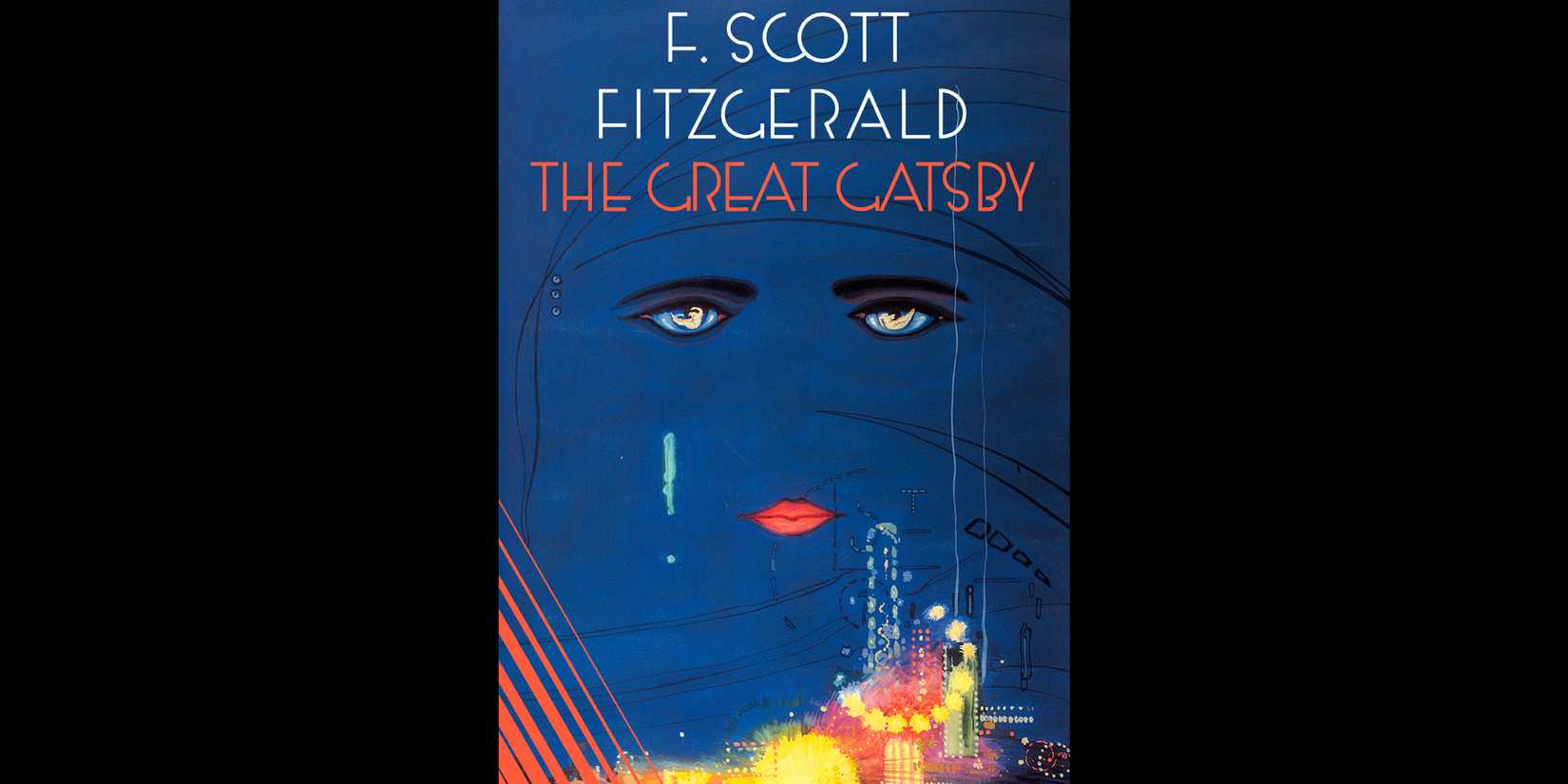 Image via Scribner
If only The Great Gatsby were the only book that feels a bit silly to introduce, yet, like, strap in, because it’s sure as hell not going to be the last. It's one of those Great American Novel contenders, and so it’s one most people are going to be at least a bit familiar with, and likely very familiar with, since it’s often required reading in high school English.
Of the potential Great American Novels, it’s one of the shortest, and it’s also not a particularly subtle book, really hammering home all that malaise and despair about the American Dream. That also makes it something people might call a bit overrated, but no, it is very good. It’s everywhere, and there might be similar novels that do more, and do more with a little more nuance, but there’s also something nice about a book that doesn’t mess around and just punches you right in the face. The Great Smacksby.
22 'Brideshead Revisited' (1945)
 Image via Penguin Classics
Jumping from a quintessential American book to one that is oh so very English, here’s Brideshead Revisited, which spans a couple of decades and is more concerned with the thematic side of things over a (or the?) narrative one. As for the premise, though, it’s about a young man being introduced to the members of a wealthy family through his studies and initial friendship with another young man.
There’s a lot unpacked here about class and religion, and then it’s also almost more interesting to read Brideshead Revisited nowadays (Brideshead Revisited revisited), 80+ years on from publication, because the period of time spanned (the 1920s through to the beginning of the 1940s) makes it feel like more of a historical novel. The whole thing is looking back at things with some nostalgia and an acknowledgment of things changing in just a couple of decades, and so all that time passing now, since 1945, colors things a different way, and might well even intensify what was already there emotionally speaking.
21 'Blonde' (2000)
 Image via HarperCollins
There were some good books published in the final year of the 20th century, and that year was, kind of annoyingly, 2000. The start of the 2000s was not the start of the 21st century. These are the rules, and this is why when one very handsome and hard-working writer had a go at rambling about the best books of the 21st century a little while ago, he didn’t include Blonde.
Blonde is not a biographical book about Marilyn Monroe, but it is still about her, just tackling her life in a way that feels like more of a psychological drama, or even a bit of a psychological horror thing at some points. It’s a mortifying book about a tragic life that also gets told in this particular way to highlight broader problems within the entertainment industry and the world at large. Blonde is as eye-opening and thought-provoking as it is hard to read, and it is so incredibly hard to read.
20 'A Confederacy of Dunces' (1980)
 Image via Grove Press
Ignatius J. Reilly is the worst, but isn't he also the best at the same time? No, you don’t have to answer that. He’s not the best. He’s still the worst, but he’s the worst in the best of ways, because his comically uneventful odyssey in A Confederacy of Dunces is so oddly compelling, and it’s a miracle of writing that such a character can be followed for so long while doing so little, and still be at the center of a book that’s this much of a classic.
Then again, even those who really like A Confederacy of Dunces would probably be like, “Yeah, no, that’s understandable” if they ran into someone who really disliked it. There’s a difficulty that comes with explaining how or why it’s good, as it just kind of is. It’s almost an anti-novel, and it’s also effortlessly funny to about the same extent that the previously mentioned Catch-22 was.
19 'The Talented Mr. Ripley' (1955)
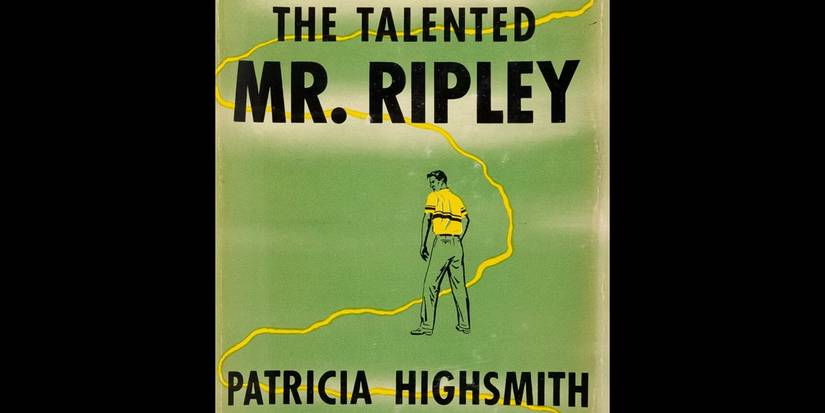 Image via Coward-McCann
The Talented Mr. Ripley centers on a man named Tom Ripley, and what happens when he becomes unusually infatuated with another man named Dickie Greenleaf. It’s a psychological thriller and a crime novel, so Ripley does eventually spiral out of control and commit an act of violence, and then that leads to escalating turmoil and chaos that’s incredibly compelling, all the while also being very uncomfortable.
Patricia Highsmith was very good at writing this kind of book, with the character of Tom Ripley also being in four sequels to The Talented Mr. Ripley, which were published over a span of 36 years. Highsmith’s Strangers on a Train (her first novel) is also worthy of a mention, but it’s the first of the Tom Ripley books that ultimately stands as her single best work.
18 'Infinite Jest' (1996)
 Image via Little, Brown and Company
One of the hardest books to summarize in a couple of paragraphs, but here goes nothing, Infinite Jest is about some kind of future where there’s a film which is dangerously addictive, but also, that’s only about 5% of the book, and there’s a lot about that piece of entertainment that remains mysterious. It’s also about people who are living with other addictions, and a dysfunctional family, and some aspiring tennis players, and a handful of revolutionaries.
The extent to which these characters cross paths? Uh, not much. Or not much on the surface. There’s a good deal of surface, but so much below it as well (more so than most books for sure, and even more so than most books that top 1000 pages in length). Infinite Jest is almost impossibly dense and honestly convoluted, but it’s worth drowning in. And it is the kind of thing that’s unlikely to ever be converted to some other medium that’s not a book.
17 'Nineteen Eighty-Four' (1949)
 Image via Simon & Schuster
While it’s harder to classify Infinite Jest as a definite dystopian novel, Nineteen Eighty-Four unambiguously is, and feels pretty close to the definitive dystopian novel of its era. You likely know the deal with lots of this, even if you’ve not read the whole thing, just because various ideas and terms from Nineteen Eighty-Four have found life beyond the story itself.
It’s not a good book to read if you want something escapist and breezy, but it is very much worth it if you don’t mind digging into something despairing.
And that story is a relatively simple one, because it’s about a man joining a group of people who are all trying to stand up to an oppressive totalitarian state, and it’s all a bit of a losing battle, to put it mildly. It’s not a good book to read if you want something escapist and breezy, but it is very much worth it if you don’t mind digging into something despairing (not to mention distressingly still relevant in a bunch of ways).
16 'The Hitchhiker's Guide to the Galaxy' (1979)
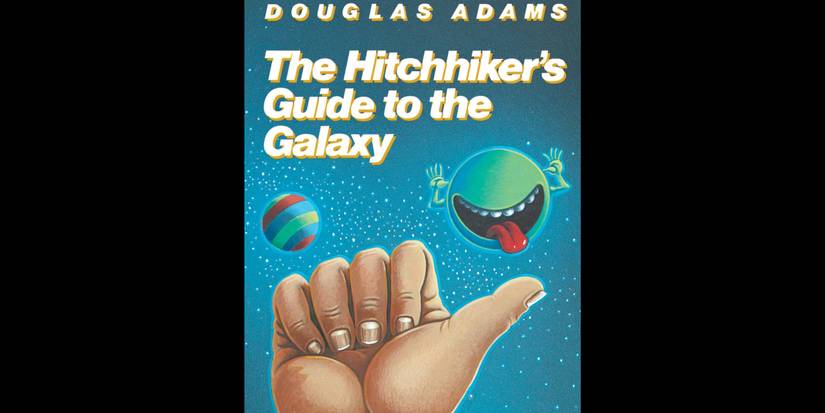 Image via Pan Books
The misery of Nineteen Eighty-Four can be mitigated by reading it at the same time as The Hitchhiker’s Guide to the Galaxy, which does technically begin with the world being destroyed, but the book’s still really funny anyway. Arthur Dent ends up surviving the destruction of Earth, and then he goes on a series of misadventures through space, both in this book and in its sequels.
The original book in The Hitchhiker’s Guide to the Galaxy series, though, comfortably remains the best, and it might well be the funniest book in the whole canon of classic/essential science fiction (again, very much the opposite of Nineteen Eighty-Four). Also, for as much as it’s worth shouting out all the long and genuinely ambitious books out there that almost feel brick-like when you're holding them, there’s also something nice about a novel being as short and punchy as The Hitchhiker’s Guide to the Galaxy, which can be chomped through in a sitting or two.


 English (US) ·