
 Image via HBO Max
Published Aug 9, 2026, 11:32 PM EDT
Liam Gaughan is a film and TV writer at Collider. He has been writing film reviews and news coverage for ten years. Between relentlessly adding new titles to his watchlist and attending as many screenings as he can, Liam is always watching new movies and television shows.
In addition to reviewing, writing, and commentating on both new and old releases, Liam has interviewed talent such as Mark Wahlberg, Jesse Plemons, Sam Mendes, Billy Eichner, Dylan O'Brien, Luke Wilson, and B.J. Novak. Liam aims to get his spec scripts produced and currently writes short films and stage plays. He lives in Allentown, PA.
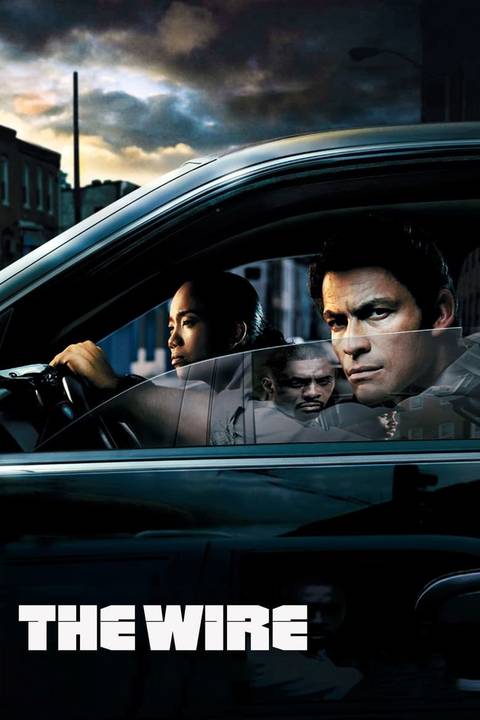
The Wire isn’t just one of the greatest television shows of all time, but remains one of the most accurate. The series was created by David Simon, a former journalist who used his own experiences writing about crime, government, and education in Baltimore to create a complex story that addressed every level of infrastructure; the series earned praise from both sides of the political aisle, as both President Barack Obama and Senator John McCain admitted to being fans of the show during the 2008 Presidential election. Although many of the characters that appeared in The Wire were based on real people, a scene from the show’s third season has become a popular reference for political pundits and reporters.
In the Season 3 episode “Straight and True,” Stringer Bell (Idris Elba) organizes a conspiracy among the various drug kingpins in Baltimore to all buy from the same dealer, which would prevent further violence from breaking out in the midst of feuds. Although he cleverly manages to frame himself as a legitimate businessman, Stringer humorously questions a colleague if he's "taking notes on a criminal fucking conspiracy," and points out how ridiculous it would be to leave behind a paper trail. Although it's a brief line intended to showcase the character's intelligence, Stringer Bell’s advice has become increasingly relevant when applied to many recent political scandals.
What Is "The Stringer Bell Rule" on ‘The Wire'?
“The Stringer Bell Rule” was coined as a phrase used to describe the documentation of activity that could be subjected to legal review within a criminal case. Stringer understands that the proposition that he has made might be able to slide past the attention of Jimmy McNulty (Dominic West) and the other cops as long as they don’t have hard proof that the kingpins were working together; it would otherwise be very challenging to find evidence that a secret handshake deal was carried out. Reporter Matthew Zeitlin made a reference to Stringer’s comments during the investigation of unethical and illegal practices by J.P. Morgan in 2013; after a spreadsheet that listed various alleged crimes was found amidst the ongoing scandal, Zeitlin joked that the company should have followed Stringer Bell’s theory and “not put it down in writing.”
Stringer’s references to criminal conspiracies were again brought up during the aftermath of the 2016 Presidential election, in which evidence was found that linked the campaign of President Donald Trump to attempts by Russian hackers to influence the results of the voting and perpetuate propaganda. After The Washington Reporter released an article that revealed that former Trump campaign chair Paul Manafort during a meeting with Russian billionaires tied to the Kremlin merely two weeks ahead of the election, The New Republic reporter Alex Shepherd commented that “a lot of people close to Donald Trump seem to have put what they were doing in writing,” reflecting an ignorance of Stringer’s edict. The term “Stringer Bell Rule” was later coined in an article for The Atlantic, which expressed shock that Roger Stone’s arrest for obstruction of justice had relied on a hard paper trail from meeting notes.
Stringer Bell’s advice ironically does not save him in The Wire, as his leadership position is undermined when Avon Barksdale (Wood Harris) is released from prison and begins to initiate a war on the young kingpin Marlo Stanfield (Jamie Hector). While Stringer realizes that it is far easier to conduct criminal activity if it is done under the guise of professionalism, Avon is so intent on getting revenge on Marlon that he ignores this advice. Stringer is ultimately cut out of his position of authority for suggesting a more pragmatic approach, and is executed by Omar Little (Michael K. Williams) during the shocking penultimate episode of Season 3.
‘The Wire’ Influenced Real World Politics
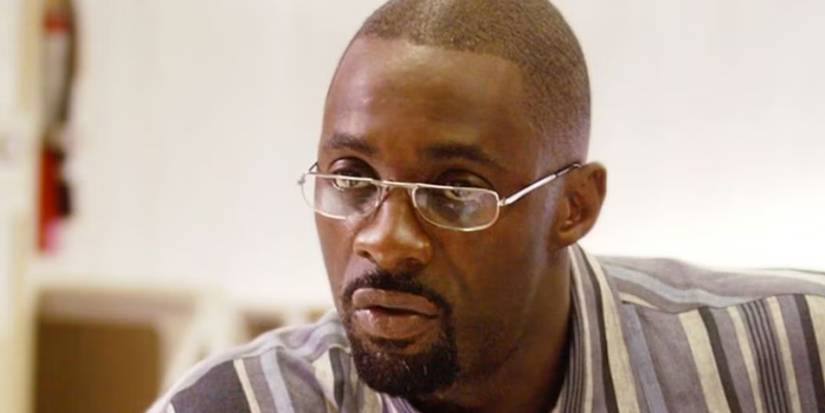 Image via HBO
The Wire’s influence on both television and politics was not initially evident, as the series received surprisingly low ratings during its initial run on HBO, where it was often dwarfed in popularity by The Sopranos. Despite being ignored by the Primetime Emmy Awards in most categories (as it famously never received a nomination for Best Drama Series), The Wire only grew in complexity as it continued to air. Season 2 examined the fundamentals of the drug trade and its impact on the trading port. Season 3 showed how these events fueled political campaigns, Season 4 emphasized the importance of protecting children, and the fifth and final season served as an homage to Simon’s own experiences as a journalist. While the material was often quite technical, viewers who stuck with The Wire ended up being more informed about the nature of real-world issues.
The Wire also helped dismantle some common excuses for the lack of progress by revealing the complexities involved in the war on drugs. The series showed the barriers that many users, dealers, and victims faced when trying to be acclimated into society, as social stigmas and protective laws helped keep many communities segregated. Although it may have been easier to point a finger at one single villain that could be defeated, Simon explored how there were those within the government, organized crime, and law enforcement that served as an impediment to progress. This would become a theme that he would continue to explore within his other projects for HBO, including the brilliant biographical series Show Me A Hero with Oscar Isaac and the crime thriller We Own This City with Jon Bernthal.
Stringer Bell may be the most influential character on The Wire, as the acclaim that Elba earned for his performance helped him earn subsequent roles in many popular films and franchises. Stringer subverted expectations of what a drug kingpin looked like, as he was an educated, eloquent leader whose aura of professionalism somehow made him feel more terrifying. It’s a little ironic that Stringer was designed to be a more “realistic” antagonist, but that some of the real criminals to emerge within recent news cycles have proven to be far more over-the-top.
Release Date 2002 - 2008-00-00
Network HBO
Writers Richard Price, Joy Lusco, Rafael Alvarez, Dennis Lehane, David Mills, William F. Zorzi, Kia Corthron





 English (US) ·