21 Years Before Nolan's 'The Odyssey', This Fantasy Epic Reimagined the Trojan War
1 week ago
17
Image via Penguin Books
Published Aug 14, 2026, 11:09 PM EDT
Diego Pineda has been a devout storyteller his whole life. He has self-published a fantasy novel and a book of short stories, and is actively working on publishing his second novel.
A lifelong fan of watching movies and talking about them endlessly, he writes reviews and analyses on his Instagram page dedicated to cinema, and occasionally on his blog. His favorite filmmakers are Andrei Tarkovsky and Charlie Chaplin. He loves modern Mexican cinema and thinks it's tragically underappreciated.
Other interests of Diego's include reading, gaming, roller coasters, writing reviews on his Letterboxd account (username: DPP_reviews), and going down rabbit holes of whatever topic he's interested in at any given point.
With The Odyssey, arguably one of the most impressive epic movies of all time, Christopher Nolan hasn't just proven that he really can do pretty much anything—including making an epic fantasy film that more than lives up to one of the most foundational stories in the history of humanity. He has also proven that there's still a huge appetite among general audiences for stories inspired by Greek mythology and folklore. Several great books from the past come to mind, including a certain 2005 masterpiece that has become criminally forgotten as the years have passed: British author David Gemmell's Troy: Lord of the Silver Bow, the momentous opening chapter of the Troy trilogy.
Gemmell was huge in the British heroic fantasy space, helping revitalize the subgenre between the 1980s and 1990s. Today, Lord of the Silver Bow stands out as one of the best possible ways to be introduced to his gritty, hugely imaginative, wonderfully written work. Though it's massive in scope, it's surprisingly intimate and character-driven in its approach, making it perfect for those who love epic fantasy and historical fiction that actually takes time to flesh out numerous characters. It's hugely different from any other mythology-inspired epic fantasy book of its kind, and even though those differences may not be for everyone, they make it a truly special novel nonetheless.
What Is 'Troy: Lord of the Silver Bow' About?
Image via Ballantine Books
After a brief prologue that introduces readers to the Egyptian exile and castaway Gershom, Lord of the Silver Bow transports readers to a cold cave where a dying priest recites a prophecy to King Agamemnon: he is to have a son who will carry his legacy forward, but a man called Helikaon, who is tied by fate to Troy, could represent a threat to his reign. Thus, Agamemnon orders Argurios, his most trusted warrior, to seek out the mysterious Helikaon and eliminate him. Right off the bat, Gemmell makes it clear that he isn't interested in doing a simple retelling of The Iliad—rather, he reimagines and reinterprets the Homeric tale as something purely and entirely Gemmellian.
That boldness in treating The Iliad and The Odyssey as scaffolding for a whole new story is part of what makes Lord of the Silver Bow one of those fantasy books that are still a must-read in 2026. What follows is the story of Helikaon, Prince of Dardania, known to friends and enemies alike by titles like "the Golden One" and "the Lord of the Silver Bow." Gemmell interweaves a tapestry of several points of view to craft this grand yet intimate tale, chronicling the adventures of Helikaon and the crew of his famed warship, the Xanthos. From romance to betrayal to bloody battles, there's something in Lord of the Silver Bow for pretty much everyone.
'Troy: Lord of the Silver Bow' Grounds Homeric Folklore in Reality
Image via Beaux-Arts de Paris
The 10-year Trojan War doesn't begin until Lord of the Silver Bow's sequel, Troy: Shield of Thunder. What this first book in the trilogy does is lay down the foundations for the war and establish its overarching preamble. As such, what Gemmell is dealing with here are the events prior to anything Homer described in the Iliad, and that creative liberty allows him to make the story entirely his own. Often, that includes grounding the tale strictly in the realm of low fantasy and realistic historical fiction.
Those hoping for magic, mythological creatures, and direct divine interventions are better off looking elsewhere. The fantastical elements in Lord of the Silver Bow are subtle, and that's precisely the source of the book's charm as a heroic epic and historical fiction masterpiece. Whereas a more direct adaptation of Homeric folklore might have been less ambiguous with its morality, less intricate with its geopolitics, and full of the presence of Greek gods, Gemmell isn't concerned by those things so much as he's intrigued by flawed heroes, multi-layered conflicts, and how vast a web of political clashes would need to be in order to cause a war of the caliber of the Trojan War.
In that sense, Lord of the Silver Bow functions as a powerfully meta study of how myths like The Iliad are formed over time and then gradually transformed into fantasy. That dimension of it alone would be enough for it to qualify as one of the best historical fiction books of the 2000s, but it's actually far from the only thing that the novel has going for it. For one, the character dynamics—which are often the fuel that drives the entirety of the book's narrative and themes forward—are as complex as any historical fiction fan could want them to be. The romantic relationship between Helikaon and the former priestess Andromache carries particular emotional weight, and his dynamic with Argurios moves in directions that are delightfully unexpected.
Lord of the Silver Bow can be potently slow-burning when it decides to quiet down and focus on building its characters, explain the nuanced geopolitics and economics of its version of the Bronze-Age Mediterranean, or introduce a new point of view. However, Gemmell can also get cinematically visceral with his action scenes. Thanks to the author's punchy, functional prose, as well as his refusal to shy away from the blood and sweat and grime of a Bronze-Age battle, every combat scene is immensely gripping. With this balance between loud action, quiet characterization, and layered worldbuilding, Troy: Lord of the Silver Bow remains a page-turner from cover to cover.
Could 'Troy: Lord of the Silver Bow' Work on the Screen?
With the incredible success of The Odyssey, it has become abundantly clear that audiences are more than willing to flock to epic adaptations of classic Greek tales. Could Lord of the Silver Bow—and the entire Troy trilogy, for that matter—work equally well as an adaptation? If one wanted to do full justice to the sheer scale of Gemmell's vision, the significance of every event contained in the story of Helikaon, and the abundance of meaningful characters, it feels like a small-screen, episodic adaptation would be the way to go.
HBO's Game of Thronesopened the floodgates for prestige television to house adaptations of great literary epics, and Troy: Lord of the Silver Bow could provide the material for what could very well become one of the best fantasy TV shows of the 21st century. It's a heroic epic with the complexity and layers of a 1,000-page behemoth, but one so perfectly paced and free of any kind of fluff that just a little under 500 pages do the job just fine. Anyone who loves these types of stories inspired by Greek mythology and folklore should consider Troy: Lord of the Silver Bow a must-read.

 Image via Penguin Books
 Image via Ballantine Books
 Image via Beaux-Arts de Paris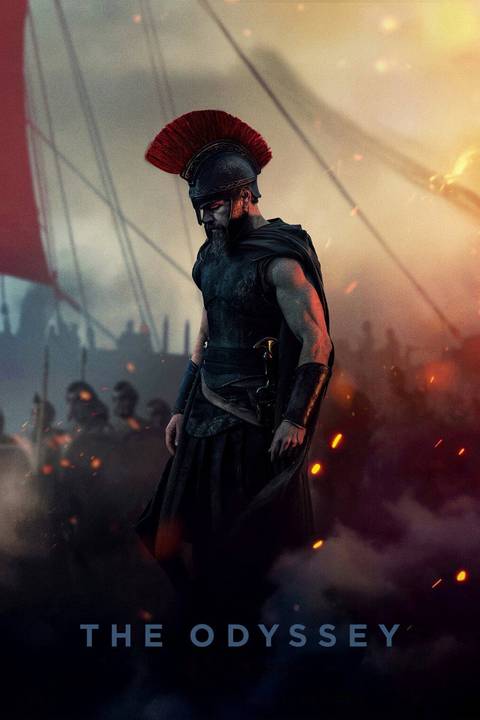





 English (US) ·