

Published May 10, 2026, 3:00 PM EDT
Emedo Ashibeze is a tenured journalist and critic specializing in the entertainment industry. Before joining ScreenRant in 2025. he wrote for several major publications, including GameRant.
For decades, an anime’s “season” has consisted of a complete arc with a beginning, middle, and end. Fans could expect an arc to begin and conclude within a season, with no loose threads left hanging to hook them into watching future seasons, as they seek a satisfying conclusion. Spring 2026 marks the end of an era in which this is the norm.
The Spring 2026 season reveals that anime has evolved from a storytelling medium to a service of “evergreen content”, engineered by streaming algorithms to ensure that the credits never truly roll. Nearly every series in Spring 2026 is designed to run indefinitely, with long-running franchises such as One Piece continuing and new series receiving multiple cours.
In the streaming era, anime are designed for longevity. Stories continue until fans lose interest or the platform decides to end them. In an era when algorithms reward watch time, studios have adapted and transformed how anime is created, sold, and sustained.
Quantity Over Quality: The Single Cour Season Is Now A Thing Of The Past
 Custom Image by J.R. Waugh
A clear sign of the pendulum shift is the multi-cour announcements and the death of the single-cour season. In Spring 2026, major titles are pre-ordered in bulk and assigned multi-year blocks that feel less like narrative choices and more like real estate land grabs on the streaming schedule. Platforms are looking for a series with staying power to retain subscribers.
Classroom of the Elite, for example, has been assigned multiple cours that cover the entire “2nd Year arc” without interruption. Season 4 adheres to the multi-cour structure, divided into two cours totalling 16 episodes, as opposed to the single-cour structure used in previous seasons. Slime Season 4 appears to follow the same trend, with two consecutive cours.
 Related
2026 Is Officially the Year Streaming Stops Being Worth It: Here’s Why
Explore the growing challenges of streaming anime in 2026 and why many fans are turning back to physical media.
This indicates a shift in focus from telling a compelling story to occupying viewers’ time. Yusuke Onuki, a game producer, predicted a continued increase in sequels and remakes in the anime industry. He states that as more companies enter the anime industry, the competition for proven IPs intensifies, and such companies tend to greenlight projects based on measurable performance.
Furthermore, this means that works with track records will be adapted over originals. This is a clear symptom of the trend in the streaming era, where works that can be stretched across multiple seasons, or cours are favoured over tight narratives that can tell a complete story in a few seasons or less, such as Full Metal Alchemist: Brotherhood.
This trend is a deliberate shift in the production philosophy of companies in the anime industry today. Companies now favour quantity over quality, and studios sacrifice pacing and satisfying payoffs for more slots on the streaming schedule. Slime S4 has a massive 5-cour plan that will undoubtedly affect its pacing; plot points are dragged out for multiple episodes.
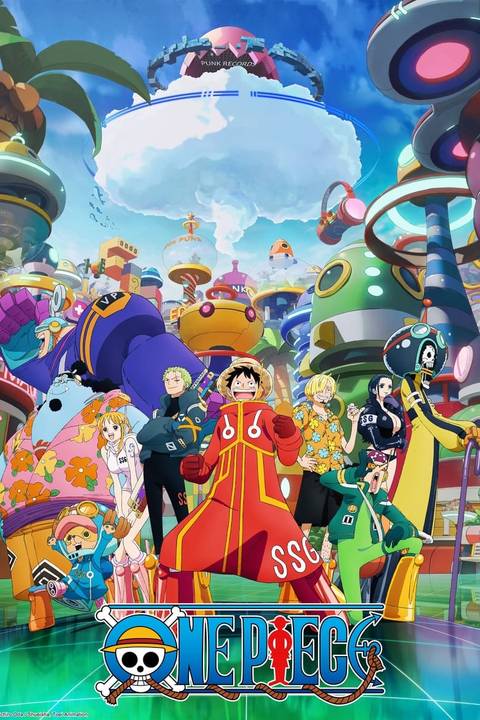
One Piece has set the standard for the entire anime industry. Every mid-tier isekai is being stretched to fit a production schedule that requires 50 weeks of content per year. In Spring 2026, this production philosophy comes across less as a trend and more as an adaptation by studios to keep up with the streaming era.
Anime is Now Designed To Be “Evergreen” To Retain Viewership On Streaming Platforms

Streaming platforms like Crunchyroll and Netflix have realised that viewers are less likely to cancel their subscriptions if their favourite shows are always airing. This resulted in the rise of a series that can be termed ‘background noise’. This background noise is deliberately used to ensure viewers receive a continuous stream of content, discouraging them from leaving the platform.
Platforms are desperate for content that stays relevant, continues to attract new subscribers, and never ages out of a catalogue; in other words, “Evergreen Content”. In business terms, evergreen content is a metaphorical gold mine; it ensures that viewers have a constant reason to return to the platform, but this comes at the cost of concise, compelling storytelling.
The anime industry is extremely competitive in the current era, and platforms are doing their best to stand out by retaining as many viewers as possible year-round. This is why evergreen content is highly sought after. Studios have become selective of which IPs to invest in and would rather invest in projects with longevity.
“Evergreen” media is inherently anti-finality. A conclusion serves as a hard stop, a barrier that effectively gives casual viewers a reason not to begin. Streaming platforms are financially motivated to avoid the finish line, and production committees have shifted to meet that demand. The only shows being greenlit are those that run perpetually for the algorithm's sake.
Anime like Rent-A-Girlfriend Season 5 and Ace of Diamond II Season 2 do not attempt to break new ground or provide a satisfying conclusion. They are intended to be “evergreen”, pleasant, and predictable to be used as background noise. The use of deliberate pacing or filler has also increased because, if the story ends, viewers may leave.
By engineering endless loops of romantic tension or infinite sports tournaments, the industry ensures an unending stream of content. What was once relegated to Shonen anime like Naruto and Bleach is now an industry standard. Rent-a-Girlfriend, a rom-com usually defined by its resolution, is in its fifth season with no end in sight.
The Death of The Series Finale: The End of A Series Is Just As Important As The Beginning
 Custom Image by Ana Nieves
The gravitation towards long-running content has led to definitive endings being seen as a missed monetisation opportunity. Definitive endings, as seen in Cowboy Bebop and Full Metal Alchemist: Brotherhood, are a rare commodity. Anime are no longer created with a poignant, well-mapped-out ending; more emphasis is placed on deliberate pacing and dragging out arcs to retain viewer engagement.
When every series is written “to continue until the fans decide”, narrative stakes are removed. Character arcs are flattened into repetitive cycles because true development may lead to a natural conclusion. This has led to a decline in storytelling quality, as character and plot development take a back seat and stories become repetitive.
 Related
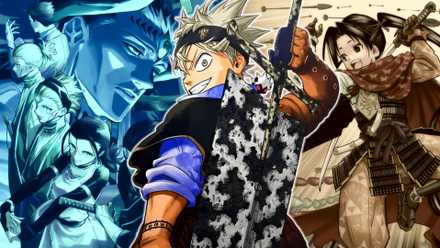
10 Major Manga Series Expected to End in 2026
2026 marks the end of an era and a shift in the manga landscape, with many long-running series bidding their final farewell in the coming months.
Viewers are trapped in a feedback loop where a show’s popularity is its own worst enemy. The more popular a series, the less likely it is to receive a conclusion. Producers will dilute any series that gains widespread popularity to make sure it never has to say a proper goodbye.
The Quintessential Quintuplets, an anime that concluded its story on May 20, 2022, has recently announced a new project during Toyota Arena Tokyo on May 2, 2026. This would be a sequel series to an already completed romance story. While its return is exciting for fans, it highlights the larger issue of series not being allowed to conclude.
The irony is that the anime most often remembered, which built the global audience being monetised today, are those that stuck the landing with stellar conclusions that left a lasting impression. Code Geass, Attack on Titan, and Gurren Lagann have all had endings. To maximise profits, platforms may be doing what is counterintuitive to long-term success.
Release Date October 20, 1999
Network Fuji TV
Directors Hiroaki Miyamoto, Konosuke Uda, Junji Shimizu, Satoshi Itō, Munehisa Sakai, Katsumi Tokoro, Yutaka Nakajima, Yoshihiro Ueda, Kenichi Takeshita, Yoko Ikeda, Ryota Nakamura, Hiroyuki Kakudou, Takahiro Imamura, Toshihiro Maeya, Yûji Endô, Nozomu Shishido, Hidehiko Kadota, Sumio Watanabe, Harume Kosaka, Yasuhiro Tanabe, Yukihiko Nakao, Keisuke Onishi, Junichi Fujise, Hiroyuki Satou
Writers Jin Tanaka, Akiko Inoue, Junki Takegami, Shinzo Fujita, Shouji Yonemura, Yoshiyuki Suga, Atsuhiro Tomioka, Hirohiko Uesaka, Michiru Shimada, Isao Murayama, Takuya Masumoto, Yoichi Takahashi, Momoka Toyoda
-

Mayumi Tanaka
Monkey D. Luffy (voice)
-
Kazuya Nakai
Roronoa Zoro (voice)







 English (US) ·