
 Image via Searchlight Pictures / Courtesy Everett Collection

Published Mar 20, 2026, 4:39 PM EDT
Luc Haasbroek is a writer and videographer from Durban, South Africa. He has been writing professionally about pop culture for eight years. Luc's areas of interest are broad: he's just as passionate about psychology and history as he is about movies and TV. He's especially drawn to the places where these topics overlap.
Luc is also an avid producer of video essays and looks forward to expanding his writing career. When not writing, he can be found hiking, playing Dungeons & Dragons, hanging out with his cats, and doing deep dives on whatever topic happens to have captured his interest that week.
Sign in to your Collider account
People like to complain about cinema's current trajectory and, sure, the last few years have certainly been no golden age for the medium. However, the 2020s have nonetheless produced a solid number of modern classics, and 2023 was an especially strong year. It was the time of Barbenheimer and Asteroid City, Poor Things and The Zone of Interest. In short, there was a 2023 masterpiece for every taste.
What made the year special was the sense that filmmakers were taking real risks: trusting audiences with complexity, ambiguity, and bold storytelling choices. From intimate character dramas and daring arthouse experiments to sweeping historical epics and inventive genre films, 2023 showcased the full range of contemporary cinema.
'American Fiction'
 Image via Amazon Studios
"It’s not a joke. It's my life." In American Fiction, a frustrated novelist (Jeffrey Wright) writes a satirical book mocking the publishing industry’s appetite for stereotypical narratives about race, only to see the work become a runaway success that forces him to confront uncomfortable truths about identity and authenticity. As the line between satire and reality blurs, his personal relationships and career are tested in unexpected ways. This movie was an intelligent riposte to its cultural moment, organically layering social commentary into its story.
In particular, American Fiction satirizes the way media and cultural institutions sometimes reward narrow, clichéd stories about Black experiences while ignoring more complex or varied voices. The script is very well-written, balancing its themes with real heart and never coming across as heavy-handed. Finally, strong performances from Wright and Sterling K. Brown do the rest of the heavy lifting. All in all, a very smart and entertaining film.
'All of Us Strangers'
 Image via Searchlight Pictures
"Do you ever feel like you’re just… watching your life?" All of Us Strangers follows a lonely screenwriter (Andrew Scott) who begins a relationship with a neighbor (Paul Mescal) while also encountering visions of his deceased parents. Director Andrew Haigh, the brains behind quiet gems like Weekend and 45 Years, builds this simple premise into a meditation on grief, connection, and the persistence of love across time. The result is a brilliant balance between a ghost story and an emotionally realistic drama.
It's a subtle and honest film, hugely elevated by its talented stars. Scott turns in an extraordinarily vulnerable performance here, playing the character with a believable mixture of gentleness, sadness, and longing. He manages to make the character's interactions with his parents feel both comforting and heartbreaking. Mescal, likewise, is terrific as ever. His character is complex, fragile and haunted, defined by warmth and spontaneity as well as deep wounds.
'Past Lives'
 Image via A24
"You dream in a language I can’t understand." After years of writing for the stage, Celine Song made her film debut with Past Lives, one of the most assured first features in years. It traces the evolving relationship between two childhood friends (Greta Lee and Teo Yoo) separated by immigration, reconnecting decades later to reflect on the paths their lives have taken. Through their conversations, the movie examines the idea of destiny and the choices that shape identity.
Song tells the story with remarkable restraint. The quiet cinematography, gentle pacing, and thoughtful dialogue allow the emotions to unfold naturally rather than forcing dramatic moments. Unlike many romantic dramas that rely on exciting twists or grand declarations, Past Lives focuses on the smaller things: conversations, pauses, and glances. It stands out because it leans into the messiness and complexity of relationships, how affection, nostalgia, and regret can coexist without clear resolution.
'Anatomy of a Fall'
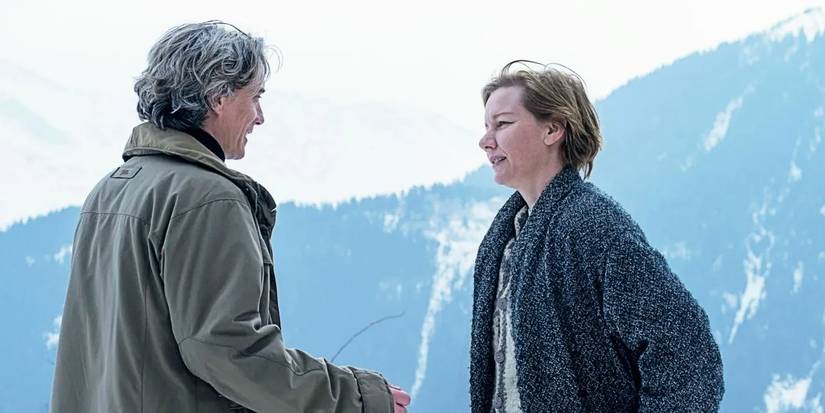 Image via Neon
"The truth is not the same for everyone." Anatomy of a Fall is one of the finest legal dramas ever made, concealing a study of a marriage within the elements of a courtroom movie. It centers on a writer (Sandra Hüller) accused of murdering her husband (Samuel Theis). The ensuing trial delves into the complexities of their relationship, as well as the ambiguity of the evidence surrounding the man's death.
Much of the credit for the film's success must go to Hüller. She had already proven herself with 2016's Toni Erdmann, but here she goes deeper, turning in a magnetic, cerebral performance of considerable nuance. She pulls off the tricky balancing act of being simultaneously sympathetic and somewhat inscrutable. Thanks to Hüller, the audience is never fully sure whether Sandra is innocent or guilty. Ultimately, Anatomy of a Fall turns the search for truth into a psychological puzzle where certainty is always just out of reach.
'Asteroid City'
 Image via Focus Features
"You can’t wake up if you don’t fall asleep." Wes Anderson pushed his signature style to even more ambitious heights with this sprawling sci-fi comedy ensemble drama. It unfolds in a stylized desert town hosting a junior stargazer convention, where a series of unexpected events, including an extraterrestrial encounter, disrupt carefully ordered lives. We follow a huge cast of characters, including war photographer Augie Steenbeck (Jason Schwartzman) and actress Midge Campbell (Scarlett Johansson), all played with humor, eccentricity, and emotional nuance.
As always, the visual style is striking. The pastel-colored desert town, symmetrical compositions, and carefully designed sets create a heightened, fantastical version of 1950s America; you can feel the care that's gone into composing every frame. The narrative structure itself is intricate, too. The tale of Asteroid City is presented as a stage play being broadcast on television, while the film also shows the actors and writers creating that play behind the scenes. In other words, Anderson explores both the "fictional" story and the artistic process behind it.
'The Holdovers'
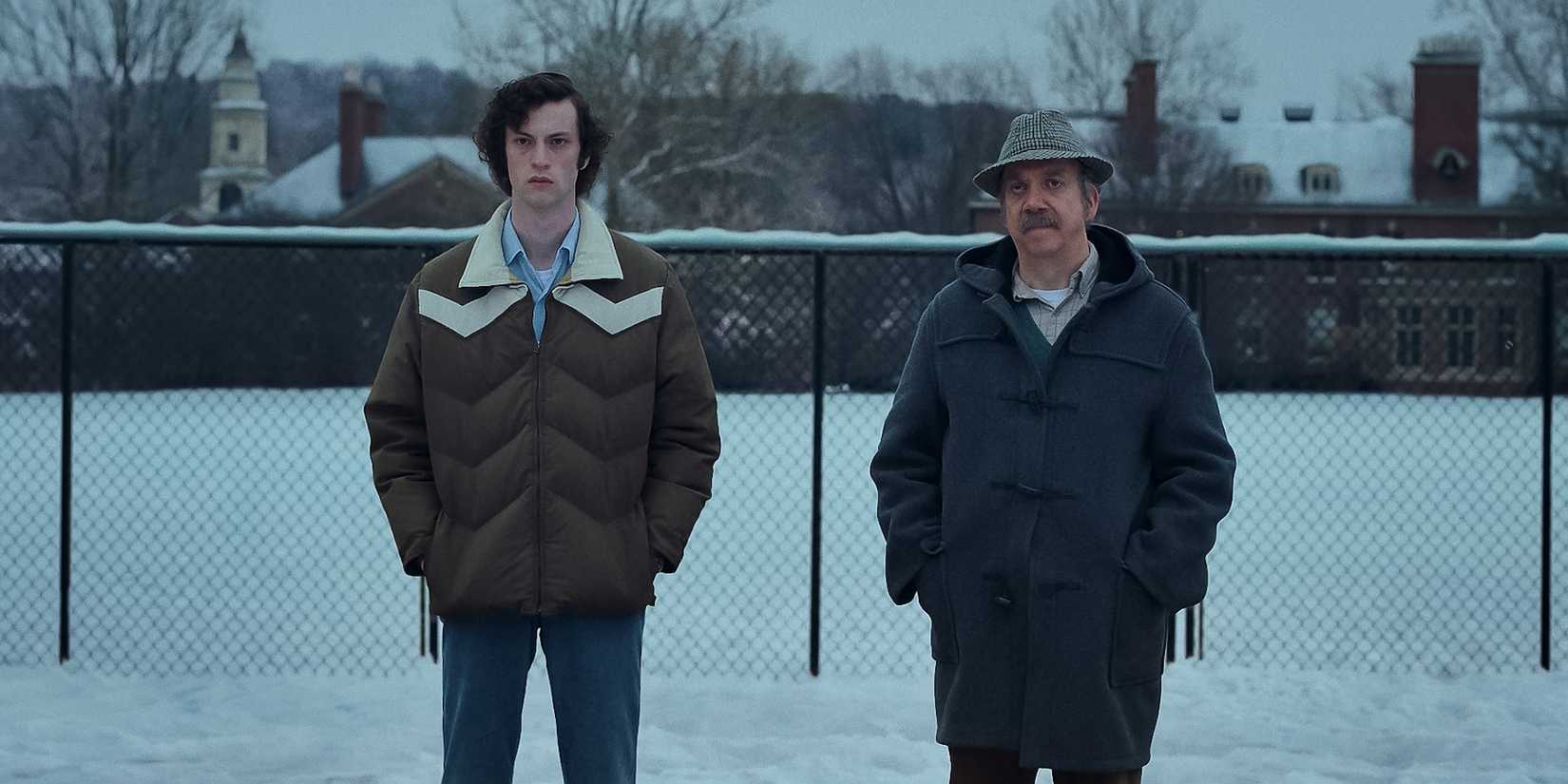 Image via Focus Features
"I don’t like you.' 'I don’t like you either.'" After the underwhelming Downsizing, director Alexander Payne returned to form with The Holdovers, a touching Christmas comedy-drama. In it, a curmudgeonly boarding school teacher (Paul Giamatti) is forced to stay on campus over the Christmas holidays to supervise students who have nowhere else to go, forming an unlikely bond with a troubled teenager (Dominic Sessa) and the school’s grieving cook (Da'Vine Joy Randolph).
That setup sounds like something from a Hallmark melodrama, but Payne and the cast turn it into a poignant and frequently hilarious story of connection and unexpected empathy. The wintery campus setting, warm cinematography, and gentle pacing give the film a cozy, reflective atmosphere that fits the story perfectly. That said, the standout element is Giamatti giving one of his best performances (which is saying something). Initially harsh and cynical, Giamatti gradually reveals layers of vulnerability and humanity beneath the prickly exterior.
'Poor Things'
 Image via Searchlight Pictures
"I want to know everything." Yorgos Lanthimos puts his oddball spin on Frankenstein with this one, and the results are spectacular. Perhaps the strangest movie of 2023, Poor Things follows Bella Baxter (Emma Stone), a woman brought back to life by an eccentric scientist (Willem Dafoe) who embarks on a journey of self-discovery across continents, experiencing the world with fearless curiosity. She navigates relationships and social expectations, in the process challenging the norms that attempt to confine her.
Stone's performance is phenomenal; fiery and vulnerable at the same time, rightly winning her the Best Actress Oscar. Around her, Lanthimos serves up amazingly surreal and imaginative imagery. The world of Poor Things looks like a strange blend of Victorian science fiction and dreamlike fantasy, with exaggerated architecture, vibrant colors, inventive cinematography, and a steampunk edge. Every location, from laboratories to cities, feels like part of a bizarre fairy tale.
'Killers of the Flower Moon'
"These people trusted us." Drawing on real events, this crime epic from Martin Scorsese chronicles the murders of members of the Osage Nation in 1920s Oklahoma, as outsiders conspire to exploit their oil wealth. The plot centers on Mollie Burkhart (Lily Gladstone), an Osage woman whose family becomes the target of a sinister conspiracy, and her husband, Ernest Burkhart (Leonardo DiCaprio), a weak-willed man manipulated by his powerful uncle, William Hale (Robert De Niro).
Through these characters, the movie examines eternal themes of greed, racism, and systemic corruption, all while keeping audiences engaged with a tense, compelling narrative. In particular, Killers of the Flower Moon is interested in how ordinary people can become complicit in terrible crimes. While the performances are strong across the board, it's De Niro who truly shines as the villainous Hale, an arch-manipulator who hides his machinations behind a benevolent face. It all adds up to both an immersive historical drama and an urgent moral inquiry.
'The Zone of Interest'
 Image via A24
"You have to think about the future." The Zone of Interest is one of the best films ever made about the Holocaust, precisely because it never shows us the horrors directly. Instead, it focuses on the domestic life of a Nazi commandant (Christian Friedel) living with his family beside Auschwitz. They are consumed with domestic worries, career uncertainty, and plans for their children, seeming not to spare much thought for the darkness around them. Director Jonathan Glazer uses this story to juxtapose the banality of the family's everyday routines with the horrendous evil occurring just beyond the walls of their home.
One of the film’s most striking techniques is that it rarely shows the violence of the camp directly. Instead, the audience hears distant gunshots, screams, and the constant rumble of furnaces while the camera remains focused on the family’s ordinary routines. If anything, this restrained approach makes the events even more disturbing. The result is a piercing statement on the banality of evil and willful moral blindness.
'Oppenheimer'
 Image via Universal Pictures
"Now I am become Death, the destroyer of worlds." The most complete film of that year was Oppenheimer, which served up crowd-pleasing tension, deep character study, and thoughtful themes in equal measure. Here, Christopher Nolan dramatizes the life of physicist J. Robert Oppenheimer (Cillian Murphy), from his role in developing the atomic bomb to the political and personal consequences that followed. In telling his story, Nolan combines narrative ambition and technical bravura with a deeper interest in psychology.
The rapid dialogue, bold editing, and shifting chronology create a sense of urgency that mirrors the stakes of the events. The director is helped by a brilliant Murphy, delivering a truly towering, Oscar-winning performance as a man grappling with the implications of his work. While this serves us a layered portrait of a single man, the movie also makes for a broader study of the dawn of the atomic age, as well as a cautionary tale about humanity's relationship with its most destructive technology.







 English (US) ·