
 Image via United Artists

Published Feb 15, 2026, 5:42 PM EST
Anja Djuricic was born in Belgrade, Serbia, in 1992. Her first interest in film started very early, as she learned to speak English by watching Disney animated movies (and many, many reruns). Anja soon became inspired to learn more foreign languages to understand more movies, so she entered the Japanese language and literature Bachelor Studies at the University of Belgrade.
Anja is also one of the founders of the DJ duo Vazda Garant, specializing in underground electronic music influenced by various electronic genres.
Anja loves to do puzzles in her spare time, pet cats wherever she meets them, and play The Sims. Anja's Letterboxd four includes Memories of Murder, Parasite, Nope, and The Road to El Dorado.
Sign in to your Collider account
What makes a movie underrated? It's a fact that some films exist just outside the mainstream; they're known, discussed, and often respected, but there's always the issue of them not being fully understood. Some movies get quickly dismissed upon release, some are misunderstood, while many are simply overshadowed by louder or more marketed releases of that same year.
The 20 most underrated movies of the last 100 years definitely have more emotional impact than reputation or influence. They don't lead viewers to easy conclusions, and many don't even offer a clean ending, instead asking us to sit with them. That very refusal to please became exactly what pushed these great films to the margins, except we didn't forget them—they're usually some of our favorites.
20 'Last Night in Soho' (2021)
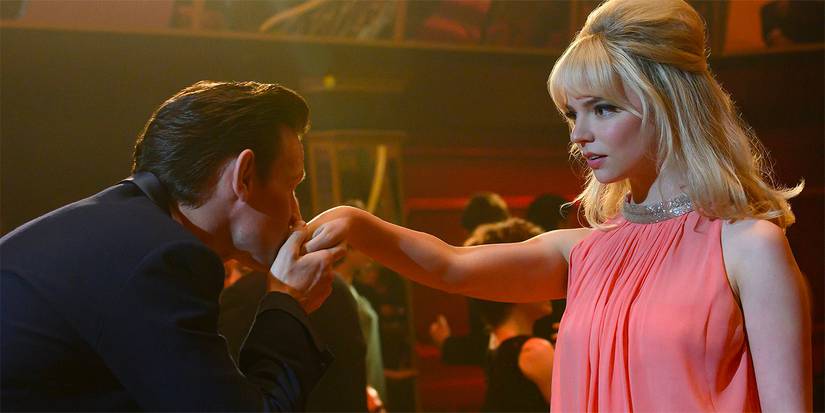 Image via Focus Features
Last Night in Soho is undoubtedly the most underrated movie Edgar Wright has made. Critics and audiences were divided upon release, saying the film is tonally confused and has a messy final act. Compared to Wright's previous crowd-pleasers, Soho does feel colder and somehow angrier, but that is its true appeal. With themes of exploitation, violence, and misogyny, the movie turns from a fantasy into a horror story while also being a daring homage to the Swinging Sixties. Its reputation is already improving as viewers recognize it as a film about historical trauma and gendered violence, not a love letter to the past but an indictment of it.
Last Night in Soho follows Eloise (Thomasin McKenzie), a young girl obsessed with the Swinging Sixties in London, who moves to London to study fashion. When she rents a room with a mysterious elderly landlady, she begins to slip into the past via vivid, dreamlike visions of an aspiring singer named Sandie (Anya Taylor-Joy). Wright makes Soho shift gears midway, leaving the romance behind and turning to paranoia and fear, with Eloise discovering that the past is less glamorous and far more predatory than she imagined.
19 'The Hitch-Hiker' (1953)
 Image via RKO Pictures
Ida Lupino's The Hitch-Hiker is unique for a number of reasons, most notably for being the first noir film directed by a woman during the 1950s. At the time, The Hitch-Hiker was modestly received and primarily treated as a genre curiosity—notable mainly because of Lupino herself. Compared to flashier noirs of the era, and even the rest of Lupino's filmography, The Hitch-Hiker seemed plain. However, modern critics consider it one of the most unsentimental noirs ever made, a film that understands the fragile nature of masculinity and the banality of terror.
The Hitch-Hiker follows two friends, Roy (Edmond O'Brien) and Gilbert (Frank Lovejoy), who embark on a road trip to go fishing in Mexico, and pick up a stranded man along the way, only to discover he’s a sociopathic killer. What follows is a lean, relentless thriller about survival, set against harsh desert landscapes, with tension and dread oozing out of the movie's every pore. The killer, played chillingly by William Talman, is less of a mastermind and more of a suffocating force, mentally tormenting his captives. Interestingly, The Hitch-Hiker was based on real events—the killing spree of Billy Cook that took place during 1950.
18 'Thief' (1981)
Michael Mann is a famous and celebrated director, but Thief is one of his movies that very few people have really heard of. Contemporary critics praised Thief for its style and aesthetics, but it was overshadowed by flashier crime films of the time and dismissed for the fact that Thief was Mann's feature directorial debut. The story was inspired by Frank Hohimer's memoir, The Home Invaders: Confessions of a Cat Burglar, while the electronic music band Tangerine Dream composed and performed the original musical score.
Thief follows Frank (James C'aan), a professional jewel thief who wants one last score before retiring and settling down with a cashier he recently started dating. Mann's experience of filming his first TV movie in Folsom Prison helped him shape Frank, even giving Caan an assignment to research what it's like to be a thief. Caan's performance is physically demanding and profoundly sad, and the tragedy of his character is emphasized by neon-soaked streets and clever lines. Thief is Mann's most human film, in retrospect, though he's always been good at creating character-oriented crime stories.
17 'Ace in the Hole' (1951)
 Image via Paramount Pictures
Ace in the Hole is Billy Wilder's perhaps most controversial movie; it was initially hated and deemed too misanthropic and detrimental to Hollywood and its reputation. Ace in the Hole felt more like an assault than a piece of entertainment compared to Wilder's well-known hits. Even the production of the film required Wilder to be the producer, writer, and director, marking the first fully hands-on film in his career; this doesn't sound like a coincidence considering the controversial topic. Modern critics have reexamined Ace in the Hole as prophetic, particularly in view of contemporary media culture, placing the movie, justly, among Wilder's best achievements.
Ace in the Hole follows Chuck Tatum (Kirk Douglas), a disgraced journalist who uses a man stranded in a cave to salvage his career, transforming the tragedy into an extended media spectacle. As Tatum's greed and narrative cruelly progress toward a bitter ending, the film depicts public complicity, press cynicism, and moral decay in quite a ruthless manner. Ace in the Hole may lack the sentimentality that audiences favored around that time, but if the movie had been made today, it'd have been a satirical spectacle.
16 'The Assassination of Jesse James by the Coward Robert Ford' (2007)
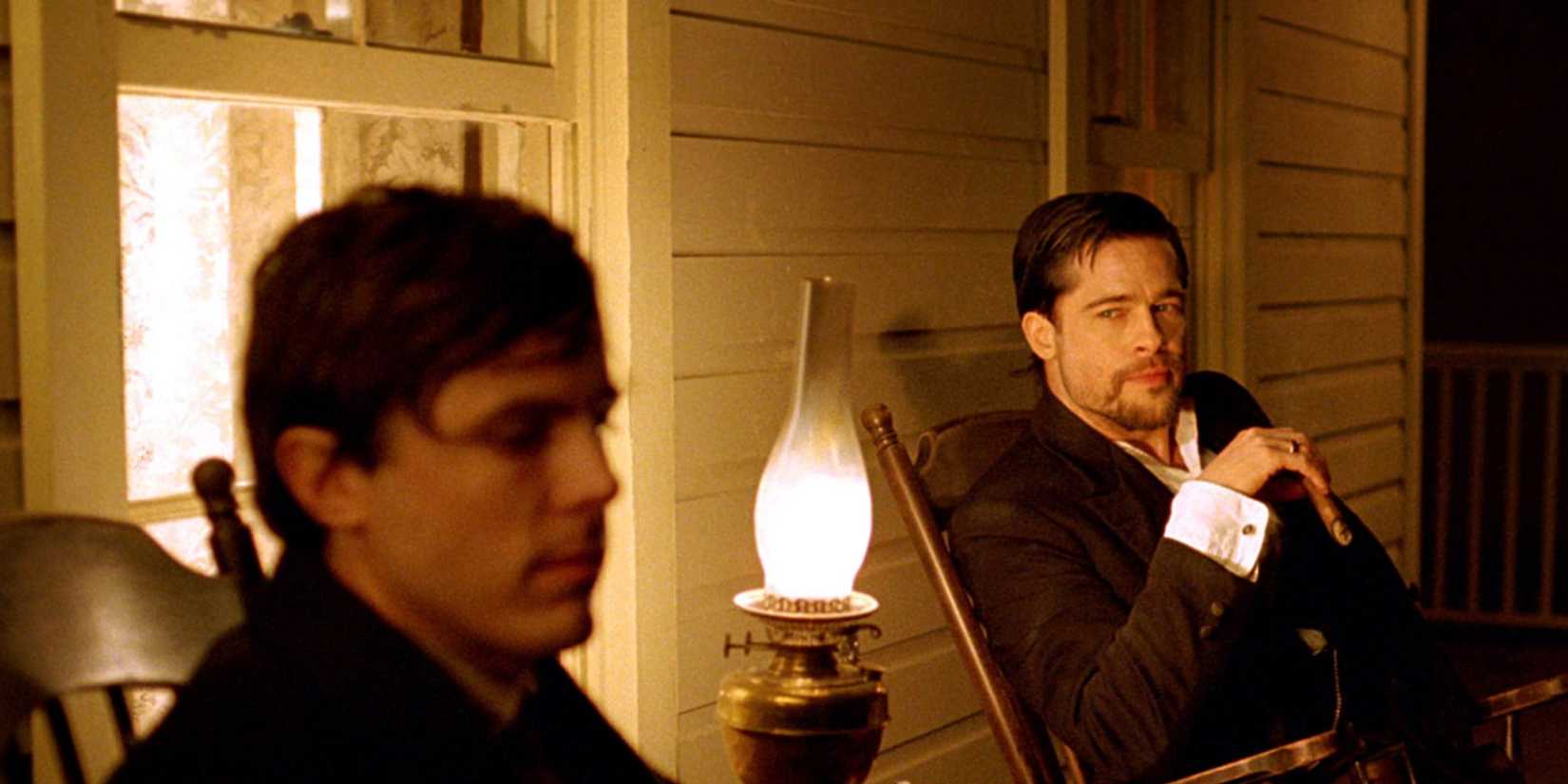 Image via Warner Bros.
In contrast to the bolder 2007 landmarks like There Will Be Blood or No Country for Old Men, The Assassination of Jesse James by the Coward Robert Ford was praised upon release but criticized for being "too long" and "too slow." Today, many people appreciate the movie's emotional impact, which builds up slowly and lingers long after the credits roll. It seems that impatience was the reason for the low rating at first, but the movie rewards those prepared to sit with it; it does demand attention, but it's worth it.
The Assassination of Jesse James by the Coward Robert Ford was based on Ron Hansen's novel of the same name, and it dramatizes the final months of Jesse James (Brad Pitt) through the eyes of Robert Ford (Casey Affleck), a young man in James' crew who at first admires him and then despises him. The film focuses on the slow erosion of the myth of Jesse James and Ford's self-worth, showing the unbearable weight of expectation within one man and his cowardice in the face of disappointment.
15 'The Limey' (1999)
 Image via Artisan Entertainment
The Limey by Steven Soderbergh was praised at the time of release for Terence Stamp's performance and for being chic, stylish, and visually elevated. Yet, The Limey felt colder and more avant-garde compared to Soderbergh's more approachable hits, leaving the movie in '99. However, recent reevaluations have been more compassionate, acknowledging the emotional and expert editing, great dialogue, and stunning visual identity. It distinguished itself in a year full of slick crime movies, yet never got the love it truly deserved.
The Limey follows Wilson (Stamp), an aging English gangster who goes to Los Angeles to look into the death of his daughter. Through nonlinear editing that reflects Wilson's fragmented memory, we slowly get to watch a tale of retaliation and a powerful study of grief. As if Wilson is unable to move on without reliving the past, scenes overlap, repeat, and interrupt one another, placing him back in a cycle of violence that never truly heals anything or ends his misery. It's a powerful crime film, and have you seen the white and red poster? Stunning.
14 'Blow Out' (1981)
 Image via Filmways Pictures
Blow Out is a neo-noir thriller by Brian De Palma, and it was critically praised for its filmmaking techniques but deemed cold by some. Compared to De Palma's more famous and popular successes like Scarface and Carrie, Blow Out really feels like a buried miracle of filmmaking. While it's about political and social trust, vibing along the lines of classic conspiracy thrillers, it's really a movie about making movies, marrying sound and image, and showing them as impossible to observe separately.
Blow Out follows the sound technician, Jack Terry (John Travolta), who, while working on a post-production cut of a slasher film, accidentally captures sound footage of a political assassination. The movie shifts from being about conspiracy to being about Jack's wish to help and do the right thing; the progression of the film depicts disappointment and frustration, emphasizing helplessness in spite of good intentions. Blow Out is now deemed one of the best thrillers ever made, being favorably compared to the films of Alfred Hitchcock.
13 'Sorcerer' (1977)
Sorcerer had the misfortune of being released the same year as Star Wars, which crushed it commercially, resulting in the movie being quickly labeled a failure. Additionally, William Friedkin did use a lot of realism in his movies, but Sorcerer was apparently overly grim and punishing (which is interesting, since The Exorcist exists); critics absolutely hated it. But, over time, Sorcerer became a cult film, getting reappraised as one of the most immersive films ever made about work and survival, changing the critical perspective of the movie by pretty much 180 degrees.
Sorcerer follows four men from different corners of the world who take the very dangerous job of transporting volatile explosives through treacherous jungle terrain in South America. The movie uniquely begins as vignettes of each of the four characters, including Roy Scheider as a mafia driver. After he and three other men come together, the sequences start to show true physical strain, fear, and exhaustion, turning their work into a form of horror. Interestingly, most action films celebrate endurance, but with Sorcerer, the endurance and effort feel punishing. The movie was based on Georges Arnaud's novel The Wages of Fear, and Friedkin deemed it a faithful adaptation, despite critical panning.
12 'The Long Goodbye' (1973)
 Image via United Artists
Did you know Elliott Gould was once Raymond Chandler's famous detective, Philip Marlowe? Robert Altman moves him from the 1940s into the 1970s in Los Angeles, making the underrated satirical neo-noir, The Long Goodbye (named after Chandler's novel). At first controversial, The Long Goodbye confused everyone who expected a conventional mystery and angered lovers of vintage noir. It felt weak and meandering in comparison to more well-known Altman movies, though its purpose has become clearer with time; upon rerelease, one of the critics that loved the film was Roger Ebert, who placed it into his Great Movies collection.
The Long Goodbye follows Marlowe, who is asked by a friend to help him escape to Mexico. Marlowe does, but upon returning to America, he is arrested for helping a fugitive. Marlowe is released and tries to get to the bottom of the mystery, witnessing moral decay along the way and increasingly looking bewildered and out of the loop. However, Marlowe is morally straight and narrow and kind, so the movie becomes less about cracking a case and more about seeing a good man come to the realization that decency is no longer important. The Long Goodbye is a reverse noir in many ways, and it's understandable why contemporary critics were so angry about it, but looking at it today, it's a classic worthy of analysis and admiration. We owe Altman and Gould some apologies, it seems.
11 'Nope' (2022)
 Image via Universal Pictures
Nope presents itself as a UFO thriller, but knowing Jordan Peele, it's way deeper than that. In fact, Nope examines exploitation and survival in the entertainment industry while serving as a clear homage to sci-fi classics, most notably Steven Spielberg's works. Peele's third feature film received less critical acclaim than Get Out or Us; audiences also expected another social horror but found something slower and stranger. This was undoubtedly why Nope was met with some resistance, but we have to give credit where credit is due—it has some of the most stunning cinematography and sound design ever crafted, and it's a beautiful, exciting movie filled with silent dread.
Nope follows siblings OJ and Emerald Haywood (Daniel Kaluuya and Keke Palmer), who are horse wranglers for Hollywood projects, and whose father is mysteriously killed by everyday objects falling from the sky. OJ and Emerald realize there's a mysterious presence in the skies above their ranch, and they try to film it and get rich off of the footage. Looking back, Nope is Peele's most ambitious work; less crowd-pleasing, sure, but richer, more akin to Close Encounters of the Third Kind than a modern horror.






 English (US) ·