
The video game landscape continues to evolve with every passing year, and that is because of its sheer popularity, with titles such as Elden Ring and Clair Obscur: Expedition 33 paving a bright future ahead of gamers. 2026 is already an incredible year for gaming, and 2027 will likely be better. However, the best year for video games wasn't any recent year, but rather 1998.
Fans can probably think of a handful of years that were true standouts in terms of gaming, like 2007, 2011, and 2017, but even before that, 1998 stood supreme. If fans are still skeptical, then look no further than this list, which will feature ten video games from 1998 that prove it was the best based on influence, originality, gameplay, innovation, design, visuals, narrative, popularity, critical acclaim, and overall quality.
10 'Grim Fandango' (1998)
 Image via LucasArts
1998 was full of major hits and underrated titles, and somehow, Grim Fandango is both, because it was once critically acclaimed but is now forgotten. Manny Calavera is a travel agent of the dead, but when he learns of an underworld conspiracy that threatens the usual four-year journey to the ninth underworld, he must stop it for the good of the dead and his job.
Maybe it is just because 1998 was such an incredible year for gaming, but Grim Fandango isn't talked about enough despite being so well-made. Even though it was overshadowed by other titles, it is still a creative masterpiece. The blend of Aztec folklore and detective noir is unique, but it is more than an aesthetic; Grim Fandango is a narrative heavyweight.
9 'Xenogears' (1998)
 Image via Square
The 1990s really excelled in terms of RPG titles, with JRPGs in particular finding their footing, and one of the best ever is Xenogears. Playing as Fei Fong Wong, who is exiled from his village after accidentally destroying it, players then go on an adventure and clear his amnesia. However, this journey leads him into a world of danger and the unknown.
Xenogears can be pretty text-heavy, but it also has the best story out of all JRPGs. The absolute scale of the narrative is extremely ambitious, diving into mature and profound themes such as gnosticism, psychology, and philosophy, which it uses to build the lore and plot around it. The intriguing narrative remains a staple of the JRPG genre and boasts a riveting story everyone should experience, proving why it is one of the best turn-based RPGs.
8 'Tekken 3' (1998)
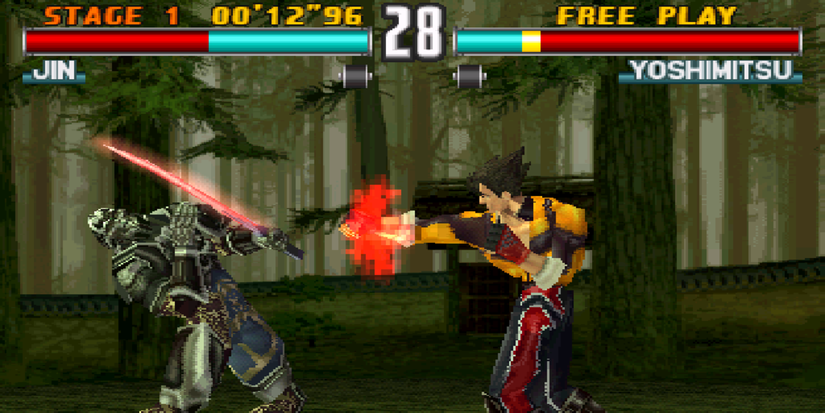 Image via Namco
Fighting games were a staple of the arcade era in the 1980s, but they never went out of style, simply shifting to consoles, like Tekken, which released Tekken 3 in 1998. The King of Iron Fist Tournament is a massive event where some of the strongest fighters in the world gather to compete against a mysterious entity known to be the strongest in the world.
It is hard for fighting games to reinvent the genre without straying too far, but Tekken 3 pioneered 3D fighting video games. The fully realized 3D movement allowed players to shift in a circle around the arena, adding another layer of depth to combat, making it more strategic. Not only that, but Tekken 3 was also gorgeous for the time, easily being a must-play fighting game of the late 1990s.
7 'Banjo-Kazooie' (1998)
 Image via Nintendo
This list surprisingly doesn't feature that many platforming games, which is shocking because this decade was littered with them. At least 1998 delivered Banjo-Kazooie, which follows the titular duo on an adventure through multiple worlds to rescue Banjo's sister from the evil and ugly witch who captured her.
Everyone loves a collect-a-thon, and Banjo-Kazooie refined the genre perfectly, creating a polished platforming experience that was the height of this franchise. The varied worlds and complex level design made every new level fun to explore, with each new puzzle posing a fun yet rewarding challenge. Banjo-Kazooie needs a modern revival, because it can't just be stuck in 1998.
6 'StarCraft' (1998)
 Image via Blizzard
The '90s were a time when video games could reinvent themselves and establish new genres, and StarCraft was one of the best, constantly expanding itself with each update. The game is set in the Koprulu Sector, a lawless region of space where exiled humans are forced to live, but this leads to an endless battle between them and a hive-minded alien race.
StarCraft and other games like it feature an addictive gameplay loop that hooked everyone in 1998. However, the real reason it is so popular is because of its worldbuilding, which features three distinct factions with their own unique strengths, history, philosophies, and culture. This bleeds into the design and narrative, building a complex history that clashes and evolves with each other.
Collider Exclusive · Sci-Fi Survival Quiz Which Sci-Fi World Would You Survive? The Matrix · Mad Max · Blade Runner · Dune · Star Wars
Five universes. Five completely different ways the future went wrong — or sideways, or up in flames. Only one of them is the world your instincts were built for. Eight questions will figure out which dystopia, galaxy, or desert wasteland you'd actually make it out of alive.
💊The Matrix
🔥Mad Max
🌧️Blade Runner
🏜️Dune
🚀Star Wars
TEST YOUR SURVIVAL →
01
You sense something is deeply wrong with the world around you. What do you do? The first instinct is often the truest one.
APull on every thread until I understand the system — then figure out how to break it. BStop asking questions and start stockpiling — food, fuel, weapons. Questions don't keep you alive. CKeep my head down, observe carefully, and trust no one until I know who's pulling the strings. DStudy the patterns. Every system has a rhythm — learn it, and you learn how to survive it. EFind the people fighting back and join them. You can't fix a broken galaxy alone.
NEXT QUESTION →
02
In a world of scarcity, what resource do you guard most fiercely? What we protect reveals what we believe survival actually requires.
AKnowledge. If you understand the system, you don't need resources — you can generate them. BFuel. Everything else — movement, power, escape — runs on it. CTrust. In a world of fakes and informants, a truly reliable ally is rarer than any commodity. DWater. And after water, information — the two things empires are truly built on. EShips and credits. The galaxy is big — you survive it by being able to move through it freely.
NEXT QUESTION →
03
What kind of threat keeps you up at night? Fear is useful data — if you're honest about what you're actually afraid of.
AThat reality itself is a lie — that everything I experience has been constructed to keep me compliant. BA raid. No warning, no mercy — just the roar of engines and then nothing left. CBeing identified. Once someone with power decides you're a problem, you're already out of time. DBeing outmanoeuvred — losing a political game I didn't even know I was playing. EThe Empire tightening its grip until there's nowhere left to run.
NEXT QUESTION →
04
How do you deal with authority you don't trust? Every dystopia has a power structure. Your approach to it determines everything.
ASubvert it from the inside — learn its rules well enough to weaponise them against it. BIgnore it and stay out of its reach. The further from any power structure, the better. CAppear to comply while doing exactly what I need to do. Visibility is the enemy. DManoeuvre within it carefully. You can't beat a system you refuse to understand. EResist openly when I have to. Some things are worth the risk of being seen.
NEXT QUESTION →
05
Which environment could you actually endure long-term? Survival isn't just tactical — it's physical, psychological, and very much about where you are.
AUnderground bunkers and server rooms — cramped, artificial, but with access to everything that matters. BOpen wasteland — brutal sun, no shelter, constant movement. At least the threat is honest. CA dense, rain-soaked city where you can disappear into the crowd and nobody asks questions. DMerciless desert — extreme heat, no water, and something enormous living beneath the sand. EThe fringe — backwater planets and busy spaceports where the Empire's attention rarely reaches.
NEXT QUESTION →
06
Who do you want in your corner when things fall apart? The company you keep is the clearest signal of who you actually are.
AA tight crew of believers who've seen behind the curtain and have nothing left to lose. BOne or two people I'd trust with my life. Any more than that and someone talks. CNobody, ideally. Alliances are liabilities. I work alone unless I have no choice. DA community bound by shared hardship and mutual survival — people who need each other to last. EA ragtag team with wildly different skills and total commitment when it counts.
NEXT QUESTION →
07
Where do you draw the line — if you draw one at all? Every survivor eventually faces a moment that tests what they're actually made of.
AI won't harm the innocent — even the ones who'd report me without hesitation. BI do what I have to to protect the people I've chosen. Everything else is negotiable. CThe line shifts depending on who's asking and what's at stake. DI draw a long-term line — nothing that compromises my people's future, even if it'd help now. ESome lines, once crossed, can't be uncrossed. I know which ones they are.
NEXT QUESTION →
08
What would actually make survival worth it? Staying alive is one thing. Having a reason to is another.
AWaking others up — dismantling the illusion so no one else has to live inside it. BFinding somewhere — or someone — worth protecting. A reason to keep moving. CAnswers. Understanding what I am, what any of this means, before time runs out. DLegacy — shaping the future in a way that outlasts me by generations. EFreedom — for myself, for others, for every world still living under someone else's boot.
REVEAL MY WORLD →
Your Fate Has Been Calculated You'd Survive In…
Your answers point to the world your instincts were built for. This is the universe your temperament, your survival instincts, and your particular brand of stubbornness were made for.
The Matrix
You took the red pill a long time ago — probably before anyone offered it to you. You're a systems thinker who can't help but notice the seams in things.
- You're drawn to understanding how the system works before figuring out how to break it.
- You'd find the Resistance, or it would find you — your instinct for spotting constructed realities is the machines' worst nightmare.
- You function best when you have access to information and the freedom to act on it.
- The Matrix built an airtight prison. You'd be the one probing the walls for the door.
Mad Max
The wasteland doesn't reward the clever or the well-connected — it rewards those who are hard to kill and harder to break. That's you.
- You don't need comfort, community, or a cause larger than the next horizon.
- You need a vehicle, a clear threat, and enough fuel to outrun it — and you're good at all three.
- You are unsentimental enough to survive that world, and decent enough — just barely — to be something more than another raider.
- In the wasteland, that distinction is everything.
Blade Runner
You'd survive here because you know how to exist in moral grey areas without losing yourself completely.
- You read people accurately, keep your circle small, and ask the questions others prefer not to answer.
- In a city where humanity is a legal designation rather than a feeling, you hold onto something that keeps you functional.
- You're not a hero. But you're not lost, either.
- In Blade Runner's world, that distinction is everything.
Dune
Arrakis is the most hostile environment in the known universe — and you are precisely the kind of person it rewards.
- Patience, discipline, and political awareness are your core strengths — and on Arrakis, they're survival tools.
- You understand that the long game matters more than any single victory.
- Others come to Dune and are consumed by it. You'd learn its logic and earn its respect.
- In time, you wouldn't just survive Arrakis — you'd begin to reshape it.
Star Wars
The galaxy far, far away is vast, loud, and in a constant state of violent political upheaval — and you wouldn't have it any other way.
- You find meaning in being part of something larger than yourself — a cause, a crew, a rebellion.
- You'd gravitate toward the Rebellion, or the fringes, or whatever pocket of the galaxy still believes the Empire's grip can be broken.
- You fight — not because you have to, but because standing aside isn't something you're capable of.
- In Star Wars, that willingness is what makes all the difference.
↻ RETAKE THE QUIZ
5 'Baldur's Gate' (1998)
 Image via BioWare
Real-time strategy games were a hit back in the 1990s, like StarCraft, but on the opposite end of sci-fi are fantasy games like Baldur's Gate. The franchise would become even bigger later, but this game is where it all began. After players are forced out of their fortress because of their father's murder, they uncover a dark conspiracy that they must stop.
Despite what fans may think, RPGs in the West were starting to fail. That was until Baldur's Gate came out and single-handedly saved it through innovative mechanics. Baldur's Gate 3 would end up being one of the best modern fantasy games, but the first one was a staple of the 1990s. With its advanced game engine bringing the tabletop experience to life, this real-time fantasy is a defining title of 1998.
4 'Resident Evil 2' (1998)
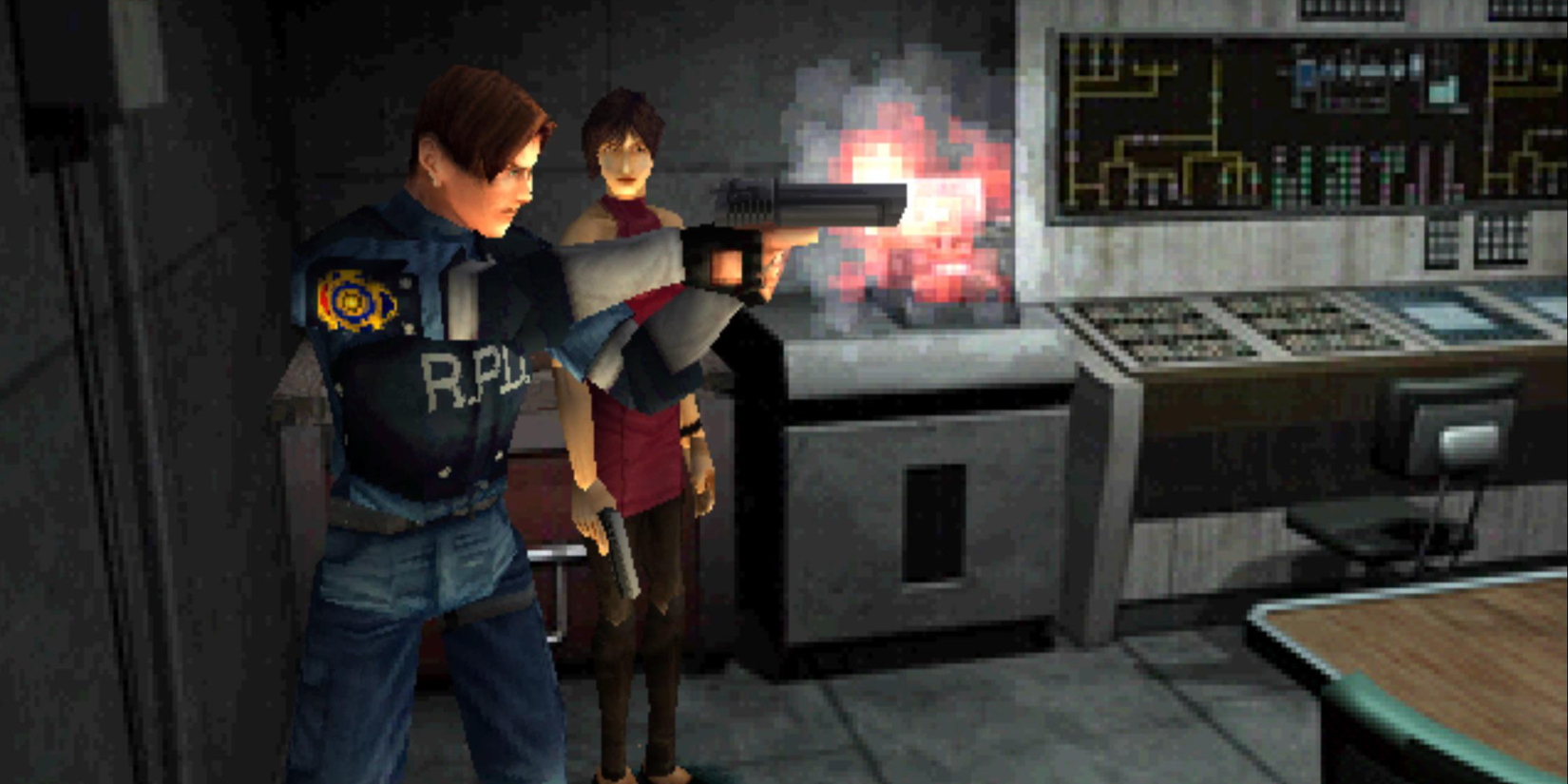 Image via Capcom
Resident Evil is celebrating its 30th anniversary in 2026, and while the first game didn't come out in 1998, Resident Evil 2 did, and that is when the franchise really took off. Leon S. Kennedy is a rookie police officer stationed in Raccoon City, and his debut gets a whole lot worse when the city is infected by a plague that turns all the residents into zombies.
The first game was good, but Resident Evil 2 shaped the horror genre with its stationary camera angles, resource management, and tense gameplay. With its defining gameplay and frightening atmosphere, Resident Evil 2 was a horror masterclass that was yet another landmark of 1998, proving the year stands above most with so many essential classics.
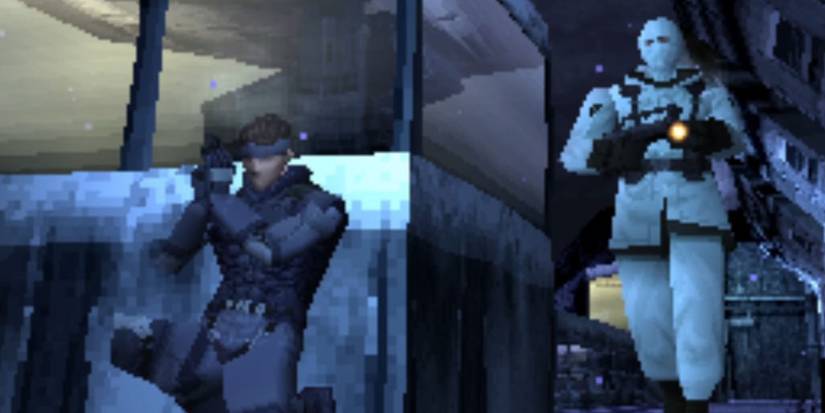 Image via Konami
Hideo Kojima is a legendary game designer who is still a legend today, but it was 1998 when he got his big break, releasing Metal Gear Solid. Players control Solid Snake, a once-retired special ops soldier who comes back into the line of duty to take on a dire mission. When a rogue special forces unit takes over a nuclear facility and holds hostages captive, players must stop them before they release a deadly weapon into the world.
1998 featured many defining video games that not only represent their genre, but the decade as a whole, including Metal Gear Solid. It is an essential stealth game that influenced the genre with its movie-like camera angles, visual prestige, tense stealth gameplay, and compelling combat. Metal Gear Solid is one of the best games of the past 30 years, and it has remained so despite being older, proving to be a testament to 1998.
2 'Half-Life' (1998)

1998 featured a lot of franchise-starting games, like Metal Gear Solid, Baldur's Gate, and Half-Life, Valve's most iconic video game. Gordon Freeman is a theoretical physicist, but when he and his team accidentally open a portal to an alien world, they must now escape the facility, which is overrun by aliens trying to take over Earth.
Some influential classics were released in 1998, and Half-Life was a genre-redefining sci-fi game that reinvented the way game narratives were handled. By combining the story and gameplay, the flow of both was no longer interrupted, instead working together. Not only that, but Half-Life's physics engine was ahead of its time, and it was still fun to play, making it a video game that still holds up nicely.
1 'The Legend of Zelda: Ocarina of Time' (1998)
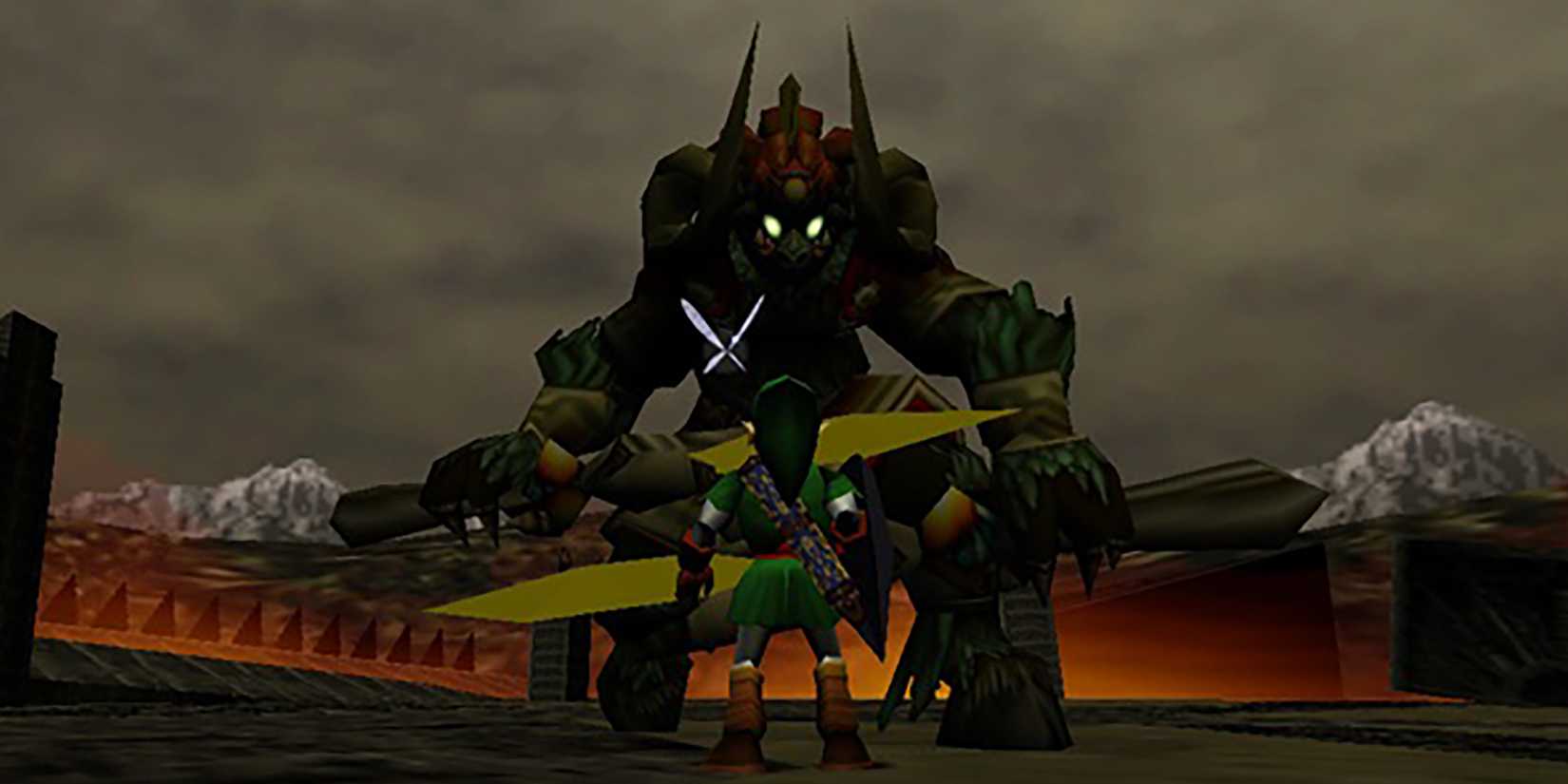 Image via Nintendo
The Legend of Zelda is one of the biggest video game franchises of all time, and while it didn't start in 1998, it did have a revolutionary entry come out. The Legend of Zelda: Ocarina of Time follows a forest boy named Link going on a grand adventure through the present and future in order to rescue Princess Zelda, who was kidnapped by Ganondorf. However, he will have to conquer dungeons and earn the Triforce of Courage to stop the Gerudo King.
1998 was full of some of the greatest video games of all time, and this list shows that, but it isn't complete without The Legend of Zelda: Ocarina of Time. This wasn't just the best video game from 1998; it is arguably the best video game of all time. From creating Z-targeting, a mechanic still used in 3D adventure games today, to the intricate design of the dungeons, this game was a wake-up call to the industry to understand just what gaming is capable of. 1998 was the best year for gaming in history, but Ocarina of Time was just the cherry on top to cement that.









 English (US) ·