
With Netflix's 1899 ending after only one season, the cliffhanger twists and turns of its eight episodes demand a bit of explanation. Throughout its run,1899 explained a multitude of sci-fi concepts and narrative devices without offering a clear explanation for any of them.
To add another layer of intrigue and drama, 1899 ended each episode with a puzzling cliffhanger while gradually unfolding the traumatic backstories of its primary characters. 1899 had the best of both of its genres and delivered one of the most mind-bending shows in recent memory.
While the Netflix original series took its time to unravel its underlying mysteries and intentionally kept viewers white-knuckled with its slow pace, it proved rewarding when it unveiled the core that held its baffling plot points together.
1899 also boasted impressive set design, diverse characters, and myriad relatable themes dealing with sexuality, death, religious fanaticism, and class divides. Netflix decided to cancel 1899 despite its success. With so much going on in its eight-episode run, the 1899 ending served up even more questions than it did answers.
The Kerberos And The Prometheus In 1899 Explained
Kerberos Is Not An everyday Ship

A ship named Kerberos is the primary setting for 1899's roster of diverse characters, while Prometheus is another ship that had reportedly gone missing before Kerberos set sail.
Early in 1899, it becomes evident that Kerberos is no ordinary ship and accommodates many technologies that are almost incomprehensible to the passengers. 1899 takes a dark turn when Kerberos' crew receives a message from a nearby ship, which, upon discovery, turns out to be Prometheus.
After finding only a young boy, Elliot, on the ghost ship, Prometheus' crew takes him onboard and sets sail back home. Little do they realize that another passenger from Prometheus named Daniel has boarded the ship.
Chaos ensues on the Kerberos when passengers start dropping dead, while Daniel attempts to force Maura (Emily Beecham) into questioning her sense of perception. 1899 explained these mysterious events in its last few episodes by revealing that the ship is a simulation that has been manipulating the passengers' reality.
Everything from their memories to their physical appearance is a construct of the simulation.
From a mythological standpoint, Cerberus/Kerberos is the three-headed guard dog who prevents the dead from escaping the underworld. Given how 1899's Kerberos serves as a prison of perception and reality for the passengers, the name makes sense.
Similarly, the other ship's name comes from the Greek myth of Prometheus, who was punished with eternal torment for stealing fire from Mt. Olympus and parallels the passengers living in endless loops of their simulated traumas.
Who Created The Simulation In 1899?
There Is A Red Herring Surrounding The Nature Of 1899's Reality
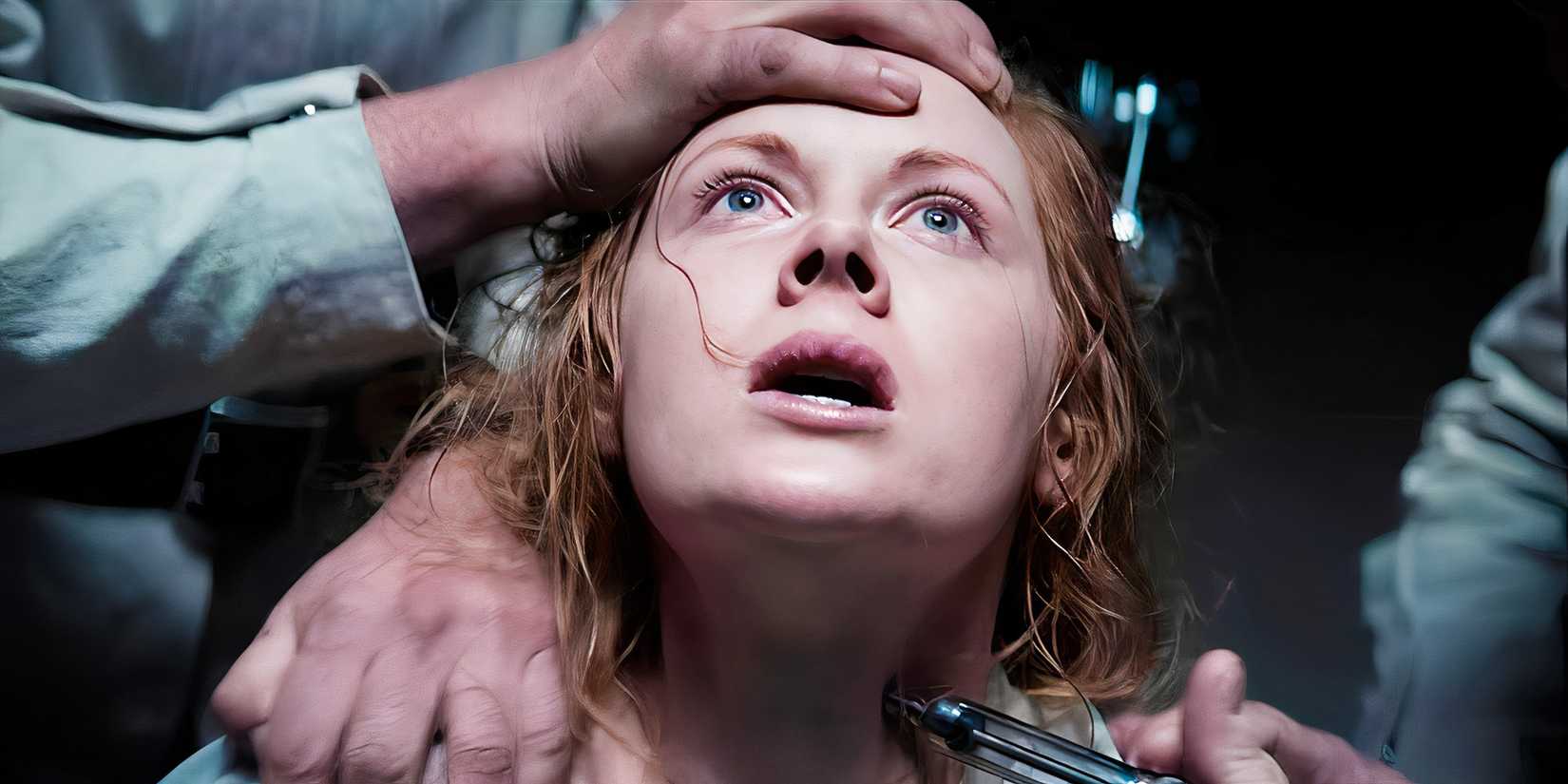
Red herrings in early episodes of 1899 explained initially that Maura’s father, Henry Singleton (Anton Lesser), is the evil genius behind the simulation. For instance, Maura keeps claiming that her father removed her memories after she and her brother learned about his secret experiments on the ship.
In another scene, Henry spies on the passengers of Kerberos from the comfort of his room. While these moments are convincing enough to suggest that Henry is the simulation's architect, the 1899 ending reveals that Maura is its creator.
Outside the simulation, Maura once lived with her husband Daniel (Aneurin Barnard), and son Elliot (Fflyn Edwards). When Elliot's health started declining due to a mysterious disease, she could not deal with the pain and grief. In an attempt to "preserve" her son, she transferred his consciousness to a simulated reality where she and Daniel could spend time together.
1899 explained little of how the simulation grew from a child's playroom to a multi-layered system, or how Henry was part of it. However, it seems likely that many other forces got involved with the technology and escalated it into chaos.
Working this to his advantage, Henry misused his daughter's technology by creating more simulations inside his primary simulation to study the dark depths of the human brain.
Maura explains his downward spiral in a brief conversation with Eyk (Andreas Pietschmann) by recalling that her mother had Alzheimer’s, which gradually destroyed her ability to recognize family members. After her death, Henry started coping with his loss by meticulously studying the human mind, hoping to find answers about his wife's illness.
With time, he took this too far by making his daughter and her family victims of his experiments. The fact that Maura purposefully chose to erase her memories to deal with the traumatic death of her son proves to be both a boon and a bane for Henry.
While it allows him to manipulate her technology and use it for his benefit, he finds himself in trouble when he realizes that only Maura possesses the code to escape the simulations.
What The Pyramid, The Beetle, And The Key Mean In 1899's Simulation
The Symbols Are Codes For The Simulation

The boy's pyramid and Maura's key are the codes required to end the simulations, as 1899 explained in later episodes. Since Maura had no memories of her past life, she could not recall anything about the key. Henry puts her through those recurring simulations to help her recall where she kept it.
It is also possible Henry placed those pyramid symbols all over the ship to jog her memory, or Maura put them there to remember the key after losing her memory. The latter seems plausible since the pyramid and key symbol are tattooed behind her son's ear.
1899 explained details symbolically which demanded deeper reflection. Just like the pyramid and the key, the beetle is also a code that unlocks closed doors. The beetle's significance harkens back to one of Maura's memories from the real world.
In the memory, Maura asks Elliot to free a beetle he traps in a jar to teach him the proverbial "set them free if you love them." Owing to this, the beetle probably gets manifested or designed as a code for literal freedom from locked doors in the simulation.
Are The Trapdoor Simulations Real Reflections Of The Past?
Their Nature Hasn't Been Confirmed, But There Are Theories

As 1899 explained, there is a trapdoor under every passenger's bed. Each trapdoor opens to an underground chamber leading to a simulation of the respective passenger's disturbing past.
Considering how every character's past was likely a mere construct, the trapdoor simulations probably have nothing to do with the passengers' reality. This is further confirmed when the passengers start going through each other's memory simulations after Daniel alters the code.
The Virus In 1899 Explained
The Black Substance Comes From A Hack

Massive black structures start growing out of the ship's walls towards the 1899 ending, and when Virginia Wilson (Rosalie Craig) touches one, the black mass starts spreading all over her body.
Like everything else in the simulation, the black substance is also a code that represents a virus. Daniel intentionally hacks into the system and introduces the virus to the simulation to prevent Henry from restarting the loop. This explains why he asks other passengers to avoid touching it.
What Plato's Cave Allegory Means In 1899
The Netflix Show Harnesses A Foundational Philosophical Theory

In his allegory, titled "The Cave," Plato describes a hypothetical scenario where a group of people is chained inside a cave, and all they can see is a blank wall in front of them. The wall reflects shadows from the real world behind them but never gives them an accurate depiction of reality.
Despite the limitations in their perception, the cave people accept the reality they are presented with because it is the only reality they know.
Movies like the Christopher Nolan sci-fi film Interstellar, Martin Scorsese's Shutter Island, and even Wachowskis' The Matrix made references to the same allegory. Henry recalls that Maura used to obsess over Plato's allegory when she was younger. That is probably where she found inspiration for creating alternative realities — or, rather, shadows of reality — through simulations.
However, after she lost her memories and Henry took control of her simulations, he became the bearer of reality while her simulation became a mere shadow on the wall. Since Henry, too, is part of a simulation, Plato's allegory is an endless cycle in 1899 where the leader of the simulation chain remains unknown.
How Henry's Black And White Syringes Work
They Each Serve A Specific, Important Purpose

Like all objects in the simulations, both injections are codes that serve a specific purpose. Their function is similar to the blue and red pills in The Matrix in that they alter the perception of those taking them.
Henry uses the black injection to reset Maura's memories and send her into a new simulation. In contrast, he uses the white one to restore his memories and subsequent understanding of reality. 1899 explained little about the syringes explicitly, but their uses were shown in the events of the series.
Why Cirian Took Control Of Maura’s Simulation
No Official Reason Has Been Given

Towards the 1899 ending, Henry gets his hands on the pyramid and the key, but Daniel still manages to stay one step ahead. Daniel manipulates the syringe's code in such a way that when Henry injects its black serum into Maura, she reaches the first simulation playroom that she had created for her son.
This is where Daniel tells her that he also changed the key's code to Laura's ring and the pyramid's code to a toy in Elliot's playroom. Using the new key and pyramid, Maura finally breaks out of the simulation loop in the show's closing arc.
However, considering how Daniel warns her that her brother Cirian has taken over the simulations, her journey seems to be far from over. Cirian's identity and motivations remain unknown even after the 1899 ending.
It is clear, though, that at the end of 1899, he is at the top of the simulation chain and is perhaps the only one experiencing reality as it is; others are just perceiving the shadows of reality that he wants them to see.
Has Maura Escapes The Simulation In 1899's Ending?
Most Of The Ending Is Speculation

The 1899 ending sees Maura wake up in a space station where she finds the other passengers plugged into a machine. This confirms that no one died on that ship. She finds a screen that reveals the name of the space station as "Project Prometheus" and the present year as "2099."
This is followed by a "Welcome to Reality" message from Cirian, which confirms that he knows about his sister's escape from the simulation.
Since 1899 ends after this, whether Maura has escaped all simulations or was simply trapped in another is pure speculation. However, since the space station shares its name with the ship, it is possibly another simulated reality created by Cirian.
Another detail confirming this is the phrase “may your coffee kick in before reality does” that Cirian leaves for Maura in the space station. In a previous scene, Anker and Ramiro find the same phrase written all over a book in the ship's control room.
Although 1899 never explained the phrase's significance, it seems to be Cirian's way of poking fun at his prisoners. By alluding to the false sense of wakefulness that comes when the brain is flooded with dopamine after the consumption of coffee, Cirian seems to insult Maura and others who willingly chose to live in fake simulations just to deal with the burdens of their realities.
Since he greets her with the same message in the space station, he may be about to put her and the passengers through another puzzling simulation.
The Real Meaning Of The 1899 Ending
The Netflix Cancelation Means 1899's Complex Thematic Depth Wasn't Fully Explored

1899 was canceled by Netflix before season 2 arrived, despite the story of the German period sci-fi still clearly having much more ground to cover. As such, it's difficult to determine exactly what the ending of 1899 means, because the point that the show finished on wasn't the ending of the series, but merely a single chapter of it.
However, since the final moments saw Maura waking up on a space station in 2099, there are some hints about the wider meaning of 1899's story.
It's clear that 1899 is a show that wants viewers to question the nature of reality. While the "the characters exist in a simulation" trope has been used before (most famously, of course, by The Matrix movies), 1899 revisits the idea but with the extra depth afforded by the additional screen-time of a TV show.
What's more, 1899 does something quite unique by having Maura not have any memories of creating 1899's simulated reality.
There are additional layers to this too. Maura tried to keep her dead son, Elliot, alive by transferring his consciousness into the simulation. This, combined with her amnesia about the fact she's living in a simulation of her own design, clearly hints that the meaning behind 1899 would have focused on denial and trying to escape from the emotional pain of tragic loss.
Unfortunately, because Netflix canceled 1899 after season 1, it seems that viewers will never know for certain how the full story would have played out and what the deeper meaning behind it would be. Many fans have started petitions to try and get 1899 renewed, and the thematic depth of the story is a key reason for this.
It is obvious that the ending of 1899 would have been something more than the reveal that the Kerberos exists in a simulation, which was only a step on the wider journey Jantje Friese and Baran bo Odar's cerebral sci-fi was taking viewers on.
Why 1899 Was Canceled After Season 1
Its Completion Rate Was Low

1899 season 1 had an incredibly high budget, totaling up to around $60 million. While the series performed fairly well on Netflix, logging around 257 million viewing hours in its first month, its viewership numbers did not reach Netflix's high expectations. Even the show's completion rate was significantly low, suggesting that many viewers started the series but did not complete it.
On Netflix, a low completion rate is seen as a sign that the demand for another season would be significantly low. Owing to this, 1899 was not given the opportunity to continue its run beyond season 1. Showrunners Jantje Friese and Baran bo Odar had planned a 3-season arc for 1899, but their plans were unfortunately cut short.
Even as a one-season wonder, though, 1899 still holds up quite well. It does, however, leave viewers with many unanswered questions in its final arc.

Release Date 2022 - 2022-00-00
Network Netflix
Showrunner Baran Bo Odar
Directors Baran bo Odar
Writers Jantje Friese, Darío Madrona, Emil Nygaard Albertsen, Emma Ko, Jerome Bucchan-Nelson, Juliana Lima Dehne
-

Andreas Pietschmann
Eyk Larsen
-

Emily Beecham
Maura Franklin

 English (US) ·