
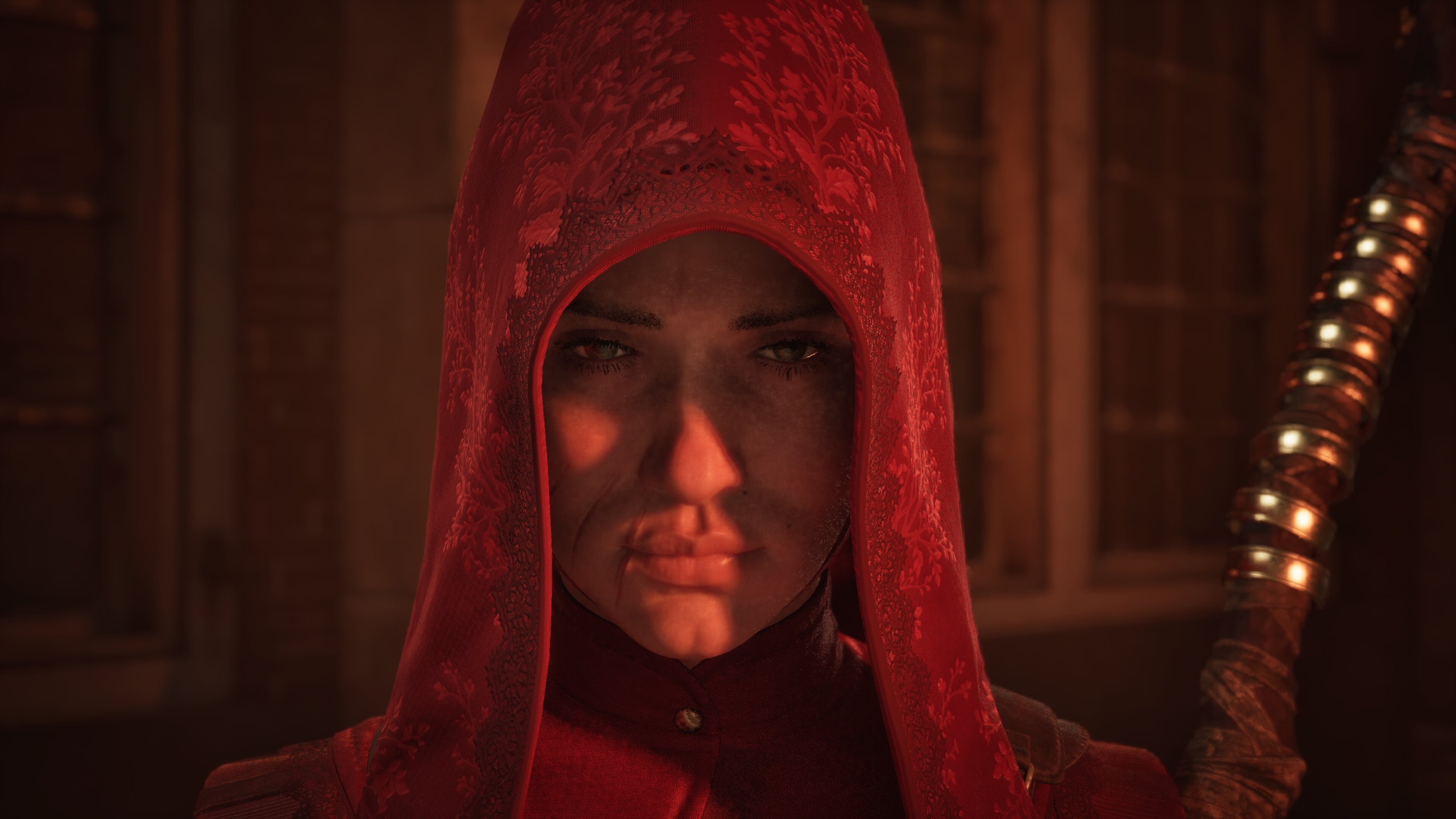
As the entire gaming industry rearranges its calendar to avoid Rockstar’s impending juggernaut, another long-gestating title has quietly emerged from the shadows – 1666: Amsterdam.
Hitting Steam Early Access in August this year after 13 years of development hell, this tale of kittens and covens is the brainchild of Assassin’s Creed 1 & 2 and Prince of Persia: The Sands of Time director Patrice Désilets.
Revealed during 2026’s Summer Games Fest, this tale of sorcery and witchcraft immediately turned heads. As a hooded wiccan soared across thatched rooftops and ducked and weaved her way between soldier-ridden canals, crimson curses and talking cats teased an exciting, thematically unique-looking adventure. Yet despite its refreshing spin on open-world traversal, this time-bending tale took its first steps into existence all the way back in 2011.
"It’s been a long journey,” reflects Désilets with a warm but weary smile, sitting opposite me in a brightly-lit cardboard office, erected in the business area at Gamescom. Picking up the controller to proudly show off his gothic adventure, he takes one of the game’s dual protagonists for a covert stroll down a packed Amsterdam canal street, before shaking off her civilian disguise and raining hex-induced havoc on the screaming populace.
Once championed as THQ’s Assassin’s Creed beater, the inspiration for 1666 first took hold on a 2011 holiday to the Dutch capital. “Walking around, seeing the houses in Amsterdam. It’s really a level design city,” recalls Désilets, ”I could picture an Assassin’s Creed there…there's a facade, and all the mystery. Then I passed a building inscribed with ‘Anno 1666.’ and immediately I thought, 'What if I do a game about the Devil set in Amsterdam?'"
The Devil’s in the details
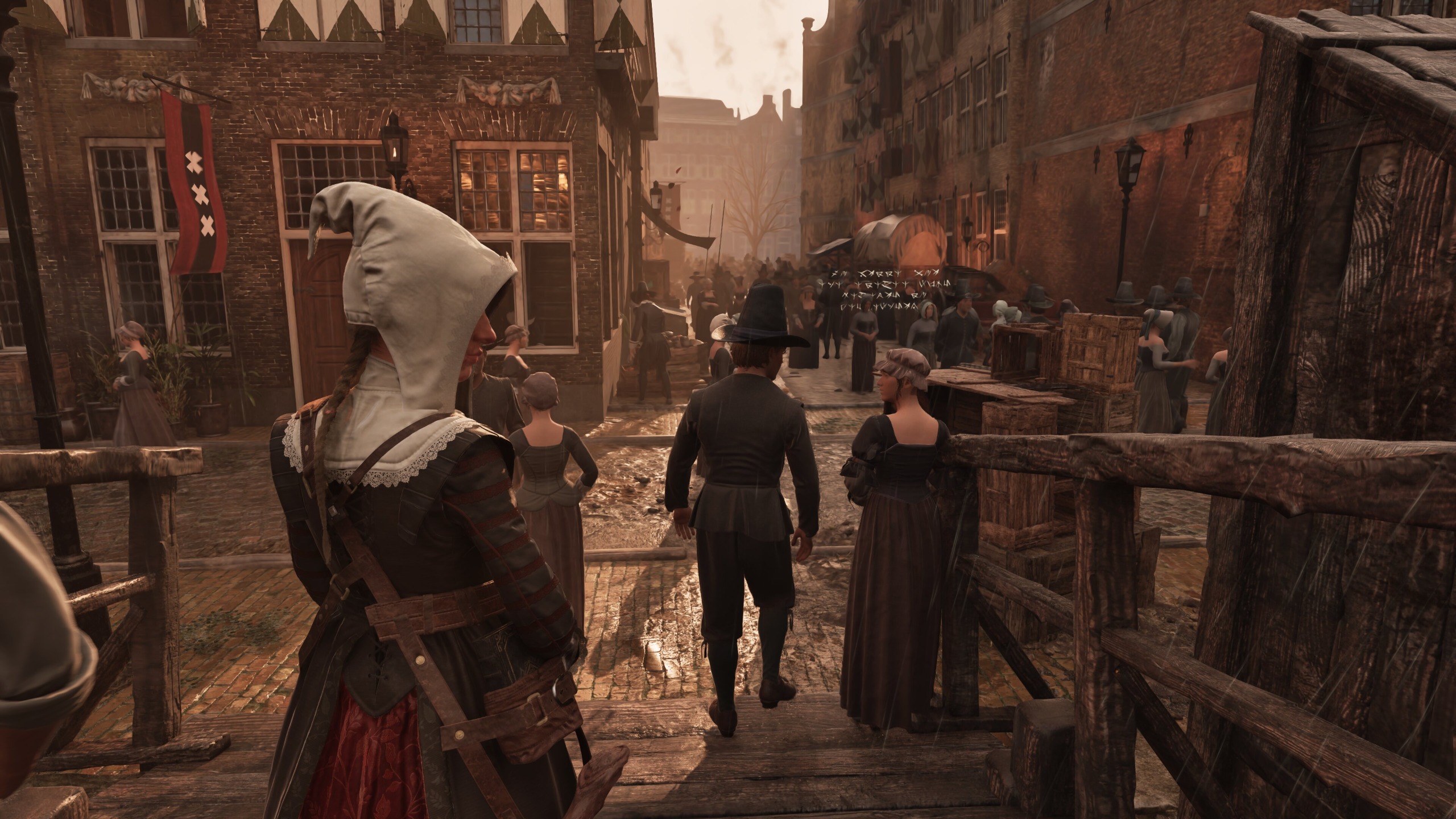
Originally envisioned as a cinematic Satan simulator, 1666: Amsterdam was meant to be the more gothic-feeling spiritual successor to Désilets’ 2010 smash hit game, Assassin's Creed: Brotherhood.
Thanks to his previous pedigree, publisher THQ was in, and so he spent the next two years crafting what we’ll affectionately call ‘The Devil’s Creed’. Yet like many deals made involving the devil, it soon appeared that Désilets Lucifer-staring epic was afflicted with a thematically fitting curse. “I started working on it for two years, then THQ went bankrupt.” Désilets recalls.
With THQ then suddenly snapped up by his old employers, Ubisoft, Désilets found himself briefly back at the Assassin’s Creed publisher, who almost immediately let him go – leaving poor old Lucifer trapped in development hell. Fiercely fighting his former employers for the rights back, Désilets eventually regained custody of his demonic baby in 2016. “…we got everything back…the 3D, all the concept art, and some animation,” Désilets grins. Yet in the years that had passed, something had changed for Désilets.
Despite having grafted to reacquire his IP, as time passed, Désilets no longer found himself excited about writing a game starring the devil’s apprentice. The reason? He was put off by a certain hit 2016 TV show. “Lucifer, the TV series, came out, and meanwhile, I'm like, 'Is it really the subject matter I want to attack?” shrugged Désilets. While Désilets had fallen out of love with the devil, he still found himself drawn to the idea of an evil-infested 17th-century Amsterdam. “What if there was a witch hunt going on in Amsterdam in 1666?” Désilets posited, as a new story unfolded before his eyes, “The only thing that I really kept was this idea of also doing 1999 [a dual time period alongside 1666], playing off two sides of the same coin: reflection and duality. That's when I pitched it to my team in January 2020, and [I] rewrote almost everything.”
Processing phobias through polygons
Thanks to being forced into remote work during the pandemic, retooling 1666 took the team at Panache six long years. While the initial Satan Sim was a Désilets-led project through and through, with his newest studio having previously made the 2011 survival game Ancestors, he’d grown to trust his team at Panache, letting their ideas help remould his 2011 original prototype in unexpected ways. “It’s funny, because it’s really a team game, yet in some ways, if we go back to my original PowerPoint, it's crazy how similar it is.”
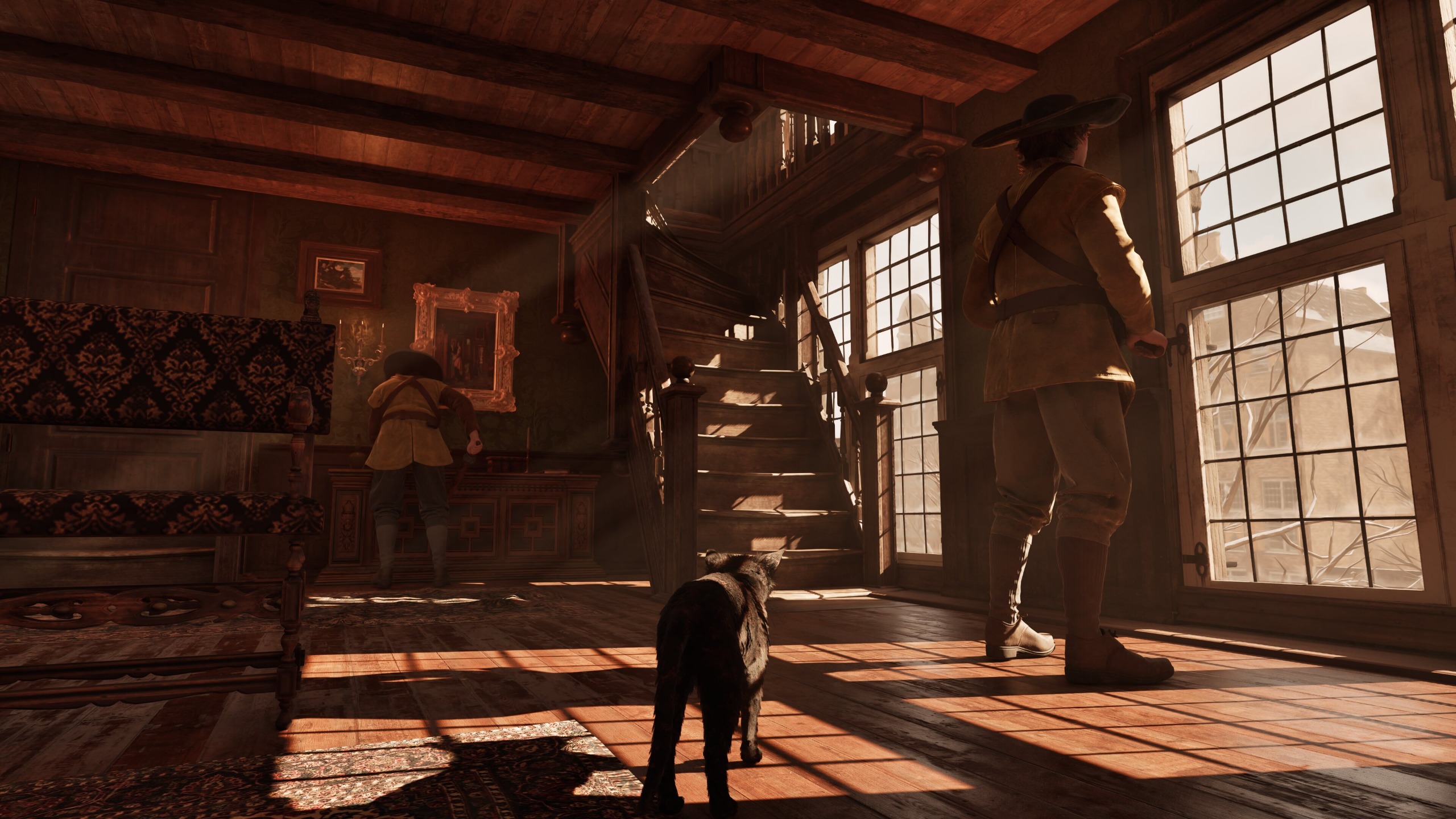
Yet for all its violence, hexes and history, there is a familiarly agile, gravity-defying protagonist at the centre of Panache’s latest. "... I feel like I'm always doing the same game ... about traversal…” laughs Désilets, “the cat is my way to play with verticality [here]... Even in Ancestors, where you were an ape in a clan, it was still this sheer pleasure of going around a 3D world. Once I analysed myself: 'Why is this always in my fucking games?' "Because I've got vertigo! In real life, I can't climb – so maybe that’s why [you climb in my games]. Don't ask me to climb anything. It's a joke in my family.”
While soaring across canals as an agile Wiccan - or darting across rooftops as a black cat - provides the vertical thrills that Désilets physically can't enjoy in real life, 1666 departs radically from the traditional Assassin's Creed formula in one surprising way. “Each time you fail, there's a reshuffle of your abilities. You must continue your investigation with a different set - that’s where the roguelite element appears,” explains Désilets. “You might fail as a fighter and come back leaning towards witchcraft, so you have to think differently. You go through the challenges the way you want - it's your game, man. If you want to spend six hours in a row being the cat, I don't care.”
Swapping polish for collaboration
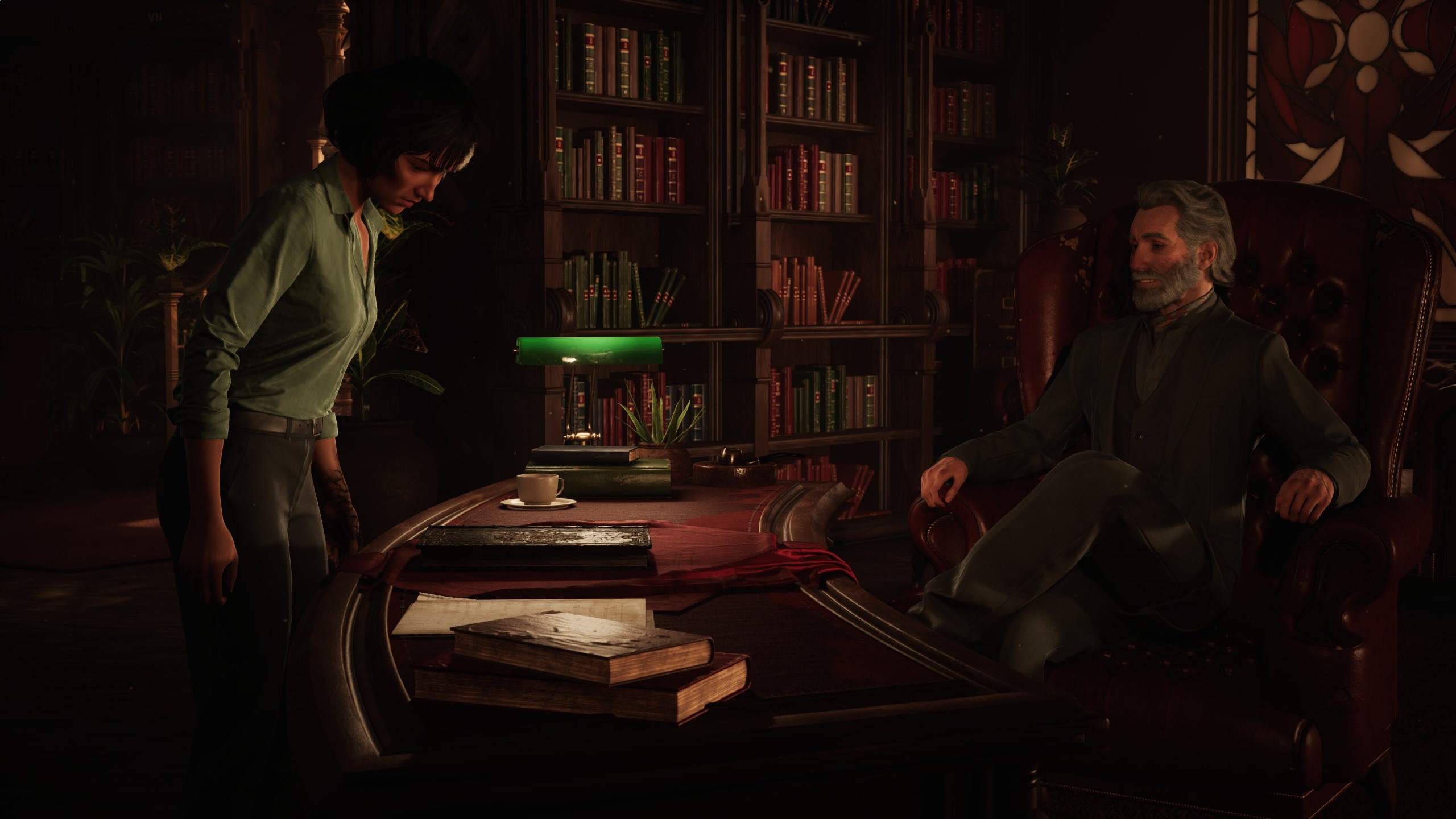
“You're not supposed to do [Early Access] with a narrative game,” shrugs Désilets, “But we're giving you roughly between 10 to 15 hours' worth of narrative-driven, open-world-ish content... [and] our goal is to have 1.0 by the end of next year, with console releases at the same time.”
For Désilets, the old way of shipping a game was done out of necessity, not choice, with the Assassin’s Creed veteran always wishing that he had more player feedback and additional time to refine his art.
“There was a time in game development when the game was finished... There was nothing you could do — no patches. That time drove me crazy.” Says Désilets . “Now... give me feedback…and then I can tweak. This is what game making is all about: having a dialogue. Yes, I can make a really badass character like Altaïr, but if you take the pad and make him turn around in circles, the badass character is gone because you're the one finishing the game. It's a co-creation.”
Narrative-driven games usually rely heavily on cinematic polish to pull players in, making 1666’s rough-around-the-edges Early Access release a peculiar sight. Yet in an industry plagued by ballooning budgets and sweeping studio closures, launching a single-player adventure this way might not just be an anomaly- but a canny survival strategy.
“I do my games with my team a bit in a bubble,” says Désilets when I ask him about the precarious current state of the industry. “I'm not always in those conferences. I'm not totally sealed off from what's going on, but you walk around, there’s an energy here…that reminds me of the old times... and lots of quality new games. Maybe we can attract new gamers into what people liked in 2007 when they first played Assassin's Creed. It's got that vibe, right?”

Follow TechRadar on Google News and add us as a preferred source to get our expert news, reviews, and opinion in your feeds. Make sure to click the Follow button!





 English (US) ·