
The horror genre is perhaps the easiest one to define. If a movie tries to scare its audience by depicting dangerous situations where characters are constantly being threatened, then it's almost certainly a work of horror. Science fiction, as a genre, feels a little harder to define, but stories within it often take place in the future or in some sort of alternate timeline, and investigate aspects of human nature through narratives that can include advanced technology, aliens, or space travel.
It just so happens that these two genres can blend together incredibly well, with sci-fi having the capacity to be as unsettling as it is generally thought-provoking, depending on the story being told. The following movies are all definable as works of science fiction, and are all capable of being incredibly frightening, even if a couple might not be directly definable as horror movies. They are all likely to get under a viewer's skin, however, and are ranked below, from good to great.
15 'A Quiet Place' (2018)
 Image via Paramount Pictures
Over the course of the 21st century, several comedic actors have demonstrated their exceptional skill when it comes to making horror movies. Back in 2018, it was John Krasinski's turn. His directorial debut was A Quiet Place, one of the best horror thrillers of the last 25 years and one of the highest-grossing horror movies of the 2010s.
There's no cheap gore in A Quiet Place, and Krasinski utilizes jump scares sparingly and intelligently. At no point does the movie's PG-13 rating hold back its scariness: Rather, through a marvelously constructed post-apocalyptic world and a genuinely claustrophobic sense of dread, Krasinski generates a level of tension that makes it impossible to not bite one's nails. — Diego Pineda Pacheco
14 'Mad God' (2021)
 Image via Shudder
For legendary stop-motion animator and visual effects wizard Phil Tippett, Mad God was like the textbook definition of a passion project. He had been developing this dystopian horror film since as far back as the late 1980s, and even though it took over three decades for the film to finally see the light of day, the result is one of the most underrated fantasy movie masterpieces of the last decade.
This is dark fantasy, science fiction, and horror through and through, a surreal celebration of everything grotesque and disgusting. But as much of a labor of love as Mad God clearly was, it's also absolutely terrifying both in terms of visuals and tone, building an atmosphere of pure existential dread that's hard to shake even after the credits roll. —Diego Pineda Pacheco
13 'The Invisible Man' (2020)
 Image via Universal Pictures
The original movies in The Invisible Man series came out back in the 1930s and 1940s, and while they're generally very fun, few people would call them scary. The stories usually centered around an individual who either deliberately or accidentally obtained the power to make themselves invisible, and the strengths and weaknesses that came from such an ability, given it could be equal parts blessing and curse.
Then in 2020, the franchise got revitalized with the simply titled The Invisible Man, which emphasized humor less and attempted to make something more grounded and genuinely terrifying. It generally works quite well, with the invisible man here stalking and tormenting an ex-partner, making the film a psychological thriller, and one where much of the tension comes from the protagonist (Elisabeth Moss) trying to prove she's really being tormented by an unseen force.
12 'Signs' (2002)
 Image via Buena Vista Pictures
Even if it's not quite one of 2002's very best movies, Signs is still largely successful as a slow-burn combination of horror, mystery, and science fiction. It's one of M. Night Shyamalan's strongest filmmaking efforts, and follows a family living on a farm, and the way they react to the news that alien invaders may be coming to Earth.
It's more about the paranoia of such a visitation, and building up to it eventually happening, rather than being an action-packed alien invasion movie. Still, this is turned into one of the movie's strengths, as between some goofy characters and exchanges of dialogue, there are some effectively creepy sequences, and a sense of grounded realism that makes this one of the more frightening alien-related sci-fi movies of the 21st century so far.
11 'Shin Godzilla' (2016)
 Image via Toho Pictures
Shin Godzilla is one of many, many Godzilla movies, as the franchise began in 1954 and has continually received sequels, spin-offs, and re-imaginings in the decades since, by both the Japanese and American film industries. This 2016 take on the character might be the scariest yet, taking the horror focus of the 1954 original and depicting the titular monster in more terrifying detail than ever before.
Reflecting a real-life disaster in surprisingly visceral detail, Shin Godzilla works as both an intense disaster film and a terrifying giant monster movie. Some social satire and dark humor prevent Shin Godzilla from being 100% horrifying all the way through, but it's still among the scariest and darkest monster movies of all time.
10 'Seconds' (1966)
 Image via Paramount Pictures
Counting itself among the few horror movies that debuted at the Cannes Film Festival, Seconds is a classic, and easily one of the most unnerving sci-fi films ever made. It follows the exploits of an organization that can offer a unique service to those with money to spare, given they're able to transform one person into another; a process which includes killing the person whose identity is being taken.
It has some hard-hitting and disturbing things to say about human nature, questioning what makes a person truly themselves, and pondering whether technology could one day disrupt such long-held beliefs, or things that have been taken for granted. That it also does this while being a dizzying and sometimes even nauseating film to watch ensures that Seconds deserves its status as a groundbreaking blend of sci-fi and horror.
9 'Nope' (2022)
 Image via Universal Studios
Jordan Peele burst onto the scene as a director with 2017's Get Out, which is one of the century's most acclaimed horror movies so far. Things got more ambitious and perhaps slightly more fantastical and/or otherworldly with 2019's Us, but it took until 2022's Nope for Peele to fully embrace making a sci-fi and horror movie at the same time.
With this film, Peele brought something new to the idea of an alien invasion movie, thanks to a unique setting, a very restrained yet effective pace, and a truly imaginative (and horrifying) take on alien lifeforms. It's a spectacular and persistently unnerving film, and has a great deal to say about humanity's relationship with other forms of life, and some biting commentary on the nature of fame and exploitation.
Collider Exclusive · Sci-Fi Survival Quiz Which Sci-Fi World Would You Survive? The Matrix · Mad Max · Blade Runner · Dune · Star Wars
Five universes. Five completely different ways the future went wrong — or sideways, or up in flames. Only one of them is the world your instincts were built for. Eight questions will figure out which dystopia, galaxy, or desert wasteland you'd actually make it out of alive.
💊The Matrix
🔥Mad Max
🌧️Blade Runner
🏜️Dune
🚀Star Wars
TEST YOUR SURVIVAL →
01
You sense something is deeply wrong with the world around you. What do you do? The first instinct is often the truest one.
APull on every thread until I understand the system — then figure out how to break it. BStop asking questions and start stockpiling — food, fuel, weapons. Questions don't keep you alive. CKeep my head down, observe carefully, and trust no one until I know who's pulling the strings. DStudy the patterns. Every system has a rhythm — learn it, and you learn how to survive it. EFind the people fighting back and join them. You can't fix a broken galaxy alone.
NEXT QUESTION →
02
In a world of scarcity, what resource do you guard most fiercely? What we protect reveals what we believe survival actually requires.
AKnowledge. If you understand the system, you don't need resources — you can generate them. BFuel. Everything else — movement, power, escape — runs on it. CTrust. In a world of fakes and informants, a truly reliable ally is rarer than any commodity. DWater. And after water, information — the two things empires are truly built on. EShips and credits. The galaxy is big — you survive it by being able to move through it freely.
NEXT QUESTION →
03
What kind of threat keeps you up at night? Fear is useful data — if you're honest about what you're actually afraid of.
AThat reality itself is a lie — that everything I experience has been constructed to keep me compliant. BA raid. No warning, no mercy — just the roar of engines and then nothing left. CBeing identified. Once someone with power decides you're a problem, you're already out of time. DBeing outmanoeuvred — losing a political game I didn't even know I was playing. EThe Empire tightening its grip until there's nowhere left to run.
NEXT QUESTION →
04
How do you deal with authority you don't trust? Every dystopia has a power structure. Your approach to it determines everything.
ASubvert it from the inside — learn its rules well enough to weaponise them against it. BIgnore it and stay out of its reach. The further from any power structure, the better. CAppear to comply while doing exactly what I need to do. Visibility is the enemy. DManoeuvre within it carefully. You can't beat a system you refuse to understand. EResist openly when I have to. Some things are worth the risk of being seen.
NEXT QUESTION →
05
Which environment could you actually endure long-term? Survival isn't just tactical — it's physical, psychological, and very much about where you are.
AUnderground bunkers and server rooms — cramped, artificial, but with access to everything that matters. BOpen wasteland — brutal sun, no shelter, constant movement. At least the threat is honest. CA dense, rain-soaked city where you can disappear into the crowd and nobody asks questions. DMerciless desert — extreme heat, no water, and something enormous living beneath the sand. EThe fringe — backwater planets and busy spaceports where the Empire's attention rarely reaches.
NEXT QUESTION →
06
Who do you want in your corner when things fall apart? The company you keep is the clearest signal of who you actually are.
AA tight crew of believers who've seen behind the curtain and have nothing left to lose. BOne or two people I'd trust with my life. Any more than that and someone talks. CNobody, ideally. Alliances are liabilities. I work alone unless I have no choice. DA community bound by shared hardship and mutual survival — people who need each other to last. EA ragtag team with wildly different skills and total commitment when it counts.
NEXT QUESTION →
07
Where do you draw the line — if you draw one at all? Every survivor eventually faces a moment that tests what they're actually made of.
AI won't harm the innocent — even the ones who'd report me without hesitation. BI do what I have to to protect the people I've chosen. Everything else is negotiable. CThe line shifts depending on who's asking and what's at stake. DI draw a long-term line — nothing that compromises my people's future, even if it'd help now. ESome lines, once crossed, can't be uncrossed. I know which ones they are.
NEXT QUESTION →
08
What would actually make survival worth it? Staying alive is one thing. Having a reason to is another.
AWaking others up — dismantling the illusion so no one else has to live inside it. BFinding somewhere — or someone — worth protecting. A reason to keep moving. CAnswers. Understanding what I am, what any of this means, before time runs out. DLegacy — shaping the future in a way that outlasts me by generations. EFreedom — for myself, for others, for every world still living under someone else's boot.
REVEAL MY WORLD →
Your Fate Has Been Calculated You'd Survive In…
Your answers point to the world your instincts were built for. This is the universe your temperament, your survival instincts, and your particular brand of stubbornness were made for.
The Matrix
You took the red pill a long time ago — probably before anyone offered it to you. You're a systems thinker who can't help but notice the seams in things.
- You're drawn to understanding how the system works before figuring out how to break it.
- You'd find the Resistance, or it would find you — your instinct for spotting constructed realities is the machines' worst nightmare.
- You function best when you have access to information and the freedom to act on it.
- The Matrix built an airtight prison. You'd be the one probing the walls for the door.
Mad Max
The wasteland doesn't reward the clever or the well-connected — it rewards those who are hard to kill and harder to break. That's you.
- You don't need comfort, community, or a cause larger than the next horizon.
- You need a vehicle, a clear threat, and enough fuel to outrun it — and you're good at all three.
- You are unsentimental enough to survive that world, and decent enough — just barely — to be something more than another raider.
- In the wasteland, that distinction is everything.
Blade Runner
You'd survive here because you know how to exist in moral grey areas without losing yourself completely.
- You read people accurately, keep your circle small, and ask the questions others prefer not to answer.
- In a city where humanity is a legal designation rather than a feeling, you hold onto something that keeps you functional.
- You're not a hero. But you're not lost, either.
- In Blade Runner's world, that distinction is everything.
Dune
Arrakis is the most hostile environment in the known universe — and you are precisely the kind of person it rewards.
- Patience, discipline, and political awareness are your core strengths — and on Arrakis, they're survival tools.
- You understand that the long game matters more than any single victory.
- Others come to Dune and are consumed by it. You'd learn its logic and earn its respect.
- In time, you wouldn't just survive Arrakis — you'd begin to reshape it.
Star Wars
The galaxy far, far away is vast, loud, and in a constant state of violent political upheaval — and you wouldn't have it any other way.
- You find meaning in being part of something larger than yourself — a cause, a crew, a rebellion.
- You'd gravitate toward the Rebellion, or the fringes, or whatever pocket of the galaxy still believes the Empire's grip can be broken.
- You fight — not because you have to, but because standing aside isn't something you're capable of.
- In Star Wars, that willingness is what makes all the difference.
↻ RETAKE THE QUIZ
8 '28 Days Later' (2002)
 Image via Searchlight Pictures
Before collaborating with Christopher Nolan to great success on half a dozen occasions, Cillian Murphy was best known for starring in the post-apocalyptic zombie film 28 Days Later. The cast also included Naomie Harris, Christopher Eccleston, and Brendan Gleeson, and the plot followed several people trying to survive the weeks following a viral outbreak that turned much of the population into irrational, homicidal creatures.
They're infected, rather than undead, so some would argue that keeps 28 Days Later from being a real zombie movie. However you want to define it, the movie is undeniably frightening and incredibly tense to watch, with its grittiness and grounded nature ensuring it still holds up brilliantly more than 20 years later.
7 'Night of the Living Dead' (1968)
 Image via Continental Distribution
If there was a Mount Rushmore of horror movie directors, then George A. Romero would need to be right up there; and if there was a Mount Rushmore of Romero masterpieces, then Night of the Living Dead may deserve to be most prominently displayed. This independent sci-fi horror gem was nothing short of revolutionary, and not just because it shattered mid-century horror conventions by having a heroic Black lead.
Made on a low budget, Night of the Living Dead is far and away one of the most important zombie movies ever made, if not the single most important one. Aside from being hugely entertaining and thematically powerful, it's also hopelessly bleak and psychologically tense, making for a terrifying experience whose chilling factor has aged like fine wine. —Diego Pineda Pacheco
6 'Invasion of the Body Snatchers' (1978)
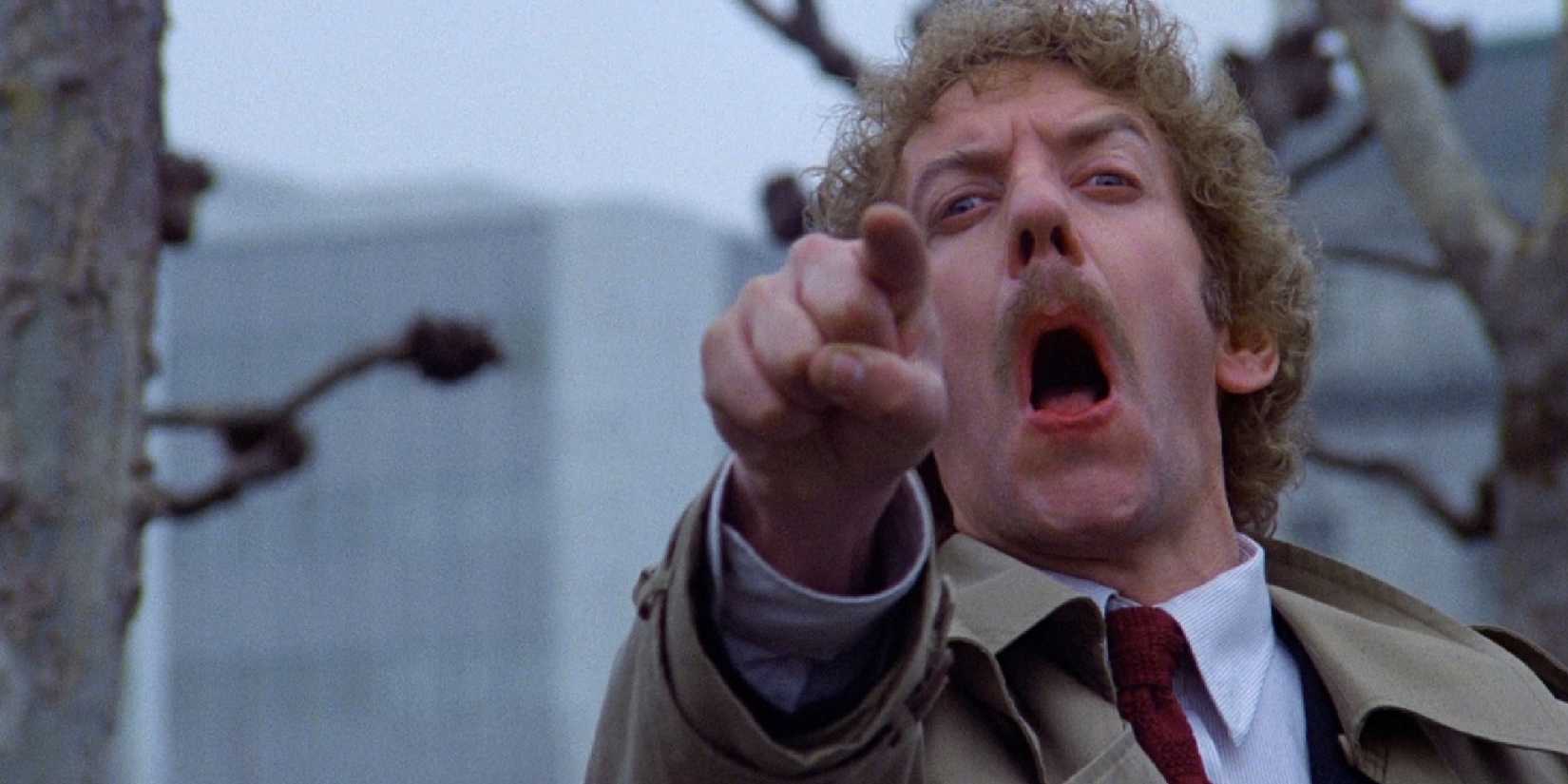 Image via United Artists
Don Siegel's 1956 sci-fi horror masterpiece Invasion of the Body Snatchers is one of the greatest horror films of Hollywood's Golden Age, as well as one of the most groundbreaking B-pictures of the era. It was a daunting task to remake such a timeless film, but not only did Philip Kaufman manage to do it just fine; he made what's still remembered as one of the greatest movie remakes of all time.
Kaufman's Invasion of the Body Snatchers is one of the best alien invasion movies of all time according to Rotten Tomatoes, complete with one of the most shocking twist endings in cinema's history. Full of deeply disturbing scenes, surreal body horror, and an unshakable sense of paranoia, it's one of the most terrifying sci-fi movies the New Hollywood film movement ever produced. —Diego Pineda Pacheco




 English (US) ·