
 Image via Netflix
Updated Jun 17, 2026, 5:24 AM EDT
Diego Pineda has been a devout storyteller his whole life. He has self-published a fantasy novel and a book of short stories, and is actively working on publishing his second novel.
A lifelong fan of watching movies and talking about them endlessly, he writes reviews and analyses on his Instagram page dedicated to cinema, and occasionally on his blog. His favorite filmmakers are Andrei Tarkovsky and Charlie Chaplin. He loves modern Mexican cinema and thinks it's tragically underappreciated.
Other interests of Diego's include reading, gaming, roller coasters, writing reviews on his Letterboxd account (username: DPP_reviews), and going down rabbit holes of whatever topic he's interested in at any given point.
Sign in to your Collider account
With kids and adults alike, animated television shows are among the medium's most popular and beloved. After all, there's something uniquely special about falling in love with a series' visual style over the course of several years and seasons, coming to appreciate its intricacies and its personality. Then, there are particularly good-looking shows; ones that don't settle for just looking pretty, and instead go all-out with an animation style that's downright stunning.
From Love, Death & Robots to Attack on Titan, some of the greatest animated TV shows of all time are, not coincidentally, also among the most visually striking. From classic anime aesthetics to more modern 3D animation that's setting new trends in Western animation, the impressive look of these gripping television shows plays a big factor in explaining their success.
15 'Mob Psycho 100' (2016–2022)
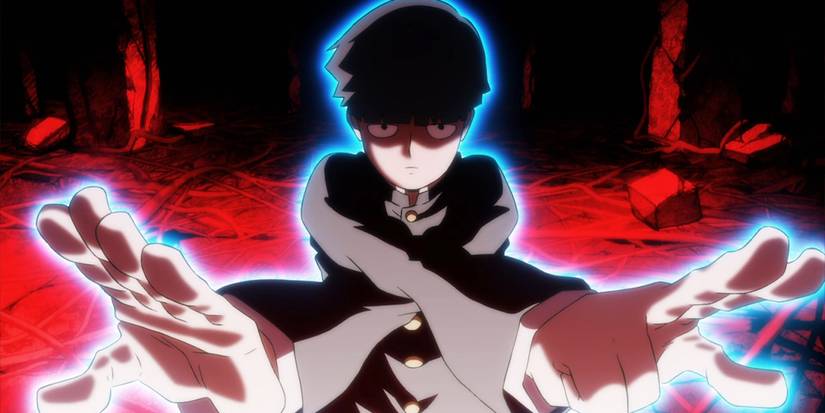 Image via Bones
Based on the web manga series written and illustrated by One, Mob Psycho 100 follows a psychic middle school boy who tries to live a normal life and keep his powers under control, though he constantly gets into trouble. It's one of the most perfect anime shows of the last 10 years, a mesmerizing work of art that's among many anime fans' favorite shows.
Mob Psycho 100 is typically considered one of the most visually stunning and highly dynamic anime series ever produced, and for good reason. Full of fluid and at times highly experimental animation, it combines highly polished avant-garde visuals with engrossing, adrenaline-pumping action scenes in a way that works flawlessly.
14 'Undone' (2019–2022)
 Image via Prime Video
Raphael Bob-Waksberg's next job after the conclusion of BoJack Horseman was Undone, which he co-created with Kate Purdy. A psychological dramedy that all fans of BoJack should be able to appreciate, this supernatural fantasy series is about a woman who, after narrowly surviving a car accident, discovers that she has a new relationship with time itself.
It's one of those Prime Video shows whose every episode is perfect, a show done with an animation technique that you don't often see on the small screen: rotoscoping. This lends the series' surreal, mind-bending quality a sort of "uncanny valley" quality that constantly works in its favor, which blends wonderfully with the oil-painted backgrounds.
13 'Over the Garden Wall' (2014)
 Image via Cartoon Network
Cartoon Network's first-ever miniseries, Over the Garden Wall, is proof of just how strong a cult reception among adult animation fans a kids' show can receive. In fairness, this is best-described as a series for all ages, a dark fantasy tale (with some surprising elements of tween-friendly horror) about two brothers who find themselves lost in a mysterious land and have to find their way back home.
For a variety of reasons, it's one of the highest-rated miniseries of all time on Letterboxd, and one of the main reasons is the animation. The character designs are wonderful, but the real star of the show is the hand-painted backgrounds, which lend the show a potent mixture of cozy fall vibes and Brothers Grimm-style fairy tale eeriness.
12 'Adventure Time' (2010–2018)
 Image via Cartoon Network
Adventure Time is yet another of the biggest animated cult classics of the 21st century, even more proof that there's something about Cartoon Network shows that even adult fans of the medium can't resist. It's the story of Finn, a 12-year-old boy, and his best friend Jake, a wise 28-year-old dog with magical powers. Together, they go on a series of surreal adventures in a remote future.
Part fantasy, part science fiction, part virtually every other genre under the Sun, it's one of those action shows that are fast-paced from start to finish. That pacing is perfectly reflected in its idiosyncratic visuals, masterfully surreal (and at times even unexpectedly painterly) despite how simple they may seem on the surface. Animation doesn't get much more colorful than this.
11 'Scavengers Reign' (2023)
 Image via HBO Max
The story of Scavengers Reign's cancellation after only one season is one of the biggest sci-fi tragedies of the 2020s so far, but even still, it will forever remain one of the most beloved sci-fi miniseries of the decade. It follows the crew of a damaged space freighter who become stranded on a beautiful yet dangerous planet.
It's avant-garde sci-fi animation at its strongest and most modern, full of surreal visuals of the utmost creativity and imagination. It's one of the highest-rated sci-fi miniseries on IMDb, and that's in no small measure thanks to how lush, intricate, and vibrantly original its animation is. The planet's alien ecology is as fascinating as it is largely because it's so visually jaw-dropping.
10 'Avatar: The Last Airbender' (2005–2008)
 Image via Nickelodeon
Celebrated by some as the single greatest animated TV show ever made, Avatar: The Last Airbender is a Nickelodeon show mainly aimed at kids, but has found success even (or perhaps even especially) among older viewers. It's set in a war-torn world of elemental powers, where a young boy reawakens to fulfill a mystical quest to bring peace to the world.
The Last Airbender has some of the greatest episodes in the animation genre, the most interesting characters, and the best-looking sequences in all of television animation. Highlighting the importance of not just solid artwork in hand-drawn animation, but also of thoughtful cinematography, the show boosts the emotional power of countless moments with its outstanding looks.
9 'The Midnight Gospel' (2020)
 Image via Netflix
From its concept alone, Netflix's The Midnight Gospel is one of the most creative sci-fi TV shows ever. Its style and energy are not only inspired by podcasts: In fact, Pendleton Ward co-created the show with Duncan Trussell, directly taking segments from his The Duncan Trussell Family Hour podcast. The result is a fascinating show where Clancy, a spacecaster with a malfunctioning multiverse simulator, travels to interview beings from dying worlds.
With a vibrant personality and a delightfully idiosyncratic style, the series deals with topics as vast as existentialism, death, meditation, drug use, and many more. Indeed, it's one of the best animated shows of the 21st century, but its themes aren't the only reason why. Colorful and often completely unrelated to what's being talked about in the podcast dialogue (to hilarious effect), the show's animation may seem deceptively simple, but in fact, it hides tremendous amounts of detail and thought behind it.
Collider Exclusive · Sci-Fi Survival Quiz Which Sci-Fi World Would You Survive? The Matrix · Mad Max · Blade Runner · Dune · Star Wars
Five universes. Five completely different ways the future went wrong — or sideways, or up in flames. Only one of them is the world your instincts were built for. Eight questions will figure out which dystopia, galaxy, or desert wasteland you'd actually make it out of alive.
💊The Matrix
🔥Mad Max
🌧️Blade Runner
🏜️Dune
🚀Star Wars
TEST YOUR SURVIVAL →
01
You sense something is deeply wrong with the world around you. What do you do? The first instinct is often the truest one.
APull on every thread until I understand the system — then figure out how to break it. BStop asking questions and start stockpiling — food, fuel, weapons. Questions don't keep you alive. CKeep my head down, observe carefully, and trust no one until I know who's pulling the strings. DStudy the patterns. Every system has a rhythm — learn it, and you learn how to survive it. EFind the people fighting back and join them. You can't fix a broken galaxy alone.
NEXT QUESTION →
02
In a world of scarcity, what resource do you guard most fiercely? What we protect reveals what we believe survival actually requires.
AKnowledge. If you understand the system, you don't need resources — you can generate them. BFuel. Everything else — movement, power, escape — runs on it. CTrust. In a world of fakes and informants, a truly reliable ally is rarer than any commodity. DWater. And after water, information — the two things empires are truly built on. EShips and credits. The galaxy is big — you survive it by being able to move through it freely.
NEXT QUESTION →
03
What kind of threat keeps you up at night? Fear is useful data — if you're honest about what you're actually afraid of.
AThat reality itself is a lie — that everything I experience has been constructed to keep me compliant. BA raid. No warning, no mercy — just the roar of engines and then nothing left. CBeing identified. Once someone with power decides you're a problem, you're already out of time. DBeing outmanoeuvred — losing a political game I didn't even know I was playing. EThe Empire tightening its grip until there's nowhere left to run.
NEXT QUESTION →
04
How do you deal with authority you don't trust? Every dystopia has a power structure. Your approach to it determines everything.
ASubvert it from the inside — learn its rules well enough to weaponise them against it. BIgnore it and stay out of its reach. The further from any power structure, the better. CAppear to comply while doing exactly what I need to do. Visibility is the enemy. DManoeuvre within it carefully. You can't beat a system you refuse to understand. EResist openly when I have to. Some things are worth the risk of being seen.
NEXT QUESTION →
05
Which environment could you actually endure long-term? Survival isn't just tactical — it's physical, psychological, and very much about where you are.
AUnderground bunkers and server rooms — cramped, artificial, but with access to everything that matters. BOpen wasteland — brutal sun, no shelter, constant movement. At least the threat is honest. CA dense, rain-soaked city where you can disappear into the crowd and nobody asks questions. DMerciless desert — extreme heat, no water, and something enormous living beneath the sand. EThe fringe — backwater planets and busy spaceports where the Empire's attention rarely reaches.
NEXT QUESTION →
06
Who do you want in your corner when things fall apart? The company you keep is the clearest signal of who you actually are.
AA tight crew of believers who've seen behind the curtain and have nothing left to lose. BOne or two people I'd trust with my life. Any more than that and someone talks. CNobody, ideally. Alliances are liabilities. I work alone unless I have no choice. DA community bound by shared hardship and mutual survival — people who need each other to last. EA ragtag team with wildly different skills and total commitment when it counts.
NEXT QUESTION →
07
Where do you draw the line — if you draw one at all? Every survivor eventually faces a moment that tests what they're actually made of.
AI won't harm the innocent — even the ones who'd report me without hesitation. BI do what I have to to protect the people I've chosen. Everything else is negotiable. CThe line shifts depending on who's asking and what's at stake. DI draw a long-term line — nothing that compromises my people's future, even if it'd help now. ESome lines, once crossed, can't be uncrossed. I know which ones they are.
NEXT QUESTION →
08
What would actually make survival worth it? Staying alive is one thing. Having a reason to is another.
AWaking others up — dismantling the illusion so no one else has to live inside it. BFinding somewhere — or someone — worth protecting. A reason to keep moving. CAnswers. Understanding what I am, what any of this means, before time runs out. DLegacy — shaping the future in a way that outlasts me by generations. EFreedom — for myself, for others, for every world still living under someone else's boot.
REVEAL MY WORLD →
Your Fate Has Been Calculated You'd Survive In…
Your answers point to the world your instincts were built for. This is the universe your temperament, your survival instincts, and your particular brand of stubbornness were made for.
The Matrix
You took the red pill a long time ago — probably before anyone offered it to you. You're a systems thinker who can't help but notice the seams in things.
- You're drawn to understanding how the system works before figuring out how to break it.
- You'd find the Resistance, or it would find you — your instinct for spotting constructed realities is the machines' worst nightmare.
- You function best when you have access to information and the freedom to act on it.
- The Matrix built an airtight prison. You'd be the one probing the walls for the door.
Mad Max
The wasteland doesn't reward the clever or the well-connected — it rewards those who are hard to kill and harder to break. That's you.
- You don't need comfort, community, or a cause larger than the next horizon.
- You need a vehicle, a clear threat, and enough fuel to outrun it — and you're good at all three.
- You are unsentimental enough to survive that world, and decent enough — just barely — to be something more than another raider.
- In the wasteland, that distinction is everything.
Blade Runner
You'd survive here because you know how to exist in moral grey areas without losing yourself completely.
- You read people accurately, keep your circle small, and ask the questions others prefer not to answer.
- In a city where humanity is a legal designation rather than a feeling, you hold onto something that keeps you functional.
- You're not a hero. But you're not lost, either.
- In Blade Runner's world, that distinction is everything.
Dune
Arrakis is the most hostile environment in the known universe — and you are precisely the kind of person it rewards.
- Patience, discipline, and political awareness are your core strengths — and on Arrakis, they're survival tools.
- You understand that the long game matters more than any single victory.
- Others come to Dune and are consumed by it. You'd learn its logic and earn its respect.
- In time, you wouldn't just survive Arrakis — you'd begin to reshape it.
Star Wars
The galaxy far, far away is vast, loud, and in a constant state of violent political upheaval — and you wouldn't have it any other way.
- You find meaning in being part of something larger than yourself — a cause, a crew, a rebellion.
- You'd gravitate toward the Rebellion, or the fringes, or whatever pocket of the galaxy still believes the Empire's grip can be broken.
- You fight — not because you have to, but because standing aside isn't something you're capable of.
- In Star Wars, that willingness is what makes all the difference.
↻ RETAKE THE QUIZ
8 'Primal' (2019–Present)
 Image via Adult Swim
Genndy Tartakovsky is a well-known legend of television animation, being the man responsible for some of the medium's greatest pieces of art. One such masterwork is Primal, a virtually dialogue-less and highly unorthodox buddy drama (with plenty of elements of horror and action-adventure) set during the time of the dinosaurs. It's about a caveman and a T-Rex, brought together by a shared tragedy, who must work together to survive in a world that wants to have them for dinner.
With Primal's exciting third season fast approaching, the series remains as much of an assured hit as it was back in 2019. Its structure, stories, and style may be experimental (and they sure are), but there's one thing about it that follows a tried-and-true formula that can never fail: Tartakovsky's typical eye-popping animation. Playing with lights, shadows, and lots and lots of blood and guts, Primal's visual signature is one of the most impressive currently on streaming.
7 'Love, Death & Robots' (2019–Present)
 Image via Netflix
Not only one of the best sci-fi anthology shows of all time, but one of the best anthology shows in general, Tim Miller's Love, Death & Robots brings together elements of multiple genres — from sci-fi to fantasy to horror — in a collection of gripping short stories dealing with all sorts of profound themes. Like all series in its genre, this one can be a bit hit-or-miss, but when it hits, it hits hard.
The thing that makes the animation style of Love, Death & Robots so compelling is that it's not just one style, but multiple. Different stories call for different looks; like the stunning photorealism of episodes like "Beyond the Aquila Drift"; or the comic-like aesthetic of ones like "Zima Blue"; or the grotesque character designs of stuff like "Mason's Rats". Even with certain styles repeating themselves across seasons from time to time, the creative teams behind these short stories always find ways to make them look and feel entirely unique.
6 'Cyberpunk: Edgerunners' (2022–Present)
 Image via Netflix
Despite the fact that it was off to a start that was, to say the least, a bit rough, Cyberpunk 2077 is now typically praised as one of the best sci-fi video games available for this generation. Japanese animation studio Trigger and Polish video game developer CD Projekt Red saw an opportunity and took it, releasing Cyberpunk: Edgerunners. This exceptional anime web series based on the game is about a street kid trying to survive in the body-modification-obsessed future. Having everything to lose, he chooses to stay alive by becoming an Edgerunner, a mercenary outlaw also known as a Cyberpunk.
Edgerunners has plenty of awesome sci-fi concepts, engaging characters, and interesting storylines, making it one of the best sci-fi shows of the last five years. Perhaps its main strength, though, lies in its jaw-dropping visuals. Stylish, energetic, bloody, and with phenomenal set and character designs, it makes an already engrossing experience all-the-more entertaining.





 English (US) ·