
Whether it be the most recent Martin Scorsese film or the latest hit from the MCU, audiences everywhere feel as if movies are getting longer and longer. Movies around and exceeding the 2 and a half hour mark have become the norm, even in escapist superhero films. More and more and more, sitting down to watch a film can feel like a commitment that has to be scheduled no different from a doctor's appointment. This problem can feel even worse in the thriller genre.
Thrillers thrive on pacing and expanded runtimes are seen by many as a reason to fill their complicated webs of intrigue with even more complexity and stickiness. But, not every lengthy film is worth its runtime, and often the best thrillers feature rapid fire, tight pacing over ample room to breathe. Concise thrillers allow for unique concepts to shine without overstaying their welcome, allowing for more stylish thrills, and for breakneck rapid fire pacing. Some of the best movies of all time are just 90 minutes but these are ones that get the viewer's heart racing.
15 'Phone Booth' (2002)
81 Minutes
 Image via 20th Century Studios
Phone Booth originally began life as an Alfred Hitchcock premise, and the influence of the Master of Suspense shows through the film's inventive premise, constrained setting, and tension-filled atmosphere. Penguin star Colin Farrell is featured in this low budget thriller as a slick New York ad executive who becomes trapped in a phone booth under the sights of a killer wielding a sniper rifle (Kiefer Sutherland). Forest Whitaker, Katie Homes, and others are present as well, but much of the film's onus is on Farrell, as he orchestrates a near soliloquy of a performance from inside his glass prison.
The shortened runtime of just over 80 minutes allows Phone Booth to squeeze all the juice out of it's claustrophobic premise without ever overstaying it's welcome. It is helped in this act by its experienced director, Joel Schumacher. After originating for Hitchcock, the script for phone booth was passed down for 30 years through the hands of people like Steven Spielberg and even Michael Bay, who wanted to do a version without the phone booth. Schumacher brings his skills of empathy and characterization to Phone Booth and ensures that while the film may be small, its impact is able to cut rather deep.
14 'Chronicle' (2012)
84 Minutes
 Image via 20th Century Studios
Chronicle is an inventive thriller, featuring fantasy elements such as supernatural powers, and the creative found footage format that was everywhere in the early 2010's. The unexpected hit focuses on three friends (Dane DeHaan, Alex Russel, and Michael B. Jordan) whom stumble upon a meteorite and begin developing telekinetic abilities. Reflecting its more gritty cinematography, Chronicle showcases how such power can unravel into corruption, selfishness, and downright sociopathy.
Dane Dehaan's outcast turned supposed-alpha in Matt is one of a superhero movie's more underrated villains, and would foreshadow trends in the genre to come (such as The Batman's take on Paul Dano's Riddler). The archetype of heroes and villains has always been more of a cape in which to dress other genres and, in his directorial debut, Josh Trank showcases that the thriller genre can step into that costume just as well as comedy or action.
13 'Batman: Mask of The Phantasm' (1993)
76 Minutes
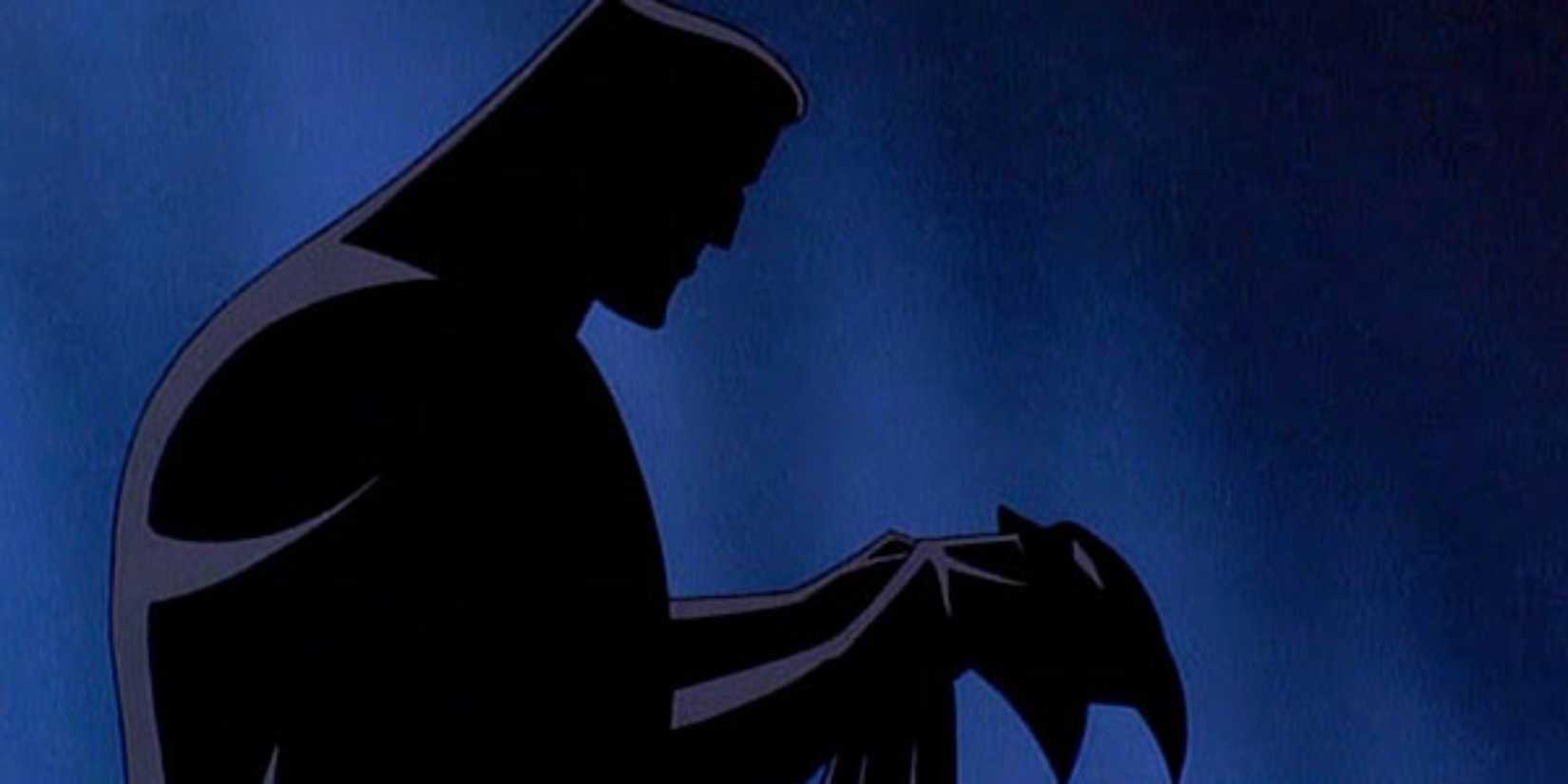 Image via Warner Bros. Pictures
Animation's need for tight control, and pinpoint pacing, lends itself expertly to both short run times and the thriller genre. Batman: Mask of the Phantasm, takes these benefits and mixes them with a noir staple in The Dark Knight himself, for what many consider to be his best film ever. Featuring the iconic animation and team behind Batman: The Animated Series, this theatrical animated feature provides a darker and more personal story than any seen on television.
Coming in at just 76 minutes, Mask of The Phantasm features Kevin Conroy's Batman investigating a string of mob killings by a new and genuinely haunting villain, and the return of Mark Hamill's Joker, here more violent and deranged than ever. It's the personal drama that drives the film, however, as the story cuts back and forth between the present day and shortly before Bruce Wayne fully commits himself to his double life. Mask of the Phantasm showcases a Batman who is vulnerable, weak, and experiencing more doubt in his vigilante crusade than audiences have seen in nearly any live action outing. The juxtaposition between what the character is in the present and could have been in the past is thought-provoking, and helps make this one of the most rewatchable Batman movies, animated or not.
12 'Sexy Beast' (2000)
89 minutes
 Image via Fox Searchlight Pictures
Gritty, ferocious, and imbued with a snarling viciousness, Sexy Beast is a cult gem crime cinema that captures the callous nature of the British underworld with a relentless, intense and stressful edge. Ray Winstone stars as Gary Dove, a retired gangster who is pressured into participating in a bank robbery by Don Logan (Ben Kingsley), a violent and sociopathic recruiter working for London crime boss, Teddy Bass (Ian McShane).
Strengthened by the screenplay’s acute attention to character development, a particularly frightful performance from Kingsley, and the budding brilliance of debut director Jonathan Glazer, Sexy Beast excels as a taut thriller that exudes the cut-throat intensity of grungy crime cinema as well as some inflections of style to boot. A bold and memorable subversion of the “one last job” category of crime movies, Sexy Beast distinguishes itself from a busy genre with its psychological depth, emphasis on raw fear, and its interest in the intricacies of human behavior. That it does all this in 89 minutes while still delivering an exciting spectacle of crime carnage is a feat worth admiring. —Ryan Heffernan
11 'Battleship Potemkin' (1925)
74 minutes
 Image Via Goskino
From comedy to horror, and even to fantasy and sci-fi, silent cinema is renowned for its pioneering achievements in many of the foundational genres of the medium. However, many of the formative thrillers didn’t emerge until after the advent and popularization of the “talkies.” One noteworthy exception to this is 1925’s Battleship Potemkin, a surprisingly epic Soviet film based on true events in which a ship’s crew mutinies against their commanders after being fed rancid meat, a revolt that inspires civilians to launch their own uprising leading to a deadly conflict with Tsarist soldiers.
Battleship Potemkin serves as a marvelous display of how the art of conjuring cinematic suspense is innately visual. Through clear storytelling stakes and simple, though understandable, character motives, the tempo of the edit, and even atmospheric sensations like claustrophobia, simmering unrest, and the dread of looming violence, the Soviet film crafts a relentlessly thrilling spectacle that is just as appropriate to label as a social drama or a war epic. However, its 74-minute runtime is unmistakably a masterclass in tension, making it an early and defining feat of thriller cinema. —Ryan Heffernan
10 'Rope' (1948)
80 Minutes
 Image via Warner Brothers
Rope is one of Alfred Hitchcock's most well regarded and inventive films. Known for its stellar single take illusion and its twisting and turning story, the film has become one of the most enduring in the famed director's gallery of thriller classics, even if Hitchcock himself was not too fond of Rope upon release. The film's creative direction and cinematography are aided by its brisk run time of only 80 minutes long, which allows Rope to let the audience simmer with its haunting premise and characters without ever becoming bored or tired of its deep but limited bag of tricks.
The premise in question focuses on the horrifyingly based on a true story, which revolves around two preppy students (John Dall, Farley Granger) who murder a classmate simply because they can. They invite several guests, including their old professor (James Stewart), to a party in which the body is hidden within the very room. This tight focus on both the environment and characters makes Rope an excellent bottle movie, as it serves to concisely explore ideas of superiority, narcissism, and class. The difference in knowledge between the audience and characters gives every minute of runtime a haunting sense of dramatic irony as Hitchcock dangles the other shoe in front of the viewer, teasing its next drop.
9 'Following' (2001)
69 Minutes
 Image via Momentum Pictures
The directorial debut of Christopher Nolan, Following, instantly put the director on the map, and laid the foundation for the director's style. Featuring the director's gorgeous cinematography, methodical pacing, and the non-linear storytelling that would make the director famous, this 69 minute thriller is a thoughtful and riveting watch for any viewer with an hour to spare. Especially as the acclaimed director's works like Oppenheimer and The Odyssey continue to trend towards the longer side, it is more than worth it for viewers to witness where the esteemed Nolan began.
Following features themes of voyeurism, identity, and control which would come to be staples in Christopher Nolan's later works. These ideas are explored through the lense of a young writer (Jeremy Theobald) who spends his time watching strangers. The tables are turned, however, when he realizes he himself is being followed. Following weaves its way through three distinct timelines to create a unique tasting thriller which leaves the audience wanting more, rather than feeling full. Made on a shoestring budget of only $6,000, Following showcased Nolan's early promise and is a worthwhile watch for fans of thrillers or those of the director's illustrious career.
Collider Exclusive · Oscar Best Picture Quiz
Which Oscar Best Picture
Is Your Perfect Movie?
Parasite · Everything Everywhere · Oppenheimer · Birdman · No Country
Five Oscar Best Picture winners. Five completely different visions of what cinema can be — and what it can do to you. One of them is the film that was made for the way your mind works. Ten questions will figure out which one.
🪜Parasite
🌀Everything Everywhere
☢️Oppenheimer
🐦Birdman
🪙No Country for Old Men
FIND YOUR FILM →
01
What kind of film experience do you actually want? The best movies don't just entertain — they leave something behind.
ASomething that pulls the rug out — that makes me think I'm watching one kind of film and then reveals I'm watching another entirely. BSomething overwhelming — funny, sad, absurd, and genuinely moving, all at once. CSomething grand and weighty — a film that makes me feel the full scale of what I'm watching. DSomething formally daring — a film that pushes what cinema can even do. ESomething lean and relentless — pure tension with no wasted frame.
NEXT QUESTION →
02
Which idea grabs you most in a film? Great films are driven by a central obsession. What's yours?
AClass, inequality, and what people are willing to do when desperation meets opportunity. BIdentity, family, and the chaos of trying to hold your life together when everything is falling apart. CGenius, moral responsibility, and the catastrophic weight of a decision you can never take back. DEgo, legacy, and the terror of becoming irrelevant while you're still alive to watch it happen. EEvil, chance, and whether moral order actually exists or if we just tell ourselves it does.
NEXT QUESTION →
03
How do you like your story told? Form is content. The way a story is shaped changes what it means.
AGenre-twisting — I want it to start in one lane and migrate into something completely different. BMaximalist and genre-blending — comedy, action, drama, sci-fi, all in one ride. CEpic and non-linear — cutting between timelines, building a mosaic of cause and consequence. DA single unbroken flow — I want to feel like I'm living it in real time, no cuts to safety. ESpare and precise — every scene doing exactly what it needs to do and nothing more.
NEXT QUESTION →
04
What makes a truly great antagonist? The opposition defines the protagonist. What kind of opposition fascinates you?
AA system — invisible, structural, and almost impossible to fight because it has no single face. BThe self — the ways we sabotage, abandon, and fail the people we love most. CHistory — the unstoppable momentum of events that no single person can stop or redirect. DThe industry — the machinery of culture that chews up talent and spits out irrelevance. EPure, implacable evil — a force so certain of itself it becomes almost philosophical.
NEXT QUESTION →
05
What do you want from a film's ending? The final note is the one that lingers. What do you want it to sound like?
AShock and inevitability — a conclusion that recontextualises everything that came before it. BEarned emotion — I want to cry, laugh, and feel genuinely hopeful, even if the world is a mess. CDevastation and grandeur — an ending that makes me sit in silence for a few minutes after. DAmbiguity — something that leaves enough open that I'm still thinking about it days later. EBleakness — an honest refusal to pretend the world is tidier than it actually is.
NEXT QUESTION →
06
Which setting pulls you in most? Where a film takes place shapes everything — mood, stakes, what's even possible.
AA gleaming modern city with a hidden underside — beauty masking rot, wealth masking desperation. BA collapsing suburban life that opens onto something infinite — the multiverse of a single ordinary person. CThe corridors of power and science at a world-historical turning point — where decisions echo for decades. DThe grimy, alive chaos of New York and Hollywood — fame as both destination and trap. EVast, indifferent landscape — desert and highway where violence arrives without warning or reason.
NEXT QUESTION →
07
What cinematic craft impresses you most? Every great film has a signature — a technical or artistic element that makes it unmistakable.
AProduction design and mise-en-scène — every frame composed to carry meaning beneath the surface. BEditing and tonal control — the ability to move between registers without losing the audience. CScore and sound design — music that becomes inseparable from the dread and awe of what you're watching. DCinematography as performance — the camera not recording events but participating in them. ESilence and restraint — what's left unsaid and unshown doing more work than any dialogue could.
NEXT QUESTION →
08
What kind of main character do you root for? The protagonist is the lens. Who you choose to follow says something about you.
ASomeone smart and resourceful who makes increasingly dangerous decisions under pressure. BSomeone overwhelmed and ordinary who turns out to be capable of something extraordinary. CA brilliant, tortured figure whose gifts and flaws are inseparable from each other. DA self-destructive artist whose ego is both their superpower and their undoing. EA quiet, principled person trying to make sense of a world that has stopped making sense.
NEXT QUESTION →
09
How do you feel about a film that takes its time? Pace is a choice. Some films sprint; others let tension accumulate slowly, deliberately.
AI love a slow build when I know the payoff is going to be seismic — patience for a devastating reveal. BGive me relentless momentum — I want to feel breathless and emotionally spent by the end. CEpic runtime doesn't scare me — if the material demands three hours, give me three hours. DI want it to feel propulsive even when nothing is technically happening — restless energy throughout. EDeliberate and unhurried — I want dread to accumulate in the spaces between the action.
NEXT QUESTION →
10
What do you want to feel walking out of the cinema? The best films leave a mark. What kind of mark do you want?
AUnsettled — like I've just seen something I can't fully explain but can't stop thinking about. BMoved and energised — like the film reminded me what actually matters and gave me something to hold onto. CHumbled — like I've been in the presence of something genuinely important and overwhelming. DExhilarated — like I've just seen cinema doing something it's never quite done before. EHaunted — like a cold, quiet dread that stays with me for days.
REVEAL MY FILM →
The Academy Has Decided Your Perfect Film Is…
Your answers have pointed to one Oscar Best Picture winner above all others. This is the film that was made for the way your mind works.
Parasite
You are drawn to films that operate on multiple levels simultaneously — that begin in one genre and quietly, brilliantly migrate into another. Bong Joon-ho's Parasite is a film about class, desire, and the architecture of inequality that manages to be darkly funny, deeply suspenseful, and genuinely shocking across a single extraordinary running time. Your instinct is for cinema that hides its true intentions until the moment it's ready to reveal them. Parasite is exactly that — a film that rewards close attention and punishes assumptions, right up to its devastating final image.
Everything Everywhere All at Once
You want it all — and this film gives you all of it. The Daniels' Everything Everywhere All at Once is one of the most maximalist films ever made: action comedy, multiverse sci-fi, family drama, existential crisis, and a genuinely earned emotional core that sneaks up on you amid the chaos. You are someone who responds to ambition, who doesn't want cinema to choose between being entertaining and being meaningful. This film refuses that choice entirely. It is overwhelming by design, and its overwhelming nature is precisely the point — because the feeling of being crushed by infinite possibility is exactly what it's about.
Oppenheimer
You are drawn to cinema on a grand scale — films that understand history not as a backdrop but as a force, and that place their characters inside that force and watch what happens. Christopher Nolan's Oppenheimer is a film about the terrifying gap between what we can do and what we should do, told with the full weight of one of the most consequential moments in human history behind it. You want your films to feel important without feeling self-important — to earn their ambition through sheer craft and the gravity of their subject. Oppenheimer does exactly that. It is enormous, complicated, and refuses easy comfort.
Birdman
You are drawn to films that foreground their own construction — that make the how of the filmmaking part of the what it's about. Alejandro González Iñárritu's Birdman, shot to appear as a single continuous take, is cinema examining itself through the cracked mirror of a fading actor's ego. You respond to formal daring, to the feeling that a film is doing something that probably shouldn't be possible. Michael Keaton's performance and Emmanuel Lubezki's restless camera create something genuinely unlike anything else — a film that is simultaneously about creativity, relevance, self-destruction, and the impossibility of ever truly knowing if your work means anything at all.
No Country for Old Men
You are drawn to cinema that trusts silence, that refuses to explain itself, and that treats dread as a form of meaning. The Coen Brothers' No Country for Old Men is a film about the arrival of a new kind of evil — implacable, arbitrary, and utterly indifferent to the moral frameworks we use to make sense of the world. It is one of the most formally controlled films ever made, and its controlled restraint is what makes it so terrifying. You want your films to haunt you, not comfort you. You are not interested in resolution if resolution would be dishonest. No Country for Old Men is honest in a way that most cinema never dares to be.
↻ RETAKE THE QUIZ
8 'Ghost in the Shell' (1995)
82 Minutes
 Image via Metrodome Distribution/Manga Entertainment
The cyberpunk thriller Ghost in the Shell imagines a world where cyborgs walk the streets disguised as regular humans, and focuses on a similarly cybernetic security officer tasked with protecting the public at large. It is a premise which is growing increasingly relevant in our modern world of AI, corporate monopoly, and tech integration. This immensely influential film is one of the best tech noir films ever made and features enough compelling action, interesting themes, and jaw-dropping animation for any viewer.
Despite a live action remake which could have damaged the original classic's legacy, Ghost in the Shell remains one of the sci-fi genres most influential and imitated works. Films such as The Matrix, and even James Cameron's Avatar. The film's compelling world is used to amplify its themes of humanity, emotion, consciousness, and choice, all of which are explored in thorough detail throughout the film's compacted runtime. As one of the darkest anime films ever, Ghost in the Shell is filled with ideas and concepts which will linger in a viewers' mind long after its short experience is over.
7 'Run Lola Run' (1998)
80 Minutes
 Image via Sony Pictures Classics
One of the most successful foreign films of all time, Run Lola Run, tells the story of German athlete (Franka Potente) who must sprint across the city in real time to gather enough money to save her erstwhile boyfriend. This setup fills the film with an inherent need for pace and energy, and it is a task that the film easily lives up to. Run Lola Run a unique and frantic film which instills the audience with a sense of urgency that must be seen to be believed.
Director Tom Tykwer, shines in the film's effective combination of cinematography, editing and performance. Run Lola Run comes off as Ridley Scott-esque in both its direction and design, using parallel timelines, and alternate character interpretations to showcase different path Lola's story may take. These unique elements made the film one of the highest grossing non-English language films of all time. If a viewer is looking for a film with breakneck pacing and a unique structure, or even just a film about running, Lola's story is a hard one to pass up.
6 'The 39 Steps' (1935)
86 minutes
 Image via Gaumont British Distributors
While the director had been actively making films for well over a decade by 1935, The 39 Steps stands as Alfred Hitchcock’s first true classic. It is little surprise that is also stands as a formative triumph for thriller cinema at large, delivering a taut and suspenseful dose of espionage intrigue as it follows Richard (Robert Donat), a civilian who gives shelter to a spy on the run and finds himself embroiled in her world of deceit and death when she is killed soon after.
The first of several films Hitchcock made focusing on innocent people being forced to go on the run, The 39 Steps combines the enticing sharpness of its technical craft with an agelessly resonant story of tension, innocence, and high-stakes spycraft. Never outstaying its welcome, the film’s 86-minute runtime proves to be perfect, keeping the story succinct and snappy while still allowing for all the intensity and twists to play out with the required gravitas. —Ryan Heffernan



 English (US) ·