

Published Aug 22, 2026, 5:55 PM EDT
Richard Craig is a Senior Author at Screen Rant covering film and TV. Richard has also written extensively about horror and film soundtracks, contributing a chapter to the first major academic collection on the folk horror genre, The Routledge Companion to Folk Horror. Richard is also a performing musician and holds an MA in Music and Sound Art.
Great horror worldbuilding does more than provide a creepy location for characters to scream in. The best examples create environments with their own histories, rules, cultures, mythologies, and ecosystems, making audiences feel as though the movie has opened a door into a much larger universe. Sometimes that means inventing an entire supernatural realm; other times, it means making an isolated town, alien planet, or secretive community feel so authentic that the horror seems inevitable.
This is particularly impressive in horror because filmmakers often have limited time to establish their worlds while simultaneously frightening the audience. A haunted town still needs rules. A monster still needs an ecosystem. A cult needs beliefs that existed before the protagonists arrived. Even an apocalypse needs to feel like it has consequences beyond what appears on the screen.
The following movies excel at exactly that. Some construct worlds around creatures with specific biological characteristics. Others create unsettling communities governed by elaborate traditions. Then there are films which expand their supernatural mythology by taking audiences somewhere that feels genuinely otherworldly. These are movies where the world itself becomes one of the most fascinating (and frightening) characters.
Insidious: Out Of The Further (2026)
 Credits: Sony Pictures
Insidious: Out of the Further expands the franchise's mythology by finally making The Further feel like more than a creepy corridor between hauntings. It introduces Gemma, a young mother who discovers she can travel into the purgatorial realm and, crucially, bring entities back with her. That ability fundamentally changes the rules established by earlier installments.
The Further becomes an active ecosystem of supernatural threats rather than merely a destination for astral projection. Out of the Further also establishes new dangers surrounding Gemma's unusual power while retaining connections to Elise Rainier and the mythology established since 2010. It's an impressive expansion of a world acclaimed for its demons.
Silent Hill (2006)

Silent Hill transforms its titular Pennsylvania town into one of horror's most distinctive environments. Based on Konami's video-game series, Silent Hill depicts a town divided between different realities, with the ordinary fog-shrouded world periodically giving way to the terrifying Otherworld. Rust, blood, darkness, and industrial decay transform familiar locations into nightmarish versions of themselves.
The transformation sequences between the two are particularly thrilling. Silent Hill certainly struggled to effectively manage the elaborate backstory regarding Alessa Gillespie, religious fanaticism, and the fire that fundamentally shaped the town's supernatural existence. Yet these themes and details are present throughout the visual world, making Silent Hill's worldbuilding incredibly effective.
Errementari: The Devil And The Blacksmith (2017)

Errementari: The Devil and the Blacksmith builds its horror around Basque folklore, giving its supernatural world a distinctive cultural identity. Set in the Basque Country during the 19th century, it follows a mysterious blacksmith named Patxi, whose isolated existence is connected to a demon trapped inside his home.
Errementari's version of Hell is particularly memorable, populated by demons with personalities, hierarchies, and their own motivations. Rather than treating Satanic imagery as generic horror decoration, Errementari draws directly from Basque mythology and Catholic traditions. It crafts a familiar but fantastical world that is both fascinating and unsettling.
Midsommar (2019)

Ari Aster's Midsommar creates one of horror's most meticulously constructed communities with the Hårga commune. Located in rural Sweden, the settlement immediately feels otherworldly through the costumes, architecture and music. Once they engage in rituals governing everything from relationships and reproduction to death, it feels like an ancient civilization with a brutal, yet fully-formed, belief system.
Midsommar required an immersive environment to be as effective as it was. It allowed Aster to maintain an unbearable tension where each innocuous folk tradition might mean something completely different and end with someone being dismembered. By the end, it becomes strangely beautiful that Florence Pugh's Dani surrenders herself to the Hårga's beliefs.
28 Days Later (2002)

28 Days Later creates extraordinary post-apocalyptic worldbuilding through deeply unsettling urban environments. Danny Boyle's landmark film establishes the Rage virus, a zombie outbreak alternative, which has devastated much of the world. The harrowing images of abandoned London streets are deeply unsettling, quickly undermining the audience's associations with the landmarks.
It demonstrates the immediate consequences of the deadly virus while aligning the audience with Jim's bewildered perspective. The world in 28 Days Later feels enormous throughout because the characters constantly encounter the consequences of events occurring elsewhere, which only makes it feel more oppressive as Jim navigates the desolate landscape.
A Quiet Place (2018)

A Quiet Place builds its post-apocalyptic world around one simple rule: make a sound and the monsters will find you. The alien creatures that are blind but possess extraordinarily sensitive hearing force humanity to adapt to a new world or perish. A Quiet Place is filled with details to help create this, including noisy foods being left on shelves in ransacked stores.
The Abbott family has survived by redesigning almost every aspect of daily life. They walk barefoot along sand paths, communicate through American Sign Language, use red lights as signals, and carefully prepare food to minimize noise. These details help foster an entire ecosystem where someone making the slightest noise becomes utterly nerve-wracking.
Annihilation (2018)

Annihilation creates perhaps the strangest world on this list through the mysterious Shimmer. The expanding phenomenon surrounding Area X refracts DNA, causing organisms to combine and mutate in extraordinary ways. Flowers grow with human-like genetic patterns, animals acquire disturbing new characteristics, and familiar biology becomes increasingly unreliable.
Crucially, Annihilation doesn't provide a conventional explanation for its existence. Instead, director Alex Garland establishes rules through observation, allowing the audience to understand Area X alongside Lena and the expedition team. It is cosmic horror built around an ecosystem that feels beautiful, alien, and fundamentally unknowable. Vitally, these sci-fi wonders allow Annihilation to explore much deeper themes than it first appears.
The Wicker Man (1973)
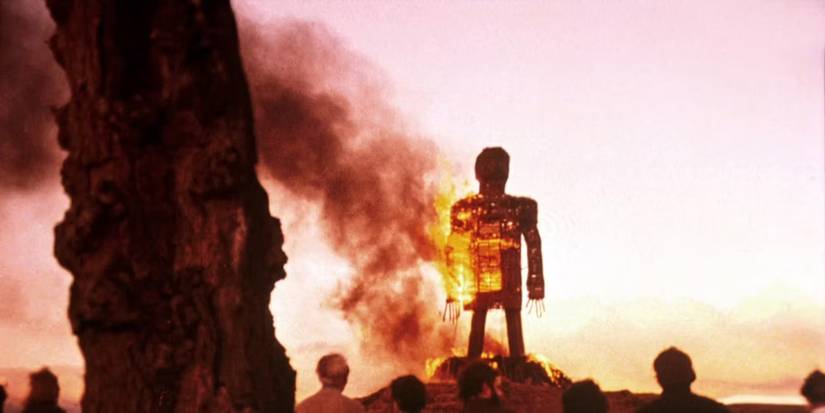
Robin Hardy's The Wicker Man creates its unsettling world through Summerisle, a remote Scottish island whose inhabitants follow a form of pagan belief that clashes violently with Sergeant Howie's Christianity. Much like Midsommar, The Wicker Man uses folk music and familiar folk traditions to foster a society that's unsettling but oddly familiar.
The Wicker Man works because Summerisle feels so complete that Howie is isolated throughout, unable to understand the Paganistic practices. Every smiling villager seems to understand rules that Howie doesn't. By The Wicker Man’s final ritual, the horrifying conclusion feels like the inevitable product of the world Hardy has meticulously established, but it is still truly shocking. The attention to detail in the community makes The WIcker Man feel rooted in a recognizable history that's stuck hundres of years in the past.
Alien (1979)
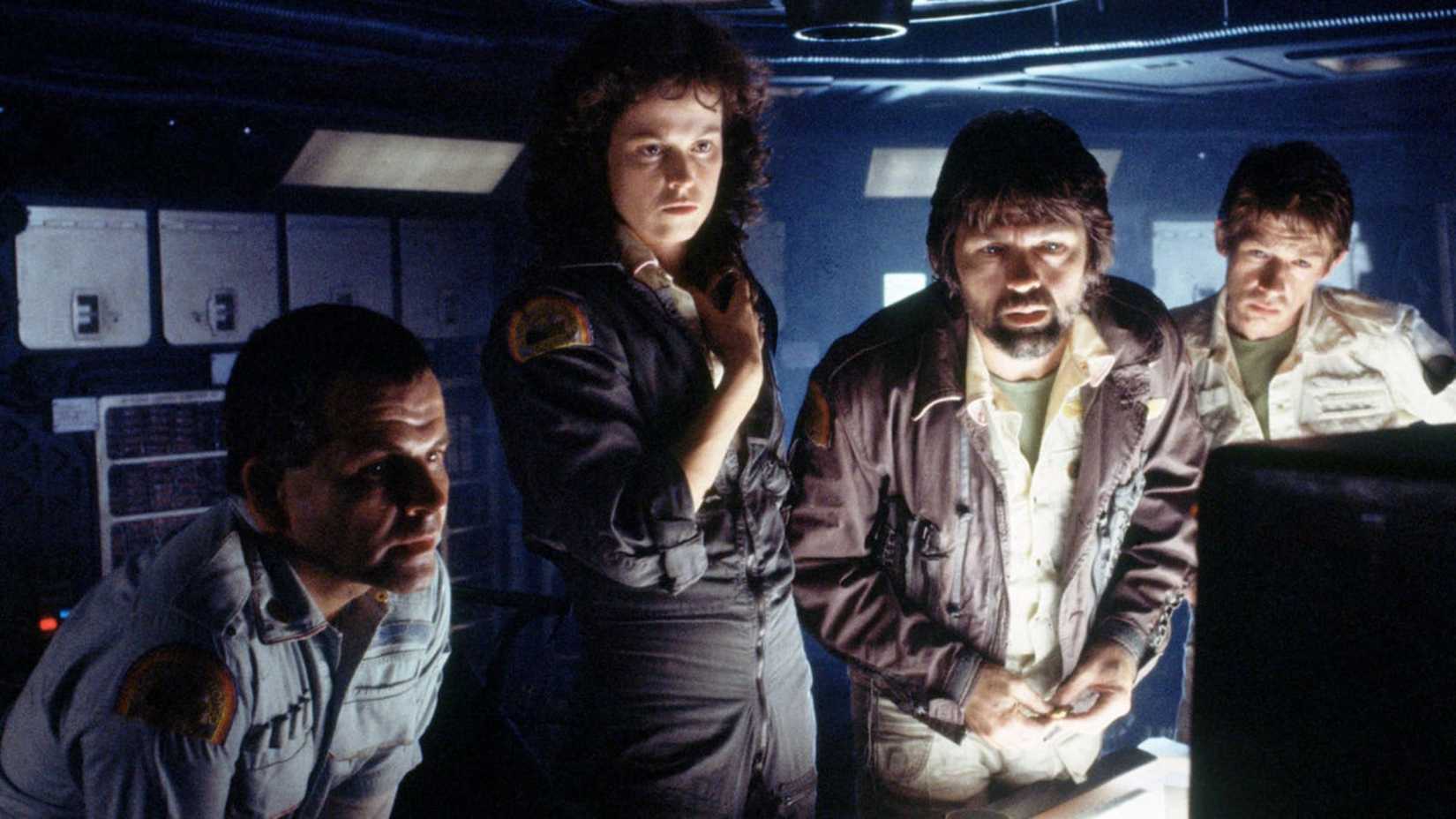
Ridley Scott's Alien demonstrates how effective worldbuilding can foster a truly suffocating tone. The Nostromo is a working commercial spacecraft, complete with industrial corridors, computer systems, cryogenic chambers, maintenance areas, and a crew employed by the mysterious Weyland-Yutani Corporation. Then the Xenomorph transforms it into a deadly labyrinth where the creature could be hiding absolutely anywhere.
The enormous extraterrestrial ecosystem exists earlier than Alien's human story, which lends the creature a sense of inevitability and adaptability beyond human comprehension. By Alien's conclusion, the environment becomes the monster's domain, and therefore a constant threat, closing in around Ripley and the audience.
Hellraiser II: Hellbound (1988)

Hellraiser II: Hellbound takes the mythology of Clive Barker's original Hellraiser and dramatically expands it. The sequel features the Cenobites’s return, but vitally it takes Kirsty into the Labyrinth, the bizarre hell dimension ruled by Leviathan. The Labyrinth's enormous geometric corridors, endless staircases, shifting rooms, and supernatural architecture are cold and indiscriminate. The landscape quickly becomes oppressive and impressive all at once.
Pinhead and the Cenobites become more understandable as inhabitants of this dimension rather than simply mysterious monsters. Hellbound introduces the possibility of deeper layers of Hell and reveals more about the transformation of human beings into Cenobites. It's ambitious worldbuilding disguised as gloriously grotesque body horror.





 English (US) ·