


Published May 16, 2026, 8:41 PM EDT
Sign in to your Collider account
HBO has always been synonymous with prestige television. The network has built its reputation on ambitious storytelling that aims to provide more than just entertainment. There’s no denying that the classics, including The Sopranos and Band of Brothers, are in a league of their own, but the last 10 years have also marked a noticeable shift for HBO.
The network’s modern slate feels more daring, introspective, and willing to tell uncomfortable stories. In an era dominated by oversaturation and algorithm-driven content, HBO has doubled down on content that requires the audience to actively engage with it. Here is a list of the greatest HBO shows of the last 10 years that linger long after the credits roll.
12 'Sharp Objects' (2018)
 Image via HBO
Sharp Objects might be a miniseries, but it leaves the kind of impact that many long-running shows fail to have. The psychological thriller follows the brilliant Amy Adams as Camille Preaker, a reporter who has recently been discharged from a psychiatric hospital. She is then tasked with investigating the strange murders of two young girls in her hometown of Wind Gap, Missouri. However, once Camille returns to her childhood home, she is forced to confront the personal trauma she has avoided for years.
The most interesting part of the show is how the protagonist’s own life intertwines with the case she is trying to solve. The narrative unfolds in an almost dream-like manner as it reveals information about Camille’s past in fragments. Her complex relationships with her controlling mother, Adora (Patricia Clarkson), and half-sister Amma (Eliza Scanlen) add another layer of intrigue to the whole story. Sharp Objects is the kind of show where every little thing feels intentional. It rewards the audience’s attention by delivering a climax that ties up every loose thread and delivers answers that are both shocking and inevitable at the same time.
11 'Big Little Lies' (2017–2026)
 Image via HBO
Big Little Lies, based on Liane Moriarty’s novel of the same name, is a psychological thriller, domestic drama, and social commentary all rolled into one relentless narrative. The show is essentially a murder story told in reverse. It’s set in the wealthy seaside community of Monterey, California, and opens with a death at a school fundraiser. The story then rewinds to explore how five women’s lives slowly collide with the central mystery and uncovers the events leading up to it. However, Big Little Lies is much more than a conventional whodunit.
The identities of the killer and the victim are initially withheld, and that slow-burn approach ensures that the show hooks the audience in right off the bat. The ensemble cast includes Reese Witherspoon, Nicole Kidman, Shailene Woodley, Laura Dern, and Zoe Kravitz as the leads, all of whom deliver compelling performances. The plot unfolds through time jumps, interrogations, and unreliable perspectives, and serves as a character study for all these women who are complex and messy in their own ways. Big Little Lies asked uncomfortable questions about motherhood and trauma, and in doing so, it paved the way for more female-led dramas.
10 'The White Lotus' (2021–Present)
 Image via HBO
The White Lotus is a delicious satire on power, privilege, and wealth. Each season of the anthology series, written and directed by Mike White, is set in a different White Lotus luxury resort and features a bunch of interesting characters to explore all kinds of power dynamics. Every installment unfolds over the course of a single week. So far, the stories have all opened with a death before rewinding to show how a brand-new group of guests and staff spiral toward the inevitable outcome. Rather than relying on traditional murder mystery mechanics, The White Lotus uses subtle microaggressions, miscommunications, and emotional cruelty to build its constant sense of tension.
The dynamics between the guests and the lesser-privileged staff of the resorts serve as some of the most memorable moments on the show, especially because of how the setting serves as a bubble where the rich barely face the consequences of their actions. The format of the show also keeps it from ever feeling stale, with every new season exploring similar themes, but from a completely different lens and in a completely different context. Visually, The White Lotus feels like pure escapism with its sunny skies, infinity pools, and grand interiors, but that only reinforces the idea that money can’t erase moral rot. The show strikes the perfect balance between dark humor and social commentary, and thrives on its unpredictability. All of this makes The White Lotus one of the most bingeable shows on HBO right now.
9 'Mare of Easttown' (2021)
 Image via HBO
Mare of Easttown is a bleak, character-driven crime drama that follows a murder mystery, but quickly expands its emotional scope to deliver a story that stays with the audience long after the credits roll. The series, created by Brad Ingelsby, is set in a small Pennsylvania town where everyone knows each other, and no one ever truly escapes their past. The story centers on Marianne “Mare” Sheehan (Kate Winslet), a worn‑down detective who is grieving the suicide of her son, fighting to maintain custody of her grandson, and facing public resentment for failing to solve a year‑old missing persons case involving a local girl. The stakes are already high, but when teenage mother Erin McMenamin (Cailee Spaeny) is found murdered in the woods, Mare is put under intense pressure to deliver justice.
This leads her and her new partner, Detective Colin Zabel (Evan Peters), down a rabbit hole of secrets that keep getting worse. Every lead implicates someone close to Mare, which reinforces the idea that in a small town, solving a crime means betraying someone. The show complicates this mystery with shocking twists and red herrings to constantly keep the audience and Mare on edge. The protagonist operates in this morally gray area where she manipulates evidence and crosses legal lines to protect herself and whatever is left of her family. In doing all this, Mare of Easttown talks about how communities deal with tragedy and forces its characters to confront the painful truths they have spent years avoiding. The show easily stands out as one of the strongest HBO dramas of all time, one that isn’t exactly easy to watch, but is worth every second.
8 'Barry' (2018–2023)
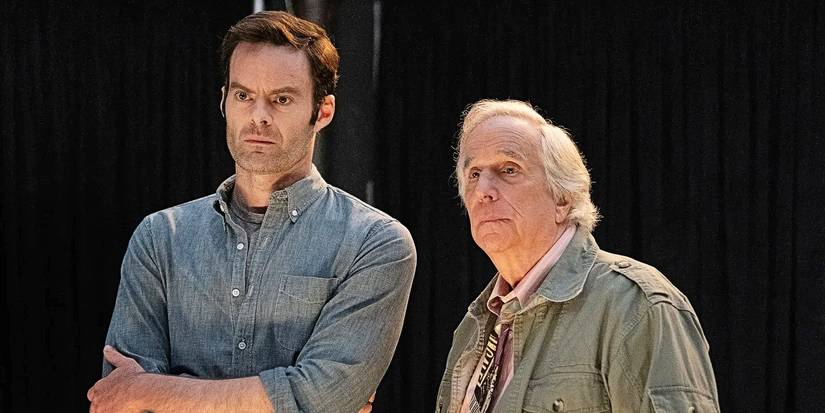 Image via HBO
Barry begins as a small-scale crime drama, but expands into a story that uses dark comedy to interrogate violence and guilt. The series, created by and starring Bill Hader, follows Barry Berkman, a former Marine suffering from depression and emotional detachment, who now works as a contract killer. The story picks up when he is sent to Los Angeles for a job, but ends up wandering into an acting class led by Gene Cousineau (Henry Winkler). The experience awakens something in Barry by offering the validation and purpose he has been looking for.
It allows him to truly believe that he can become someone new, but the catch is that the reality of his life is never too far behind. Barry’s handler, Monroe Fuches (Stephen Root), refuses to let him walk away from his work, which becomes the central conflict of the story. As Barry juggles auditions, personal relationships, and murder, his two lives begin to seep into each other in ways he is not okay with. As the story goes on, the tone of the show darkens and becomes increasingly uncomfortable. The series refuses to paint Barry as black or white, and that makes him feel real despite all the heightened drama unfolding around him.
7 'House of the Dragon' (2022–Present)
 Image via HBO
House of the Dragon is a Game of Thrones spinoff that strips the fantasy spectacle of the original into something that feels way more brutal. The series adapts George R. R. Martin’s Fire & Blood, and narrows the scope of the story to explore inheritance and pride within the House of Targaryen. The show is set roughly 200 years before the events of the original series, at the height of the Targaryen rule.
Things pick up with King Viserys I Targaryen (Paddy Considine) naming his daughter Rhaenyra Targaryen (Milly Alcock and Emma D’Arcy) as the successor to the Iron Throne. However, the decision defies centuries of patriarchal precedent and plants a seed of instability that festers slowly but surely. Things only grow more complex when Viserys remarries and produces male children with Alicent Hightower (Olivia Cooke). The plot unfolds over years, which allows relationships to evolve and resentments to really settle. At the same time, the series never frames its conflict in simple terms and shows how everyone is capable of cruelty within systems of power.
Collider Exclusive · TV Medicine Quiz Which Fictional Hospital Would You Work Best In? The Pitt · ER · Grey's Anatomy · House · Scrubs
Five hospitals. Five completely different ways medicine goes sideways on television — brutal, chaotic, romantic, brilliant, and ridiculous. Only one of them is the ward your instincts were built for. Eight questions will figure out exactly where you belong.
🚨The Pitt
🏥ER
💉Grey's
🔬House
🩺Scrubs
FIND YOUR HOSPITAL →
01
A critical patient comes through the door. What's your first instinct? Medicine under pressure reveals who you actually are.
AStay completely present — block everything else out and work through it step by step, right now. BTriage fast and delegate — get the right people on the right problems immediately. CTrust my gut and move — I work best when I stop overthinking and just act. DAsk the question everyone else is ignoring — what's the thing that doesn't fit? ETake a breath, make a joke to cut the tension, and then get to work — panic helps no one.
NEXT QUESTION →
02
Why did you go into medicine in the first place? The honest answer says more about you than the one you'd give in an interview.
ABecause I wanted to be where it matters most — right at the edge, when someone's life is actually on the line. BBecause I wanted to help people — genuinely, one patient at a time, in a system that makes it hard. CBecause I was drawn to the intensity of it — the stakes, the drama, the feeling of being fully alive. DBecause medicine is the most interesting puzzle there is — and I needed a problem worth solving. EBecause I wanted to make a difference — and also, honestly, I didn't know what else to do with my life.
NEXT QUESTION →
03
What do you actually want from the people you work with? Who you want beside you under pressure is who you are.
ACompetence and calm — I need people who don't fall apart when things get bad. BTrust and reliability — I want to know that when I pass something off, it's handled. CConnection — I want colleagues who become family, even if that gets complicated. DIntelligence and the willingness to be challenged — I have no interest in people who just agree with me. EFriendship — people I actually like spending twelve hours a day with, because those hours are going to happen either way.
NEXT QUESTION →
04
You lose a patient you fought hard to save. How do you carry it? Every doctor who's worked a long shift has had to answer this question.
AI carry it. All of it. I don't look for ways to put it down — that weight is part of doing this work honestly. BI process it and move — you have to, or the next patient suffers for the one you just lost. CI feel it deeply and lean on the people around me — I don't think you're supposed to handle that alone. DI go back over every decision — not to punish myself, but because I need to understand what I missed. EI grieve it genuinely, find some way to laugh about something unrelated, and try to be kind to myself — imperfectly.
NEXT QUESTION →
05
How would your colleagues describe the way you work? Your reputation on the floor is usually more accurate than your self-image.
AIntense and completely present — no small talk during a shift, but exactly who you want there. BSteady and dependable — not the flashiest in the room but never the one who drops something. CPassionate and occasionally chaotic — brilliant on the hard cases, prone to drama everywhere else. DBrilliant and difficult — right more often than anyone else, and everyone knows it, including me. EWarm and self-deprecating — not the most intimidating presence, but genuinely good at this and easy to like.
NEXT QUESTION →
06
How do you feel about hospital protocol and procedure? Every institution has rules. What you do with them is a choice.
AProtocol is the floor, not the ceiling — I follow it until the patient needs something it can't provide. BI respect it — the system is broken in places, but the structure is there for a reason and I work within it. CI follow it until my instincts tell me not to — and my instincts are usually right, even when they cause problems. DRules are for people who haven't thought hard enough about when to break them. EI try to follow it and mostly do — with a few memorable exceptions that still come up in meetings.
NEXT QUESTION →
07
What does this job cost you personally? Nobody works in medicine without paying a price. What's yours?
AEverything outside these walls — I've given this job my full attention and the rest of my life has gone around it. BMy idealism, mostly — I came in believing the system could be fixed and I've made a complicated peace with that. CStability — my personal life has been as chaotic as the OR, and that's not entirely a coincidence. DMy relationships — I am not easy to know, and the people who've tried to would probably agree. EMy sense of gravity — I use humour as a coping mechanism, which not everyone appreciates in a hospital.
NEXT QUESTION →
08
At the end of a long shift, what keeps you coming back? The answer to this question is the most honest thing about you.
AThe fact that it's real — that nothing else I could be doing would matter this much, right now, today. BThe patients — individual human beings who needed something and got it because I was there. CThe people I work with — I have walked through impossible things with these people and I'd do it again. DThe next unsolved case — there's always another puzzle, and I'm not done yet. EBecause despite everything — the exhaustion, the loss, the absurdity — I actually love this job.
REVEAL MY HOSPITAL →
Your Assignment Has Been Made You Belong In…
Your answers have pointed to one fictional hospital above all others. This is the ward your instincts, your temperament, and your particular brand of dysfunction were built for.
The Pitt
You are built for the most unsparing version of emergency medicine television has ever shown — one that puts you inside a single fifteen-hour shift and doesn't let you look away.
- You need your work to be real, not romanticised — meaning over drama, honesty over aesthetics.
- You find purpose inside the work itself, not in the chaos surrounding it.
- You've made peace with the fact that this job takes from you constantly, and gives back in ways that are harder to name.
- Pittsburgh Trauma Medical Center demands exactly that kind of person — and you would not want to be anywhere else.
ER
You are the person who keeps the whole floor running — not the most brilliant in the room, but possibly the most essential.
- You show up, do the work, absorb the losses, and come back the next day without needing the job to be anything other than what it is.
- You care about patients as individual human beings, not as cases to solve or dramas to live through.
- You believe in the system even when it fails you — and you understand that emergency medicine is about holding the line just long enough.
- ER is television about endurance. You have it.
Grey's Anatomy
You came to medicine with your whole self — your ambition, your emotions, your relationships, your history — and you have never quite managed to leave any of it at the door.
- You feel things fully and form deep attachments to the people you work with.
- Your personal and professional lives are permanently, chaotically entangled — and that entanglement drives both your greatest disasters and your most remarkable saves.
- You understand that extraordinary medicine often happens at the intersection of clinical skill and profound human connection.
- It's messy at Grey Sloan. You would not have it any other way.
House
You are drawn to the problem above everything else — the symptom that doesn't fit, the diagnosis hiding underneath the obvious one.
- You're not primarily motivated by the patient as a person — though you are capable of caring, even if you'd deny it.
- You work best when the stakes are highest and the standard answer is wrong.
- Princeton-Plainsboro exists to house one extraordinary, impossible mind — and everyone around that mind is there because they're smart enough to keep up.
- The only way forward here is to think harder than everyone else in the room. That is exactly what you do.
Scrubs
You understand that medicine is tragic and absurd in almost equal measure — and that the only sane response is to hold both of those things at the same time.
- You are warm, self-aware, and funnier than most people in your field.
- You use humour to get through terrible moments — and at Sacred Heart, that's not a flaw, it's a survival strategy.
- You lean on the people around you and let them lean back. The laughter and the grief are genuinely inseparable here.
- Scrubs is a show about learning to become someone worthy of the job. You are still very much in the middle of that process — which is exactly right.
↻ RETAKE THE QUIZ
6 'The Night Of' (2016)
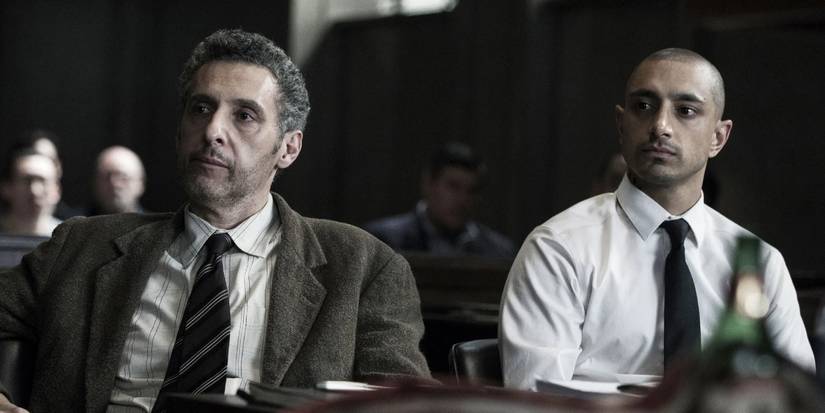 Image via HBO
The Night Of is a slow‑burn crime drama that uses a single murder case to expose the brutal workings of the American criminal justice system. The HBO limited series unfolds less like a traditional whodunit and more like a bureaucratic nightmare where truth becomes secondary to process. The story begins with Nasir “Naz” Khan (Riz Ahmed), a shy Pakistani‑American college student who borrows his father’s taxi for a night out in New York City. After meeting a mysterious young woman, Andrea Cornish (Sofia Black‑D’Elia), the two spend the evening together before Naz wakes up in her apartment to find her brutally murdered beside him, and that’s when his fate is pretty much sealed.
Soon enough, Naz is arrested and shoved into a system that isn’t interested in uncovering the truth. He is represented by small-time defense attorney Jack Stone (John Turturro), who becomes his only ally amidst all this chaos, but that, too, is not the most reliable one. The show doesn’t really rush toward a conclusion. Instead, it explores the devastating transformation Naz goes through in prison, where he is isolated, frightened, and eventually hardened. Every episode takes the investigation in a new direction while exploring the consequences Naz has to face for something he might not have even done. The Night Of avoids heated courtroom battles because it focuses on how tedious it really is for justice to be delivered. By the time the truth finally comes out, Naz is no longer the same person, and that’s exactly the statement the show is trying to make.
5 'The Pitt' (2025–Present)
 Image via HBO Max
The Pitt is quickly earning a reputation for revitalizing the medical drama genre with its exhausting approach to storytelling in the ER. With each season set almost entirely within a single shift in the titular emergency room, the HBO series pulls no punches in how it immerses viewers into the chaos of modern healthcare. Expect overworked doctors and nurses making impossible decisions as they deal with overcrowding, the emotional toll of the job, and more.
The Pitt impressed fans and critics alike with its dedication to realism, both in its depiction of medical cases and the broken system that healthcare workers have to deal with on a daily basis. It's a stressful TV series that keeps you hooked from start to finish, leaving you just as tired as its well-written characters, who remind fans that healthcare workers carry incredible burdens with them long after their shifts end.
4 'Succession' (2018–2023)
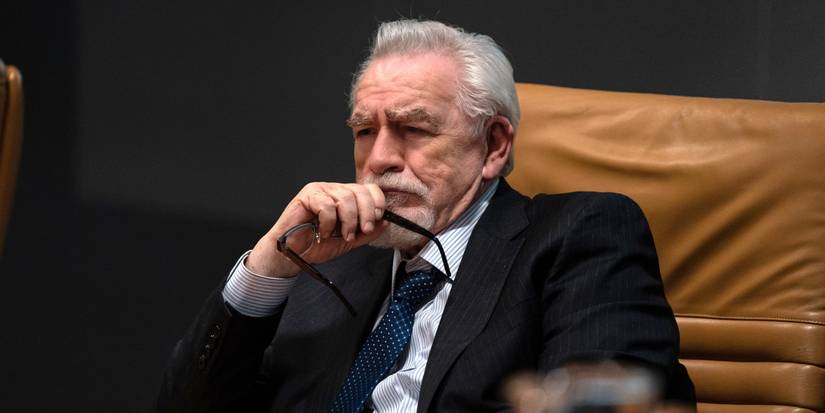 Image via HBO
Succession is a black comedy that satirizes the corporate world. Beneath that, though, it’s a messy, complex, and wild family drama at heart. The series, created by Jesse Armstrong, centers on the Roy family, owners of the multinational media conglomerate Waystar Royco. The story begins with patriarch Logan Roy’s (Brian Cox) declining health, triggering a succession crisis that he has no intention of actually resolving. His children, Kendall (Jeremy Strong), Siobhan “Shiv” (Sarah Snook), Roman (Kieran Culkin), and Connor (Alan Ruck), are all desperate to earn their father’s validation and the throne he sits on. This leads to a race where the siblings constantly swing between sabotaging each other and teaming up to try to sabotage their manipulative father.
The drama involves boardroom coups, hostile takeovers, media scandals, and political backroom deals, but all of this only serves as the backdrop for the show’s larger exploration of how parental neglect manifests in strange ways. Nothing in Succession feels permanent, and that gives the show a cyclical nature that compels the audience to keep watching. Despite all that, though, the series portrays its characters as fully-realized humans, shaped by the world they have grown up in. All of that is punctuated by the show’s devastating yet fitting finale that is still being talked about simply because of how brilliant it truly was.
3 'Watchmen' (2019)
 Image via HBO
Watchmen reimagines Alan Moore and Dave Gibbons’ iconic graphic novel through the lens of American history, racial trauma, and power. The series, created by Damon Lindelof, is set decades after the original events, and opens with the historical violence of the 1921 Tulsa Race Massacre, which immediately grounds the show in real-world atrocities. From there, the story shifts to an alternate-reality present day where masked law enforcement has become necessary following a wave of anti-police violence.
The narrative follows detective Angela Abar (Regina King), who is operating under the vigilante persona Sister Night. Angela’s work gradually pulls her into a larger conspiracy involving policing, memory, inherited trauma, and the unresolved consequences of the original Watchmen’s infamous ending. That’s when the line between her personal history and her work begins to blur. Watchmen takes a slow-burn approach to resolving its mystery, with tons of detours along the way. The show never presents anything as purely good or bad to show that power without accountability always reproduces some kind of harm.







 English (US) ·