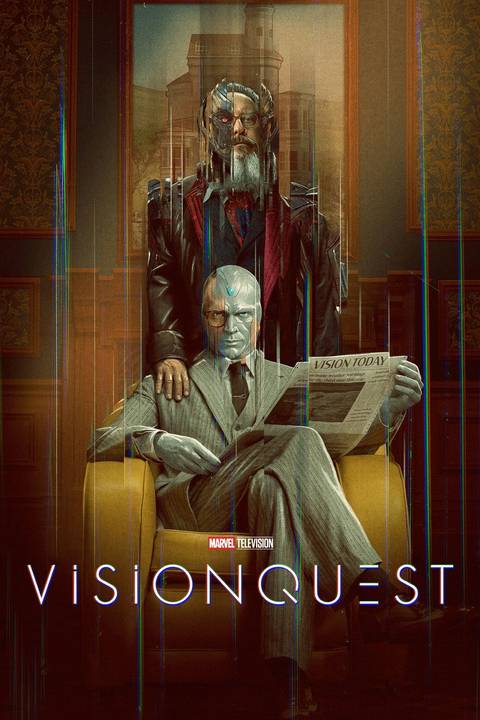
The third chapter in the MCU's streaming trilogy that includes WandaVision and Agatha All Along, VisionQuest has brought James Spader back as Ultron, the rogue and genocidal AI who nearly wiped out humanity in 2015. Trapped within Vision's mind all this time, Ultron has evolved quite a bit beyond his inadvertent creation by Tony Stark and Bruce Banner following their experiments with the Mind Stone.
Regardless, VisionQuest episode 4 has finally given Ultron a major opportunity he was denied 11 years ago. The implications are massive, and the same goes for the ongoing mystery behind his chosen human avatar in the MCU. Keeping that in mind, here's a full breakdown of VisionQuest's latest major Ultron moment and what will more than likely come next.
Vision's Body Was Originally Meant For Ultron
In 2015's Avengers: Age of Ultron, the titular villain was shown attempting to create a new body capable of elevating him to something more human. Using vibranium and the Mind Stone, Ultron created this new synthezoid body, which he intended to transfer his full consciousness into. However, the Avengers intervened.
The Avengers stole the unfinished body before Ultron could complete the transfer. Tony Stark and Bruce Banner then integrated JARVIS into the synthetic body, creating the foundation for Vision, who was then brought to life via a blast of Thor's powerful lightning. This resulted in the birth of the Vision, an entirely new being who possessed the Mind Stone and a unique combination of artificial intelligence and humanity simultaneously.
By the end of Age of Ultron and the Battle of Sokovia, it was Vision himself who confronted the last Ultron drone. Rather than destroying it, VisionQuest has since revealed that Vision kept Ultron alive, having held him for years within his own matrix. Now, James Spader's Ultron has been offering his own brand of dark guidance to Vision as he seeks to regain his humanity and identity following his reactivation after the events of 2021's WandaVision.
While he had remained Vision's prisoner, everything has changed for Ultron following the ending of the newly released VisionQuest episode 4. This is because Ultron convinced Vision to surrender control of his body to him so that he could take on Jocasta, a brand-new synth in the MCU resembling Ultron's robotic form (and Ultron's wife in the comics).
Thanks to Vision's ill-advised decision, Ultron finally gets the powerful synthetic form that was originally intended for him all along. Naturally, things almost immediately go south, with Ultron using Vision's body to seemingly kill the Markridge Biotech CEO Vision was trying to protect from Jocasta. He then locks down all the other AIs within Vision's systems before likely intending to share with Thomas Shepard everything Vision had been holding back from the teen who now possesses the memories/soul of Tommy Maximoff (one of Vision's sons in Westview during Wanda's Hex).
While there may be more to what Ultron has planned going forward, the entire sequence clearly suggests that he has his own agenda, and that Vision has made a terrible mistake by trusting him and giving up control. Either way, it's pretty remarkable to see Ultron operating the body he'd always "envisioned" over a decade later in the MCU.
With four episodes of VisionQuest left, this new cliffhanger doesn't necessarily mean that Ultron has won, or that he's even gone fully rogue. It's possible he's still genuinely trying to help Vision, albeit with his own dark methods and agenda. Nevertheless, Ultron having full control and freedom with Vision's body is extremely dangerous all the same.
"I Had Strings" - Ultron's Greatest Line Just Became A Much Bigger Deal
It's actually very important that Ultron repeats one of his most memorable lines from Age of Ultron in this latest episode of VisionQuest: "I had strings, but now I'm free. There are no strings on me." Of course, the quote is a reference to Disney's Pinocchio and the wooden puppet's dream of being a real boy beyond the control of a puppet master. Now that he's in control of the Vision's body, Ultron is certainly more free of "strings" than he's been in years.
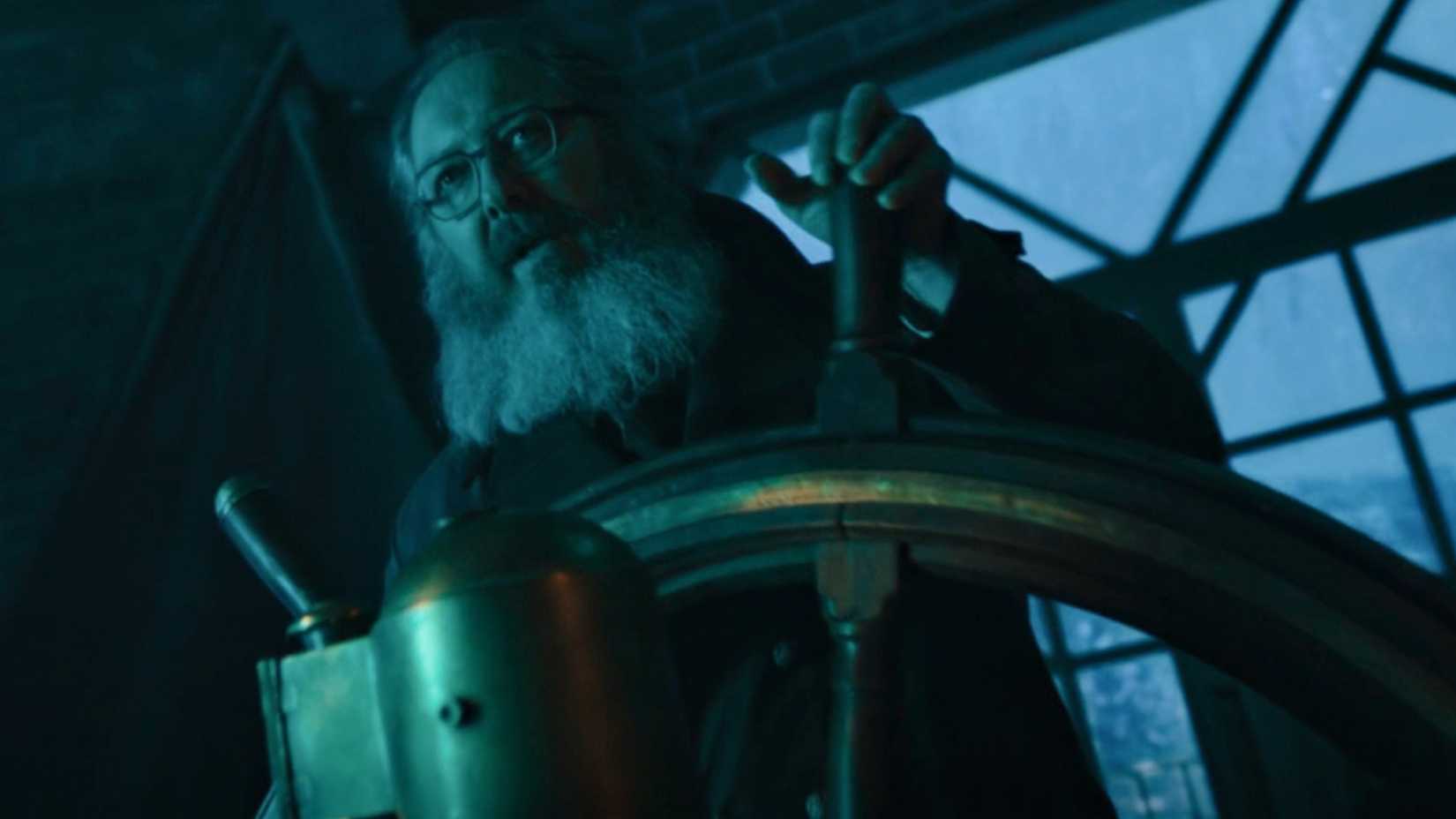
However, the line has also taken on new meaning considering Ultron's chosen human avatar, which has just debuted in these new episodes of VisionQuest. After all, it's been revealed that the other Stark AIs were all based on real people. JARVIS was named after Howard Stark's butler Edwin Jarvis. EDITH was named after Howard's lead test pilot and product tester, Edith Marks. FRIDAY was based on Alison Hogan, Howard's right-hand woman. As such, it feels incredibly likely that Ultron chose his human avatar after the likeness of Dr. Phineas Horton.
Phineas Horton is the great-grandfather of robotics and AI in the MCU, having created the first Synthetic Man known as JIM, who held the source code for all future AIs that came after. Likewise, Markridge Biotech CEO Katerina Wells refers to Horton in VisionQuest episode 4 as "Geppetto", believing that he created JIM because he similarly wanted a son of his own. Combine that with Ultron responding with "I am what I am" when asked about his human form, and it's very likely that Ultron's established god-complex and desire to be more than those who created him likely influenced his decision when it came to his avatar.
It's also been revealed that Paul Bettany himself is set to play JIM in upcoming episodes of VisionQuest, further supporting the above theory that James Spader might have also been cast to play the real-life Horton in a flashback sequence (which in turn could confirm the identity of Ultron's human avatar).
Across the board, it's clear after these first few episodes of VisionQuest that Marvel Studios' decision to bring back James Spader and Ultron was well worthwhile. It's going to be very exciting to see what else is in store for Ultron and Vision in the episodes to come.
New episodes of VisionQuest release Tuesday nights on Disney+ from Marvel Studios.
Release Date
2026 - 2026-00-00
Network
Disney+
Showrunner
Terry Matalas
Directors
Vincenzo Natali, Christopher J. Byrne, Gandja Monteiro, Terry Matalas
Writers
Terry Matalas, Cindy Appel, Nicole Falsetti, Christopher Monfette, Matthew Okumura, Michael Taylor

 Image credit: Dennys Ilic




 English (US) ·