
 Image via Warner Bros.
Published Jun 27, 2026, 8:29 AM EDT
Sign in to your Collider account
The 1990s were a great time for movies, and I still enjoy watching films from that decade. Specifically, 1999 is often seen as one of the best years for films, with many movies gaining popularity and building on the success of the New Hollywood movement from the 1970s. There was something for everyone in the '90s, in almost every genre, and we all collectively remember enjoying that time.
However, not every movie from that decade was a success. Like any other decade, the '90s had its share of disappointments. Some films were complete failures and deserve a 0/10 rating and these movies belong in the cinematic Hall of Shame. So here it goes, the 10 worst movies from the '90s that are truly 0/10.
10 ‘Bio-Dome’ (1996)
 Image via MGM/UA Distribution Co.
Bio-Dome follows Bud Macintosh (Pauly Shore) and Doyle Johnson (Stephen Baldwin), two irresponsible friends who spend their days avoiding work and causing problems for those around them. Their lives take an unexpected turn when they accidentally become trapped inside an environmental research facility during a year-long experiment. As scientists attempt to maintain a carefully balanced ecosystem, Bud and Doyle create chaos throughout the project and force everyone inside to deal with the consequences of their reckless behavior.
The film had a funny idea, but quickly became known for its childish humor and repetitive jokes. The screenplay used too many crude gags and did not offer much character development or real laughs. The weak writing and lack of creativity made the story feel like just a series of immature skits. Today, Bio-Dome is remembered as one of the worst comedies of the 1990s.
9 ‘Chairman of the Board’ (1998)
 Image via Trimark Pictures
Chairman of the Board centers on Edison Stockard (Carrot Top), an eccentric inventor whose unusual ideas rarely earn respect from others. His fortunes suddenly change when he forms a connection with a wealthy businessman who appreciates his creativity. After an unexpected series of events, Edison finds himself running a major corporation despite having almost no experience in business. He then struggles to navigate board meetings, company politics, and skeptical executives, and attempts to prove that his unconventional thinking can succeed.
The film had weak comedy and a very predictable storyline. The humour depended entirely on Carrot Top's quirky personality, not on a genuinely funny script. The jokes often failed to land, while the plot offered few surprises or memorable moments. As a result, the Chairman of the Board quickly developed a reputation as one of the least entertaining comedies of its decade.
8 ‘The Scarlet Letter’ (1995)
 Image via Buena Vista Pictures
The Scarlet Letter is a story about Hester Prynne (Demi Moore), a woman who attempts to build a new life in a strict Puritan settlement. As she adjusts to a society governed by rigid religious rules, she forms a relationship with Reverend Arthur Dimmesdale (Gary Oldman). Their growing bond places both characters under increasing pressure, as community leaders seek to enforce conformity and punish those who challenge social expectations. The story explores their struggle against a society that leaves little room for personal freedom.
The movie, based on Nathaniel Hawthorne's classic novel, faced criticism for making significant changes to the original story. The adaptation lost the themes and atmosphere that made the book respected. Combined with uneven storytelling and questionable creative choices, these changes disappointed both critics and fans of the novel. As a result, the historical drama failed to please either audience.
7 ‘Highlander II: The Quickening’ (1991)
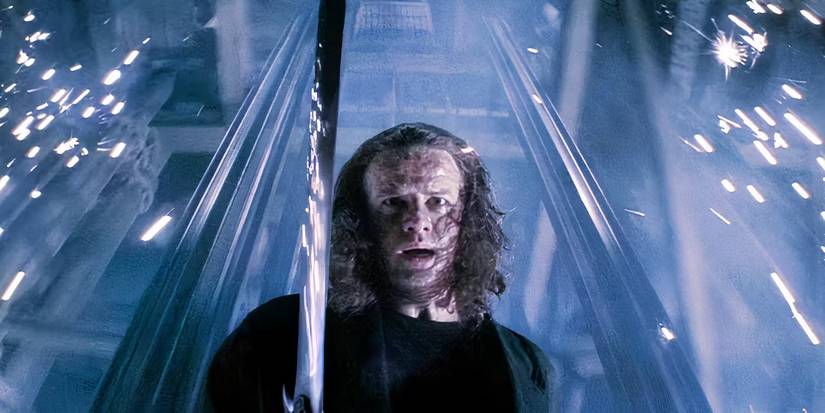 Image via InterStar
Highlander II: The Quickening takes place in a future where the Earth's atmosphere is protected by a massive shield designed to prevent environmental disaster. Connor MacLeod (Christopher Lambert) becomes involved in uncovering secrets surrounding the shield while facing new threats connected to his mysterious past. As the story moves forward, he learns more about immortality and hidden conspiracies that put him in conflict with powerful enemies who want to control the future.
Highlander II is known for changing the story established in the first Highlander movie. Many fans were disappointed by confusing explanations for Connor's origins and the inconsistent world-building. The messy plot, awkward dialogues, and lack of clear direction were too obvious throughout. Instead of building on the franchise in a meaningful way, the sequel upset much of what audiences loved about the first film, making it one of cinema's most disappointing follow-ups.
6 ‘North’ (1994)
 Image via Columbia Pictures
The film North centres on North (Elijah Wood), a young boy who believes that his parents do not appreciate him enough. Convinced that he would be happier elsewhere, he is given the unusual opportunity to search for a new family. His journey takes him across different locations where he meets various potential parents, each offering a different lifestyle and set of values. As North continues his search, he gradually learns that every family comes with its own challenges and imperfections.
Despite its family‑friendly idea, the film was met with overwhelmingly negative reviews. Critics said the film failed to balance comedy, fantasy, and drama, which leaves it with an uneven tone. Its message was seen as too simplistic, and most of the jokes fell flat. What could have been a heartfelt coming‑of‑age story instead became one of the most criticized family films of the 1990s.
5 ‘Stop! Or My Mom Will Shoot’ (1992)
 Image via Universal Pictures
Stop! Or My Mom Will Shoot follows police officer Joe Bomowski (Sylvester Stallone), whose life becomes increasingly complicated when his overbearing mother comes to visit. Determined to help her son, she repeatedly inserts herself into his personal affairs and even becomes involved in a criminal investigation. As Joe attempts to solve the case professionally, his mother's constant interference creates misunderstandings and additional problems at every turn.
The story received a lot of criticism for using predictable jokes and an old-fashioned style of comedy. The main joke usually became stale long before the story ended. Stallone's acting was also seen as unsuited for the material, making the humor feel forced. Over time, the movie has gained a reputation as one of Stallone's weakest films and a clear example of failed comedy.
4 ‘Theodore Rex’ (1995)
 Image via New Line Cinema
Theodore Rex takes place in a world where humans and dinosaurs coexist. While Detective Katie Coltrane (Whoopi Goldberg) is assigned to investigate a series of suspicious incidents and is partnered with Theodore Rex, a cheerful dinosaur detective. Together, they follow clues that point toward a larger conspiracy while trying to overcome their very different personalities. Their investigation gradually uncovers the threats that could put public safety at risk.
Despite its unusual concept, the film struggled to win over audiences and critics. The mix of buddy-cop comedy and science fiction did not work well together. The screenplay lacked focus, and the visual effects looked unconvincing, even for the mid-1990s. Instead of becoming a memorable family adventure, Theodore Rex earned a reputation as one of the strangest and least successful studio productions of its time.
3 ‘Baby Geniuses’ (1999)
 Image via Sony Pictures Releasing
Baby Geniuses revolves around a group of highly intelligent infants who communicate through a secret language that adults cannot understand. However, the scientists become fascinated by the babies' hidden knowledge and attempt to unlock the secrets of their communication. At the center of the story are twins whose extraordinary abilities attract the attention of researchers determined to study and control them. Though the babies must work together to protect themselves while outsmarting the adults pursuing them.
The film aimed at families faced criticism for its unrealistic story and clumsy execution. The talking-baby idea did not land well, and it was more annoying than fun. The screenplay struggled to stay believable, even in a fantasy setting. Because of this, Baby Geniuses often appear on lists of the worst family films ever made.
Collider Exclusive · Oscar Best Picture Quiz
Which Oscar Best Picture
Is Your Perfect Movie?
Parasite · Everything Everywhere · Oppenheimer · Birdman · No Country
Five Oscar Best Picture winners. Five completely different visions of what cinema can be — and what it can do to you. One of them is the film that was made for the way your mind works. Ten questions will figure out which one.
🪜Parasite
🌀Everything Everywhere
☢️Oppenheimer
🐦Birdman
🪙No Country for Old Men
FIND YOUR FILM →
01
What kind of film experience do you actually want? The best movies don't just entertain — they leave something behind.
ASomething that pulls the rug out — that makes me think I'm watching one kind of film and then reveals I'm watching another entirely. BSomething overwhelming — funny, sad, absurd, and genuinely moving, all at once. CSomething grand and weighty — a film that makes me feel the full scale of what I'm watching. DSomething formally daring — a film that pushes what cinema can even do. ESomething lean and relentless — pure tension with no wasted frame.
NEXT QUESTION →
02
Which idea grabs you most in a film? Great films are driven by a central obsession. What's yours?
AClass, inequality, and what people are willing to do when desperation meets opportunity. BIdentity, family, and the chaos of trying to hold your life together when everything is falling apart. CGenius, moral responsibility, and the catastrophic weight of a decision you can never take back. DEgo, legacy, and the terror of becoming irrelevant while you're still alive to watch it happen. EEvil, chance, and whether moral order actually exists or if we just tell ourselves it does.
NEXT QUESTION →
03
How do you like your story told? Form is content. The way a story is shaped changes what it means.
AGenre-twisting — I want it to start in one lane and migrate into something completely different. BMaximalist and genre-blending — comedy, action, drama, sci-fi, all in one ride. CEpic and non-linear — cutting between timelines, building a mosaic of cause and consequence. DA single unbroken flow — I want to feel like I'm living it in real time, no cuts to safety. ESpare and precise — every scene doing exactly what it needs to do and nothing more.
NEXT QUESTION →
04
What makes a truly great antagonist? The opposition defines the protagonist. What kind of opposition fascinates you?
AA system — invisible, structural, and almost impossible to fight because it has no single face. BThe self — the ways we sabotage, abandon, and fail the people we love most. CHistory — the unstoppable momentum of events that no single person can stop or redirect. DThe industry — the machinery of culture that chews up talent and spits out irrelevance. EPure, implacable evil — a force so certain of itself it becomes almost philosophical.
NEXT QUESTION →
05
What do you want from a film's ending? The final note is the one that lingers. What do you want it to sound like?
AShock and inevitability — a conclusion that recontextualises everything that came before it. BEarned emotion — I want to cry, laugh, and feel genuinely hopeful, even if the world is a mess. CDevastation and grandeur — an ending that makes me sit in silence for a few minutes after. DAmbiguity — something that leaves enough open that I'm still thinking about it days later. EBleakness — an honest refusal to pretend the world is tidier than it actually is.
NEXT QUESTION →
06
Which setting pulls you in most? Where a film takes place shapes everything — mood, stakes, what's even possible.
AA gleaming modern city with a hidden underside — beauty masking rot, wealth masking desperation. BA collapsing suburban life that opens onto something infinite — the multiverse of a single ordinary person. CThe corridors of power and science at a world-historical turning point — where decisions echo for decades. DThe grimy, alive chaos of New York and Hollywood — fame as both destination and trap. EVast, indifferent landscape — desert and highway where violence arrives without warning or reason.
NEXT QUESTION →
07
What cinematic craft impresses you most? Every great film has a signature — a technical or artistic element that makes it unmistakable.
AProduction design and mise-en-scène — every frame composed to carry meaning beneath the surface. BEditing and tonal control — the ability to move between registers without losing the audience. CScore and sound design — music that becomes inseparable from the dread and awe of what you're watching. DCinematography as performance — the camera not recording events but participating in them. ESilence and restraint — what's left unsaid and unshown doing more work than any dialogue could.
NEXT QUESTION →
08
What kind of main character do you root for? The protagonist is the lens. Who you choose to follow says something about you.
ASomeone smart and resourceful who makes increasingly dangerous decisions under pressure. BSomeone overwhelmed and ordinary who turns out to be capable of something extraordinary. CA brilliant, tortured figure whose gifts and flaws are inseparable from each other. DA self-destructive artist whose ego is both their superpower and their undoing. EA quiet, principled person trying to make sense of a world that has stopped making sense.
NEXT QUESTION →
09
How do you feel about a film that takes its time? Pace is a choice. Some films sprint; others let tension accumulate slowly, deliberately.
AI love a slow build when I know the payoff is going to be seismic — patience for a devastating reveal. BGive me relentless momentum — I want to feel breathless and emotionally spent by the end. CEpic runtime doesn't scare me — if the material demands three hours, give me three hours. DI want it to feel propulsive even when nothing is technically happening — restless energy throughout. EDeliberate and unhurried — I want dread to accumulate in the spaces between the action.
NEXT QUESTION →
10
What do you want to feel walking out of the cinema? The best films leave a mark. What kind of mark do you want?
AUnsettled — like I've just seen something I can't fully explain but can't stop thinking about. BMoved and energised — like the film reminded me what actually matters and gave me something to hold onto. CHumbled — like I've been in the presence of something genuinely important and overwhelming. DExhilarated — like I've just seen cinema doing something it's never quite done before. EHaunted — like a cold, quiet dread that stays with me for days.
REVEAL MY FILM →
The Academy Has Decided Your Perfect Film Is…
Your answers have pointed to one Oscar Best Picture winner above all others. This is the film that was made for the way your mind works.
Parasite
You are drawn to films that operate on multiple levels simultaneously — that begin in one genre and quietly, brilliantly migrate into another. Bong Joon-ho's Parasite is a film about class, desire, and the architecture of inequality that manages to be darkly funny, deeply suspenseful, and genuinely shocking across a single extraordinary running time. Your instinct is for cinema that hides its true intentions until the moment it's ready to reveal them. Parasite is exactly that — a film that rewards close attention and punishes assumptions, right up to its devastating final image.
Everything Everywhere All at Once
You want it all — and this film gives you all of it. The Daniels' Everything Everywhere All at Once is one of the most maximalist films ever made: action comedy, multiverse sci-fi, family drama, existential crisis, and a genuinely earned emotional core that sneaks up on you amid the chaos. You are someone who responds to ambition, who doesn't want cinema to choose between being entertaining and being meaningful. This film refuses that choice entirely. It is overwhelming by design, and its overwhelming nature is precisely the point — because the feeling of being crushed by infinite possibility is exactly what it's about.
Oppenheimer
You are drawn to cinema on a grand scale — films that understand history not as a backdrop but as a force, and that place their characters inside that force and watch what happens. Christopher Nolan's Oppenheimer is a film about the terrifying gap between what we can do and what we should do, told with the full weight of one of the most consequential moments in human history behind it. You want your films to feel important without feeling self-important — to earn their ambition through sheer craft and the gravity of their subject. Oppenheimer does exactly that. It is enormous, complicated, and refuses easy comfort.
Birdman
You are drawn to films that foreground their own construction — that make the how of the filmmaking part of the what it's about. Alejandro González Iñárritu's Birdman, shot to appear as a single continuous take, is cinema examining itself through the cracked mirror of a fading actor's ego. You respond to formal daring, to the feeling that a film is doing something that probably shouldn't be possible. Michael Keaton's performance and Emmanuel Lubezki's restless camera create something genuinely unlike anything else — a film that is simultaneously about creativity, relevance, self-destruction, and the impossibility of ever truly knowing if your work means anything at all.
No Country for Old Men
You are drawn to cinema that trusts silence, that refuses to explain itself, and that treats dread as a form of meaning. The Coen Brothers' No Country for Old Men is a film about the arrival of a new kind of evil — implacable, arbitrary, and utterly indifferent to the moral frameworks we use to make sense of the world. It is one of the most formally controlled films ever made, and its controlled restraint is what makes it so terrifying. You want your films to haunt you, not comfort you. You are not interested in resolution if resolution would be dishonest. No Country for Old Men is honest in a way that most cinema never dares to be.
↻ RETAKE THE QUIZ
2 ‘Batman & Robin’ (1997)
 Image via Warner Bros.
 Batman (George Clooney) and Robin (Chris O'Donnell) defend Gotham City from threats, including Mr. Freeze (Arnold Schwarzenegger) and Poison Ivy (Uma Thurman). As the villains pursue their dangerous plans, tensions begin to grow between the two heroes over trust and responsibility. The arrival of Batgirl (Alicia Silverstone) adds another ally to the fight, forcing the team to overcome personal differences while attempting to save the city from destruction.
Even though the film has one of the most famous superheroes, it received a lot of criticism when it was released. Reviewers pointed out its silly tone, weak dialogue, and heavy use of flashy visuals instead of a good story. The acting and many over-the-top moments became targets of mockery. Its negative reception hurt the Batman franchise for years and made Batman & Robin one of the most notorious superhero films ever made.
1 ‘Mad Dog Time’ (1996)
 Image via MGM
Mad Dog Time begins when Vic (Richard Dreyfuss) returns to lead a criminal organization after a lengthy absence. His return creates uncertainty among the gangsters, associates, and rivals who adapted to life without him. As different figures compete for influence and power, old rivalries resurface, and loyalties are tested. The film follows multiple interconnected characters whose ambitions collide within an increasingly unstable underworld.
Mad Dog Time had a strong cast but did not please critics or audiences. The story was unclear, and it struggled to develop its characters. The dialogue and humor often felt out of place, making the movie confusing to watch. Instead of being a clever crime comedy, the film became known for its jumbled storytelling and is one of the most poorly reviewed movies of the decade.

Mad Dog Time
Release Date November 8, 1996
Runtime 93 minutes
Director Larry Bishop
Producers Judith James





 English (US) ·