
Some of the most analyzed movies in cinematic history deployed CGI with such great effect that even the most eagle-eyed film fanatics missed it. When most people think about CGI, they picture giant superheroes flying through cities, dinosaurs chasing terrified humans, or entire alien worlds brought to life from scratch. However, some of the most impressive visual effects are the ones audiences never notice at all.
Modern filmmakers increasingly use CGI for surprisingly mundane tasks. Instead of creating dragons or spaceships, visual effects artists are often asked to erase objects, alter landscapes, modify performances, and even replace parts of actors' bodies. In many cases, viewers can watch a movie multiple times without realizing a shot has been digitally altered.
The best visual effects are often invisible. When audiences notice CGI, it can sometimes pull them out of the story. That's why many filmmakers use computer-generated imagery not to create spectacle but to make impossible shots appear completely natural.
From digitally altered city skylines and entirely fake animals to groundbreaking face replacements and even a surprisingly expensive pile of dog poop, some of Hollywood's most memorable movies contain visual effects hiding in plain sight.
The Gotham Skyline In Joker

Although Joker was filmed largely in New York City, director Todd Phillips didn't want audiences to immediately recognize the city. After all, the movie takes place in Gotham, not Manhattan. To achieve this, visual effects artists extensively modified the skyline throughout the film (via Looper).
Existing buildings were digitally altered, additional architectural details were added, and the city was given a more rundown appearance to match Arthur Fleck's bleak world. Graffiti, grime, and weathering effects were layered onto locations to create a city that felt familiar but distinctly separate from real-life New York.
The result is remarkably convincing. Joker's Gotham feels like a believable urban environment rather than a comic-book fantasy, and many viewers never realize just how much of the city's appearance was created during post-production.
Tony Stark's Face In Iron Man 3

Sometimes CGI isn't used to create superheroes, it is used to keep production moving. During filming of Iron Man 3, Robert Downey Jr. suffered an ankle injury that temporarily halted production. Rather than delaying major scenes indefinitely, Marvel found an inventive solution.
A body double performed the very final scene in Iron Man 3, while visual effects artists later placed Downey's face onto the performance. Using detailed facial scans and digital reconstruction techniques, the effects team created a seamless illusion that allowed Tony Stark to remain front and center despite the actor's absence from some filming.
The technology was an evolution of techniques already used elsewhere in the Marvel Cinematic Universe, and most audiences never suspected that parts of Tony Stark's performance had actually been assembled from multiple people.
The Baby In Children Of Men

The unforgettable childbirth sequence in Children of Men remains one of the most impressive scenes in modern cinema, but the newborn baby audiences see was not entirely real. A DVD extra explained that filmmakers combined practical effects with digital enhancement to create the illusion.
An animatronic baby was used during filming, allowing the actors to physically interact with something tangible during the scene. Later, visual effects artists tracked the model and added realistic movement that would have been impossible with a static prop.
The combination is so seamless that viewers rarely question what they are seeing. Instead, their attention remains focused on the emotional power of the sequence. It's a perfect example of practical and digital effects working together rather than competing against one another.
The Sheep And Landscape In Brokeback Mountain

Ang Lee's Brokeback Mountain looks like a completely natural production, making its extensive visual effects work all the more surprising. The film required thousands of sheep for several scenes, but only a fraction of that number were actually available during filming.
According to the DVD behind-the-scenes featurettes, to fill out the herds, visual effects artists created hundreds of digital sheep and blended them into the landscape. The CGI work didn't stop there. Mountains were enhanced, skies were replaced, weather effects were added, and various modern elements were removed from shots.
Because Brokeback Mountain is a grounded romantic drama rather than a special-effects spectacle, audiences rarely think about CGI while watching it. Yet dozens of visual effects shots quietly helped create the film's sweeping western atmosphere.
Lex's Face During The Kitchen Attack In Jurassic Park

Jurassic Park is famous for revolutionizing dinosaur effects, but it also quietly pioneered another visual-effects breakthrough. During the kitchen sequence, Lex falls through a ceiling while escaping a velociraptor.
The stunt itself was performed successfully by a stunt double, but there was one problem: the performer briefly looked directly at the camera. Rather than reshooting the scene, Industrial Light & Magic digitally replaced the stunt performer's face with actress Ariana Richards' face.
The effect lasted only moments, but it made cinema history as the earliest example of digital face replacement (via Guinness World Records). Today, face-swapping technology appears in countless movies. Back in 1993's Jurassic Park, however, it was revolutionary. Most viewers never notice the shot, which is perhaps the greatest compliment possible.
The Dog Poo In John Wick

Not every visual effect is glamorous. One of the most unexpectedly expensive CGI creations in John Wick was a pile of puppy poop. Early in the film, John's beloved beagle Daisy leaves behind a small mess, and the filmmakers wanted the moment to play naturally.
Unfortunately, getting a real puppy to cooperate on command proved difficult (via SyFy). Rather than waiting indefinitely for canine inspiration, the production opted to create the poop digitally. According to the filmmakers, the shot was revised numerous times before everyone was satisfied with the final result.
The visual effects reportedly cost thousands of dollars, making it one of the most expensive pieces of movie excrement ever created. Evidently, there's no CGI task is too small for Hollywood.
Naked Jessica Alba In Machete

One of the most talked-about scenes in Robert Rodriguez's Machete featured Jessica Alba appearing nude in a shower sequence. However, the reality was rather different. Alba has publicly stated that she does not perform nude scenes, so filmmakers used visual effects to create the illusion.
During filming, she wore clothing that was later digitally removed in post-production (via Geek Tyrant). The final result convinced many audiences they were seeing something entirely natural, demonstrating just how convincing digital alterations can be when used carefully.
The Machete scene also sparked discussions about performance, digital manipulation, and where audiences draw the line between practical reality and visual illusion. Regardless of opinion, it remains one of Hollywood's most surprising uses of invisible CGI.
Lieutenant Dan's Legs In Forrest Gump

One of the most groundbreaking visual effects in Forrest Gump had nothing to do with historical footage or digital trickery involving famous presidents. After Lieutenant Dan loses his legs during the Vietnam War, actor Gary Sinise continued performing the role with both legs intact.
To create the illusion of amputation, he wore specially designed blue coverings that could be removed digitally later. Visual effects artists painstakingly erased his legs frame by frame, creating a convincing effect that still holds up decades later.
The production even modified Sinise's wheelchair to help conceal his lower body during filming. Today, digital limb removal is relatively common. In 1994, however, it represented a major leap forward in visual-effects technology and remains one of Forrest Gump's most impressive achievements.
New York City In Avengers: Infinity War

The battle between Iron Man, Doctor Strange, Wong, and Ebony Maw in Avengers: Infinity War appears to take place in a bustling Manhattan street. In reality, much of what audiences see isn't real at all. Visual effects artists built enormous portions of the environment digitally, including surrounding buildings, background architecture, and much of the cityscape (via Gigazine).
Many shots contain surprisingly little practical scenery beyond the actors, vehicles, and a handful of physical elements. Because the sequence is packed with action, most viewers focus on the superheroes rather than the surrounding environment.
Yet the digital recreation of New York is essential to making the battle feel convincing. It is a reminder that modern blockbuster environments are often far more artificial than audiences realize.
Captain Marvel's Hair (And Body)

Superhero movies frequently use digital effects to enhance costumes and powers, but the Marvel Cinematic Universe took things a step further with Captain Marvel in Avengers: Endgame. For most scenes, Brie Larson's hair was digitally adjusted or completely replaced to achieve the exact look filmmakers wanted.
Many scenes were filmed with her hair tied up under a special cap so her long flowing locks could be created digitally. Perhaps more distasteful though, is how the visual effects artists also modified aspects of her appearance.
Comparing behind-the-scenes photos, it’s clear Larson’s stomach was made smaller and changed the suit's design (via Reddit user deadspider98). It is purportedly standard practice in the MCU to film with baggier costumes to allow for movement and then digitally alter them, but Brie Larson’s example has become one of the most infamous.
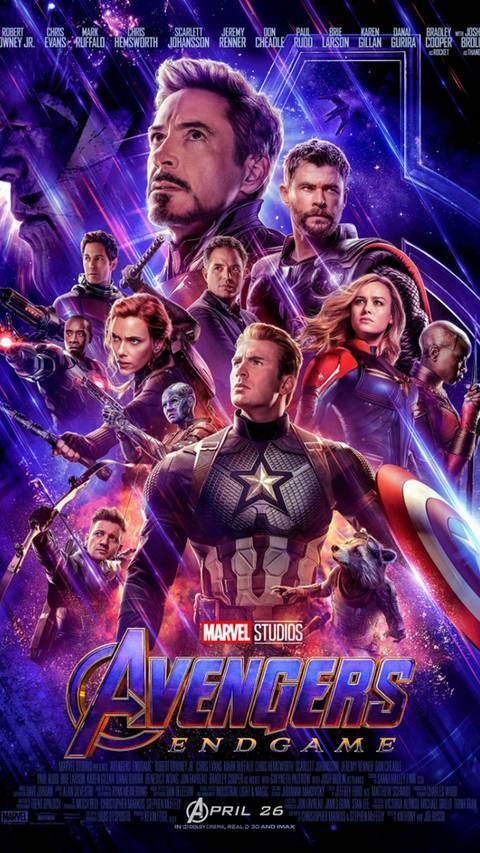
Release Date April 26, 2019
Runtime 181 Minutes
-

-

Steve Rogers / Captain America






 English (US) ·