
 Image via Jerome Domine/Abaca/startraksphoto.com
Published Aug 27, 2026, 9:24 PM EDT
Dyah (pronounced Dee-yah) is a Senior Author at Collider, responsible for both writing and transcription duties. She joined the website in 2022 as a Resource Writer before stepping into her current role in April 2023. As a Senior Author, she writes Features and Lists covering TV, music, and movies, making her a true Jill of all trades. In addition to her writing, Dyah also serves as an interview transcriber, primarily for events such as San Diego Comic-Con, the Toronto International Film Festival, and the Sundance Film Festival.
Dyah graduated from Satya Wacana Christian University in October 2019 with a Bachelor's degree in English Literature, concentrating on Creative Writing. She is currently completing her Master's degree in English Literature Studies, with a thesis on intersectionality in postcolonial-feminist studies in Asian literary works, and is expected to graduate in 2026.
Born and raised between Indonesia and Singapore, Dyah is no stranger to different cultures. She now resides in the small town of Kendal with her husband and four cats, where she spends her free time cooking or cycling.
Sign in to your Collider account
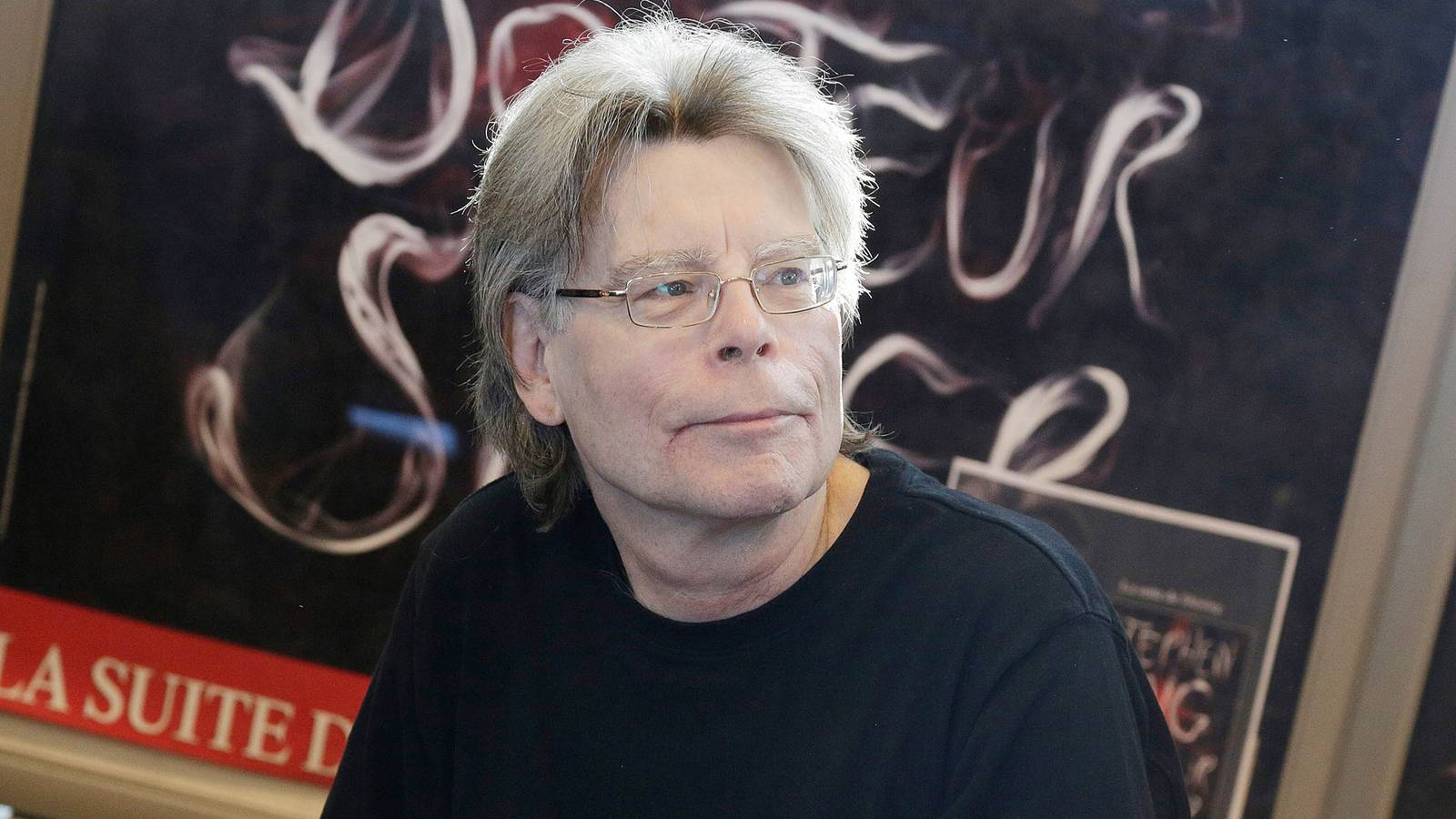
With a career spanning more than five decades and dozens of published works, calling Stephen King a seasoned writer barely does him justice. Although he is best known for horror, King's greatest strength lies in transforming ordinary fears into deeply unsettling stories. His monsters may be supernatural, but the emotions driving them are often painfully human.
However, horror is only one part of King's appeal. Throughout his career, he has demonstrated versatility, exploring genres, characters, and themes that don't rely on traditional scares. Whether he's writing about grief, ambition, or human nature, King finds ways to interpret everyday themes into new trepidations. With that said, here are 10 Stephen King books that are 10/10 masterpieces.
1 'The Dark Tower: The Gunslinger' (1982)
 Image via Donald M. Grant, Publisher
Like many authors at the height of their career, King was more than capable of creating a multi-book series, with The Dark Tower being his most popular. Its first book, The Dark Tower: The Gunslinger, kicks things off by introducing Roland Deschain, a mysterious gunslinger chasing the legendary Dark Tower across a bizarre, dying world.
The Gunslinger, and the rest of the series, is basically King’s answer to The Lord of the Rings. It’s packed with adventure and shows off plenty of experimentation on King’s part, combining Western, fantasy, horror, and sci-fi into one strange cornucopia. While it isn’t the strongest book in the series, The Gunslinger lays the groundwork for its creepy, post-apocalyptic world and sets up a much bigger story to come.
2 'The Green Mile' (1996)
 Image via Signet Books
The Green Mile follows death row supervisor Paul Edgecomb and John Coffey, a gentle giant convicted of murdering two young girls. As Paul gets to know him, he discovers Coffey possesses mysterious abilities that challenge everything he believes about justice and guilt. Meanwhile, the prison houses dangerous inmates, cruel guards, and unexpected friendships that make the death row unforgettable.
King might be famous for showing the worst in people, but The Green Mile does the opposite. King introduces a great deal of humanity into an unforgiving environment. He challenges people's perceptions of the prisoners, presenting readers with difficult questions about whether certain prisoners deserve to die despite their crimes or deserve a second chance.
3 '11/22/63' (1963)
 Image via Scribner/Stephen King
English teacher Jake Epping gets the unimaginable chance to travel back to 1958 through a mysterious portal. His friend Al thinks Jake could use it to stop John F. Kennedy’s assassination and maybe prevent decades of tragedy. Jake takes on the mission, but his little stint gets complicated when the alternative timeline promises him a better life.
At a whopping 800+ pages, 11/22/63 is a lengthy read. Plus, time travel isn't exactly the most innovative concept, as it's pretty common in sci-fi. But it's hard to resist King's meticulous research into the period, which he pours into his fictional writing to create a terrifying alternate reality filled with war, political extremism, violence, and natural disasters.
Collider Exclusive · Horror Survival Quiz Which Horror Villain Do You Have the Best Chance of Surviving? Jason Voorhees · Michael Myers · Freddy Krueger · Pennywise · Chucky
Five killers. Five completely different ways to die — if you're not smart enough, fast enough, or self-aware enough to avoid it. Only one of them is the villain your particular set of instincts gives you a fighting chance against. Eight questions will figure out which one.
🏕️Jason
🔪Michael
💤Freddy
🎈Pennywise
🪆Chucky
TEST YOUR SURVIVAL →
01
Something feels wrong. You can't explain it — you just know. What do you do? First instincts are the difference between the survivor and the first act casualty.
ALeave immediately. I don't need to understand a threat to respect it. BStay quiet and observe. If I can see it, I can understand it. If I can understand it, I can avoid it. CStay awake. Whatever this is, I am not going to sleep until I feel safe again. DConfront it directly. Fear grows in the dark — I'd rather know what I'm dealing with. ECheck everything, trust nothing. The threat might be closer than I think — and smaller.
NEXT QUESTION →
02
Where are you most likely to find yourself when things go wrong? Setting is everything in horror. Where you are determines which rules apply.
ASomewhere remote — a cabin, a campsite, off the grid and away from people. BA quiet suburban neighbourhood where nothing ever happens. Except tonight. CIn my own head — the most dangerous place of all, depending on what's already in there. DWherever children are — because something about this place attracts the worst things. ESomewhere ordinary — a house, a toy store, a place where the last thing you'd expect is a threat.
NEXT QUESTION →
03
What is your most reliable survival asset? Every survivor has a quality the villain didn't account for. What's yours?
APhysical fitness — I can run, I can swim, I can outlast something that relies on brute persistence. BSpatial awareness — I always know the exits, the hiding spots, the fastest route out. CPsychological resilience — I've faced my worst fears before. They don't have the same power over me. DEmotional steadiness — I don't panic. Panic is what gets you caught. EScepticism — I don't underestimate threats because of how they look. Size is irrelevant.
NEXT QUESTION →
04
What kind of fear is hardest for you to fight through? Knowing your weakness is the first step to not dying because of it.
AThe unstoppable — something that will not stop, cannot be reasoned with, and is always getting closer. BThe invisible — a threat I can feel but can't locate, watching from somewhere I can't see. CThe psychological — something that uses my own mind and memories against me. DThe unknowable — something ancient, shapeless, that feeds on the fear itself. EThe mundane — a threat so ordinary-looking that no one will believe me until it's too late.
NEXT QUESTION →
05
You're with a group when things start going wrong. What's your role? Horror movies are brutally clear about who survives group situations and who doesn't.
AThe one who says "we need to leave" first — and means it, even when no one listens. BThe one who stays quiet, watches the others, and figures out the pattern before anyone else does. CThe one who holds the group together when panic sets in — because someone has to. DThe one who asks the questions nobody wants to ask — because ignoring them gets people killed. EThe one who takes the threat seriously when everyone else is laughing it off.
NEXT QUESTION →
06
What's the horror movie mistake you're most likely to make? Honest self-assessment is a survival skill. Denial is not.
AGoing back for someone — I know I shouldn't, but I can't leave them behind. BAssuming I'm safe once I've found a hiding spot. That's when it finds me. CFalling asleep when I absolutely cannot afford to. Exhaustion is its own enemy. DLetting my curiosity override my instincts — I always need to understand what I'm dealing with. EDismissing the threat because of how it looks. That's exactly what it wants.
NEXT QUESTION →
07
What's your best weapon against something that can't be stopped by conventional means? Every horror villain has a weakness. The survivors are always the ones who find it.
AThe environment itself — I use the terrain, the water, the geography against it. BPatience — I wait, I watch, and I strike at the one moment it doesn't expect. CLucidity — if I can stay in control of my own mind, it loses its primary weapon. DCourage — facing it directly, refusing to run, taking away the fear it feeds on. EImprovisation — I use whatever's at hand, however unconventional. Creativity over brute force.
NEXT QUESTION →
08
It's the final scene. You're the last one standing. How did you make it? The final survivor always has a reason. What's yours?
AI kept moving. I never stopped, never hid for too long, never let it corner me. BI figured out the pattern before anyone else did — and I used it against the thing following it. CI stayed awake, stayed lucid, and refused to give it the one thing it needed most. DI stopped being afraid of it. And the moment I did, everything changed. EI took it seriously from the start — and I never once made the mistake of underestimating it.
REVEAL MY VILLAIN →
Your Survival Odds Have Been Calculated Your Best Chance Is Against…
Your instincts, your strengths, and your particular way of thinking under pressure point to one villain you actually have a fighting chance against. Everyone else — good luck.
Jason Voorhees
Jason is relentless, but he is also predictable — and that is the gap you would exploit.
- He moves in straight lines toward his target. He doesn't strategise, doesn't adapt, doesn't outsmart. He simply pursues.
- Your ability to keep moving, use the environment, and resist the panic that freezes most victims gives you a genuine edge.
- The Crystal Lake survivors were always the ones who stopped running in circles and started thinking about terrain, water, and distance.
- You think like that. Which means Jason, for all his indestructibility, would face someone who simply refused to be where he expected.
Michael Myers
Michael watches before he moves. He is patient, methodical, and almost impossible to detect — until it's too late for anyone who isn't paying close enough attention.
- But you are paying attention. You notice the shape in the window, the car parked slightly wrong, the silence where there should be sound.
- Michael's power lies in the invisibility of ordinary suburbia — the fact that nothing ever looks wrong until it already is.
- Your spatial awareness and instinct to map every room, every exit, and every shadow before you need them is precisely the quality Laurie Strode had.
- You are not a victim waiting to happen. You are someone who already suspects something is wrong — and acts on it.
Freddy Krueger
Freddy wins by getting inside your head — using your own fears, your own memories, your own subconscious as weapons against you. That strategy requires a target who can be destabilised.
- You are harder to destabilise than most. You've faced uncomfortable truths about yourself and you haven't looked away.
- The survivors on Elm Street were always the ones who understood what was happening and chose to face it rather than flee from it.
- Freddy's greatest weakness is that his power evaporates in the presence of someone who refuses to give him the fear he feeds on.
- Your psychological resilience — the ability to stay grounded when reality itself becomes unreliable — is exactly the quality that keeps you alive here.
Pennywise
Pennywise is ancient, shapeshifting, and feeds on terror — but it has one critical vulnerability: it cannot function against someone who genuinely stops being afraid of it.
- The Losers Club didn't survive because they were braver than everyone else. They survived because they faced their fears together, and faced them honestly.
- You ask the questions others avoid. You look directly at what frightens you rather than turning away.
- That directness — the refusal to let fear fester in the dark — is Pennywise's worst nightmare.
- It chose the wrong target when it chose you. You are exactly the kind of person whose fear tastes like nothing at all.
Chucky
Chucky's greatest advantage is that nobody takes him seriously until it's already too late. He exploits the gap between how something looks and what it actually is.
- You don't have that gap. You take threats seriously regardless of how they present — and you never make the mistake of underestimating something because of its size or appearance.
- Chucky relies on surprise, on the delay between recognition and response. You close that delay faster than almost anyone.
- Your instinct to treat every unfamiliar thing with appropriate scepticism — rather than dismissing it because it seems absurd — is the exact quality that keeps you breathing.
- Against Chucky, not laughing is already winning. You are very good at not laughing.
↻ RETAKE THE QUIZ
4 'The Shining' (1977)
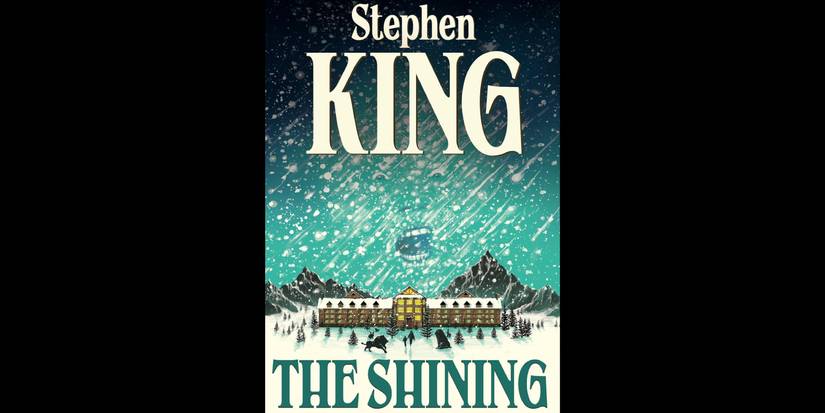 Image via Vintage
There's a reason why Stanley Kubrick chose to adapt The Shining (apart from the urgency to make a commercial hit). A classic study of how the human psyche manifests through our surroundings, The Shining follows Jack Torrance as he moves his family to the isolated Overlook Hotel. Looking for a fresh start, it seems like his demons decide to tag along.
The Overlook Hotel is a sight to behold, with decades of history marked by dark events such as mob hits and personal tragedies. But the phantom apparitions haunting these hallways are none other than Jack projecting his baggage, trapping him in a toxic cycle of self-destruction that heightens the tension when his family is involved.
5 'The Dead Zone' (1979)
 Image via Hodder & Stoughton
They say that great power comes with great responsibility, and the same applies to Johnny Smith from The Dead Zone. As a child, he discovers that he has the gift of clairvoyance. But after an accident leaves him in a five-year coma, he awakens with a much stronger sense of this ability.
A single physical touch allows Johnny to glimpse people's pasts and possible futures. It's a lot for an ordinary high school teacher to take in, but he tries to use his abilities for good. However, tampering with future outcomes always comes with consequences. It's reasonable for him to use his powers to help solve cases in his small town, but when the fate of the world is in jeopardy, that's when the book truly raises the stakes.
6 'Pet Sematary' (1983)
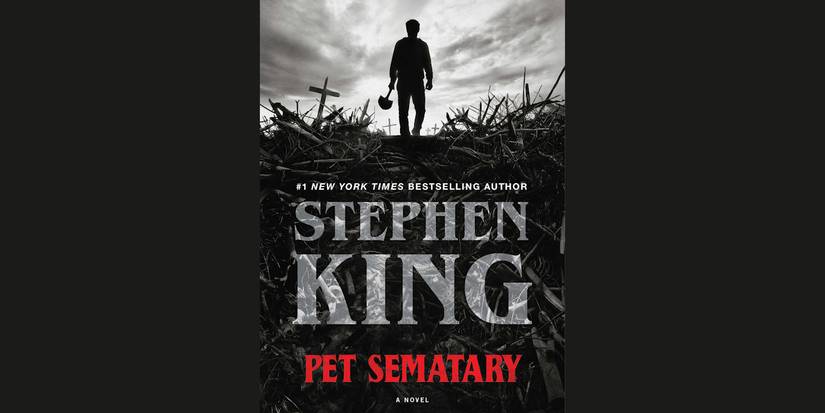 Image via Doubleday
The moral lesson in Pet Sematary is plain and simple: never challenge grief. The novel follows Louis Creed, a Chicago doctor who moves his family to the small Maine town of Ludlow. Although their new house is picturesque, it sits dangerously close to a busy road where speeding trucks regularly kill animals.
This actual pet cemetery behind Louis' family home is a star in itself. When a deceased cat they buried returns to life, it gives Louis an idea after a similar tragedy occurs to his family. However, Louis' inability to deal with his grief becomes the catalyst for the disasters that follow, proving that there is a reason why the dead should remain dead.
7 'Carrie' (1974)
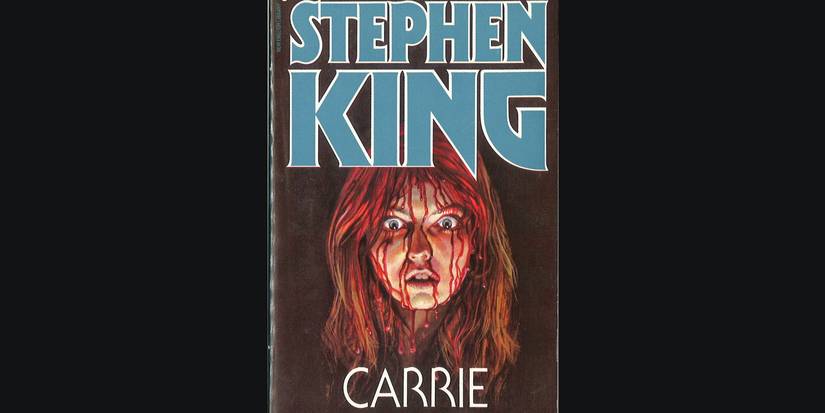 Image via Doubleday
Not all evil descends from hell. Sometimes the worst demons are waiting at school. Carrie follows reserved teenager Carrie White, whose social interactions are limited to her overzealous religious mother. With no experience of how the "real world" works, Carrie is chastised by her peers for her awkwardness, inadvertently forcing her telekinetic powers to come out.
Carrie is one of King’s most grounded works, mainly because readers can recognize the all-too-familiar teenage experience of being bullied. Revenge is never the right answer, but Carrie never wanted this life. That makes her redemption — though violence is certainly not the answer — one of the most satisfying conclusions, especially after all the pain she is forced to endure against her will.
8 'The Stand' (1978)
 Image via Doubleday
Only King could have written about COVID-19 decades before it actually happened, so much so that he had to "apologize" for it. The Stand starts off with a deadly, man-made virus that makes its way out of a government laboratory. While authorities try to contain it, it's too late — more than 99% of the world's population is wiped out.
The Stand shows that apocalypses don't happen overnight. It's weeks and weeks of collapse. The same can be said for the human psyche. When entire nations fall apart, survivors need some kind of belief to hold on. It's here that King introduces one of his famous recurring villains, who take advantage of humanity's fears for their pleasure.
9 'Salem's Lot' (1975)
 Image via Vintage Publishing
Ben Mears returns to Jerusalem’s Lot, hoping to write about the creepy old Marsten House. But something is bugging him about his childhood town. Before long, Ben notices something wrong with the town as its residents begin disappearing and turning into vampires, turning his homecoming trip into a horrific haunt.
But the vampires aren’t the only thing making Salem’s Lot frightening. The town is already filled with corruption, betrayal, and people willing to look the other way. The vampires simply bring those darker sides into bigger manifestations. Even religion offers little protection, showing that evil can exist anywhere, including among people who are supposed to be good.
10 'Misery' (1987)
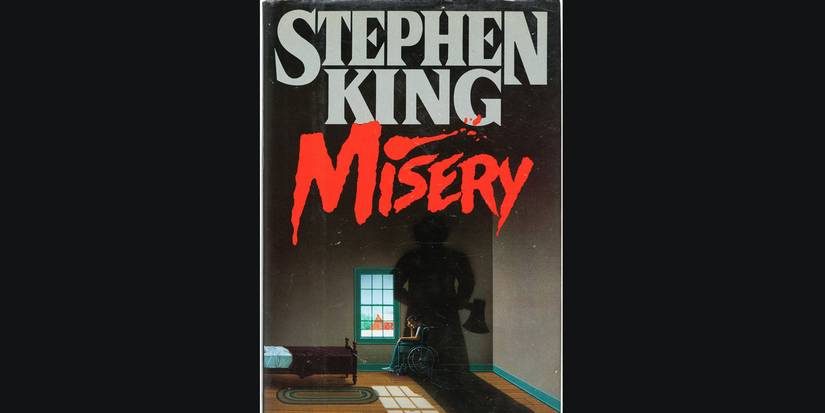 Image via Viking
After novelist Paul Sheldon crashes his car during a snowstorm, he wakes up injured in the home of Annie Wilkes, a woman who claims to be his fan. However, Paul realizes Annie is no lifesaver — she's keeping him hostage. With his legs injured, he’s forced to keep writing his Misery series according to her demands.
Misery takes obsessive fandom to a level, showing what happens when admiration turns into control. Unlike today’s stan culture, which is mostly expressed through the Internet, there’s no screen protecting Paul from Annie. He’s trapped with her, while she controls his medication, threatens him, and uses violence to get what she wants.
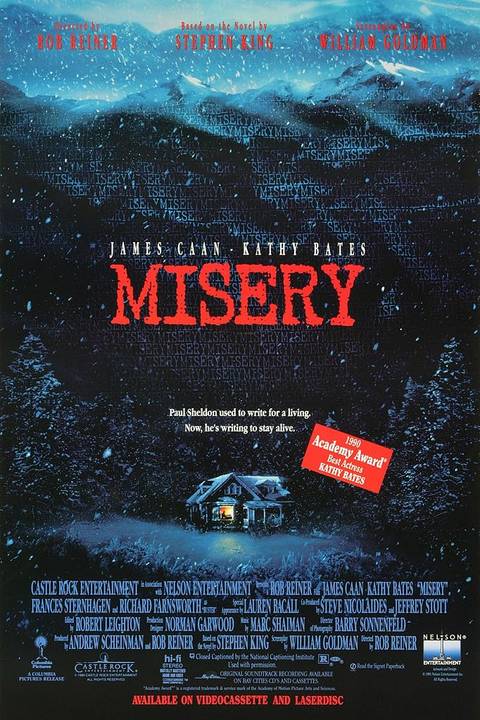
Release Date November 30, 1990
Runtime 107 minutes
Producers Andrew Scheinman




 English (US) ·