
 Image via CBS
Published Jun 21, 2026, 8:21 AM EDT
Christine is a freelance writer for Collider with two decades of experience covering all types of TV shows and movies spanning every genre. With a particular affinity for dramas, true crime, sitcoms, and thrillers, if it's a top TV show, Christine has likely watched it and is eager to share her thoughts. When she's not furiously writing away, you can find her enjoying the next binge obsession with a glass of wine in front of the TV.
Sign in to your Collider account
The following article contains spoilers.There's nothing quite like a good sitcom to make you laugh, cry, and enjoy on your own or with the whole family. The best ones ran for multiple seasons and ended just as much on a high as they began. When you feel sad the series has ended but satisfied with how, that's the mark of a great show.
From the 1980s to the 21st century, there have been some great sitcoms that ended exactly as they should, with impeccable writing, acting, and closure to leave fans clapping and sighing in appreciation. That's not an easy feat, but some shows wrapped up beautifully.
10 'Boy Meets World' (1993–2000)
 Image via ABC
The coming-of-age sitcom Boy Meets World defined a generation of '90s kids, and is still remembered fondly to this day. One of the most impactful scenes, however, is at the end when Mr. Feeny (William Daniels), the strict but father-figure-like teacher and eventually principal, walks quietly through the empty classroom. He's reminiscing about all the moments he shared with these students, bringing viewers along with him. When he utters the final words, "class dismissed," it will give you chills.
It's emotionally satisfying, showing both the growth of all the characters who have now become adults as well as honoring their journeys to get there. It signifies Mr. Feeny's integral part in their lives, reminding viewers how important educators are in shaping children. But it also depicts that important transition from childhood to adulthood. It's the perfect way to end a show about the challenges of coming of age.
9 'New Girl' (2011–2018)
 Image via Ray Mickshaw/©Fox/courtesy Everett Collection
New Girl could have taken the traditional sappy goodbye route as all the roommates moved on, and it did. But the show also made sure to remind fans of how funny and quirky the characters were through one final, elaborate prank. Winston (Lamorne Morris) pretends Nick (Jake Johnson) and Jess (Zooey Deschanel) are being evicted from the apartment by a company called Engram Pattersky, which is reportedly evicting all tenants. But once the truck is loaded with all their belongings, Winston reveals it was all a prank; Engram Pattersky is an anagram for My Greatest Prank. It's the catalyst, however, for convincing Nick and Jess to move out and on anyway.
Before that, Jess walks her friends through memorable moments they shared together, thus also helping provide closure for fans who were with them on the journey through the show's seven seasons. Of course, they also had to play one final game of True American to bring back the recurring segment for closure and later are seen playing it again in a flash forward. This solidifies that their bond is unbreakable and helps fans feel like even though the show is ending, in their minds, the group is still together. The sitcom ending was a genuine masterpiece.
8 'Young Sheldon' (2017–2024)
 Image via CBS
Young Sheldon is a prequel series to The Big Bang Theory, but it became a juggernaut of a show on its own with plenty of fantastic episodes. Fans knew where the story was headed, including the tragic death of George Sr. (Lance Barber), which was dealt with in the final episodes of the last season. But what was most poignant about the finale is that it set up Sheldon's (Iain Armitage) story to come.
While walking outside Caltech with a smile, Sheldon is stopped by a professor who asks if he's lost. "No," he says. "I'm exactly where I need to be." Knowing this school becomes Sheldon's future, where he studies and eventually works, makes this ending brilliant. But it's also the knowledge that Sheldon will meet his lifelong friends there that brings so much satisfaction to the subtle smile on Sheldon's face.
7 'The Office' (2005–2013)
 Image via NBC
After nine seasons of The Office, a mockumentary sitcom about boring everyday office life, the show needed to end in a way that really helped bring everything to a close. It did, with the whole group reuniting for Dwight (Rainn Wilson) and Angela's (Angela Kinsey) wedding, including eccentric regional manager Michael Scott (Steve Carell, who left the series in Season 7).
The goodbyes the staff share with one another in this sitcom that's a banger from start to finish are fictional for the show, of course. But you can tell that there are also some real goodbyes from the actors behind them, too. There's growth for characters, with Jim (John Krasinski) finally quitting to pursue his dream, Pam (Jenna Fischer) supporting him, and Oscar (Oscar Nuñez) running for state senate. But it was Carell's surprise return that brought it all together, including his final line. When Dwight says, "I can't believe you came," he replies, "that's what she said."
6 'The Good Place' (2016–2020)
 Image via NBC
The Good Place is one of the best shows about the afterlife, following Eleanor (Kristen Bell), who thinks she has been sent to the "good" place, essentially heaven, when she was supposed to be sent to the bad one (effectively hell). She tries to change her ways while there, hoping to earn her spot in before anyone realizes the mistake while ironically lying about who she really is. But there's a lot more behind the plot.
There's true closure when the show reveals that even an eternal paradise isn't all it's cracked up to be after a while, and souls can eventually pass on to end their existences for good. Once good deeds are accomplished, the door is officially open. The Good Place reminds us that all good things really must come to an end, and that isn't a bad thing. It's just reality. In the end is where we find peace, meaning, and closure.
Collider Exclusive · TV Medicine Quiz Which Fictional Hospital Would You Work Best In? The Pitt · ER · Grey's Anatomy · House · Scrubs
Five hospitals. Five completely different ways medicine goes sideways on television — brutal, chaotic, romantic, brilliant, and ridiculous. Only one of them is the ward your instincts were built for. Eight questions will figure out exactly where you belong.
🚨The Pitt
🏥ER
💉Grey's
🔬House
🩺Scrubs
FIND YOUR HOSPITAL →
01
A critical patient comes through the door. What's your first instinct? Medicine under pressure reveals who you actually are.
AStay completely present — block everything else out and work through it step by step, right now. BTriage fast and delegate — get the right people on the right problems immediately. CTrust my gut and move — I work best when I stop overthinking and just act. DAsk the question everyone else is ignoring — what's the thing that doesn't fit? ETake a breath, make a joke to cut the tension, and then get to work — panic helps no one.
NEXT QUESTION →
02
Why did you go into medicine in the first place? The honest answer says more about you than the one you'd give in an interview.
ABecause I wanted to be where it matters most — right at the edge, when someone's life is actually on the line. BBecause I wanted to help people — genuinely, one patient at a time, in a system that makes it hard. CBecause I was drawn to the intensity of it — the stakes, the drama, the feeling of being fully alive. DBecause medicine is the most interesting puzzle there is — and I needed a problem worth solving. EBecause I wanted to make a difference — and also, honestly, I didn't know what else to do with my life.
NEXT QUESTION →
03
What do you actually want from the people you work with? Who you want beside you under pressure is who you are.
ACompetence and calm — I need people who don't fall apart when things get bad. BTrust and reliability — I want to know that when I pass something off, it's handled. CConnection — I want colleagues who become family, even if that gets complicated. DIntelligence and the willingness to be challenged — I have no interest in people who just agree with me. EFriendship — people I actually like spending twelve hours a day with, because those hours are going to happen either way.
NEXT QUESTION →
04
You lose a patient you fought hard to save. How do you carry it? Every doctor who's worked a long shift has had to answer this question.
AI carry it. All of it. I don't look for ways to put it down — that weight is part of doing this work honestly. BI process it and move — you have to, or the next patient suffers for the one you just lost. CI feel it deeply and lean on the people around me — I don't think you're supposed to handle that alone. DI go back over every decision — not to punish myself, but because I need to understand what I missed. EI grieve it genuinely, find some way to laugh about something unrelated, and try to be kind to myself — imperfectly.
NEXT QUESTION →
05
How would your colleagues describe the way you work? Your reputation on the floor is usually more accurate than your self-image.
AIntense and completely present — no small talk during a shift, but exactly who you want there. BSteady and dependable — not the flashiest in the room but never the one who drops something. CPassionate and occasionally chaotic — brilliant on the hard cases, prone to drama everywhere else. DBrilliant and difficult — right more often than anyone else, and everyone knows it, including me. EWarm and self-deprecating — not the most intimidating presence, but genuinely good at this and easy to like.
NEXT QUESTION →
06
How do you feel about hospital protocol and procedure? Every institution has rules. What you do with them is a choice.
AProtocol is the floor, not the ceiling — I follow it until the patient needs something it can't provide. BI respect it — the system is broken in places, but the structure is there for a reason and I work within it. CI follow it until my instincts tell me not to — and my instincts are usually right, even when they cause problems. DRules are for people who haven't thought hard enough about when to break them. EI try to follow it and mostly do — with a few memorable exceptions that still come up in meetings.
NEXT QUESTION →
07
What does this job cost you personally? Nobody works in medicine without paying a price. What's yours?
AEverything outside these walls — I've given this job my full attention and the rest of my life has gone around it. BMy idealism, mostly — I came in believing the system could be fixed and I've made a complicated peace with that. CStability — my personal life has been as chaotic as the OR, and that's not entirely a coincidence. DMy relationships — I am not easy to know, and the people who've tried to would probably agree. EMy sense of gravity — I use humour as a coping mechanism, which not everyone appreciates in a hospital.
NEXT QUESTION →
08
At the end of a long shift, what keeps you coming back? The answer to this question is the most honest thing about you.
AThe fact that it's real — that nothing else I could be doing would matter this much, right now, today. BThe patients — individual human beings who needed something and got it because I was there. CThe people I work with — I have walked through impossible things with these people and I'd do it again. DThe next unsolved case — there's always another puzzle, and I'm not done yet. EBecause despite everything — the exhaustion, the loss, the absurdity — I actually love this job.
REVEAL MY HOSPITAL →
Your Assignment Has Been Made You Belong In…
Your answers have pointed to one fictional hospital above all others. This is the ward your instincts, your temperament, and your particular brand of dysfunction were built for.
The Pitt
You are built for the most unsparing version of emergency medicine television has ever shown — one that puts you inside a single fifteen-hour shift and doesn't let you look away.
- You need your work to be real, not romanticised — meaning over drama, honesty over aesthetics.
- You find purpose inside the work itself, not in the chaos surrounding it.
- You've made peace with the fact that this job takes from you constantly, and gives back in ways that are harder to name.
- Pittsburgh Trauma Medical Center demands exactly that kind of person — and you would not want to be anywhere else.
ER
You are the person who keeps the whole floor running — not the most brilliant in the room, but possibly the most essential.
- You show up, do the work, absorb the losses, and come back the next day without needing the job to be anything other than what it is.
- You care about patients as individual human beings, not as cases to solve or dramas to live through.
- You believe in the system even when it fails you — and you understand that emergency medicine is about holding the line just long enough.
- ER is television about endurance. You have it.
Grey's Anatomy
You came to medicine with your whole self — your ambition, your emotions, your relationships, your history — and you have never quite managed to leave any of it at the door.
- You feel things fully and form deep attachments to the people you work with.
- Your personal and professional lives are permanently, chaotically entangled — and that entanglement drives both your greatest disasters and your most remarkable saves.
- You understand that extraordinary medicine often happens at the intersection of clinical skill and profound human connection.
- It's messy at Grey Sloan. You would not have it any other way.
House
You are drawn to the problem above everything else — the symptom that doesn't fit, the diagnosis hiding underneath the obvious one.
- You're not primarily motivated by the patient as a person — though you are capable of caring, even if you'd deny it.
- You work best when the stakes are highest and the standard answer is wrong.
- Princeton-Plainsboro exists to house one extraordinary, impossible mind — and everyone around that mind is there because they're smart enough to keep up.
- The only way forward here is to think harder than everyone else in the room. That is exactly what you do.
Scrubs
You understand that medicine is tragic and absurd in almost equal measure — and that the only sane response is to hold both of those things at the same time.
- You are warm, self-aware, and funnier than most people in your field.
- You use humour to get through terrible moments — and at Sacred Heart, that's not a flaw, it's a survival strategy.
- You lean on the people around you and let them lean back. The laughter and the grief are genuinely inseparable here.
- Scrubs is a show about learning to become someone worthy of the job. You are still very much in the middle of that process — which is exactly right.
↻ RETAKE THE QUIZ
5 'Friends' (1994–2004)
 Image via NBC
For a decade, Friends was in every living room every week when it aired. Even after it ended and to this day, the show remains the benchmark series about a single group of adult friends navigating life. The show and all of the best Friends episodes took viewers on a journey with its six main characters, each one marking a milestone by the end. From finally solidifying a long-term on-and-off-again relationship to getting married, having kids, and pursuing dreams, they were all ready to move on.
But the pivotal moment is when they are preparing to move out of Monica's (Courteney Cox) oversized apartment, which is where a lot of the show takes place. As they stand together there one last time, ready to move on to their new places and lives, they decide to get one last coffee. "Sure," says Chandler (Matthew Perry), "where?" It's one last joke that perfectly fits his comedic style, because of course they'd be going to Central Perk. Giving Chandler the last line and making it a roll-your-eyes corny one is exactly what was needed for the tone of the show.
4 'The Fresh Prince of Bel-Air' (1990–1996)
 Image via Warner Bros. Television Distribution
It makes sense that a show about a young Will (Will Smith) in high school moving to live with his wealthy aunt and uncle in Bel-Air would end with him finally moving out on his own. But throwing things for a loop, the family decides to move out of their lavish mansion as well, opting to be closer to their kids. Hilary (Karyn Parsons) and Ashley (Tatyana Ali) move to New York, and Carlton (Alfonso Ribeiro) is prepping for Princeton while Geoffrey (Joseph Marcell) decides to go back to London. What's interesting is that Will is the one who decides to stay in California to complete his college degree, a future he probably never could have imagined when he first moved in, nor could anyone else.
The ending of The Fresh Prince of Bel-Air is perfect as they say their final goodbyes and Will is left in the living room alone to reflect on his time there. It's all in fondness, and in his simple smile and subtle sigh, you can feel the weight of the moment, both for the character and the actor. As he turns off the light and leaves, Carlton's voice bellowing from upstairs, indicating everyone forgot he was still there, icing on top to bring one last laugh.
3 'Cheers' (1982–1993)
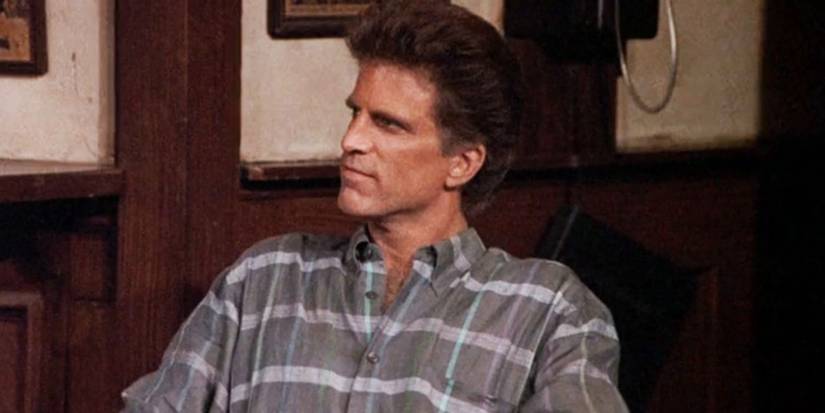 Image via NBC
Cheers started as a welcoming bar where everyone knows your name and is glad you came, and Sam (Ted Danson) is tending. And it ended the same way, coming full circle. But it's the satisfaction in the end that Sam realizes he's exactly where he needs to be that makes it so great. After surprisingly deciding not to run off and get married to Diane (Shelley Long), Sam coming to terms with the fact that the bar is his one true love is a testament to the importance of every interaction he had there up to that point.
In a way, it tells viewers that the welcoming promise of the bar wasn't just a song and a sign on the wall: it was a calling; it had meaning to Sam. There's no place he'd rather be. When he tells a patron who comes in as he's washing up that they're closed, it's also a goodbye to fans. Cheers and its fan-favorite characters won't return to our TVs, but in our minds, the bar will re-open in the morning and welcome its regulars and others once again.
2 'Newhart' (1982–1990)
 Image via CBS
For eight seasons, Newhart walked viewers through the story of Dick (Bob Newhart) and Joanna (Mary Frann), a couple who move from the city to a small rural Vermont town to run an inn. While there, they interact with the eccentric townsfolk and the eclectic mix of guests who come to stay. The sitcom is witty, dry, sarcastic, and entertaining with memorable characters and satisfying episodes.
Newhart pulled a fast one on fans, however, using the finale to deliver one huge, final punchline that completely changed the show. Through a meta crossover with The Bob Newhart Show, Newhart's sitcom that aired prior to Newhart, the ending suggested that his character on that show, Bob Hartley, was simply having one, long dream that characterized the entire show. In most cases, the "it was all a dream" storyline doesn't work. But Newhart made it shocking, nostalgic, and rewarding, showing that this angle can be done well.
1 'M*A*S*H' (1972–1983)
 Image via CBS
One of the best shows to ever grace the small screen, M*A*S*H had meaning, heart, humor, and was telling of its time and the complexities of war. The war comedy drama set in a Mobile Army Surgical Hospital during the Korean War follows the mix of personalities as they handle the tough jobs in a complicated and often depressing situation while doing their best to be there for one another and deal with the trauma in a healthy way.
The end of the show marks the end of the war, and the 2.5-hour episode, which broke viewership records, sees each character processing what they went through and getting ready to return to civilian life. The final scene with Hawkeye (Alan Alda) looking down from his helicopter to see stones spelling out "Goodbye" is as emotional as a show can possibly get.

M*A*S*H
Release Date 1972 - 1983-00-00
Showrunner Larry Gelbart
Directors Larry Gelbart
-

-

Loretta Swit
Margaret Houlihan








 English (US) ·