
 Image via Paramount Pictures

Published Mar 17, 2026, 4:27 PM EDT
Luc Haasbroek is a writer and videographer from Durban, South Africa. He has been writing professionally about pop culture for eight years. Luc's areas of interest are broad: he's just as passionate about psychology and history as he is about movies and TV. He's especially drawn to the places where these topics overlap.
Luc is also an avid producer of video essays and looks forward to expanding his writing career. When not writing, he can be found hiking, playing Dungeons & Dragons, hanging out with his cats, and doing deep dives on whatever topic happens to have captured his interest that week.
Sign in to your Collider account
Shakespeare has inspired more cinematic reinterpretations than almost any other writer, often in ways that are bold, unconventional, and wide-ranging. However, his plays were created for the stage, shaped by the expectations of a very different era, which makes adapting them for the screen a complicated and delicate task.
Nevertheless, a few talented directors and stars have' more than succeeded, adapting the Bard's work into true movie masterpieces. These films are the focus of this list. From faithful period pieces to bold reimaginings, the titles below reveal how timeless stories of ambition, love, betrayal, and identity can resonate across centuries.
10 'Much Ado About Nothing' (1993)
 Image via Samuel Goldwyn Company
"I do love nothing in the world so well as you. Is not that strange?" Kenneth Branagh’s Much Ado About Nothing brings Shakespeare’s romantic comedy to sunlit life, following the witty sparring between Beatrice (Emma Thompson) and Benedick (Branagh) alongside the courtship of the young lovers Claudio (Robert Sean Leonard) and Hero (Kate Beckinsale). The story unfolds through misunderstandings, deceptions, and schemes that test the characters’ trust and affection.
The supporting cast is rounded out by heavy hitters like Denzel Washington, Keanu Reeves, Michael Keaton, and Imelda Staunton, all doing a fine job. All in all, this movie stands out with its lighter mood and infectious sense of fun. That breezier, more inviting sensibility helped the film connect with a wide audience, and it was a solid box office success. It’s a reminder that the Bard's aren’t solely steeped in tragedy and gloom. They can be playful, inviting, and full of life.
9 'Richard III' (1995)
 Image via United Artists
 "Now is the winter of our discontent." This take on Richard III reimagines the historical tragedy in a stylized 1930s fascist England, following the ruthless Duke of Gloucester (Ian McKellen) as he schemes his way to the throne. Transplanting the classic story to a modern setting was a masterstroke, lending the tale a striking new political and visual context. The uniforms, propaganda imagery, and militaristic atmosphere make Richard’s rise to power feel chillingly relevant rather than distant and shrouded in history.
Indeed, this movie leans more into visual storytelling than most Shakespeare adaptations do, using nimble camera movements and confident editing to amp up the drama. McKellen's towering performance anchors it all (something which is true of most films he appears in). His Richard is charismatic, intelligent, and deeply unsettling. He frequently breaks the fourth wall, speaking directly to the audience and drawing them into his plots. This makes his manipulations feel even more intimate and disturbing.
8 'Macbeth' (1971)
 Image via Columbia Pictures
"Out, damned spot!" This interpretation of Macbeth is drenched in dread, suspicion, and violence. Filmed with a stark, almost unforgiving realism, it abandons stage-like flourishes in favor of a harsh portrait of medieval Scotland, one defined by filth, brutality, and suffocating gloom. At the heart of it, Jon Finch is mesmerizing as the title character, a doomed Scottish nobleman who murders his king after receiving a prophecy from three witches.
Crucially, Finch makes the iconic character feel human. Here, he's not as a grand, larger-than-life tyrant, but as an ordinary man undone by his own hunger for power. His transformation feels unsettlingly plausible, rooted in recognizable flaws, insecurities, and desires. The film's aesthetic complements this. The visual style is grim and gritty, defined by graphic violence. The battle scenes are visceral and chaotic, while the supernatural moments carry a quiet, lingering unease. This approach was controversial at the time but has aged well.
7 'Throne of Blood' (1957)
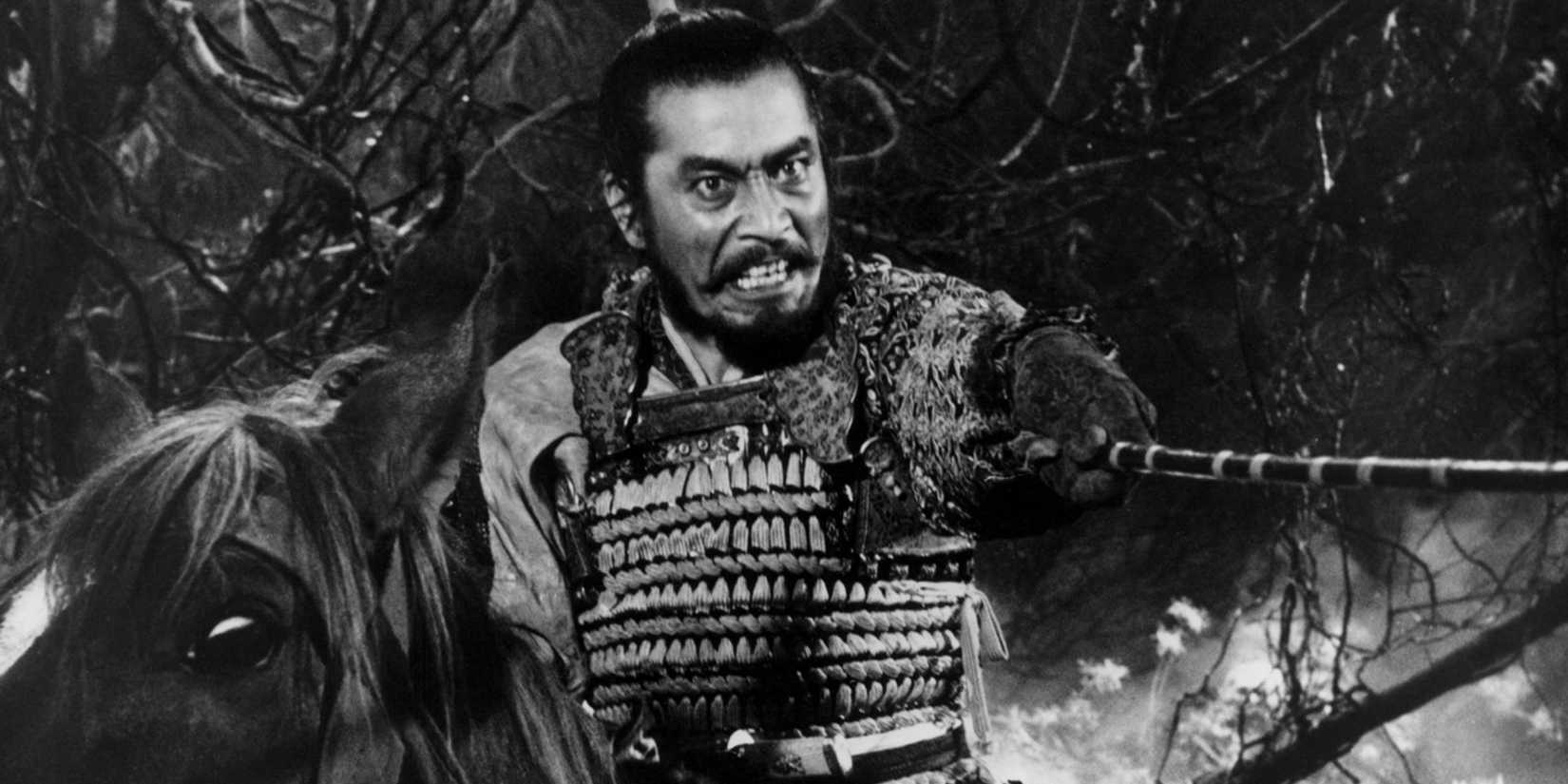 Image via Toho
"Why should a man be faithful to his destiny?" Akira Kurosawa’s Throne of Blood transposes the story of Macbeth to feudal Japan, following warrior Washizu (Toshiro Mifune) as he is driven by prophecy and ambition to seize power. The director reshapes the familiar story through a distinctly Japanese lens, drawing on the aesthetics of Noh theatre and samurai cinema. The result is one of the most visually dynamic Shakespeare adaptations ever. Indeed, Kurosawa uses mist, stillness, and sudden bursts of motion to create a suffocating sense of inevitability, as if the characters are being pulled toward their fate.
Nearly every shot feels haunted. The most striking example of this is the legendary finale, where Mifune’s character is pinned down by a relentless storm of arrows. The star is never overwhelmed by this powerful imagery; however, remaining restless, intense, and spell-binding throughout. For all these reasons, Throne of Blood went on to be hugely influential, echoing through works as varied as Star Wars, Millennium Actress, and Brian De Palma’s Carrie.
6 'Chimes at Midnight' (1965)
 Image via Janus Films
"Banish plump Jack, and banish all the world." This one's a little different in that it's not a direct adaptation. Instead, Chimes at Midnight weaves together material from several Shakespeare plays to focus on the relationship between Prince Hal (Keith Baxter) and the roguish Sir John Falstaff (Orson Welles), a vain and boastful knight who shows up in Henry IV and The Merry Wives of Windsor. Welles also wrote and directed the film, and it was his favorite of all the movies he made.
While Falstaff typically serves as comic relief in the original plays, here he's the emotional core of the story. Welles plays him with a lot of complexity, wonderfully balancing wit and subtle sorrow. In his telling, the character's humor and brashness mask some deep vulnerabilities. His directorial chops are also on display here, most notably in the big Battle of Shrewsbury sequence. It's mud-soaked, disorienting, and strikingly raw in its depiction of medieval combat.
5 'Henry V' (1989)
 Image via Curzon Film Distributors
"Once more unto the breach, dear friends, once more." This was Kenneth Branagh’s feature directorial debut, though it feels like the work of a veteran. Henry V chronicles the young English king’s (Branagh) campaign in France, culminating in the legendary Battle of Agincourt, tracing his transformation from uncertain ruler to commanding leader. Branagh handles the material with an impressive balance of poetry and realism: the language is lyrical, while the performances are three-dimensional and the battle scenes are gritty and unglamorous.
The star plays the character with a lot of depth and contradiction. Branagh’s Henry is both resolute and uncertain, a leader capable of stirring rhetoric yet shadowed by the weight of his choices. Ultimately, this adaptation succeeds because it makes Shakespeare feel immediate and relevant. Branagh deserves serious credit for breathing new life into one of Shakespeare’s most famous plays while staying true to its spirit, making it accessible for a modern audience.
4 'Romeo and Juliet' (1968)
 Image via Paramount Pictures
"Thus with a kiss I die." While some will prefer Baz Luhrmann's flashier modern riff, Franco Zeffirelli's 1968 version of Romeo and Juliet is probably the more well-rounded adaptation. It's one of the most lively and heartbreaking renditions of the iconic tale. A big part of this is due to the authentic casting and performances. Zeffirelli cast actors close to the characters’ actual ages, with Leonard Whiting as Romeo and Olivia Hussey as Juliet. This choice gives the romance a genuine sense of youthful innocence and impulsiveness.
Another strength is the film’s clarity and accessibility. While it retains much of Shakespeare’s language, the acting and direction make the dialogue easier to follow, even for viewers unfamiliar with the play. Finally, there's the rich visual style, defined by sunlit streets, grand interiors, and immersive period detail, winning that year's Oscar for Best Cinematography. All in all, a masterful and energetic adaptation worthy of the source material.
3 'West Side Story' (1961)
 Image via United Artists
"Tonight, tonight, it all began tonight." While Spielberg's remake is fantastic too, Jerome Robbins and Robert Wise’s West Side Story remains one of the greatest movie musicals ever, as well as one of the most enjoyable Shakespeare adaptations. With swagger and style, it reimagines Romeo and Juliet within the context of rival street gangs in mid-20th-century New York City. Tony (Richard Beymer) and Maria (Natalie Wood) fall in love amid tensions between the Jets and the Sharks, their relationship unfolding through music, dance, and escalating conflict.
The chemistry between the leads is electric, a key reason the movie works so well. That said, it's the music and dance routines that make this a classic. Instead of relying solely on dialogue, West Side Story expresses emotion and tension through choreography and song. Numbers like "Tonight" and "America" convey the characters’ hopes and frustrations in a way that feels both theatrical and cinematic (and is incredibly catchy).
2 'Ran' (1985)
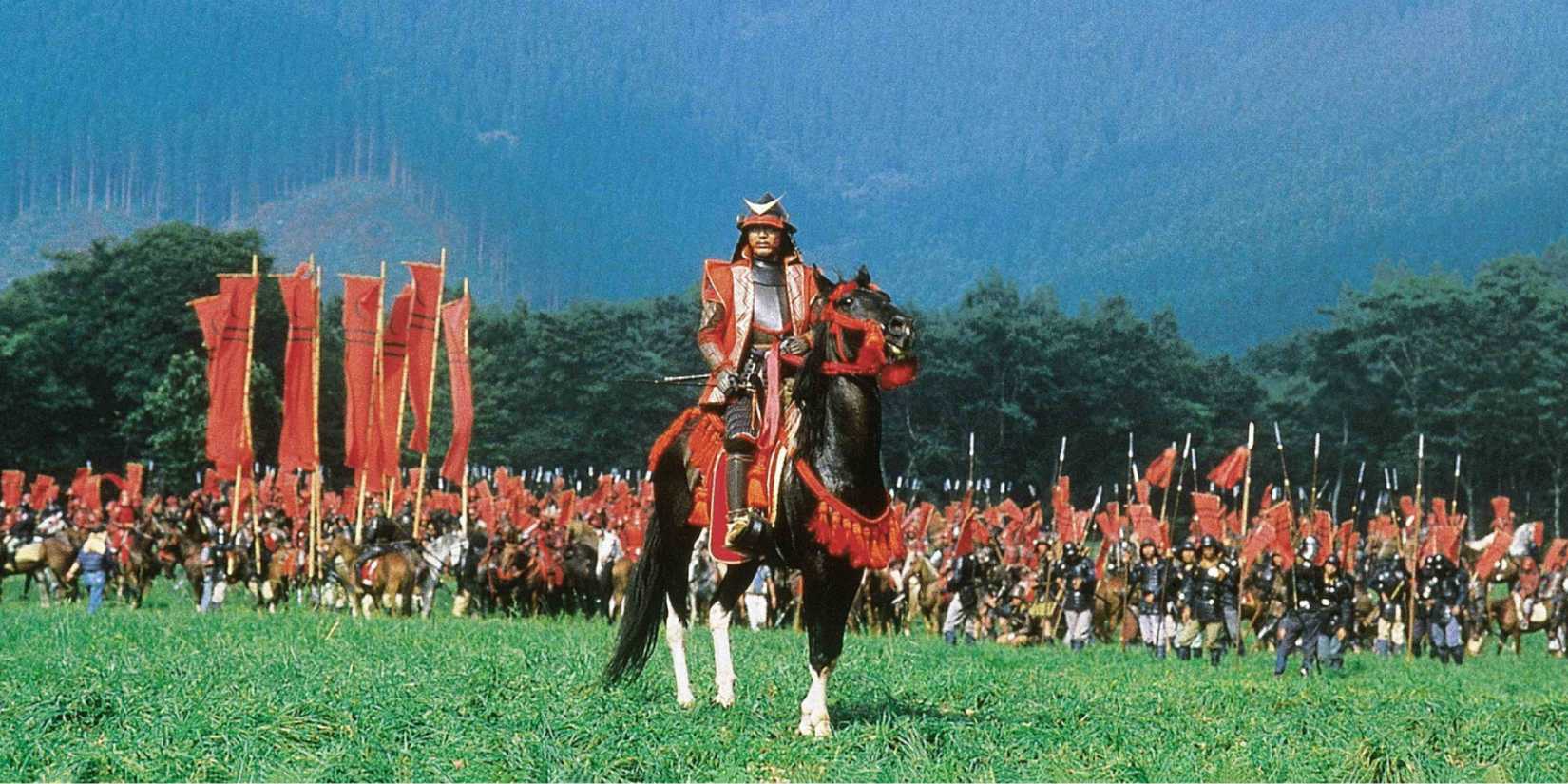 Image via Toho
"In a mad world, only the mad are sane." Kurosawa strikes again, this time putting his own distinctive spin on King Lear. He relocates the narrative to feudal Japan, following aging warlord Hidetora Ichimonji (Tatsuya Nakadai) as he divides his kingdom among his sons. The decision soon unleashes betrayal, war, and personal tragedy, forcing Hidetora to confront the consequences of his past actions as his world descends into chaos. The scale of the film is simply breathtaking.
Massive battle scenes unfold in sweeping formations, saturated with striking color and arranged with the precision of a master painter. Every image feels deliberate. The performances rise to meet that ambition. Nakadai, in particular, anchors the film as Hidetora, charting a haunting decline from commanding authority to fractured madness. Through him, Ran delves deep into themes of power, pride, and the destructiveness of war. Not for nothing, the movie is now routinely ranked among Kurosawa's masterpieces.
1 'Hamlet' (1996)
 Image via Castle Rock Entertainment
"To be, or not to be. That is the question." Of all Branagh's Shakespeare movies, the 1996 version of Hamlet is the most accomplished. It offers an ambitious full-text adaptation of Shakespeare’s tragedy (clocking in at 4 hours), following the prince (Branagh) as he seeks to avenge his father’s (Brian Blessed) murder while grappling with doubt and existential reflection. Unlike most adaptations, this one includes nearly every line of the play, allowing the full complexity of the Bard's masterpiece to come through.
That's an audacious undertaking, one that could have collapsed into a mess, but Branagh pulls it off. Despite the length, the movie stays engaging throughout thanks to dynamic pacing and staging, as well as phenomenal performances across the board. Branagh, of course, shines most as Hamlet. He convincingly captures the full depth of the character, from his intelligence and energy to his emotional volatility. He's compelling during the introspective moments as well as the ones where Hamlet explodes with anger.

Hamlet
Release Date December 25, 1996
Runtime 242 minutes






 English (US) ·