
 Image via FOX

Published Feb 22, 2026, 6:49 AM EST
Lisa Nordin is an actress, writer, and fan of all things performing arts. Her favorite genres are Sci-Fi and Fantasy. She is a self-published author and enjoys exploring how fictional stories help define and qualify the human experience.
Sign in to your Collider account
Science fiction has within it a delicate duality. Sci-fi programs can be futuristic in their predictions, offering a glimpse into the future with almost laser-like clarity. They can also run the risk of feeling archaic if their special effects, references, or topical explorations are too dated. Balancing the fine line that exists between these two extremes requires immense talent. Luckily, there are some terrific sci-fi TV shows that have excelled at doing just that.
Some sci-fi series have contextual themes that are still incredibly relevant today, like Star Trek: The Next Generation, tackling topics like racism and gender conformity. Others have scarily accurate depictions of what the future would be like, and modern viewers watch these only to realize how many of those predictions have come true. While some titles are best left in the past, here are the sci-fi shows (in no particular order) that still hold up surprisingly well.
1 'Sliders' (1995–2000)
 Image via FOX
Decades before the MCU was exploring multiverses, Sliders was. Starring Jerry O'Connell, John Rhys-Davies, Sabrina Lloyd, Cleavant Derricks, and Kari Wuhrer, Sliders follows a group of individuals as they "slide" via wormholes from one reality to another. This premise creates infinite possibilities for creativity for the writers, as each new world they encounter can either be worse than the one they're familiar with or seemingly better, with a twist.
Sliders episodes covered a wide variety of topical issues like population control, commerce, and even Post Traumatic Stress Disorder. Some of the episodes almost seemed prophetic in their social commentary, like a world where everything, even ordering food, had a legal clause attached to it. Sliders is still as entertaining and thought-provoking to watch now as it was upon its debut and is well worth revisiting. O'Connell has suggested the idea of a reboot, with the caveat that the new series adhere to the more cerebral and thought-provoking themes of the show's first two seasons. Now is the time to check out the OG to see what could possibly be in store for Sliders fans in the future.
2 'Farscape' (1999–2003)
 Image via SYFY
Celebrating its 25th anniversary a few years ago, Farscape is a sexy sci-fi trip like no other. While other shows like Star Trek have been criticized for their alien species being too bland or always humanoid, Farscape pushed the boundaries by working with the Jim Henson Creature Shop to create one of the main characters, Dominar Rygel XVI (Jonathan Hardy). This choice, among many others, set Farscape apart from most space exploration series and gave it a unique voice.
Farscape explored how romance and self-development would evolve over time in space. After all, you are traveling for years with the same crew, seeing them day in and day out; those types of intimate interpersonal relationships can be complicated at best. The relationship between John Crichton (Ben Browder) and Aeryn Sun (Claudia Black) was unique among many TV series of the era and wasn't afraid to go where it needed to go, ignoring traditional timeframes. Farscape has some great overarching themes that run throughout the series' lifespan, and some defining standalone episodes as well. It is still a fan favorite over two decades later and proves that intriguing storytelling works in any time or dimension.
3 'Doctor Who' (Classic) (1963–1989)
.jpg?q=49&fit=crop&w=825&dpr=2) Image via BBC One
Image via BBC OneDoctor Who is an institution in British sci-fi television. With a brief hiatus in the middle, Doctor Who is one of the longest-running sci-fi series ever. Launched in 1963, the series went strong until 1989. A revival in 2005 brought the classic back and is continuing to generate episodes for now, though the future of the series seems uncertain.
Doctor Who has a brilliant trick built into its mechanics in that the main character, The Doctor, can "regenerate," which changes their appearance, personality, and form. This means that a new actor can be brought on when the current actor is ready to depart, with no major rewrites needed. The Doctor remains The Doctor, just in a slightly different form. While the classic series has some special effects that appear quaint to the modern eye, the themes explored, and the drama and tension created, are ever-present. Throughout its illustrious career, Doctor Who has not only given the sci-fi community some of the best heroes ever portrayed on screen, but some of the best villains. It is impossible to overstate how important Doctor Who has been in shaping the science fiction landscape, and it will continue to be a significant watch, more than 60 years later.
4 '3rd Rock from the Sun' (1996–2001)
 Image via NBC
One of the best sci-fi sitcoms of all time, 3rd Rock from the Sun follows a group of intergalactic agents sent to Earth to learn all about its people and their customs. The aliens pose as a family unit so as not to raise suspicion and do their best to blend in and observe humanity. The phenomenally talented cast includes John Lithgow, French Stewart, Kristen Johnston, and Joseph Gordon-Levitt. There are also dynamic supporting performances given by Jane Curtin, Simbi Kali, Elmarie Wendel, and Wayne Knight.
3rd Rock from the Sun is laugh-out-loud funny. Lithgow is irreplaceable as the patriarch, Dick Solomon, and tackles his role with a highly amusing blend of vulnerability and bravado. 3rd Rock from the Sun won eight Primetime Emmys and is one of the best sci-fi comedies ever. As with many sitcoms, 3rd Rock contained several poignant moments within it, and the ending hurt like a bandage being ripped off, but it was exactly where the show needed to go, and kudos to all involved for having the tenacity to stick to it.
5 'The Twilight Zone' (1959–1964)
 Image via CBS
Somewhere between horror and suspense, The Twilight Zone made viewers feel uneasy and for good reason. The anthology series, spearheaded by Rod Serling, posed a different, eerie situation in each episode. Although each journey that the viewer takes is different, the goal is universal: to convey a moral concept or idea by the end. The Twilight Zone is one of the genre's most significant titles and has inspired generations of other sci-fi TV shows and movies.
The Twilight Zone exemplifies how science fiction can be used as a spectacular medium to explore reality. By using the concept of what is possible, viewers can examine with a unique and indifferent perspective what already is. One such example is an episode from Season 3 titled "Little Girl Lost," in which Serling drew from a brief and harrowing experience he had as a father when he couldn't find his daughter in her room, even though he could clearly hear her crying. Using timeless, primal fears like a parent losing their child, The Twilight Zone remains impactful and still hits the same, even so many years later.
6 'The X-Files' (1993–2018)
 Image via FOX
Another TV series that is synonymous with the science fiction milieu is The X-Files. Taking the bureaucracy of Star Trek and bringing it all too close to home, The X-Files follows two FBI agents, Fox Mulder (David Duchovny) and Dana Scully (Gillian Anderson), as they investigate unexplained supernatural phenomena. The brilliance of The X-Files is that unsolved cases happen all the time, so the premise of the series is still surprisingly spooky and chilling to watch, even now.
Before streaming, The X-Files was a forerunner in must-watch prestige TV. One of the most highly viewed episodes, "Leonard Betts," which aired right after the Super Bowl, had 29 million viewers. While this impressive number seemed to be a one-off, that was the beauty of the show. It had stand-alone episodes you could watch, enjoy, and take them or leave them. An important aspect that makes The X-Files continually scary is its use of practical effects. No matter how good computer-generated effects are, they are finite. Technology will always keep improving, and what looks state-of-the-art now will look cartoonish in as little as 5-10 years. By using practical effects, the monsters and entities in The X-Files are able to terrify audiences over a quarter of a century later.
7 'Mystery Science Theater 3000' (Classic) (1988–1999)
 Image via Shout! Factory
Created by Joel Hodgson, Mystery Science Theater 3000 is a quirky space comedy like no other. The setting is in the "not-too-distant future" where a man is sent into space and forced to watch really cheesy B-movies to see how long it will take him to crack and go insane. Mystery Science Theater 3000 is an indie project that has gained a cult following and worked its way into many sci-fi fans' hearts.
The stroke of genius in MST3K is that the stars are riffing off of already old movies, making the experience its own time capsule. It is a self-contained relevancy model that works beautifully, and making fun of bad movies has never been more fun. It took a while for Mystery Science Theater 3000 to be recognized for the unique comedy gem that it was, and head writer and later host Michael J. Nelson eventually earned two Primetime Emmy nominations in 1994 and 1995. The series was rebooted for a brief engagement from 2017 to 2022, a testament to the enduring love the sci-fi community has for this singular and spectacular series.
8 'Fringe' (2008–2013)
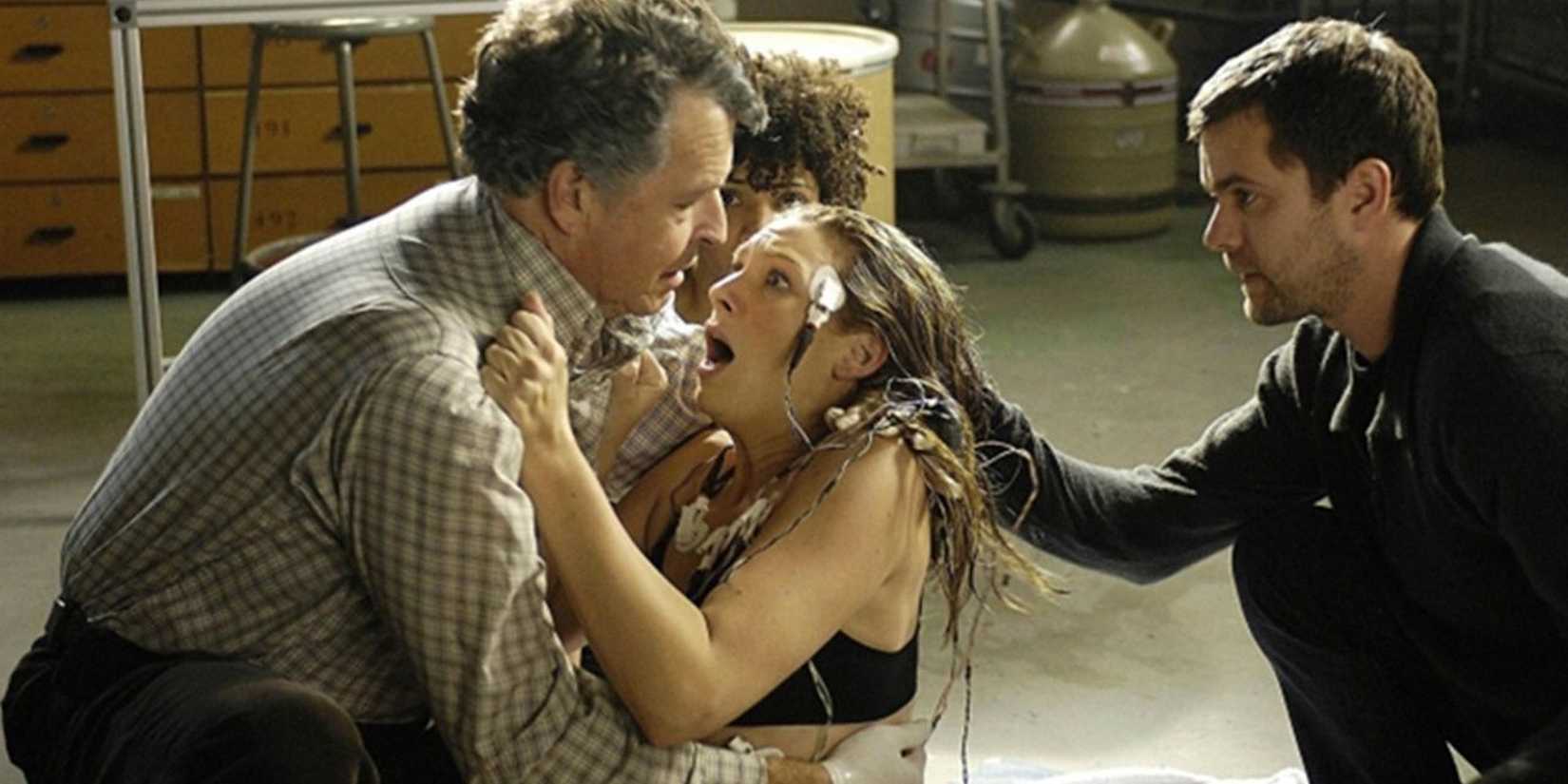 Image via FOX
Building on the foundation laid by The X-Files, another fantastic sci-fi show that follows an FBI agent investigating odd occurrences is Fringe. In Fringe, agent Olivia Dunham (Anna Torv) works with the brilliant but highly unstable Dr. Walter Bishop (John Noble), his son Peter (Joshua Jackson), and lab technician Astrid (Jasika Nicole) to discover what lies at the center of unexplained mysteries. One of the series' creators, J. J. Abrams, is well known for his ability to tell captivating sci-fi mysteries, and Fringe is no exception.
Fringe is a masterpiece, start to finish. It has a solid series arc and riveting episodes throughout. Everything feels solid and complete in Fringe and expertly well done. The acting is superb, and the episodes blend scientific facts with speculative theories. Fringe is a must-watch for anyone who wants to lean into the science aspect of science fiction. It uses theories about not only what could be possible, but how it could functionally happen. Fringe only gets better with every season, and with each passing year.
9 'Battlestar Galactica' (2004–2009)
 Image via SYFY
Some series only seem to grow more relevant as time goes on. It is almost as if they are on a collision course between when their projected timeline occurs and real-life situations moving steadily ever toward them. Perhaps no other sci-fi TV show exemplifies this better than Battlestar Galactica.
In Battlestar Galactica, humanity has fled to the stars and Earth is more of a legend than a reality. As the last of the human race tries to survive, they face an ever-evolving foe in the form of Cylons. The Cylons are highly intelligent, sentient robots that have produced models that resemble humans with nearly undetectable precision. With its blend of politics and human rights undertones, Battlestar Galactica has never been more relevant. It was ahead of its time and remains one of the most enduring sci-fi series ever made. "So say we all."
10 'Star Trek: The Next Generation' (1987–1994)
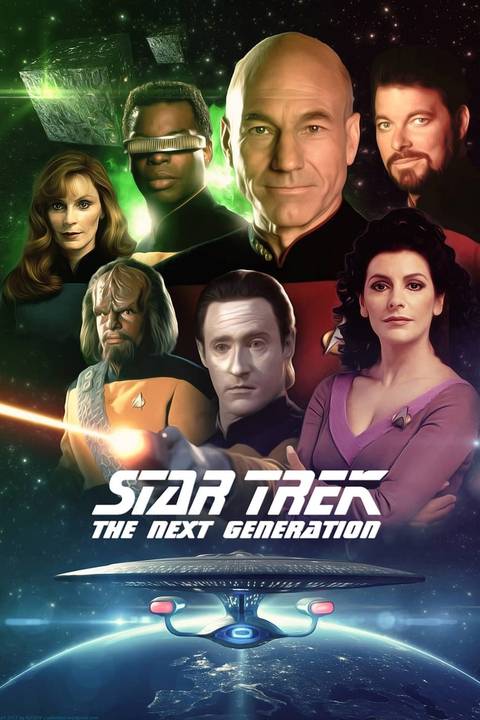
Similar to Doctor Who, Star Trek: The Next Generation was the reinvigoration of a beloved classic. Airing 18 years after the original wrapped, the series followed a new ship, a new captain, and a new crew of Starfleet as they boldly went where no one had gone before to “explore strange new worlds” and “seek out new life and new civilizations.” Patrick Stewart, Jonathan Frakes, Brent Spiner, Michael Dorn, LeVar Burton, Gates McFadden, and Marina Sirtis portrayed some of the core crew, with many other talented actors, including Whoopi Goldberg and Wil Wheaton, joining the series throughout.
Within the dynamics of a functioning academy, Star Trek has officers, ranks, and a corporate approach to space exploration, which gives the series a solid structure, a clear chain of command, and intriguing interpersonal dynamics. Watching Star Trek: The Next Generation today, you will soon realize that the topics covered in each episode are still incredibly relevant. From gender identity to war crimes and immigration, every episode has something current audiences can take away from it. There are episodes like "The Measure of a Man" in Season 2, which gives viewers a glimpse into a possible future. In this most celebrated episode, Star Trek: The Next Generation addressed what it fundamentally means to have autonomy decades before AI was prevalent. As the android officer, Data (Spiner) goes on trial to retain his personal rights, the series explores what qualifies as sentience and what privileges should be retained therein. If AI technology becomes self-aware, this groundbreaking episode could have very real implications.
Star Trek: The Next Generation
Release Date 1987 - 1994-00-00
Network Syndication
Showrunner Gene Roddenberry
-

-

Commander William T. Riker





 English (US) ·