
Dune is kind of a big deal, right? It’s always been a landmark science fiction novel, and then not long after it was a novel, it also became a series. It’s become even more popular in the last half-decade or so, thanks to a successful film adaptation of the first half of Frank Herbert's original novel in 2021, and then an arguably even better film adaptation of the second half of the story in 2024. And then in 2026, a third Dune movie is scheduled, with this one being based on the second book in the series, Dune Messiah.
As for Dune, the first book, it's a little like Lawrence of Arabia but on a desert planet, and with various interesting science fiction elements. An almost overwhelming number, really, and they're not what’s going to be explored here. Instead, here are a bunch of sci-fi novels that are just as worth reading as Dune. That’s not to say that these are better than Dune, nor are they the only classic science fiction books worth reading once you’ve gotten through Dune, but they're a bunch of great and/or classic ones.
10 'Lucifer's Hammer' (1977)
 Image via Del Rey Books
Lucifer’s Hammer is all about a huge comet approaching the Earth, and the chaos that results, all of it becoming more intense when it eventually comes time for the collision. That’s an event that tips Lucifer’s Hammer from science fiction into a full-on post-apocalyptic novel, and it mostly works on both counts, even if it feels like Larry Niven and Jerry Pournelle are a little more at home writing the comparatively dry and science-heavy earlier sections of the book.
It’s a frequently handled premise tackled well, and Lucifer’s Hammer is probably a little better than Ringworld, which Niven wrote on his own (it is probably more famous than Lucifer’s Hammer, though). If the end of the world, explored through fiction, is interesting to you, then Lucifer’s Hammer does ultimately stand as a fairly easy to recommend book.
9 'Hyperion' (1989)
 Image via Doubleday
The events of Hyperion would make for a pretty great season of television, since it’s a novel that’s largely about a group of interesting characters headed toward a mysterious destination, and each one recounts the events that led to them taking part in the journey to the world of Hyperion. And then the ending of the book does deal with some stuff that happens at the destination, so, like, that would be a sensible season finale or something.
And then there are other books in the series, so why no one’s jumped on this yet (as of 2026), when so many other books have been made into TV shows, is a mystery. Maybe one day. For now, Hyperion is a great read, and one of the better character-focused science fiction novels out there (with the first book in the series certainly being the best, though the sequels are also compelling).
8 'Under the Dome' (2009)
 Image via Charles Scribner's Sons
Including even one Stephen King book here might be one too many, in the eyes of some, since he’s a little more at home in the horror genre, and the realm of dark fantasy, too (see The Dark Tower). Also, some of his more controversial and not-great books dive into science fiction, like The Tommyknockers and Dreamcatcher. He’s gotten better with sci-fi more recently, though, if Under the Dome is anything to go by.
The level of suspense and dread throughout Under the Dome is high, and it’s also successfully ambitious in drawing things out across more than 1000 pages.
This has more sci-fi elements near the end, but most of it’s a survival-focused story that kicks off when a mysterious dome traps the population of a small town in just the town, with no way out. The level of suspense and dread throughout Under the Dome is high, and it’s also successfully ambitious in drawing things out across more than 1000 pages with things never really coming close to feeling boring.
7 'Slaughterhouse-Five' (1969)
 Image via Dell Publishing
Set in World War II, but feeling like significantly more than just a book about that conflict, Slaughterhouse-Five goes to some mind-bending places with its sci-fi elements throughout, and it’s also surprisingly satirical, too. That all sounds like a lot’s being bitten off for something that probably won’t take you more than a couple of days to read, but there is a rather staggering balance between all these elements struck here.
It’s probably not as surprising, though, when you consider this is a Kurt Vonnegut Jr. novel, and his work was just about always ambitious and unique. Slaughterhouse-Five has him recounting experiences from his time spent serving in World War II, but in ways that few other authors have ever come close to doing, and it remains a powerful – and undeniably singular, as far as sci-fi goes – read all these decades later.
6 'Swan Song' (1987)
 Image via Pocket Books
Like Lucifer’s Hammer, Swan Song is a post-apocalyptic novel, but here, the end of the world is caused by nuclear war. It’s probably the most reliably grim way the world can end, but Swan Song does spend most of its pages on documenting how various survivors get by in a radically changed world, and one where fantastical elements ultimately play an increasingly significant role as the story goes on.
Swan Song gets very big in scope, and it’s also very well-paced, cutting quite effortlessly between various groups of characters in a manner that ensures the novel as a whole always feels like it’s moving forward. It’s a dark and lengthy read, but a very rewarding one that also isn't just misery for the sake of misery. Among all the books out there about surviving post-apocalyptic worlds, it’s one of the more surprisingly bittersweet ones, all things considered.
5 'Frankenstein' (1818)
 Image via Oxford University Press USA
A bit like how you have to mention The Cabinet of Dr. Caligari when you're talking about all-time great twist endings in cinema history, so too does it feel obligatory to mention Frankenstein when talking about classic and important literary works of science fiction. This is one of the first true science fiction novels, even if there were stories written before 1818 that had elements subsequently recognized as sci-fi in nature.
As for Frankenstein, you probably know the plot here, or some variation of the story, even if you’ve not read Mary Shelley’s original novel, thanks to all those movie adaptations… though, admittedly, some of them do deviate quite a bit. It’s a story that’s still best experienced in its original form, and it’s remarkable to read it 200+ years on from when it was written, since you can really appreciate how influential and ahead of its time it was.
4 'The Forever War' (1974)
 Image via St. Martin's Press
Some might argue The Forever War is an even better sci-fi novel than Dune, but that’s not being done here, necessarily. Instead, here’s a slightly more cowardly suggestion that both are great. The Forever War isn't quite as famous, and not having any major adaptations yet (either TV or film in nature) might have something to do with that, but, like Hyperion, it does feel like it could be made into something very interesting on-screen, if any filmmakers were feeling sufficiently brave.
The Forever War really does live up to the “Forever” part of the title, thanks to its structure, which is probably the most interesting and easy-to-spoil part of The Forever War. There are bold predictions made here about the future that honestly don’t feel too off the mark, and so much to dig into thematically, if you like analyzing your science fiction in depth, regarding what The Forever War has to say about… you know… war... and how long they sometimes go on for.
3 '11/22/63' (2011)
 Image via Scribner
Oops, another Stephen King book. This one’s 11/22/63, and it wasn’t written too much longer after Under the Dome. It was similar in length and ambition, yet probably has more by way of science fiction elements, given time travel plays a massive role in the narrative here. To cut a long story short, the protagonist is given the chance to travel back to 1958, and he does so with the intention of preventing the assassination of John F. Kennedy, destined to happen five years on from the point in time he arrives at.
It’s no exaggeration to say that it’s up there among the very best things Stephen King has ever written, even if it sounds (and is) a little outside his expected wheelhouse. King largely pulled off doing time travel the right way (or at least a compelling way), with 11/22/63, and for a book that’s so long, it really is a pleasant surprise to find it so easily readable and engrossing pretty much right from the start.
2 'A Clockwork Orange' (1962)
 Image via Penguin Books
The crime and sci-fi genres violently collide in A Clockwork Orange, which is one of the all-time great dystopian novels, and was also famously (or infamously) made into an all-time great dystopian movie. The premise is the same across both, and Stanley Kubrick’s adaptation is honestly surprisingly faithful, up until the end, as A Clockwork Orange (1971) ends before the point at which A Clockwork Orange (1962) does.
That makes both versions very much worth experiencing, even if it’s an uneasy read, in book form, and a very uneasy watch, in its movie form. It has to be, though, with the way A Clockwork Orange chooses to explore incredibly hard-to-answer questions about morality, justice, and the extent to which technology could – or should – be utilized in the supposed name of rehabilitation.
1 'Gravity's Rainbow' (1973)
 Image via Viking Press
For as trippy as Slaughterhouse-Five could be, it’s got nothing on Gravity’s Rainbow when you take into account how dense and lengthy the latter is. They're both worth comparing as World War II-related books that also have some sci-fi elements, but the line between science fiction, dreams, real-life horrors, and satire is so very blurred throughout Gravity’s Rainbow.
Would there be lines between all those things, rather than just “a” line? Who knows. Reading this book is a nightmare, albeit a cathartic (to finally finish it) and rewarding one (because it'll stay implanted in your brain forever). There’s nothing else like it, not even the other weird and usually compelling books Thomas Pynchon has written. It’s an important and endlessly perplexing read, and there probably won’t ever be another way to experience it, other than reading it, so if you’ve got a strong enough stomach, that’s very much worth doing at some point in your life.
Collider Exclusive · Sci-Fi Survival Quiz Which Sci-Fi World Would You Survive? The Matrix · Mad Max · Blade Runner · Dune · Star Wars
Five universes. Five completely different ways the future went wrong — or sideways, or up in flames. Only one of them is the world your instincts were built for. Eight questions will figure out which dystopia, galaxy, or desert wasteland you'd actually make it out of alive.
💊The Matrix
🔥Mad Max
🌧️Blade Runner
🏜️Dune
🚀Star Wars
TEST YOUR SURVIVAL →
01
You sense something is deeply wrong with the world around you. What do you do? The first instinct is often the truest one.
APull on every thread until I understand the system — then figure out how to break it. BStop asking questions and start stockpiling — food, fuel, weapons. Questions don't keep you alive. CKeep my head down, observe carefully, and trust no one until I know who's pulling the strings. DStudy the patterns. Every system has a rhythm — learn it, and you learn how to survive it. EFind the people fighting back and join them. You can't fix a broken galaxy alone.
NEXT QUESTION →
02
In a world of scarcity, what resource do you guard most fiercely? What we protect reveals what we believe survival actually requires.
AKnowledge. If you understand the system, you don't need resources — you can generate them. BFuel. Everything else — movement, power, escape — runs on it. CTrust. In a world of fakes and informants, a truly reliable ally is rarer than any commodity. DWater. And after water, information — the two things empires are truly built on. EShips and credits. The galaxy is big — you survive it by being able to move through it freely.
NEXT QUESTION →
03
What kind of threat keeps you up at night? Fear is useful data — if you're honest about what you're actually afraid of.
AThat reality itself is a lie — that everything I experience has been constructed to keep me compliant. BA raid. No warning, no mercy — just the roar of engines and then nothing left. CBeing identified. Once someone with power decides you're a problem, you're already out of time. DBeing outmanoeuvred — losing a political game I didn't even know I was playing. EThe Empire tightening its grip until there's nowhere left to run.
NEXT QUESTION →
04
How do you deal with authority you don't trust? Every dystopia has a power structure. Your approach to it determines everything.
ASubvert it from the inside — learn its rules well enough to weaponise them against it. BIgnore it and stay out of its reach. The further from any power structure, the better. CAppear to comply while doing exactly what I need to do. Visibility is the enemy. DManoeuvre within it carefully. You can't beat a system you refuse to understand. EResist openly when I have to. Some things are worth the risk of being seen.
NEXT QUESTION →
05
Which environment could you actually endure long-term? Survival isn't just tactical — it's physical, psychological, and very much about where you are.
AUnderground bunkers and server rooms — cramped, artificial, but with access to everything that matters. BOpen wasteland — brutal sun, no shelter, constant movement. At least the threat is honest. CA dense, rain-soaked city where you can disappear into the crowd and nobody asks questions. DMerciless desert — extreme heat, no water, and something enormous living beneath the sand. EThe fringe — backwater planets and busy spaceports where the Empire's attention rarely reaches.
NEXT QUESTION →
06
Who do you want in your corner when things fall apart? The company you keep is the clearest signal of who you actually are.
AA tight crew of believers who've seen behind the curtain and have nothing left to lose. BOne or two people I'd trust with my life. Any more than that and someone talks. CNobody, ideally. Alliances are liabilities. I work alone unless I have no choice. DA community bound by shared hardship and mutual survival — people who need each other to last. EA ragtag team with wildly different skills and total commitment when it counts.
NEXT QUESTION →
07
Where do you draw the line — if you draw one at all? Every survivor eventually faces a moment that tests what they're actually made of.
AI won't harm the innocent — even the ones who'd report me without hesitation. BI do what I have to to protect the people I've chosen. Everything else is negotiable. CThe line shifts depending on who's asking and what's at stake. DI draw a long-term line — nothing that compromises my people's future, even if it'd help now. ESome lines, once crossed, can't be uncrossed. I know which ones they are.
NEXT QUESTION →
08
What would actually make survival worth it? Staying alive is one thing. Having a reason to is another.
AWaking others up — dismantling the illusion so no one else has to live inside it. BFinding somewhere — or someone — worth protecting. A reason to keep moving. CAnswers. Understanding what I am, what any of this means, before time runs out. DLegacy — shaping the future in a way that outlasts me by generations. EFreedom — for myself, for others, for every world still living under someone else's boot.
REVEAL MY WORLD →
Your Fate Has Been Calculated You'd Survive In…
Your answers point to the world your instincts were built for. This is the universe your temperament, your survival instincts, and your particular brand of stubbornness were made for.
The Matrix
You took the red pill a long time ago — probably before anyone offered it to you. You're a systems thinker who can't help but notice the seams in things.
- You're drawn to understanding how the system works before figuring out how to break it.
- You'd find the Resistance, or it would find you — your instinct for spotting constructed realities is the machines' worst nightmare.
- You function best when you have access to information and the freedom to act on it.
- The Matrix built an airtight prison. You'd be the one probing the walls for the door.
Mad Max
The wasteland doesn't reward the clever or the well-connected — it rewards those who are hard to kill and harder to break. That's you.
- You don't need comfort, community, or a cause larger than the next horizon.
- You need a vehicle, a clear threat, and enough fuel to outrun it — and you're good at all three.
- You are unsentimental enough to survive that world, and decent enough — just barely — to be something more than another raider.
- In the wasteland, that distinction is everything.
Blade Runner
You'd survive here because you know how to exist in moral grey areas without losing yourself completely.
- You read people accurately, keep your circle small, and ask the questions others prefer not to answer.
- In a city where humanity is a legal designation rather than a feeling, you hold onto something that keeps you functional.
- You're not a hero. But you're not lost, either.
- In Blade Runner's world, that distinction is everything.
Dune
Arrakis is the most hostile environment in the known universe — and you are precisely the kind of person it rewards.
- Patience, discipline, and political awareness are your core strengths — and on Arrakis, they're survival tools.
- You understand that the long game matters more than any single victory.
- Others come to Dune and are consumed by it. You'd learn its logic and earn its respect.
- In time, you wouldn't just survive Arrakis — you'd begin to reshape it.
Star Wars
The galaxy far, far away is vast, loud, and in a constant state of violent political upheaval — and you wouldn't have it any other way.
- You find meaning in being part of something larger than yourself — a cause, a crew, a rebellion.
- You'd gravitate toward the Rebellion, or the fringes, or whatever pocket of the galaxy still believes the Empire's grip can be broken.
- You fight — not because you have to, but because standing aside isn't something you're capable of.
- In Star Wars, that willingness is what makes all the difference.
↻ RETAKE THE QUIZ
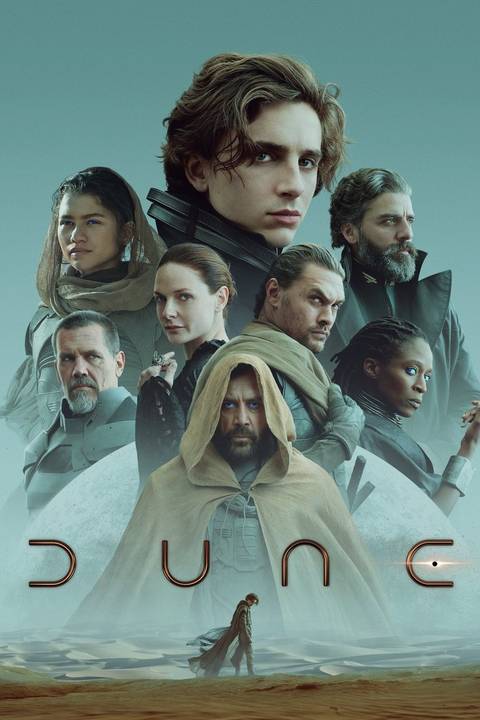
Dune
Release Date September 15, 2021
Runtime 155 minutes
Director Denis Villeneuve
Writers Denis Villeneuve, Eric Roth, Jon Spaihts, Frank Herbert







 English (US) ·