
 Image via Ballantine Books
Published Jul 19, 2026, 2:33 PM EDT
Dyah (pronounced Dee-yah) is a Senior Author at Collider, responsible for both writing and transcription duties. She joined the website in 2022 as a Resource Writer before stepping into her current role in April 2023. As a Senior Author, she writes Features and Lists covering TV, music, and movies, making her a true Jill of all trades. In addition to her writing, Dyah also serves as an interview transcriber, primarily for events such as San Diego Comic-Con, the Toronto International Film Festival, and the Sundance Film Festival.
Dyah graduated from Satya Wacana Christian University in October 2019 with a Bachelor's degree in English Literature, concentrating on Creative Writing. She is currently completing her Master's degree in English Literature Studies, with a thesis on intersectionality in postcolonial-feminist studies in Asian literary works, and is expected to graduate in 2026.
Born and raised between Indonesia and Singapore, Dyah is no stranger to different cultures. She now resides in the small town of Kendal with her husband and four cats, where she spends her free time cooking or cycling.
Sign in to your Collider account
Aliens have existed since the dawn of the universe — or at least in science fiction. With fictional stories dating back to the second century AD, from the Greek satire A True Story by Lucian of Samosata to the first modern alien invasion tale, The War of the Worlds by H.G. Wells, readers have been treated to countless stories about encounters between humans and extraterrestrials, and whether those meetings bode well for either side.
While technology and space odysseys play a huge role in sci-fi, many writers have also explored aliens through a more philosophical lens, whether through their language, culture, or the way they build their civilizations. From the novel that inspired this year's most talked-about movie to a revolutionary take on aliens from a non-male perspective, here are the sci-fi books about aliens that are 10/10, no notes.
'The Pride of Chanur' (1982)
 Image via DAW Books
The first novel in the five-part Chanur series, The Pride of Chanur begins when Captain Pyanfar Chanur, leader of a hani merchant ship, offers refuge to Tully, the lone surviving human after escaping captivity. Refusing to hand him back to his captors only further strains relations across the Compact, where the alliance is already on the verge of breaking apart due to rival alien powers.
Instead of telling an alien story through human eyes, The Pride of Chanur presents a first-contact story through alien eyes. Humans are the mysterious outsiders, and with Tully aboard, Chanur must confront the fragility of the Compact and choose between maintaining her honor and political convenience.
'The Three-Body Problem' (2008)
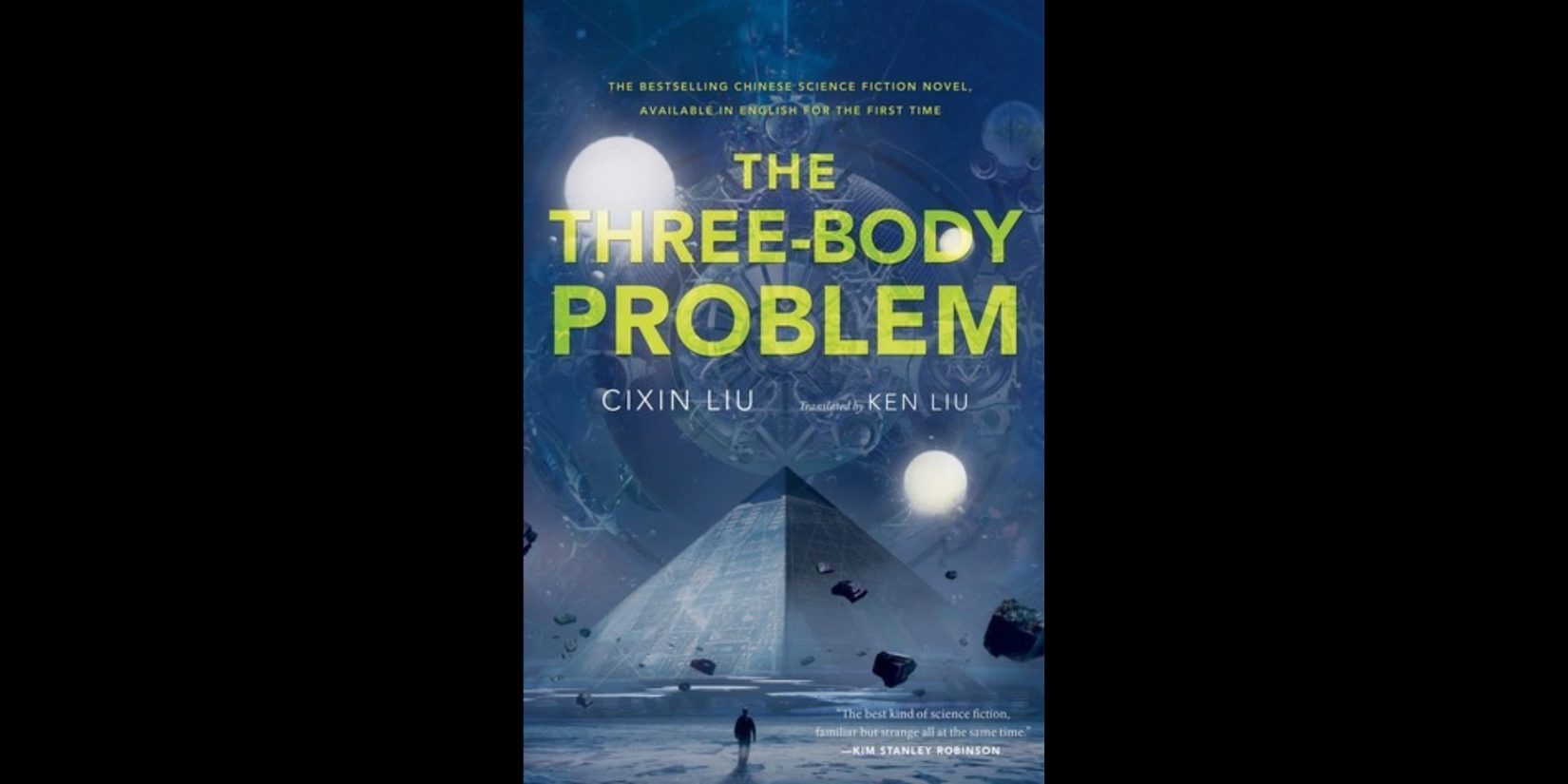 Image via Tor Books
The Three-Body Problem begins during China's Cultural Revolution, when astrophysicist Ye Wenjie, devastated by her father's public execution, is recruited to the secret Red Coast project. There, she makes contact with Trisolaris, an alien civilization struck in the volatile orbit of three suns. Ignoring a warning not to reply, Ye invites the Trisolarans to Earth, which only sets off an invasion centuries later.
The Trisolarans represent an age-old paradox often found in alien fiction: their "invasion" is ultimately an act of survival. But humanity has yet to develop the means to welcome them, and not everyone is willing to try. It's one of those cases where good deeds don't always reap rewards, and where technological advancement doesn't necessarily lead to a higher moral ground.
'Slaughterhouse-Five' (1969)
 Image via Dell
Slaughterhouse-Five by Kurt Vonnegut follows Billy Pilgrim, a World War II soldier who survives the firebombing of Dresden after being held as a prisoner of war in an underground slaughterhouse. Haunted by the horrors he witnessed, Billy becomes "unstuck in time." Through the novel's time-traveling plot, Billy takes readers to his wartime experiences, his career as an optometrist, and even his own future death.
The alien plot comes with the introduction of the Tralfamadorians, an extraterrestrial race that abducts Billy and places him in a human zoo. However, some readers see them as a product of his PTSD rather than actual aliens. Existing outside the mechanics of time, they are more philosophical than threatening, reminding Billy that humans are only an arm's length away from death.
'Under the Dome' (2009)
 Image via Scribner
In true Stephen King versatility, Under the Dome is one of his many forays into alien writings. The novel follows the residents of Chester's Mill, Maine, after an invisible, impenetrable dome suddenly seals the town off from the outside world. Trapped inside, former Army captain Dale "Barbie" Barbara joins newspaper editor Julia Shumway to reveal the dome’s power source.
The dome is revealed to be an extraterrestrial "ant farm" created by juvenile aliens known as the Leatherheads, who trap humans for their own amusement. As fear, scarcity, and isolation suffocate Chester's Mill, once-peaceful neighbors begin turning against one another. At a time when compassion is needed most, corruption flourishes out of fear, which only pleases the Leatherheads even more.
Collider Exclusive · Sci-Fi Survival Quiz Which Sci-Fi World Would You Survive? The Matrix · Mad Max · Blade Runner · Dune · Star Wars
Five universes. Five completely different ways the future went wrong — or sideways, or up in flames. Only one of them is the world your instincts were built for. Eight questions will figure out which dystopia, galaxy, or desert wasteland you'd actually make it out of alive.
💊The Matrix
🔥Mad Max
🌧️Blade Runner
🏜️Dune
🚀Star Wars
TEST YOUR SURVIVAL →
01
You sense something is deeply wrong with the world around you. What do you do? The first instinct is often the truest one.
APull on every thread until I understand the system — then figure out how to break it. BStop asking questions and start stockpiling — food, fuel, weapons. Questions don't keep you alive. CKeep my head down, observe carefully, and trust no one until I know who's pulling the strings. DStudy the patterns. Every system has a rhythm — learn it, and you learn how to survive it. EFind the people fighting back and join them. You can't fix a broken galaxy alone.
NEXT QUESTION →
02
In a world of scarcity, what resource do you guard most fiercely? What we protect reveals what we believe survival actually requires.
AKnowledge. If you understand the system, you don't need resources — you can generate them. BFuel. Everything else — movement, power, escape — runs on it. CTrust. In a world of fakes and informants, a truly reliable ally is rarer than any commodity. DWater. And after water, information — the two things empires are truly built on. EShips and credits. The galaxy is big — you survive it by being able to move through it freely.
NEXT QUESTION →
03
What kind of threat keeps you up at night? Fear is useful data — if you're honest about what you're actually afraid of.
AThat reality itself is a lie — that everything I experience has been constructed to keep me compliant. BA raid. No warning, no mercy — just the roar of engines and then nothing left. CBeing identified. Once someone with power decides you're a problem, you're already out of time. DBeing outmanoeuvred — losing a political game I didn't even know I was playing. EThe Empire tightening its grip until there's nowhere left to run.
NEXT QUESTION →
04
How do you deal with authority you don't trust? Every dystopia has a power structure. Your approach to it determines everything.
ASubvert it from the inside — learn its rules well enough to weaponise them against it. BIgnore it and stay out of its reach. The further from any power structure, the better. CAppear to comply while doing exactly what I need to do. Visibility is the enemy. DManoeuvre within it carefully. You can't beat a system you refuse to understand. EResist openly when I have to. Some things are worth the risk of being seen.
NEXT QUESTION →
05
Which environment could you actually endure long-term? Survival isn't just tactical — it's physical, psychological, and very much about where you are.
AUnderground bunkers and server rooms — cramped, artificial, but with access to everything that matters. BOpen wasteland — brutal sun, no shelter, constant movement. At least the threat is honest. CA dense, rain-soaked city where you can disappear into the crowd and nobody asks questions. DMerciless desert — extreme heat, no water, and something enormous living beneath the sand. EThe fringe — backwater planets and busy spaceports where the Empire's attention rarely reaches.
NEXT QUESTION →
06
Who do you want in your corner when things fall apart? The company you keep is the clearest signal of who you actually are.
AA tight crew of believers who've seen behind the curtain and have nothing left to lose. BOne or two people I'd trust with my life. Any more than that and someone talks. CNobody, ideally. Alliances are liabilities. I work alone unless I have no choice. DA community bound by shared hardship and mutual survival — people who need each other to last. EA ragtag team with wildly different skills and total commitment when it counts.
NEXT QUESTION →
07
Where do you draw the line — if you draw one at all? Every survivor eventually faces a moment that tests what they're actually made of.
AI won't harm the innocent — even the ones who'd report me without hesitation. BI do what I have to to protect the people I've chosen. Everything else is negotiable. CThe line shifts depending on who's asking and what's at stake. DI draw a long-term line — nothing that compromises my people's future, even if it'd help now. ESome lines, once crossed, can't be uncrossed. I know which ones they are.
NEXT QUESTION →
08
What would actually make survival worth it? Staying alive is one thing. Having a reason to is another.
AWaking others up — dismantling the illusion so no one else has to live inside it. BFinding somewhere — or someone — worth protecting. A reason to keep moving. CAnswers. Understanding what I am, what any of this means, before time runs out. DLegacy — shaping the future in a way that outlasts me by generations. EFreedom — for myself, for others, for every world still living under someone else's boot.
REVEAL MY WORLD →
Your Fate Has Been Calculated You'd Survive In…
Your answers point to the world your instincts were built for. This is the universe your temperament, your survival instincts, and your particular brand of stubbornness were made for.
The Matrix
You took the red pill a long time ago — probably before anyone offered it to you. You're a systems thinker who can't help but notice the seams in things.
- You're drawn to understanding how the system works before figuring out how to break it.
- You'd find the Resistance, or it would find you — your instinct for spotting constructed realities is the machines' worst nightmare.
- You function best when you have access to information and the freedom to act on it.
- The Matrix built an airtight prison. You'd be the one probing the walls for the door.
Mad Max
The wasteland doesn't reward the clever or the well-connected — it rewards those who are hard to kill and harder to break. That's you.
- You don't need comfort, community, or a cause larger than the next horizon.
- You need a vehicle, a clear threat, and enough fuel to outrun it — and you're good at all three.
- You are unsentimental enough to survive that world, and decent enough — just barely — to be something more than another raider.
- In the wasteland, that distinction is everything.
Blade Runner
You'd survive here because you know how to exist in moral grey areas without losing yourself completely.
- You read people accurately, keep your circle small, and ask the questions others prefer not to answer.
- In a city where humanity is a legal designation rather than a feeling, you hold onto something that keeps you functional.
- You're not a hero. But you're not lost, either.
- In Blade Runner's world, that distinction is everything.
Dune
Arrakis is the most hostile environment in the known universe — and you are precisely the kind of person it rewards.
- Patience, discipline, and political awareness are your core strengths — and on Arrakis, they're survival tools.
- You understand that the long game matters more than any single victory.
- Others come to Dune and are consumed by it. You'd learn its logic and earn its respect.
- In time, you wouldn't just survive Arrakis — you'd begin to reshape it.
Star Wars
The galaxy far, far away is vast, loud, and in a constant state of violent political upheaval — and you wouldn't have it any other way.
- You find meaning in being part of something larger than yourself — a cause, a crew, a rebellion.
- You'd gravitate toward the Rebellion, or the fringes, or whatever pocket of the galaxy still believes the Empire's grip can be broken.
- You fight — not because you have to, but because standing aside isn't something you're capable of.
- In Star Wars, that willingness is what makes all the difference.
↻ RETAKE THE QUIZ
'Solaris' (1961)
 Image via Harcourt
Adapted into a major motion picture (twice) by Andrei Tarkovsky and Steven Soderbergh, Solaris follows Kris Kelvin as he arrives at Solaris Station. Scientists have spent decades studying the planet's sentient ocean, but the research shows no promise. It is only when the crew bombards the vast body of water with high-energy X-rays that it finally responds, but not in the way they expect.
Instead of traditional aliens, the ocean in Solaris is itself an extraterrestrial being that prompts humans to confront the impossibility of understanding foreign intelligence. When provoked, it responds by materializing physical replicas of the scientists' deepest fears. Solaris thus becomes less about understanding otherness and more about finding answers within ourselves—only to learn to live with life's unanswered questions.
'Childhood's End' (1953)
 Image via Ballantine Books
The inspiration behind Pink Floyd's song of the same name, Childhood's End by Arthur C. Clarke opens with massive alien ships appearing above major cities, ending the Cold War effectively. Under the leadership of Karellen, the mysterious Overlords assume control of humanity. But unlike human leaders, the Overlords promote peace, eradicate hunger, and eliminate poverty.
Although the Overlords are more caretakers than conquerors, their utopia comes at a great cost: the freedom of children. Rather than enslaving them, the Overlords gather them into a uniform hive mind (similar to Pluribus). It highlights the paradox of peace. If peace comes at the cost of stripping away individual agency, it is essentially a successful dictatorship, but a dictatorship nevertheless.
'The Gods Themselves' (1972)
 Image via Doubleday
Winner of both the Nebula and Hugo Awards for Best Novel, The Gods Themselves marked Isaac Asimov's first science fiction novel in fifteen years. With Earth’s scientists developing the Electron Pump, they unknowingly unleash a horrifying truth: the breakthrough is slowly altering the laws of physics needed to keep the Sun stable, setting it on course for an apocalyptic explosion.
Across the parallel universe, a trio of alien beings faces the same dilemma. Their species depends on the Electron Pump, but they soon discover its deadly consequences. Forced into a human-alien collaboration, both sides wrestle with the moral conflict between ambition and survival. Despite its out-of-this-world premise, the novel delivers a grounded message: all of humanity's intellectual gifts can be undone by a single shred of ignorance.
'The Left Hand of Darkness' (1969)
 Image via Penguin Random House
The Left Hand of Darkness follows Genly Ai, an envoy of the Ekumen, who travels to the frozen planet Gethen to persuade its people to join a coalition of worlds. However, his mission is interrupted by the political rivalries between a kingdom and a bureaucratic state. Only the exiled salesman Estraven is commited to helping Genly, which is only the beginning of their journey across the Permafrost.
Historically, science fiction has been written largely from a male-dominated perspective. The Left Hand of Darkness changed that by becoming one of the first sci-fi novels to explore sex and gender through a feminist lens. Rather than battling an alien enemy, Genly's greatest challenge is understanding the people of Gethen, whose inhabitants have no fixed gender. The novel pleads that bridging civilizations begins not with conquest, but with a willingness to question our own assumptions.
'Embassytown' (2011)
 Image via Del Rey
Embassytown follows Avice Benner Cho as she returns to her childhood home on the planet Arieka. There, humans and the native Ariekei, or Hosts, coexist, with communication made possible by genetically engineered humans capable of speaking the alien race's language. However, when the newly arrived Ambassador Ez/Ra speaks with an unprecedented voice, the Hosts descend into chaos.
Embassytown takes a unique approach to portraying alien life through the power, and destruction, of language. Everything the Ariekei say must be true, leaving them incapable of lying or even using figurative language like metaphor. Avice eventually teaches them a new way of speaking, reshaping their consciousness and allowing them to imagine the impossible without harming themselves.
'Project Hail Mary' (2021)
 Image via Ballantine Books
2026's biggest sci-fi movie has its roots in literature. Project Hail Mary follows Ryland Grace, a former science teacher who awakens alone aboard the starship Hail Mary with no memory of how he got there. As his memories gradually return, he learns he was sent on a one-way mission to Tau Ceti after the alien microorganism Astrophage began draining the Sun's energy.
The highlight of Project Hail Mary is the friendship Grace forms despite his isolation. After meeting the spider-like Eridian engineer, mathematics and science become the common language that bridges their differences and overcomes the vast interstellar divide. Even when Grace has the chance to return home safely, he's not willing to do it without leaving his companion behind.
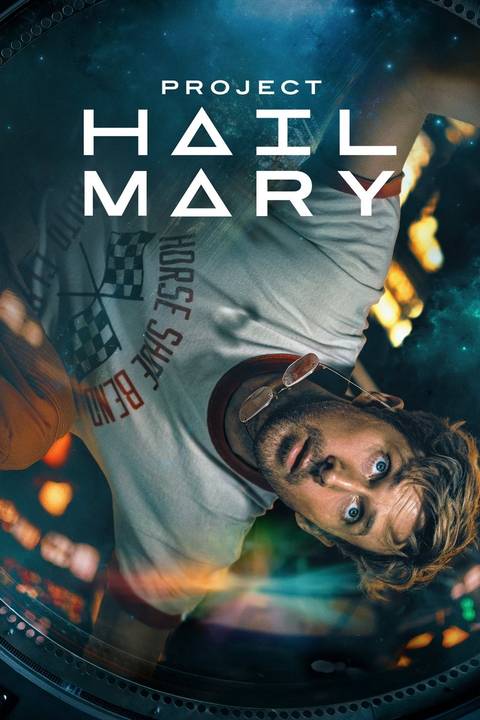
Project Hail Mary
Release Date March 15, 2026
Runtime 157 minutes
Director Christopher Miller, Phil Lord
Writers Drew Goddard, Andy Weir
-

-

James Ortiz
Rocky (voice)





 English (US) ·