
It takes something truly special for a movie to be genuinely scary. Even the tensest of thrillers and the most jump-scare-filled of horror films can have a tough time getting under the skin of veteran scary movie fans. It's only the most legendary motion pictures that are able to go down in history as the meanest, cruelest, most terrifying in the history of film.
Whether it's an essential classic like The Haunting or a modern horror classic like The Babadook, the scariest movies in film history are the epitome of the deeply visceral reactions that the Seventh Art is able to generate. These absolute masterpieces toy with the audiences' deepest fears in ways that result in absolutely unforgettable experiences.
10 'Jacob's Ladder' (1990)
 Image via Tri-Star Pictures
Adrian Lyne's psychological horror film Jacob's Ladder is one of the most criminally underrated cult classics of '90s Hollywood. It stars Tim Robbins as Jacob, a Vietnam War veteran whose traumatizing experiences in the military result in the most bizarre hallucinations. What follows is one of the most haunting thrillers of all time.
Jacob's Ladder is probably not the best choice for those who prefer more straightforward horror, because this is a surreal arthouse gem that delights itself in confusing and disorienting the audience. Those who love that kind of thing, however, are virtually guaranteed to love Jacob's Ladder, whose psychologically deep and stylistically bold atmosphere is nothing if not profoundly chilling.
9 'The Haunting' (1963)
 Image via MGM
As audiences have grown more tolerant, censorship has decreased around the world, and effects have gotten stronger, horror has generally gotten considerably scarier as the years have gone on. There are still plenty of older classics that are utterly terrifying, however, and Robert Wise's British-American gem The Haunting is most definitely one of those films.
One of the most perfect horror movies based on books, The Haunting has been labeled as one of the scariest movies ever made by filmmakers of the caliber of Martin Scorsese and Steven Spielberg. Frankly, it's difficult to disagree with them. This is just about as psychologically intense and potently atmospheric as haunted house movies get.
8 'The Texas Chain Saw Massacre' (1974)
 Image via Vortex Inc.
The New Hollywood film movement was far and away one of the most important and influential in the history of cinema, revolutionizing pretty much all genres imaginable—horror included. Few New Hollywood horror gems were ever more influential than Tobe Hooper's The Texas Chain Saw Massacre, one of the greatest counter-cultural movies from the era.
Typically, when a horror movie gets banned around the world, you know it's one of the good ones; and Texas Chain Saw is no exception. What makes it so special is how masterfully Hooper builds an air of dread and terror without ever actually showing much graphic violence, since the majority of the kills happen off-screen. If anything, this is irrefutable proof that films which leave most of the horror to the imagination are often the most effective.
7 'The Babadook' (2014)
 Image via Umbrella Entertainment
One of the most original horror movies of the 21st century, Jennifer Kent's modern Australian masterpiece The Babadook is widely regarded as one of the greatest horror movies of the past couple of decades. Though it initially failed to become a commercial success in Australia, it soon garnered such strong international attention that it's now just about as mainstream as modern horror gems get.
Throughout the 21st century, horror cinema has distanced itself from the jump-scare-heavy stories of the past and started experimenting with more atmospheric, psychologically-driven horror—the sorts of films that have come to be known as "elevated horror." Out of the bunch, The Babadook stands out as one of the scariest. Blending a genuinely moving story with some of the best-executed psychological horror of the 2010s, it's a must-see for all fans of the genre.
6 'Halloween' (1978)
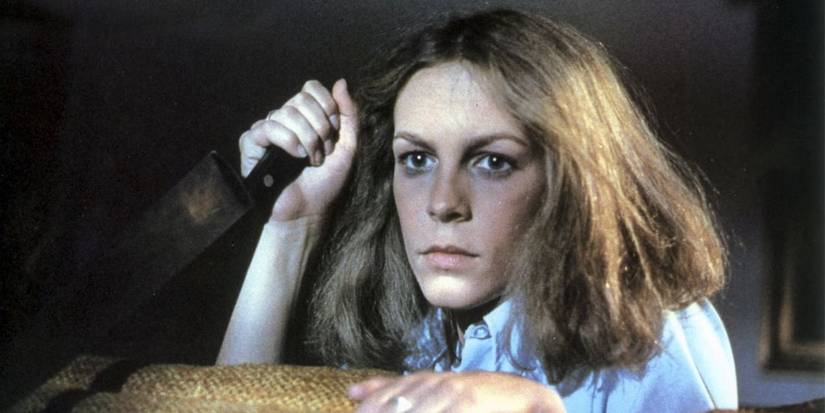 Image via Compass International Pictures
If a hypothetical Mount Rushmore of horror filmmakers were ever built, John Carpenter would have to be right up there, and that's thanks to masterpieces like Halloween. One of the most important and groundbreaking pioneers of the slasher subgenre of horror, this is one of those R-rated slasher movies that are true masterpieces from start to finish.
It's a film all about slow-burning psychological tension and unsettling atmosphere-building rather than pure shock or gore, taking full advantage of a budget of less than half a million dollars. Shoestring-budget horror is often the most creative, and Halloween is no exception. Suburban spaces suddenly became the scariest location imaginable, and it was all thanks to Carpenter and his creation of Michael Myers, easily one of the scariest characters in film history.
Collider Exclusive · Horror Survival Quiz Which Horror Villain Do You Have the Best Chance of Surviving? Jason Voorhees · Michael Myers · Freddy Krueger · Pennywise · Chucky
Five killers. Five completely different ways to die — if you're not smart enough, fast enough, or self-aware enough to avoid it. Only one of them is the villain your particular set of instincts gives you a fighting chance against. Eight questions will figure out which one.
🏕️Jason
🔪Michael
💤Freddy
🎈Pennywise
🪆Chucky
TEST YOUR SURVIVAL →
01
Something feels wrong. You can't explain it — you just know. What do you do? First instincts are the difference between the survivor and the first act casualty.
ALeave immediately. I don't need to understand a threat to respect it. BStay quiet and observe. If I can see it, I can understand it. If I can understand it, I can avoid it. CStay awake. Whatever this is, I am not going to sleep until I feel safe again. DConfront it directly. Fear grows in the dark — I'd rather know what I'm dealing with. ECheck everything, trust nothing. The threat might be closer than I think — and smaller.
NEXT QUESTION →
02
Where are you most likely to find yourself when things go wrong? Setting is everything in horror. Where you are determines which rules apply.
ASomewhere remote — a cabin, a campsite, off the grid and away from people. BA quiet suburban neighbourhood where nothing ever happens. Except tonight. CIn my own head — the most dangerous place of all, depending on what's already in there. DWherever children are — because something about this place attracts the worst things. ESomewhere ordinary — a house, a toy store, a place where the last thing you'd expect is a threat.
NEXT QUESTION →
03
What is your most reliable survival asset? Every survivor has a quality the villain didn't account for. What's yours?
APhysical fitness — I can run, I can swim, I can outlast something that relies on brute persistence. BSpatial awareness — I always know the exits, the hiding spots, the fastest route out. CPsychological resilience — I've faced my worst fears before. They don't have the same power over me. DEmotional steadiness — I don't panic. Panic is what gets you caught. EScepticism — I don't underestimate threats because of how they look. Size is irrelevant.
NEXT QUESTION →
04
What kind of fear is hardest for you to fight through? Knowing your weakness is the first step to not dying because of it.
AThe unstoppable — something that will not stop, cannot be reasoned with, and is always getting closer. BThe invisible — a threat I can feel but can't locate, watching from somewhere I can't see. CThe psychological — something that uses my own mind and memories against me. DThe unknowable — something ancient, shapeless, that feeds on the fear itself. EThe mundane — a threat so ordinary-looking that no one will believe me until it's too late.
NEXT QUESTION →
05
You're with a group when things start going wrong. What's your role? Horror movies are brutally clear about who survives group situations and who doesn't.
AThe one who says "we need to leave" first — and means it, even when no one listens. BThe one who stays quiet, watches the others, and figures out the pattern before anyone else does. CThe one who holds the group together when panic sets in — because someone has to. DThe one who asks the questions nobody wants to ask — because ignoring them gets people killed. EThe one who takes the threat seriously when everyone else is laughing it off.
NEXT QUESTION →
06
What's the horror movie mistake you're most likely to make? Honest self-assessment is a survival skill. Denial is not.
AGoing back for someone — I know I shouldn't, but I can't leave them behind. BAssuming I'm safe once I've found a hiding spot. That's when it finds me. CFalling asleep when I absolutely cannot afford to. Exhaustion is its own enemy. DLetting my curiosity override my instincts — I always need to understand what I'm dealing with. EDismissing the threat because of how it looks. That's exactly what it wants.
NEXT QUESTION →
07
What's your best weapon against something that can't be stopped by conventional means? Every horror villain has a weakness. The survivors are always the ones who find it.
AThe environment itself — I use the terrain, the water, the geography against it. BPatience — I wait, I watch, and I strike at the one moment it doesn't expect. CLucidity — if I can stay in control of my own mind, it loses its primary weapon. DCourage — facing it directly, refusing to run, taking away the fear it feeds on. EImprovisation — I use whatever's at hand, however unconventional. Creativity over brute force.
NEXT QUESTION →
08
It's the final scene. You're the last one standing. How did you make it? The final survivor always has a reason. What's yours?
AI kept moving. I never stopped, never hid for too long, never let it corner me. BI figured out the pattern before anyone else did — and I used it against the thing following it. CI stayed awake, stayed lucid, and refused to give it the one thing it needed most. DI stopped being afraid of it. And the moment I did, everything changed. EI took it seriously from the start — and I never once made the mistake of underestimating it.
REVEAL MY VILLAIN →
Your Survival Odds Have Been Calculated Your Best Chance Is Against…
Your instincts, your strengths, and your particular way of thinking under pressure point to one villain you actually have a fighting chance against. Everyone else — good luck.
Jason Voorhees
Jason is relentless, but he is also predictable — and that is the gap you would exploit.
- He moves in straight lines toward his target. He doesn't strategise, doesn't adapt, doesn't outsmart. He simply pursues.
- Your ability to keep moving, use the environment, and resist the panic that freezes most victims gives you a genuine edge.
- The Crystal Lake survivors were always the ones who stopped running in circles and started thinking about terrain, water, and distance.
- You think like that. Which means Jason, for all his indestructibility, would face someone who simply refused to be where he expected.
Michael Myers
Michael watches before he moves. He is patient, methodical, and almost impossible to detect — until it's too late for anyone who isn't paying close enough attention.
- But you are paying attention. You notice the shape in the window, the car parked slightly wrong, the silence where there should be sound.
- Michael's power lies in the invisibility of ordinary suburbia — the fact that nothing ever looks wrong until it already is.
- Your spatial awareness and instinct to map every room, every exit, and every shadow before you need them is precisely the quality Laurie Strode had.
- You are not a victim waiting to happen. You are someone who already suspects something is wrong — and acts on it.
Freddy Krueger
Freddy wins by getting inside your head — using your own fears, your own memories, your own subconscious as weapons against you. That strategy requires a target who can be destabilised.
- You are harder to destabilise than most. You've faced uncomfortable truths about yourself and you haven't looked away.
- The survivors on Elm Street were always the ones who understood what was happening and chose to face it rather than flee from it.
- Freddy's greatest weakness is that his power evaporates in the presence of someone who refuses to give him the fear he feeds on.
- Your psychological resilience — the ability to stay grounded when reality itself becomes unreliable — is exactly the quality that keeps you alive here.
Pennywise
Pennywise is ancient, shapeshifting, and feeds on terror — but it has one critical vulnerability: it cannot function against someone who genuinely stops being afraid of it.
- The Losers Club didn't survive because they were braver than everyone else. They survived because they faced their fears together, and faced them honestly.
- You ask the questions others avoid. You look directly at what frightens you rather than turning away.
- That directness — the refusal to let fear fester in the dark — is Pennywise's worst nightmare.
- It chose the wrong target when it chose you. You are exactly the kind of person whose fear tastes like nothing at all.
Chucky
Chucky's greatest advantage is that nobody takes him seriously until it's already too late. He exploits the gap between how something looks and what it actually is.
- You don't have that gap. You take threats seriously regardless of how they present — and you never make the mistake of underestimating something because of its size or appearance.
- Chucky relies on surprise, on the delay between recognition and response. You close that delay faster than almost anyone.
- Your instinct to treat every unfamiliar thing with appropriate scepticism — rather than dismissing it because it seems absurd — is the exact quality that keeps you breathing.
- Against Chucky, not laughing is already winning. You are very good at not laughing.
↻ RETAKE THE QUIZ
5 'The Thing' (1982)
As if any more proof were needed of John Carpenter's significance in the horror cinema space, there's also The Thing, a film that altogether revolutionized sci-fi horror. Though the film was originally a commercial and critical disappointment, it soon started garnering a cult following. At some point, that praise grew so large that this is now widely considered as mainstream as horror classics from the '80s come.
The Thing may very well be the scariest sci-fi movie ever made, a perfect blend between aesthetics and theme. Indeed, this is a movie reflecting the state of all-encompassing paranoia of the Cold-War era United States, yet Carpenter never allows that thematic dimension to overpower the film's fear factor. Full of mystery, terrifying twists, and disgustingly good special effects, it's one of those horror classics that have aged like fine wine.
4 'Hereditary' (2018)
 Image via A24
Ari Aster's Hereditary nowadays continues to be praised by many as the single greatest horror movie of the 21st century. While that may or may not be the case, there's one thing that's pretty much undeniable: It sure is one of the scariest films the big screen has seen in years. But aside from being deeply unsettling, it's also a surprisingly sad and emotionally stirring film, one of the best mother-son movies of the last decade.
But though it may be poignant to the core, Hereditary perfectly understands what has allowed elevated horror to become such a popular subgenre over the course of the last couple of decades: unnerving psychological tension, an oppressive sense of atmosphere, and perfectly-calculated gore that's never used in excess. Anyone who claims that Aster's debut feature doesn't scare them in the slightest is quite likely just trying to sound cool.
3 'Sinister' (2012)
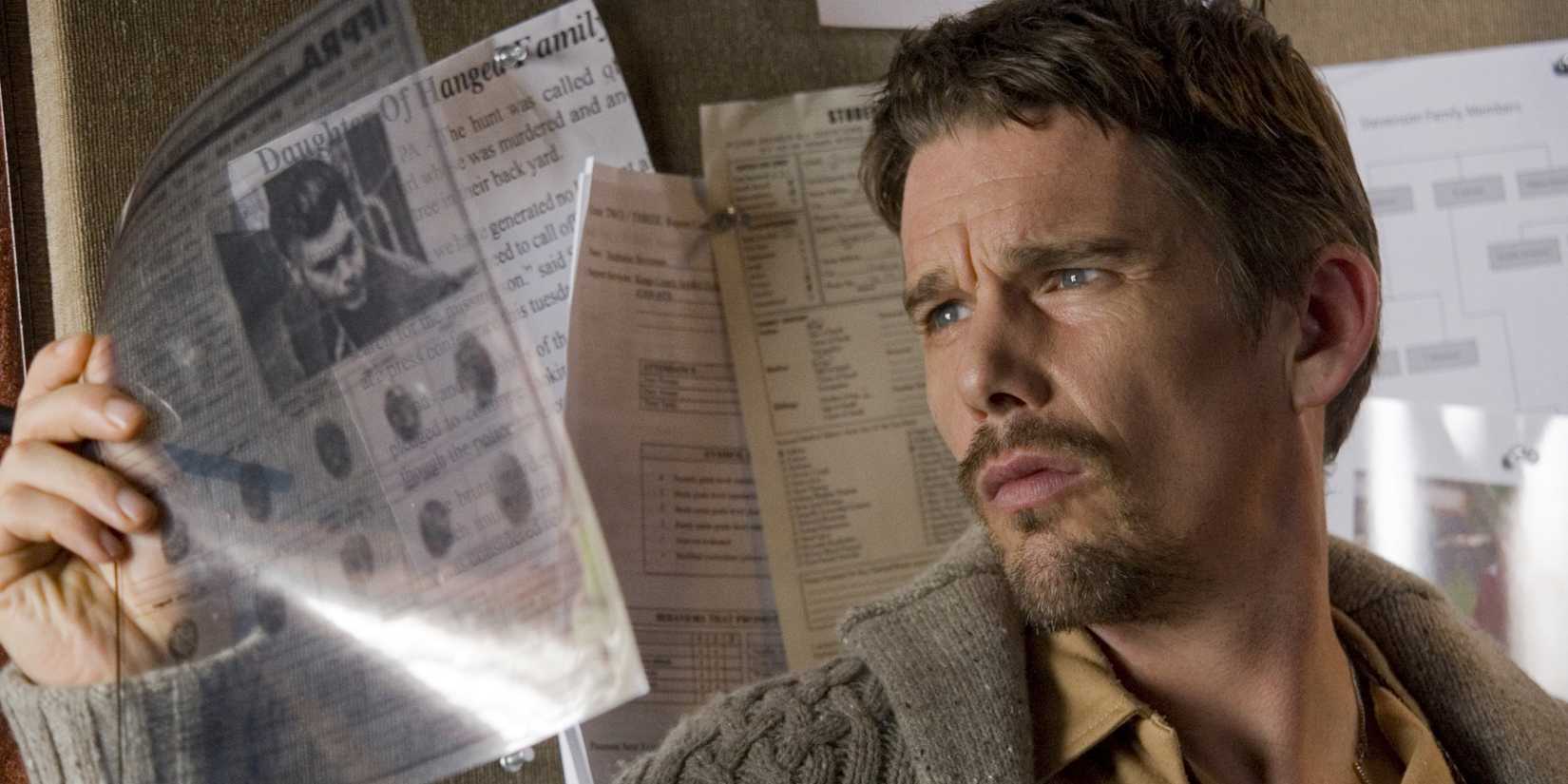 Image via Lionsgate Films
Back in 2020, BroadbandChoices.co.uk founded the Science of Scare Project, where they showed experiment participants a series of horror films and measured their heart rates in order to find what could "objectively" be the scariest movie ever made. The winner was Scott Derrickson's Sinister, and although scariness is ultimately purely subjective, there's no arguing against science.At the very least, Sinister is one of the scariest movies released since 2000, and though it isn't at all devoid of jump scares and other horror clichés, those are at least used as effectively as they possibly could have been. There's an oppressive atmosphere of dread surrounding the entire experience of watching Sinister, one so impeccably constructed that virtually anyone who loves scary movies should check out this one at least once.
2 'The Shining' (1980)
 Image via Warner Bros.
Over a quarter of a century after his death, Stanley Kubrick continues to be praised by many as the single greatest filmmaker to have ever done it. For proof of why, one needn't look much further than The Shining, the only time the director ever dipped his toes into horror. And yet, he has such a perfect understanding of the genre and of what makes its fans tick, that it would easy to watch this Stephen King adaptation and assume that its director had been making horror films for decades.
Simply put, The Shining is one of those precious horror movies that can be called perfect, anchored by Jack Nicholson's terrifying performance and Shelley Duvall's criminally underappreciated terrified turn. Slow yet incredibly atmospheric, bloody yet only in brief bursts, and delectably—as well as horrifyingly—bizarre in all the right places, this is one of the most essential Hollywood classics of the '80s, regardless of genre.
1 'The Exorcist' (1973)
 Image via Warner Bros. Pictures
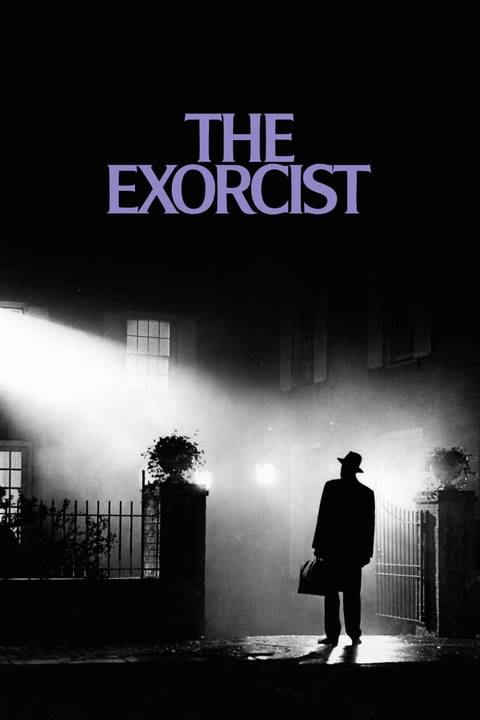
To this day, many would still say that William Friedkin's The Exorcist is the scariest horror movie ever made, and it wouldn't be easy to disagree with them. At the time of its release, this possession masterpiece had audiences reacting with a level of panic and shock that was unlike anything else movie theaters had ever seen. And though The Exorcist has undeniably lost a bit of its shock value, the effectiveness of its horror elements is still as potent as it has ever been.
Based on one of the most influential horror books of all time (penned by screenwriter William Peter Blatty), The Exorcist has aged flawlessly in pretty much every department. The special effects and makeup still look horrifyingly real, the performances by the likes of Ellen Burstyn and Linda Blair are still awfully effective, and the profoundly affecting nature of the atmosphere built by Friedkin hasn't lost one bit of its scariness.
The Exorcist
Release Date December 26, 1973
Runtime 122 minutes
Writers William Peter Blatty
-

-

Linda Blair
Regan MacNeil




 English (US) ·