
Slasher movies are easy to dismiss until one gets under your skin and stays there. A masked killer, a sharp weapon, a group of possible victims and a final survivor can sound like a basic formula. The masterpieces (on this list) expose how much can be done inside it.
These ten films have real personalities. Their murders are remembered, but blood alone did not secure their places here. Each one understands anticipation, character and the sick relationship between the audience and the killer. Horror fans have argued over these rankings for decades. Scroll down slowly to find out what I think.
10 'X' (2022)
 Image via A24
A group of young filmmakers arrives at an isolated Texas farm in 1979, hoping to shoot an adult movie without telling the elderly owners what they are doing. That setup could have settled for cheap jokes and quick deaths. X instead connects youth, sex, ageing, ambition and resentment until the violence starts feeling like the ugliest possible reaction to being left behind.
Maxine Minx (Mia Goth) and Pearl (Mia Goth) drive the film far beyond its porn-shoot premise. Maxine believes fame will rescue her from an ordinary life. Pearl sees the youth and freedom she lost standing right in front of her. The barn, the alligator, the headlights and the television preacher all feed into a story about people desperate to feel special before time decides otherwise. X earns this spot through empathy that never softens the horror. Pearl is monstrous, but the film understands exactly where the rage began.
9 'The Burning' (1981)
 Image via Filmways Pictures
Camp Blackfoot carries an old wound. Years earlier, a cruel prank left caretaker Cropsy (Lou David) horribly burned. His return turns another summer camp into a hunting ground, but The Burning has more on its mind than revenge. The campers actually behave like young people with existing friendships, private insecurities and enough personality to make the deaths feel disruptive rather than scheduled. The raft massacre remains the film’s most famous passage though.
The film comes from Tom Savini and his effects are fast, graphic and mean, with Cropsy attacking several people in broad daylight before anyone can properly react. Yet the camp life before that violence deserves equal credit. Woodstock (Fisher Stevens), Dave (Jason Alexander) and Sophie (Holly Hunter) appear early in their careers, while Alfred (Brian Backer)’s position as the bullied outsider complicates the usual slasher assumptions. Cropsy is not just punishing one neat group of guilty people. His anger has spread beyond the original humiliation and become an excuse to destroy strangers. That lack of moral order makes The Burning nastier than many of the Friday the 13th imitators surrounding it.
8 'Child’s Play' (1988)
 Image via United Artists
There is something immediately upsetting about a killer hiding inside a toy a child loves. Child’s Play felt brutal because of that as a child. Six-year-old Andy Barclay (Alex Vincent) begs for a Good Guy doll, and his mother Karen Barclay (Catherine Hicks) manages to buy one despite their financial struggles. Neither knows that serial killer Charles Lee Ray (Brad Dourif) used voodoo to transfer his soul into the doll before dying. Andy then becomes the only witness to murders nobody believes he could have understood.
The film protects Andy’s point of view long enough for the adults’ disbelief to become part of the terror. Karen starts from a reasonable place, then has to accept that her son has been telling the truth while everyone around him treated him as disturbed. Chucky is still frightening here, before later sequels pushed his personality further into comedy. Brad Dourif’s voice has anger, panic and criminal arrogance in it. The battery discovery remains one of the cleanest reveals in 1980s horror. Karen sees that the doll has been moving without power, and every earlier scene instantly becomes worse.
7 'You’re Next' (2011)
 Image Via Lionsgate
You’re Next is exactly how the name sounds. The Davison family reunion is already uncomfortable before a crossbow bolt crashes through the dining-room window. Old grudges, sibling competition and money have poisoned the evening, leaving everyone emotionally exposed when masked attackers surround the house. Then Erin (Sharni Vinson) starts responding with a level of calm nobody expected from Crispian Davison (A. J. Bowen)’s quiet Australian girlfriend.
What follows is one of the most satisfying reversals in modern slasher cinema. Erin grew up on a survivalist compound, so locked doors, broken windows and armed intruders register as problems to solve. Erin gets hurt, makes mistakes and understands the situation faster than the people panicking around her. The animal masks are creepy as hell. The family conspiracy underneath them is even uglier. Wealth has turned murder into an inheritance strategy, and the killers expect their victims to behave helplessly. Adam Wingard and writer Simon Barrett keep the humour vicious without draining the danger. A blender eventually becomes a weapon, which tells you how completely Erin refuses the role chosen for her.
6 'Scream 2' (1997)
 Image via Miramax Films
Wes Craven and Kevin Williamson had already exposed the rules of slasher movies, so the sequel faced a brutal question. What could Scream possibly say next without repeating the joke? The answer arrives through copycat violence, media exploitation, survivor trauma and the pressure of watching real murders become entertainment before the victims have even recovered.
Sidney Prescott (Neve Campbell) is trying to build a life at Windsor College when Ghostface returns. Neve Campbell’s work here has more weariness than the first film. Sidney understands the pattern now, which only makes the renewed attack feel crueler. Gale Weathers (Courteney Cox) sees another career opportunity, Dewey Riley (David Arquette) returns with injuries that still affect him and Randy Meeks (Jamie Kennedy) treats sequel rules as protection until the rules fail him. His death in broad daylight remains a punch to the chest. The sound-booth murder of Cici Cooper (Sarah Michelle Gellar) and the car escape with Ghostface unconscious beside Sidney and Hallie McDaniel (Elise Neal) show how inventive the suspense had become. Scream 2 knows sequels need escalation, then asks how much suffering audiences expect survivors to endure for another good movie.
Collider Exclusive · Horror Survival Quiz Which Horror Villain Do You Have the Best Chance of Surviving? Jason Voorhees · Michael Myers · Freddy Krueger · Pennywise · Chucky
Five killers. Five completely different ways to die — if you're not smart enough, fast enough, or self-aware enough to avoid it. Only one of them is the villain your particular set of instincts gives you a fighting chance against. Eight questions will figure out which one.
🏕️Jason
🔪Michael
💤Freddy
🎈Pennywise
🪆Chucky
TEST YOUR SURVIVAL →
01
Something feels wrong. You can't explain it — you just know. What do you do? First instincts are the difference between the survivor and the first act casualty.
ALeave immediately. I don't need to understand a threat to respect it. BStay quiet and observe. If I can see it, I can understand it. If I can understand it, I can avoid it. CStay awake. Whatever this is, I am not going to sleep until I feel safe again. DConfront it directly. Fear grows in the dark — I'd rather know what I'm dealing with. ECheck everything, trust nothing. The threat might be closer than I think — and smaller.
NEXT QUESTION →
02
Where are you most likely to find yourself when things go wrong? Setting is everything in horror. Where you are determines which rules apply.
ASomewhere remote — a cabin, a campsite, off the grid and away from people. BA quiet suburban neighbourhood where nothing ever happens. Except tonight. CIn my own head — the most dangerous place of all, depending on what's already in there. DWherever children are — because something about this place attracts the worst things. ESomewhere ordinary — a house, a toy store, a place where the last thing you'd expect is a threat.
NEXT QUESTION →
03
What is your most reliable survival asset? Every survivor has a quality the villain didn't account for. What's yours?
APhysical fitness — I can run, I can swim, I can outlast something that relies on brute persistence. BSpatial awareness — I always know the exits, the hiding spots, the fastest route out. CPsychological resilience — I've faced my worst fears before. They don't have the same power over me. DEmotional steadiness — I don't panic. Panic is what gets you caught. EScepticism — I don't underestimate threats because of how they look. Size is irrelevant.
NEXT QUESTION →
04
What kind of fear is hardest for you to fight through? Knowing your weakness is the first step to not dying because of it.
AThe unstoppable — something that will not stop, cannot be reasoned with, and is always getting closer. BThe invisible — a threat I can feel but can't locate, watching from somewhere I can't see. CThe psychological — something that uses my own mind and memories against me. DThe unknowable — something ancient, shapeless, that feeds on the fear itself. EThe mundane — a threat so ordinary-looking that no one will believe me until it's too late.
NEXT QUESTION →
05
You're with a group when things start going wrong. What's your role? Horror movies are brutally clear about who survives group situations and who doesn't.
AThe one who says "we need to leave" first — and means it, even when no one listens. BThe one who stays quiet, watches the others, and figures out the pattern before anyone else does. CThe one who holds the group together when panic sets in — because someone has to. DThe one who asks the questions nobody wants to ask — because ignoring them gets people killed. EThe one who takes the threat seriously when everyone else is laughing it off.
NEXT QUESTION →
06
What's the horror movie mistake you're most likely to make? Honest self-assessment is a survival skill. Denial is not.
AGoing back for someone — I know I shouldn't, but I can't leave them behind. BAssuming I'm safe once I've found a hiding spot. That's when it finds me. CFalling asleep when I absolutely cannot afford to. Exhaustion is its own enemy. DLetting my curiosity override my instincts — I always need to understand what I'm dealing with. EDismissing the threat because of how it looks. That's exactly what it wants.
NEXT QUESTION →
07
What's your best weapon against something that can't be stopped by conventional means? Every horror villain has a weakness. The survivors are always the ones who find it.
AThe environment itself — I use the terrain, the water, the geography against it. BPatience — I wait, I watch, and I strike at the one moment it doesn't expect. CLucidity — if I can stay in control of my own mind, it loses its primary weapon. DCourage — facing it directly, refusing to run, taking away the fear it feeds on. EImprovisation — I use whatever's at hand, however unconventional. Creativity over brute force.
NEXT QUESTION →
08
It's the final scene. You're the last one standing. How did you make it? The final survivor always has a reason. What's yours?
AI kept moving. I never stopped, never hid for too long, never let it corner me. BI figured out the pattern before anyone else did — and I used it against the thing following it. CI stayed awake, stayed lucid, and refused to give it the one thing it needed most. DI stopped being afraid of it. And the moment I did, everything changed. EI took it seriously from the start — and I never once made the mistake of underestimating it.
REVEAL MY VILLAIN →
Your Survival Odds Have Been Calculated Your Best Chance Is Against…
Your instincts, your strengths, and your particular way of thinking under pressure point to one villain you actually have a fighting chance against. Everyone else — good luck.
Jason Voorhees
Jason is relentless, but he is also predictable — and that is the gap you would exploit.
- He moves in straight lines toward his target. He doesn't strategise, doesn't adapt, doesn't outsmart. He simply pursues.
- Your ability to keep moving, use the environment, and resist the panic that freezes most victims gives you a genuine edge.
- The Crystal Lake survivors were always the ones who stopped running in circles and started thinking about terrain, water, and distance.
- You think like that. Which means Jason, for all his indestructibility, would face someone who simply refused to be where he expected.
Michael Myers
Michael watches before he moves. He is patient, methodical, and almost impossible to detect — until it's too late for anyone who isn't paying close enough attention.
- But you are paying attention. You notice the shape in the window, the car parked slightly wrong, the silence where there should be sound.
- Michael's power lies in the invisibility of ordinary suburbia — the fact that nothing ever looks wrong until it already is.
- Your spatial awareness and instinct to map every room, every exit, and every shadow before you need them is precisely the quality Laurie Strode had.
- You are not a victim waiting to happen. You are someone who already suspects something is wrong — and acts on it.
Freddy Krueger
Freddy wins by getting inside your head — using your own fears, your own memories, your own subconscious as weapons against you. That strategy requires a target who can be destabilised.
- You are harder to destabilise than most. You've faced uncomfortable truths about yourself and you haven't looked away.
- The survivors on Elm Street were always the ones who understood what was happening and chose to face it rather than flee from it.
- Freddy's greatest weakness is that his power evaporates in the presence of someone who refuses to give him the fear he feeds on.
- Your psychological resilience — the ability to stay grounded when reality itself becomes unreliable — is exactly the quality that keeps you alive here.
Pennywise
Pennywise is ancient, shapeshifting, and feeds on terror — but it has one critical vulnerability: it cannot function against someone who genuinely stops being afraid of it.
- The Losers Club didn't survive because they were braver than everyone else. They survived because they faced their fears together, and faced them honestly.
- You ask the questions others avoid. You look directly at what frightens you rather than turning away.
- That directness — the refusal to let fear fester in the dark — is Pennywise's worst nightmare.
- It chose the wrong target when it chose you. You are exactly the kind of person whose fear tastes like nothing at all.
Chucky
Chucky's greatest advantage is that nobody takes him seriously until it's already too late. He exploits the gap between how something looks and what it actually is.
- You don't have that gap. You take threats seriously regardless of how they present — and you never make the mistake of underestimating something because of its size or appearance.
- Chucky relies on surprise, on the delay between recognition and response. You close that delay faster than almost anyone.
- Your instinct to treat every unfamiliar thing with appropriate scepticism — rather than dismissing it because it seems absurd — is the exact quality that keeps you breathing.
- Against Chucky, not laughing is already winning. You are very good at not laughing.
↻ RETAKE THE QUIZ
5 'A Nightmare on Elm Street' (1984)
 Image via New Line Cinema
Before Freddy Krueger (Robert Englund) became a comedian with knives, he was a filthy, cruel presence waiting inside sleep in A Nightmare on Elm Street. Tina Gray (Amanda Wyss)’s death announces that immediately. She is dragged across the ceiling while Rod Lane (Jsu Garcia) watches helplessly, and the bedroom offers no logical explanation for what is happening. Wes Craven had found the perfect slasher territory. Every person eventually has to sleep, and parents cannot protect children from something they refuse to acknowledge.
Nancy Thompson (Heather Langenkamp) becomes formidable through exhaustion rather than physical power. Heather Langenkamp’s character investigates the deaths, discovers the connection between Freddy and the adults of Elm Street and builds traps while her body is begging to shut down. The parents created the haunting when they burned Krueger alive and buried the truth, leaving their children to inherit the punishment. That generational guilt adds weight to every surreal image. The body bag in the school hallway, Freddy’s arms stretching across the alley and Glen Lantz (Johnny Depp) disappearing into his bed still feel wrong in the best way. Sleep was never safe again after this as a kid.
4 'Black Christmas' (1974)
 Image via Warner Bros.
Black Christmas helped establish ideas later slashers would use constantly, but its influence is only half the argument. The attic, the rocking chair and the unanswered telephone leave the film in a place far colder than closure. The phone rings inside a sorority house, and the voice on the other end refuses to sound human for long. It mutters, screams, threatens and shifts between identities while the women listening struggle to understand whether the caller is joking or already nearby. Bob Clark keeps the killer hidden so completely that even his face remains outside the audience’s reach.
Jess Bradford (Olivia Hussey) is dealing with an unwanted pregnancy and a controlling boyfriend while her friends begin disappearing during the Christmas break. Olivia Hussey allows the fear to build without losing Jess’s anger or independence. Barb Coard (Margot Kidder) brings sharp humour as Barb, whose drinking and hostility barely cover her own pain. The police trace the obscene calls slowly, and the truth is horrifyingly simple. They are coming from inside the house. Nobody can promise that Billy ever left.
3 'The Texas Chain Saw Massacre' (1974)
 Image Via Bryanston Distributing Company
The title promises gore that Tobe Hooper barely shows. What the film delivers is worse. Five young people travel through rural Texas, pick up a deeply unsettling hitchhiker and eventually wander onto property belonging to a family that has turned slaughterhouse methods into domestic routine. The heat, dust, noise and relentless screaming make the whole experience feel physically unpleasant.
Leatherface (Gunnar Hansen) first appears with almost no warning. Gunnar Hansen’s huge frame fills the doorway, the hammer drops and a metal door slams shut. There is no speech and no theatrical reveal in The Texas Chain Saw Massacre. A human life ends with the speed of an animal being processed. The dinner scene later pushes Sally Hardesty (Marilyn Burns) beyond normal fear as the family mocks her terror and tries to involve their barely living grandfather in the killing. Marilyn Burns spends much of the last act running, falling and screaming until survival looks stripped of all dignity. Her laughter in the truck is not triumph. She has escaped with her mind hanging by a thread while Leatherface swings the chainsaw against the sunrise. One of the best slashers of all time.
2 'Scream' (1996)
 Image via Dimension Films
Horror fans knew the rules before 1996. The genius of Scream was recognizing that the characters could know them too and still die. Casey Becker (Drew Barrymore) answers a phone call, talks about scary movies and slowly realizes the stranger outside understands her home better than she does. Drew Barrymore was the biggest name in the cast, which made her murder before the title card feel like a direct threat to audience expectations.
Sidney Prescott (Neve Campbell) has already lost her mother and watched the town turn that death into gossip. Ghostface forces her to question her father, her boyfriend, her friends and the story she has been told about Maureen. Neve Campbell keeps Sidney emotionally grounded while the film around her jokes about virginity, sequels and suspicious behaviour. Billy Loomis (Skeet Ulrich) and Stu Macher (Matthew Lillard) are terrifying precisely because their motives are unequal. Billy has built a revenge story around his own entitlement. Stu seems thrilled that murder has given him a role to perform. Scream laughs with horror fans, understands their knowledge and then uses that knowledge against them.
1 'Halloween' (1978)
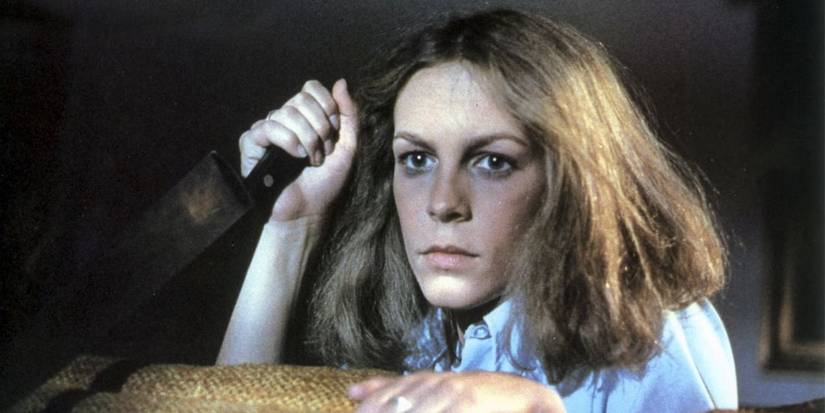 Image via Compass International Pictures
The king of it all. Mighty Michael Myers. Halloween is basically a white mask that appears across the street, behind a hedge and beside a clothesline. Michael Myers (Nick Castle) spends much of Halloween standing still, yet every sighting changes the space around Laurie Strode (Jamie Lee Curtis). Haddonfield looks ordinary enough to lower everyone’s guard. Children walk home from school. Teenagers make plans. Parents leave for the evening. Evil has entered a familiar neighbourhood and has no interest in explaining itself.
John Carpenter’s direction is disciplined to the point of cruelty in this film. The widescreen frame encourages the viewer to search every background, while his score creates panic from a few repeating notes. Laurie notices Michael before anyone else, partly because she pays attention and partly because she already lives more cautiously than her friends. Once the attack begins, she fights with whatever is close, protects the children and keeps moving despite believing she has stopped him more than once. Dr. Loomis (Donald Pleasence) shoots Michael, looks down and finds the ground empty. The closing shots move through silent rooms while his breathing continues. The movie ends, but Haddonfield never gets its safety back.
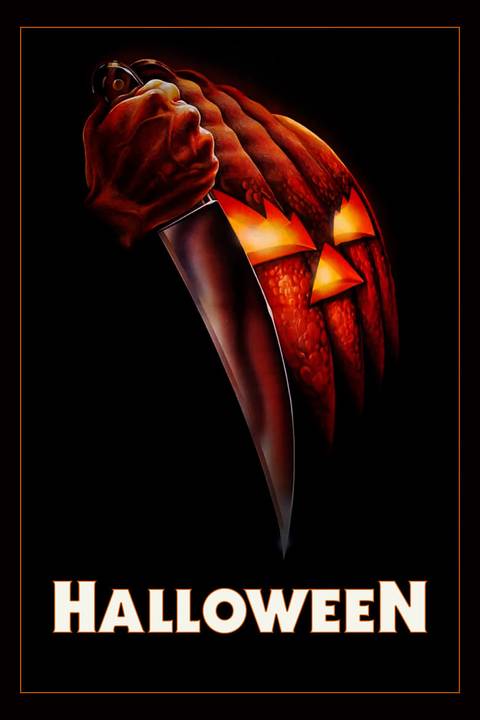
Halloween
Release Date October 27, 1978
Runtime 91 minutes
Director John Carpenter
Writers Debra Hill, John Carpenter




 English (US) ·