
Thriller cinema has long been a staple of film as an artistic medium, delivering adrenaline-pumping and heart-stopping spectacles that enthrall viewers in twisting stories of high-stakes suspense. Psychological thrillers are particularly intriguing, typically delivering dark and macabre tales of desperation and disturbing depravity that thrive off a fine balance of inspired storytelling creativity, bold and impressionable filmmaking, and the ability to build and sustain tension over a prolonged period of time.
It is no surprise that the movies that have perfected this craft have earned widespread acclaim not only as defining masterpieces of the genre, but as quintessential classics of cinema at large as well. Ranging from Hitchcockian classics to modern-day masterworks, and even to several gems of international cinema, these psychological thrillers are truly flawless.
'The Night of the Hunter' (1955)
 Metro-Goldwyn-Mayer Studios Inc
While sadly dismissed upon release, The Night of the Hunter is today regarded as a masterpiece of psychological suspense and macabre drama, bolstered by its astonishing black-and-white visuals and Robert Mitchum’s unforgettable performance. He stars as Harry Powell, a sadistic killer who poses as a priest in order to get close to the wife of an executed bank robber in the hope of finding out where the thief stashed the money. When the widow’s young son grows suspicious of Powell’s sinister nature, a fierce rivalry erupts between the child and the murderer.
Weaving an enrapturing tale that is part classic film noir, part German Expressionist horror, and part dark fairy tale moralism, The Night of the Hunter offers a dreamlike descent into a bleak scenario of greed, ambition, and the ever-looming threat of violence. Directed by Charles Laughton, in what was the esteemed actor’s only directorial credit, it remains a frightfully eerie triumph of cinematic suspense that never wastes a single second of its snappy 92-minute runtime.
'Les Diaboliques' (1955)
 Image via Cinédis
Another ensnaring chiller from 1955, Les Diaboliques hails from France and captivates viewers with its rich marriage of sinister plot twists that blur the line between psychological tension and simmering horror. It revolves around the murder of a cruel boarding school headmaster who is slain by his meek wife and cunning mistress. However, when the corpse mysteriously disappears, the two women are thrust on an unhinged and erratic journey to elude the law while figuring out what happened to the body.
The film masterfully conjures and sustains suspense with its unpredictable story, visceral atmosphere, and two exceptional lead performances from Simone Signoret and Véra Clouzot. Les Diaboliques keeps viewers immersed in the morbid mystique from its opening moments right up until its shocking finale. Furthermore, its undercurrent of feminism and misogyny, power, and manipulation are only more pressing and relevant today than when the film was released 71 years ago.
'Get Out' (2017)
 Image via Blumhouse Productions
Immediately enshrining itself as a classic of psychological suspense and one of the defining cinematic triumphs of the 2010s, Get Out is a bold yet deceptively deft masterclass in social satire and interpersonal tension laced with ideas of sci-fi terror. It follows Chris (Daniel Kaluuya), a Black photographer who visits the family home of his White girlfriend for a weekend holiday, where he is struck by a jarring cultural clash. While he initially dismisses it as casual racism, he soon learns there is something far more sinister at play.
Such is the control, poise, and thematic resonance of the film; it is astonishing to think it marked Jordan Peele’s debut as a feature film writer-director. Perhaps its defining triumph is the way in which Peele places all viewers, regardless of background, in Chris’s perspective, making every inappropriate comment a cringe-worthy and uncomfortable moment of realization. Its thematic gravitas and cultural critique only grows stronger as the movie goes on, making Get Out not only an enthralling feat of thriller cinema, but a timely meditation on racism in modern America as well.
Collider Exclusive · Oscar Best Picture Quiz
Which Oscar Best Picture
Is Your Perfect Movie?
Parasite · Everything Everywhere · Oppenheimer · Birdman · No Country
Five Oscar Best Picture winners. Five completely different visions of what cinema can be — and what it can do to you. One of them is the film that was made for the way your mind works. Ten questions will figure out which one.
🪜Parasite
🌀Everything Everywhere
☢️Oppenheimer
🐦Birdman
🪙No Country for Old Men
FIND YOUR FILM →
01
What kind of film experience do you actually want? The best movies don't just entertain — they leave something behind.
ASomething that pulls the rug out — that makes me think I'm watching one kind of film and then reveals I'm watching another entirely. BSomething overwhelming — funny, sad, absurd, and genuinely moving, all at once. CSomething grand and weighty — a film that makes me feel the full scale of what I'm watching. DSomething formally daring — a film that pushes what cinema can even do. ESomething lean and relentless — pure tension with no wasted frame.
NEXT QUESTION →
02
Which idea grabs you most in a film? Great films are driven by a central obsession. What's yours?
AClass, inequality, and what people are willing to do when desperation meets opportunity. BIdentity, family, and the chaos of trying to hold your life together when everything is falling apart. CGenius, moral responsibility, and the catastrophic weight of a decision you can never take back. DEgo, legacy, and the terror of becoming irrelevant while you're still alive to watch it happen. EEvil, chance, and whether moral order actually exists or if we just tell ourselves it does.
NEXT QUESTION →
03
How do you like your story told? Form is content. The way a story is shaped changes what it means.
AGenre-twisting — I want it to start in one lane and migrate into something completely different. BMaximalist and genre-blending — comedy, action, drama, sci-fi, all in one ride. CEpic and non-linear — cutting between timelines, building a mosaic of cause and consequence. DA single unbroken flow — I want to feel like I'm living it in real time, no cuts to safety. ESpare and precise — every scene doing exactly what it needs to do and nothing more.
NEXT QUESTION →
04
What makes a truly great antagonist? The opposition defines the protagonist. What kind of opposition fascinates you?
AA system — invisible, structural, and almost impossible to fight because it has no single face. BThe self — the ways we sabotage, abandon, and fail the people we love most. CHistory — the unstoppable momentum of events that no single person can stop or redirect. DThe industry — the machinery of culture that chews up talent and spits out irrelevance. EPure, implacable evil — a force so certain of itself it becomes almost philosophical.
NEXT QUESTION →
05
What do you want from a film's ending? The final note is the one that lingers. What do you want it to sound like?
AShock and inevitability — a conclusion that recontextualises everything that came before it. BEarned emotion — I want to cry, laugh, and feel genuinely hopeful, even if the world is a mess. CDevastation and grandeur — an ending that makes me sit in silence for a few minutes after. DAmbiguity — something that leaves enough open that I'm still thinking about it days later. EBleakness — an honest refusal to pretend the world is tidier than it actually is.
NEXT QUESTION →
06
Which setting pulls you in most? Where a film takes place shapes everything — mood, stakes, what's even possible.
AA gleaming modern city with a hidden underside — beauty masking rot, wealth masking desperation. BA collapsing suburban life that opens onto something infinite — the multiverse of a single ordinary person. CThe corridors of power and science at a world-historical turning point — where decisions echo for decades. DThe grimy, alive chaos of New York and Hollywood — fame as both destination and trap. EVast, indifferent landscape — desert and highway where violence arrives without warning or reason.
NEXT QUESTION →
07
What cinematic craft impresses you most? Every great film has a signature — a technical or artistic element that makes it unmistakable.
AProduction design and mise-en-scène — every frame composed to carry meaning beneath the surface. BEditing and tonal control — the ability to move between registers without losing the audience. CScore and sound design — music that becomes inseparable from the dread and awe of what you're watching. DCinematography as performance — the camera not recording events but participating in them. ESilence and restraint — what's left unsaid and unshown doing more work than any dialogue could.
NEXT QUESTION →
08
What kind of main character do you root for? The protagonist is the lens. Who you choose to follow says something about you.
ASomeone smart and resourceful who makes increasingly dangerous decisions under pressure. BSomeone overwhelmed and ordinary who turns out to be capable of something extraordinary. CA brilliant, tortured figure whose gifts and flaws are inseparable from each other. DA self-destructive artist whose ego is both their superpower and their undoing. EA quiet, principled person trying to make sense of a world that has stopped making sense.
NEXT QUESTION →
09
How do you feel about a film that takes its time? Pace is a choice. Some films sprint; others let tension accumulate slowly, deliberately.
AI love a slow build when I know the payoff is going to be seismic — patience for a devastating reveal. BGive me relentless momentum — I want to feel breathless and emotionally spent by the end. CEpic runtime doesn't scare me — if the material demands three hours, give me three hours. DI want it to feel propulsive even when nothing is technically happening — restless energy throughout. EDeliberate and unhurried — I want dread to accumulate in the spaces between the action.
NEXT QUESTION →
10
What do you want to feel walking out of the cinema? The best films leave a mark. What kind of mark do you want?
AUnsettled — like I've just seen something I can't fully explain but can't stop thinking about. BMoved and energised — like the film reminded me what actually matters and gave me something to hold onto. CHumbled — like I've been in the presence of something genuinely important and overwhelming. DExhilarated — like I've just seen cinema doing something it's never quite done before. EHaunted — like a cold, quiet dread that stays with me for days.
REVEAL MY FILM →
The Academy Has Decided Your Perfect Film Is…
Your answers have pointed to one Oscar Best Picture winner above all others. This is the film that was made for the way your mind works.
Parasite
You are drawn to films that operate on multiple levels simultaneously — that begin in one genre and quietly, brilliantly migrate into another. Bong Joon-ho's Parasite is a film about class, desire, and the architecture of inequality that manages to be darkly funny, deeply suspenseful, and genuinely shocking across a single extraordinary running time. Your instinct is for cinema that hides its true intentions until the moment it's ready to reveal them. Parasite is exactly that — a film that rewards close attention and punishes assumptions, right up to its devastating final image.
Everything Everywhere All at Once
You want it all — and this film gives you all of it. The Daniels' Everything Everywhere All at Once is one of the most maximalist films ever made: action comedy, multiverse sci-fi, family drama, existential crisis, and a genuinely earned emotional core that sneaks up on you amid the chaos. You are someone who responds to ambition, who doesn't want cinema to choose between being entertaining and being meaningful. This film refuses that choice entirely. It is overwhelming by design, and its overwhelming nature is precisely the point — because the feeling of being crushed by infinite possibility is exactly what it's about.
Oppenheimer
You are drawn to cinema on a grand scale — films that understand history not as a backdrop but as a force, and that place their characters inside that force and watch what happens. Christopher Nolan's Oppenheimer is a film about the terrifying gap between what we can do and what we should do, told with the full weight of one of the most consequential moments in human history behind it. You want your films to feel important without feeling self-important — to earn their ambition through sheer craft and the gravity of their subject. Oppenheimer does exactly that. It is enormous, complicated, and refuses easy comfort.
Birdman
You are drawn to films that foreground their own construction — that make the how of the filmmaking part of the what it's about. Alejandro González Iñárritu's Birdman, shot to appear as a single continuous take, is cinema examining itself through the cracked mirror of a fading actor's ego. You respond to formal daring, to the feeling that a film is doing something that probably shouldn't be possible. Michael Keaton's performance and Emmanuel Lubezki's restless camera create something genuinely unlike anything else — a film that is simultaneously about creativity, relevance, self-destruction, and the impossibility of ever truly knowing if your work means anything at all.
No Country for Old Men
You are drawn to cinema that trusts silence, that refuses to explain itself, and that treats dread as a form of meaning. The Coen Brothers' No Country for Old Men is a film about the arrival of a new kind of evil — implacable, arbitrary, and utterly indifferent to the moral frameworks we use to make sense of the world. It is one of the most formally controlled films ever made, and its controlled restraint is what makes it so terrifying. You want your films to haunt you, not comfort you. You are not interested in resolution if resolution would be dishonest. No Country for Old Men is honest in a way that most cinema never dares to be.
↻ RETAKE THE QUIZ
'Memories of Murder' (2003)
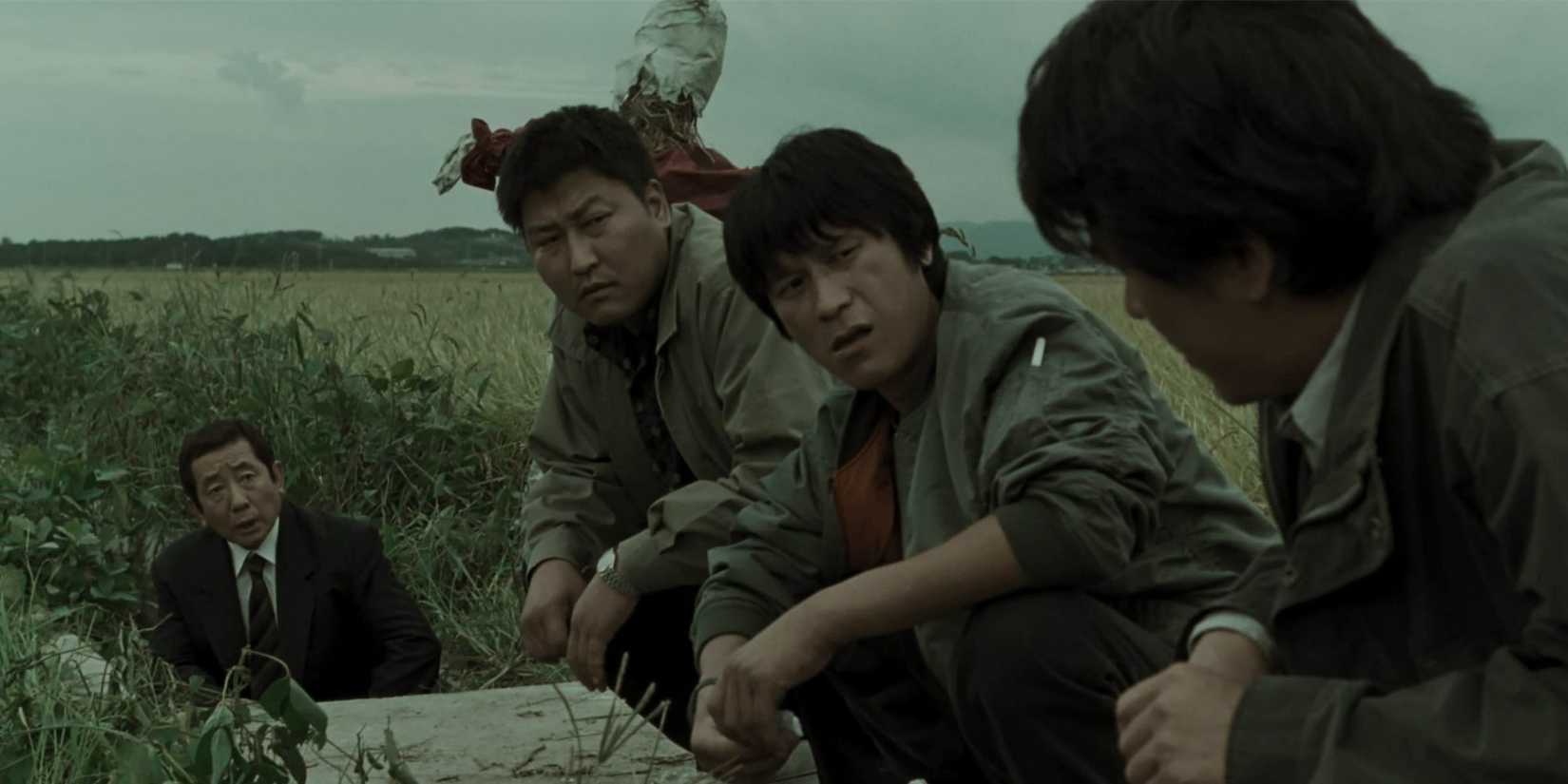 Image via CJ Entertainment
From the ever-brilliant Bong Joon Ho, Memories of Murder captures a piercing tone of bleak murder mystery, while imbuing the spectacle with everything from outbursts of slapstick hysteria to contemplative character drama. Loosely based on true events, it's set in a South Korean rural province as two local cops and a detective from Seoul investigate a serial rapist and killer tormenting the region.
While the three police officers are all sympathetic and nuanced characters, the film never seeks to idolize them. Instead, it uses the obstacles they face and the inherent flaws in their character to cast dispersions on systemic inadequacy, the nature of police work in resource-starved areas, and the toxicity of obsession. Gripping from its opening scene, and featuring a chilling conclusion that stays with viewers long after the credits roll, Memories of Murder is a true masterpiece of suspenseful storytelling from a modern master of the form.
'Rear Window' (1954)
 Image via Paramount Pictures
There is certainly no shortage of Sir Alfred Hitchcock films to choose from when it comes to selecting the greatest psychological thrillers of all time. However, Rear Window marks a particularly exceptional achievement from the Master of Suspense given how it constructs its story without ever leaving the one setting. Set in a Greenwich Village apartment complex, it starts with photographer L. B. Jeffries (James Stewart) taking to spying on his neighbors to pass time as he sits bedridden with a broken leg. However, when he believes he witnesses a neighbor commit murder, his playful voyeurism turns into a deadly obsession.
Hitchcock completely immerses the audience in Jeffries’s perspective, making his intrigue infectious, his conviction resonant, and the sense of danger he slips into as he persists with his investigation viscerally suspenseful. It forces the viewer into a feeling of entrapment and peril that is entirely addictive, even 72 years on from the film’s release. With ingenious plot twists and an unwavering control of tension and revelation, Rear Window is Hitchcock at his absorbing and enrapturing best.
'M' (1931)
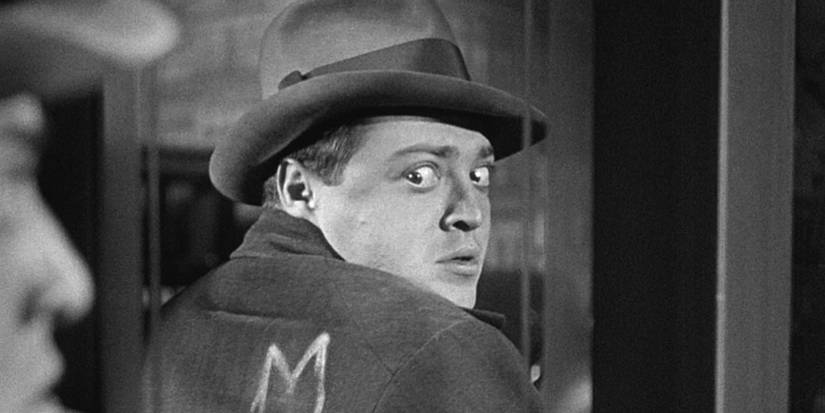 Image via Vereinigte Star-Film GmbH
Heralded as crime cinema’s earliest masterpiece, M is a work of perfection in everything from its storytelling prowess and shifting perspectives to its use of German Expressionism visuals and pioneering sound techniques to contribute to the tale’s intensity. It transpires as residents in Berlin are tormented by an active child killer. As the police flood the streets to break the case, the strain is placed on figures of organized crime to set out to apprehend the murderer to restore normality. All the while, the compulsive killer teeters on the cusp of striking again.
With Peter Lorre’s outstanding performance as the murderous Hans Beckert, M delivers a simmering psychological thriller that doesn’t just run as a gripping crime epic, but as a fascinating dive into criminal morality as well. Director Fritz Lang, in his first “talkie” picture at that, only makes the film all the more captivating with his use of music, steady camera work, and bold editing decisions. From the brilliant and eerily disconcerting opening through to the eruption of a finale, M is a timeless triumph of thriller cinema.
'Mulholland Drive' (2001)
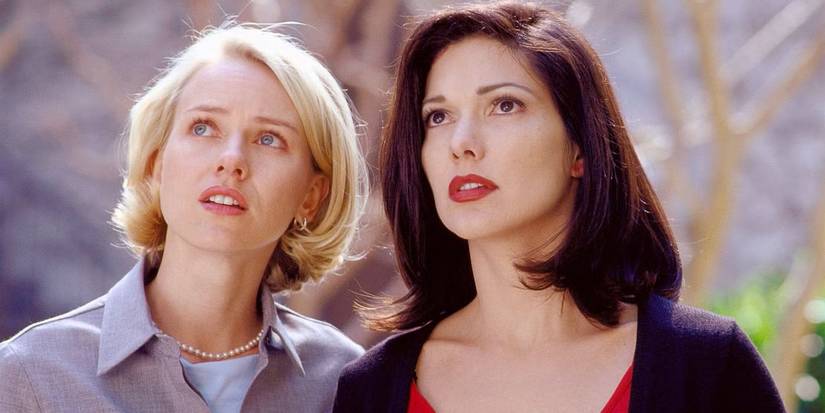 Image via Universal Pictures
As engrossing as it is enigmatic, Mulholland Drive is one of the finest feats of cinematic artistry viewers have ever seen. Its use of disorienting yet entirely arresting scenes to add layers to what is a vague story of identity and ambition creates a sense of hypnotic gravitas, one that is often as visually stunning and atmospherically inviting as it is unnerving and suspenseful.
Its basic story outline revolves around the friendship that develops between Rita (Laura Harring), an amnesiac, and Betty Elms (Naomi Watts), the bubbly aspiring actress who helps her uncover her identity and past. It features David Lynch’s trademark mastery of surrealism and mystique, with the director leaning on his unrivaled ability to conjure curiosity and contemplation to imbue Mulholland Drive with an unshakable undercurrent of dread-filled tension. The story only grows more complex as the movie unfurls, but there is no doubt that its intricacies spin a web of uncertainty and cinematic glamour that is a joy to be entangled in.
'Psycho' (1960)
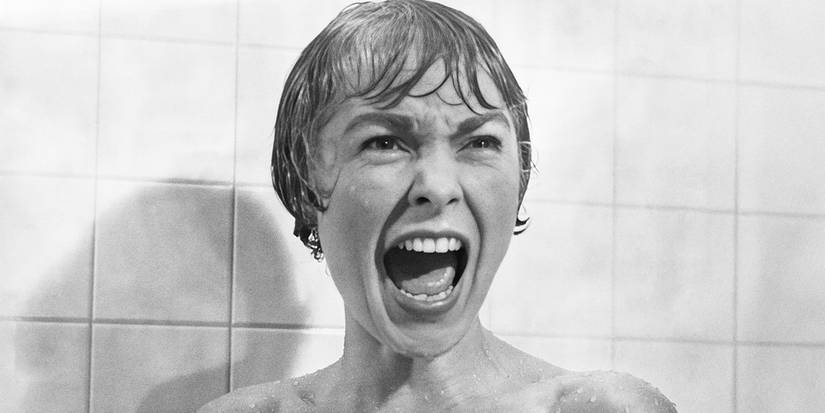 Image via Paramount Pictures
Another timeless highlight of Hitchcock’s immaculate career, Psycho is perhaps his most well-known and frequently discussed movie in today’s world, and it is easy to see why. A work of psychological suspense that is so fierce that it can be considered a true horror classic, the 1960 film unfolds as a secretary from Phoenix flees the city after stealing a large sum of money from her workplace, only to be murdered while staying at Bates Motel. In the wake of her disappearance, her lover and sister set out to investigate.
The shower death scene, the climactic reveal, and even the film’s final moments have all been enshrined as iconic sequences in the history of the form. However, every second of Psycho is a compelling and chilling masterclass in cinematic intensity propelled by technical filmmaking brilliance and astonishing subversive storytelling. Its ability to fool, manipulate, and terrify viewers remains just as intact today as it was 66 years ago, making it a truly ageless masterpiece of thriller cinema.
'Parasite' (2019)
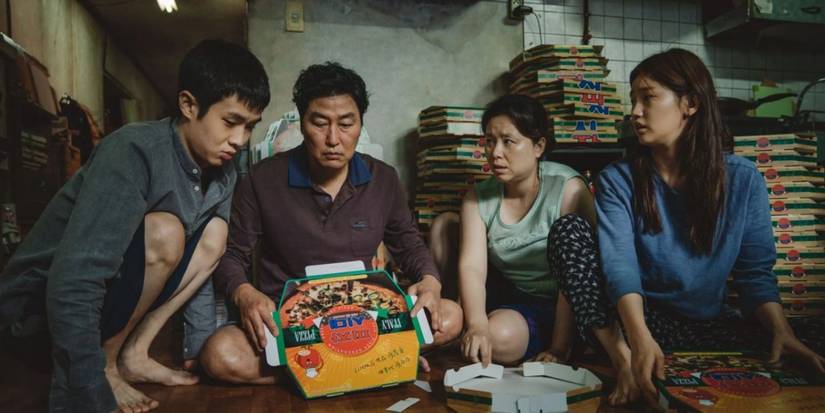 Image via NEON
Parasite achieved the miraculous feat of becoming the first-ever international film to win Best Picture at the Academy Awards—and the even more miraculous feat of having the vast majority of the film-loving community agree with the decision. Another triumph from South Korea’s Bong Joon Ho, it follows the impoverished Kim family as they connive their way into the service of the wealthy Park household. While they enjoy the luxurious lifestyle they are exposed to, the drastic disparity in class soon turns into a tense situation fueled by jealousy, inequality, and desperation.
With its precise and faultless screenplay brilliantly supported by rich visual storytelling and symbolism, Parasite excels as both a wickedly entertaining pressure cooker of a film and a scorching thematic exploration of class disparity. Rife with shocking twists, several sequences of unbelievable suspense, and shattering eruptions of violence, Parasite is a masterclass in bold, thematically-loaded storytelling that stands among the greatest pictures of the 21st century and the finest accomplishments in the history of thriller cinema.
'The Silence of the Lambs' (1991)
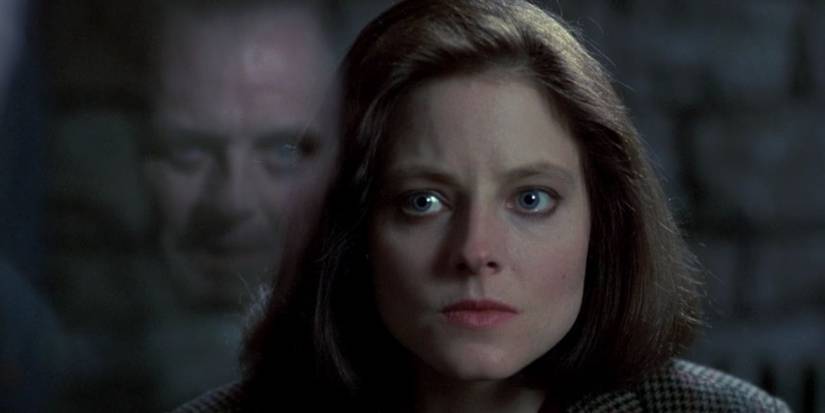 Image via Orion Pictures
Blending chilling crime thrills with piercing psychological depth that haunts the viewer long after the movie ends, The Silence of the Lambs is perhaps the crowning glory of thriller cinema up to this point in time. Based on Thomas Harris’s novel of the same name, it follows FBI cadet Clarice Starling (Jodie Foster) as she is tasked with gaining insights into an active case from detained psychiatrist and cannibalistic serial killer, Dr. Hannibal Lecter (Sir Anthony Hopkins). Soon enough, she enters into a cerebral cat-and-mouse game with Lecter.
While Hopkins’s chilling performance has become timelessly iconic, the movie itself is a phenomenal feat of suspense and drama. Jonathan Demme expertly uses invasive camera techniques, misdirection, and the desperation of the ongoing investigation to conjure visceral tension throughout the entirety of the film’s 118-minute runtime. Complimented by a brilliantly rewarding yet unnerving climax, The Silence of the Lambs is the best psychological thriller cinema has ever seen, a truly perfect picture from beginning to end.




 English (US) ·