

Published Feb 15, 2026, 9:12 AM EST
Jessica is a journalist, editor, TCA critic, and multimedia storyteller with a decade of experience covering pop culture, film, TV, women's sports, lifestyle, and more. She earned her degree in journalism from the University of North Carolina-Wilmington with a focus in creative writing before moving to N.Y.C. and getting her start at The Huffington Post. (She still misses those nap pods.) She's covered multiple film festivals, recapped some of your favorite series, worked too many red carpets to count, and even yapped on a podcast or two. When she’s not interviewing your favorite showrunner or ranking Ryan Gosling's best roles for places like UPROXX, Teen Vogue, Marie Claire, The Daily Beast, and Cosmopolitan, she’s busy being a full-time hype woman to her cat, Finn. You can find her on Bluesky and, sadly, Twitter.
Sure, Emily Brontë's Wuthering Heights may have written the handbook on tragic obsession with its brooding, pathetic men, commentary on class divides, feelings so intense they practically manifest as fog and mud. So much mud. But it's not the only bit of classic literature to go absolutely feral for love. In fact, think of the novels below as unhinged cousins of Brontë's work. Some are tragic. Some are scandalous. All are begging for a modern adaptation that understands yearning is an art form.
And, if we're being honest, cinema needs more tortured, love-sick himbos, more corseted baddies plotting by candlelight, more morally messy heroines whose desire is both their power and their curse. Emerald Fennell's latest entry really only skims the surface of what the Gothic genre can do with a Charli XCX soundtrack and lots of latex. We need more, and these stories can give it to us.
1 'The Lady of the Camellias' by Alexandre Dumas
 Image via Alexandre Dumas/Penguin Classics
This is the original sad-girl romance: a Parisian courtesan falls in love with a respectable young man and society responds by slowly destroying her. Marguerite Gautier is the heroine in question, a woman adored publicly and judged privately, living in a world where affection is transactional. She falls genuinely in love with Armand Duval, a young man whose feelings are sincere, though fatally naive. Their attempt at an impossible fantasy – domestic bliss – is quickly derailed by Armand's haughty family and the chasm of their disparate social standings.
The vibes give Wuthering Heights by way of lace gloves and a devastating diagnosis of tuberculosis, a disease that serves as a metaphor for the way women are often punished for displaying desire so openly. The novel directly inspired Baz Luhrmann's 2001 musical Moulin Rouge! And while that delightful little romp starring Nicole Kidman and Ewan McGregor absolutely cannot be improved, a more direct adaptation could ramp up the devastation. Because who doesn't want their romance to feel terminal, right?
2 'The Sorrows of Young Werther' by Johann Wolfgang von Goethe
 Image via Johann Wolfgang von Goethe/Penguin Classics
The patron saint of dramatic longing? That's Werther, a young German artist who has absolutely zero chill when it comes to unrequited love. When he falls for Charlotte, a woman already engaged to a more socially appropriate man, he spirals... quite spectacularly. Told entirely through Werther's letters, the novel traps us inside his consciousness in a way that's suffocating and enthralling. Seriously, how does one person feel this much?
If Wuthering Heights is about passion tipping into vengeance, Werther is about passion curdling inward. And it deserves an adaptation that indulges in emotional excess with plenty of furious letter writing, panoramic landscapes, and dizzying inner monologues.
3 'The Tenant of Wildfell Hall' by Anne Brontë
 Image via Anne Brontë/Wordsworth Classics
The Brontë novel that feels shockingly most modern didn't originate from Emily or Charlotte, but the youngest sister, Anne. Her heroine, Helen Graham, is a woman fleeing a disastrous marriage and facing social exile because of that choice. She arrives at Wildfell Hall with her young son and a cloud of suspicion trailing her.
Like her older sister's work, The Tenant of Wildfell Hall is about control, reputation, and survival, but from the perspective of someone determined not to be destroyed by love. And it deserves a film adaptation that treats Helen as the quietly radical figure she is, choosing autonomy over love, independence over conformity, Realism over Romanticism. This one's for the Moor-loving feminists, you guys.
4 'Zofloya' by Charlotte Dacre
 Image via Charlotte Dacre/Oxford World Classics
No shade to Emerald Fennell or Emily Brontë because, yes, Wuthering Heights is wild. But Zofloya? Zofloya is absolutely unhinged. It's about a woman who gives in to jealousy, desire, and literal demonic influence, and the novel never once asks her to calm down.
Victoria di Loredani is that woman. She's beautiful, volatile, and deeply bored. A truly dangerous combination. When she becomes consumed with desire for her husband's brother, a dark, magnetic figure who offers increasingly violent solutions to the obstacles separating her from her obsession. Zofloya is a Gothic romance with the safety rails ripped off, and it's begging for a maximalist on-screen translation that treats its excess as art.
5 'Tess of the d'Urbervilles' by Thomas Hardy
 Image via Thomas Hardy/Signet Classics
Fair warning: few novels understand how cruel society can be to women quite like this one. Tess is pure-hearted, punished anyway, and slowly crushed by circumstance (and men who claim to love her). Sent by her impoverished family to seek aid from supposed aristocratic relatives, she's harassed and eventually assaulted by Alec d'Uberville. When she tries to rebuild her life with a farmer named Angel, her past and societal prejudice of the time serve as a roadblock that ultimately costs her not only her freedom, but her life.
The Wuthering Heights parallel is the sense of futility and inevitability. Doesn't it always end this way for women, after all? But a new adaptation could go all-in on the feminine rage simmering just beneath the surface of Thomas Hardy's work instead of drowning in her unjust suffering.
6 'Northanger Abbey' by Jane Austen
 Image via Jane Austen/Oxford World Classics
Yes, it's funny. Yes, it's self-aware. But Northanger Abbey is also about what happens when Gothic romance warps your expectations of love and danger. (In other words, this one's for the BookTok Romantasy babes who like things a bit meta.) Arguably Jane Austen's sharpest work, the novel follows Catherine Morland, a young, impressionable woman who reads way too many horror-tinged bodice-rippers in her spare time. When she's invited to stay at Northanger Abbey by the charming Henry Tilney, she immediately goes hunting for the family's dark secrets and imagined misdeeds, only to be shocked by the more mundane cruelty hiding in plain sight.
Brontë and Austen both loved writing about desire and the effects of yearning, but here, Austen interrogates the topic with comedy, not tragedy. Catherine wants intensity because she's been taught to associate drama with meaning. Austen pokes fun at that impulse before ultimately righting that misconception. A modern adaptation could play with tone – maybe part satire, part sincere coming-of-age – without losing the original's bite.
7 'Love in the Time of Cholera' by Gabriel García Márquez
 Image via Gabriel García Márquez/Vintage
If Jacob Elordi's Heathcliff spent more money on stationery than his gold tooth, well, then you'd get this story. It begins with a man named Florentino Ariza falling in love with Fermina Daza only to be rejected when she marries a respected doctor. Florentino, devastated but undeterred, vows to wait for her. And he does. For decades. The story is often mistaken for a tender epic about patience and true love. It is that… but it's also something far stranger and more unsettling: a novel about how romantic obsession can sour when left for too long.
Like Wuthering Heights, it's about longing as fixation and the impact time has on perception. A film adaptation that embraces its sensual weirdness instead of smoothing it down into something more akin to a soap opera could finally capture how sweeping, romantic, and odd this story really is.
8 'The House of the Seven Gables' by Nathaniel Hawthorne
 Image via Nathaniel Hawthorne/SeaWolf Press
A cursed family, a decaying house, and generations of unresolved resentment — this novel is catnip for readers who spent way too long mapping the Earnshaw family tree. The Pyncheon family lives under the shadow of an ancestral crime: generations earlier, their patriarch stole land from a man who was executed for witchcraft, cursing the family with his dying breath. Now the decaying House of the Seven Gables stands as a physical manifestation of that guilt and Hepzibah Pyncheon, a proud and impoverished woman, struggles to survive within it alongside her fragile brother Clifford while under the cruel thumb of patriarch, Judge.
Like Bronte, Nathaniel Hawthorne is fascinated with the idea of inheritance here, in both its literal and figurative forms. But passion takes a backseat to the slow moral rot happening inside the story's four walls. A film adaptation could lean into the house as a character, letting grand architecture and the secrets it hides do the heavy lifting.
9 'The Makioka Sisters' by Jun'ichirō Tanizaki
 Image via Jun'ichirō Tanizaki/Vintage
The Makioka Sisters takes us from the Scottish moors to the oppressive humidity of pre-war Japan, but it's every bit as devastating as Bronte’s work, in its own way. This novel chronicles a family slowly unraveling under the pressure of tradition, marriage expectations, and time itself. Following four sisters – Tsuruko, Sachiko, Yukiko, and Taeko – over several years in Osaka and Kobe, the story touches on everything from marriage and romance to the social obligations of a fading aristocracy.
Like Wuthering Heights, it's obsessed with what happens when a person's wants collide with their social obligation, it just goes about it in a more restrained way. A film adaptation that honors the time period could be the kind of genre slow burn we just don’t see enough on the big screen.
10 The Picture of Dorian Gray by Oscar Wilde
 Image via Oscar Wilde/Penguin Classics
Swap the moors for mirrors, and you've got a cousin to Emily Brontë's fixation with moral decay. This is a romance with the self, with youth, and it's practically dripping with Gothic aesthetics. Dorian Gray is an attractive young man whose portrait, painted by the devoted artist Basil Hallward, captures him at the peak of youth. Under the influence of the seductive, amoral Lord Henry Wotton, Dorian comes to believe that beauty is life's highest value, and that aging is the ultimate tragedy.
As Dorian pursues a life of pleasure without consequence, the painting absorbs his moral and physical corruption, turning it grotesque while its subject remains the picture of perfection. A modern adaptation could push the eroticism and the horror of Dorian's shallow, frivolous world view while diving deeper into the homoeroticism and critique on masculinity that author Oscar Wilde was only allowed to skim at the time.
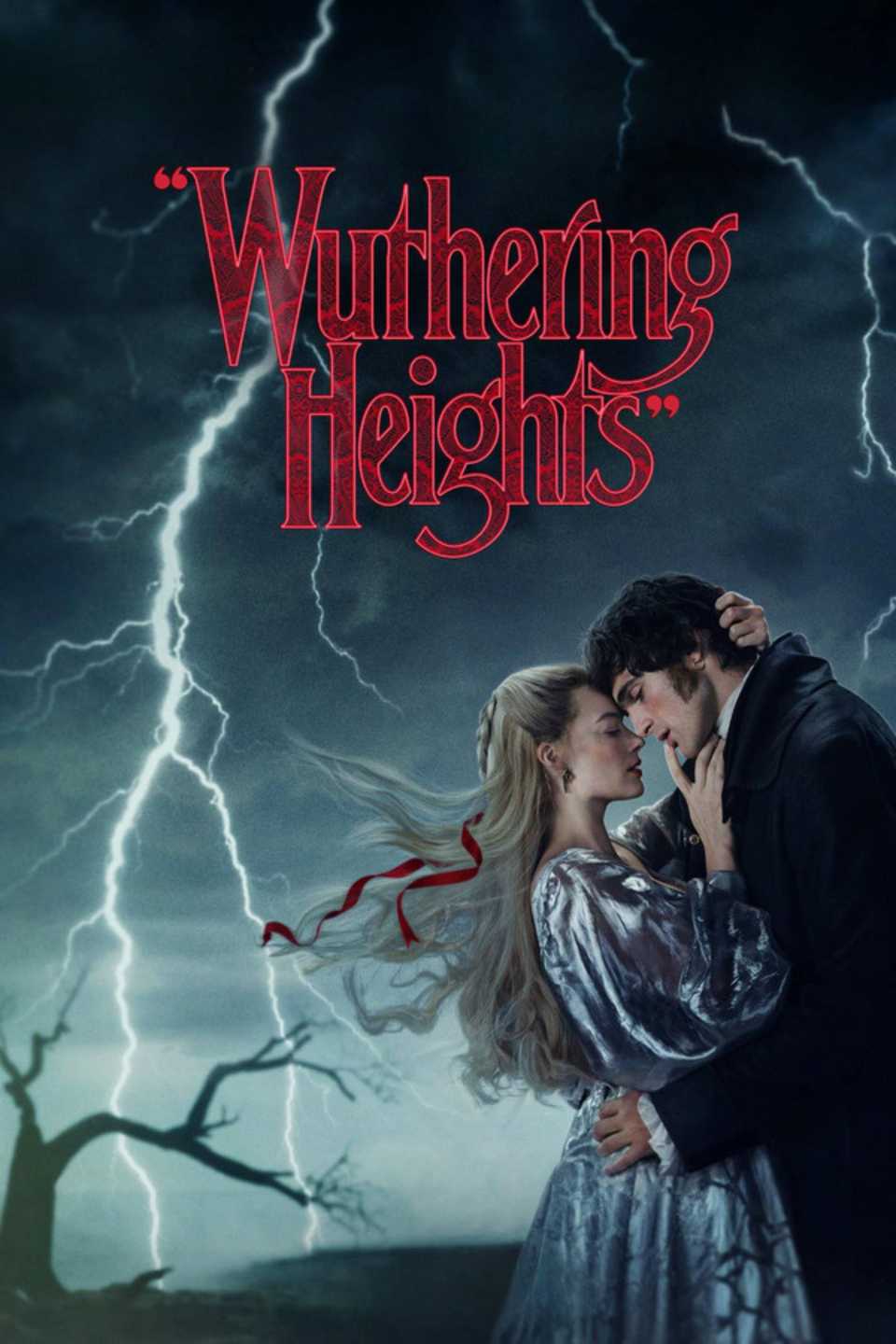
Wuthering Heights
Release Date February 13, 2026
Runtime 136 Minutes
Director Emerald Fennell
Writers Emerald Fennell, Emily Brontë







 English (US) ·