
Science fiction was born in literature, evolving over the course of the centuries in ways more dramatic than most other genres have ever experienced. As such, it should come as no surprise that several of the greatest sci-fi movies in history are based on books. There's something about this genre that allows filmmakers to take wildly creative pieces of sci-fi literature and turn them into equally fantastic cinematic masterpieces.
Whether it's a children's film like The Wild Robot, a huge Hollywood blockbuster like Project Hail Mary, or an international arthouse gem like Solaris, the best sci-fi films based on books are proof of just how perfectly this genre lends itself to being translated from the printed page to the big screen. Indeed, these are some of the most spectacular adventures that the art form has ever had to offer.
10 'The Wild Robot' (2024)
 Image via DreamWorks Animation
DreamWorks Animation has had its fair share of ups and downs over the years; but when a DreamWorks movie hits the spot, it hits hard. One such DreamWorks masterpiece is The Wild Robot, based on the 2016 first chapter of Peter Brown's children's novel series. Just like the book, the film version of The Wild Robot should be considered essential for all kids and families who love science fiction.
With the animation being some of the most striking in DreamWorks' impressive catalog and Roz being one of the greatest movie characters of the 2020s, The Wild Robot remains true to the essence of Brown's book while sprinkling in plenty of its own space. A love letter to nature, community, and motherhood, it's one of the most wonderful book-to-film adaptations made for families in recent memory.
9 'The Iron Giant' (1999)
 Image via Warner Bros. Pictures
As instantly endearing as Roz and her friends are, there's a certain animated film about a giant robot that's simply unbeatable in terms of both iconicity and legendary status: Brad Bird's The Iron Giant. Loosely based on Ted Hughes' 1968 children's novel, it's one of those '90s movies that have aged like fine wine, the masterpiece that proved just how incredible of an animation filmmaker Bird was.
Whereas the book is a sort of dark sci-fi fairy tale set in the English countryside, The Iron Giant is some kind of blend between a tender coming-of-age and a riveting Cold War thriller. Exploring themes of nuclear panic and government paranoia, it's a film that still appeals to countless adults in the modern day while never ceasing to delight children as well. It's visually perfect, and the friendship between the titular hero and Hogarth is irresistibly endearing.
8 'Project Hail Mary' (2026)
 Image via Amazon MGM
Hard sci-fi movies haven't been common throughout the 2020s, but there have certainly been some great ones; and Project Hail Mary is easily the best of the bunch. Based on the 2021 novel by Andy Weir, one of the modern masters of hard sci-fi literature, it's a film every bit as engrossing as the last Weir adaptation, 2015's The Martian.
As soon as it came out, Project Hail Mary proved to be one of the most surprising box office hits of the decade thus far, having made well over half a billion dollars worldwide. How could it not have? Aside from being visually gorgeous and nicely anchored by Daniel Pemberton's unforgettable score, it's imbued with a delightful sense of adventure and just the right amount of scientific accuracy to be absolutely legendary. As for the instantly endearing friendship between Grace and Rocky, it's the sort of character dynamic so fun that it takes a great film and turns it into an instant classic.
7 'The Prestige' (2006)
 Image via Warner Bros. Pictures
Christopher Nolan has been the king of Hollywood blockbusters for several years now, but before he properly established that reputation as undeniable, he made The Prestige. This steampunk thriller was his first proper sci-fi film, and it demonstrated early on just how exceptional of an understanding Nolan had of the genre. Co-writing the screenplay with his brother Jonathan Nolan, he took inspiration from Christopher Priest's 1995 novel.
The Nolans remained faithful to the book's core themes of magic, obsession, and rivalry, but re-engineered the story in ways that still make The Prestige one of those mystery movies that are amazing from start to finish. Psychologically intense and as twist-filled as the magic tricks performed by its characters, it's arguably one of those rare movie adaptations that are better than their source material.
6 'The Face of Another' (1966)
 Image via Toho
The Japanese New Wave film movement was one of the most important of the '60s, introducing a barrage of avant-garde elements to the country's filmography that resulted in the creation of masterpieces like The Face of Another. One of those forgotten sci-fi movies that are still masterpieces, this psychological thriller was based on Kōbō Abe's 1964 novel of the same name.
Abe's work tends to explore people's alienation from urban society, and The Face of Another is no exception. The film itself is a brilliant expansion of those thematic concerns, a masterful deconstruction of how identity is shaped by one's physical appearance and how that appearance is perceived by society. Complex, thought-provoking, visually striking, and chillingly surreal, it's one of those must-see Japanese masterpieces from the 20th century.
5 'Solaris' (1972)
 Image via Mosfilm
Andrei Tarkovsky was a filmmaker like no other, a poet with a camera who became the Soviet Union's greatest movie auteur over the course of a career that was tragically cut short by cancer. That short career includes two sci-fi films, the first one being Solaris, based on Polish writer Stanisław Lem's 1961 novel of the same title.
Philosophically profound and full of the sort of gorgeous slow-burning moments that characterize Tarkovsky's oeuvre.
Lem's is arguably one of the greatest European sci-fi books in history, so adapting it was never going to be an easy task; but then again, Tarkovsky was no regular director. In his hands, Solaris' film version materialized as one of the most poetic sci-fi movies of all time, a beautiful and methodically-paced meditation on identity and human connections. Philosophically profound and full of the sort of gorgeous slow-burning moments that characterize Tarkovsky's oeuvre, some have called it his response to Stanley Kubrick's 2001: A Space Odyssey.
4 'Children of Men' (2006)
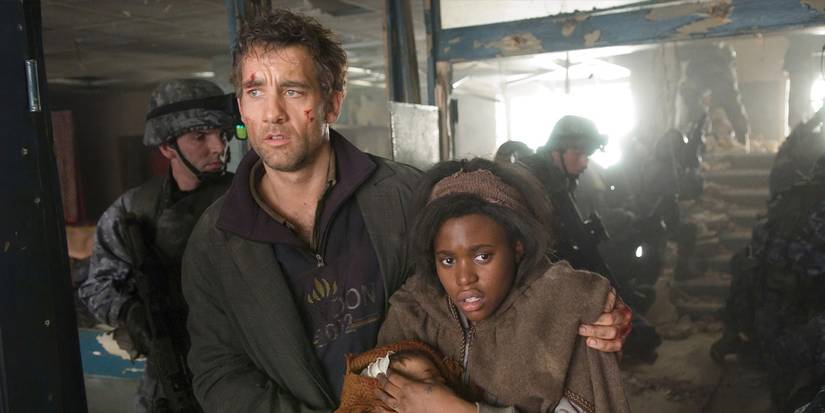 Image via Universal Pictures
Children of Men may be one of the bleakest sci-fi movies ever, but it's also one of the greatest of the last decade. Directed by Alfonso Cuarón, this dystopian action thriller was based on P. D. James' 1992 novel The Children of Men. Like it, the film is about the global catastrophe caused by widespread infertility; but outside of that, it's a relatively loose adaptation.
That looseness, however, allows Cuarón to deliver an incredibly powerful allegory for the cruel treatment of refugees in the Western world. Though it's dark, Children of Men is also beautifully hopeful, as well as packed with adrenaline-pumping action sequences bound to have anyone biting their nails. As thematically complex as it is emotionally engaging, it's a testament to everything that modern sci-fi should aim to be.
3 'The Thing' (1982)
 Image via Universal Pictures
John Carpenter's The Thing wasn't the first adaptation of John W. Campbell Jr.'s 1938 novella Who Goes There?; that was Christian Nyby's 1951 sci-fi horror classic The Thing from Another World. It was Carpenter's version, however, that completely revolutionized sci-fi horror. Though it was a critical and commercial failure upon release, the VHS market and cable TV allowed it to become one of the biggest cult classics the genre has ever seen.
Carpenter actually set out to make a far more faithful adaptation of Campbell's novella than Nyby had 31 years earlier, and he succeeded. But while staying true to the plot and terrifying tone of the book, introducing the world to one of the best sci-fi movie monsters ever, The Thing also brings a whole new thematic dimension to the material, interpreting it as a powerful allegory for the Red Scare and Cold War paranoia.
Collider Exclusive · Sci-Fi Survival Quiz Which Sci-Fi World Would You Survive? The Matrix · Mad Max · Blade Runner · Dune · Star Wars
Five universes. Five completely different ways the future went wrong — or sideways, or up in flames. Only one of them is the world your instincts were built for. Eight questions will figure out which dystopia, galaxy, or desert wasteland you'd actually make it out of alive.
💊The Matrix
🔥Mad Max
🌧️Blade Runner
🏜️Dune
🚀Star Wars
TEST YOUR SURVIVAL →
01
You sense something is deeply wrong with the world around you. What do you do? The first instinct is often the truest one.
APull on every thread until I understand the system — then figure out how to break it. BStop asking questions and start stockpiling — food, fuel, weapons. Questions don't keep you alive. CKeep my head down, observe carefully, and trust no one until I know who's pulling the strings. DStudy the patterns. Every system has a rhythm — learn it, and you learn how to survive it. EFind the people fighting back and join them. You can't fix a broken galaxy alone.
NEXT QUESTION →
02
In a world of scarcity, what resource do you guard most fiercely? What we protect reveals what we believe survival actually requires.
AKnowledge. If you understand the system, you don't need resources — you can generate them. BFuel. Everything else — movement, power, escape — runs on it. CTrust. In a world of fakes and informants, a truly reliable ally is rarer than any commodity. DWater. And after water, information — the two things empires are truly built on. EShips and credits. The galaxy is big — you survive it by being able to move through it freely.
NEXT QUESTION →
03
What kind of threat keeps you up at night? Fear is useful data — if you're honest about what you're actually afraid of.
AThat reality itself is a lie — that everything I experience has been constructed to keep me compliant. BA raid. No warning, no mercy — just the roar of engines and then nothing left. CBeing identified. Once someone with power decides you're a problem, you're already out of time. DBeing outmanoeuvred — losing a political game I didn't even know I was playing. EThe Empire tightening its grip until there's nowhere left to run.
NEXT QUESTION →
04
How do you deal with authority you don't trust? Every dystopia has a power structure. Your approach to it determines everything.
ASubvert it from the inside — learn its rules well enough to weaponise them against it. BIgnore it and stay out of its reach. The further from any power structure, the better. CAppear to comply while doing exactly what I need to do. Visibility is the enemy. DManoeuvre within it carefully. You can't beat a system you refuse to understand. EResist openly when I have to. Some things are worth the risk of being seen.
NEXT QUESTION →
05
Which environment could you actually endure long-term? Survival isn't just tactical — it's physical, psychological, and very much about where you are.
AUnderground bunkers and server rooms — cramped, artificial, but with access to everything that matters. BOpen wasteland — brutal sun, no shelter, constant movement. At least the threat is honest. CA dense, rain-soaked city where you can disappear into the crowd and nobody asks questions. DMerciless desert — extreme heat, no water, and something enormous living beneath the sand. EThe fringe — backwater planets and busy spaceports where the Empire's attention rarely reaches.
NEXT QUESTION →
06
Who do you want in your corner when things fall apart? The company you keep is the clearest signal of who you actually are.
AA tight crew of believers who've seen behind the curtain and have nothing left to lose. BOne or two people I'd trust with my life. Any more than that and someone talks. CNobody, ideally. Alliances are liabilities. I work alone unless I have no choice. DA community bound by shared hardship and mutual survival — people who need each other to last. EA ragtag team with wildly different skills and total commitment when it counts.
NEXT QUESTION →
07
Where do you draw the line — if you draw one at all? Every survivor eventually faces a moment that tests what they're actually made of.
AI won't harm the innocent — even the ones who'd report me without hesitation. BI do what I have to to protect the people I've chosen. Everything else is negotiable. CThe line shifts depending on who's asking and what's at stake. DI draw a long-term line — nothing that compromises my people's future, even if it'd help now. ESome lines, once crossed, can't be uncrossed. I know which ones they are.
NEXT QUESTION →
08
What would actually make survival worth it? Staying alive is one thing. Having a reason to is another.
AWaking others up — dismantling the illusion so no one else has to live inside it. BFinding somewhere — or someone — worth protecting. A reason to keep moving. CAnswers. Understanding what I am, what any of this means, before time runs out. DLegacy — shaping the future in a way that outlasts me by generations. EFreedom — for myself, for others, for every world still living under someone else's boot.
REVEAL MY WORLD →
Your Fate Has Been Calculated You'd Survive In…
Your answers point to the world your instincts were built for. This is the universe your temperament, your survival instincts, and your particular brand of stubbornness were made for.
The Matrix
You took the red pill a long time ago — probably before anyone offered it to you. You're a systems thinker who can't help but notice the seams in things.
- You're drawn to understanding how the system works before figuring out how to break it.
- You'd find the Resistance, or it would find you — your instinct for spotting constructed realities is the machines' worst nightmare.
- You function best when you have access to information and the freedom to act on it.
- The Matrix built an airtight prison. You'd be the one probing the walls for the door.
Mad Max
The wasteland doesn't reward the clever or the well-connected — it rewards those who are hard to kill and harder to break. That's you.
- You don't need comfort, community, or a cause larger than the next horizon.
- You need a vehicle, a clear threat, and enough fuel to outrun it — and you're good at all three.
- You are unsentimental enough to survive that world, and decent enough — just barely — to be something more than another raider.
- In the wasteland, that distinction is everything.
Blade Runner
You'd survive here because you know how to exist in moral grey areas without losing yourself completely.
- You read people accurately, keep your circle small, and ask the questions others prefer not to answer.
- In a city where humanity is a legal designation rather than a feeling, you hold onto something that keeps you functional.
- You're not a hero. But you're not lost, either.
- In Blade Runner's world, that distinction is everything.
Dune
Arrakis is the most hostile environment in the known universe — and you are precisely the kind of person it rewards.
- Patience, discipline, and political awareness are your core strengths — and on Arrakis, they're survival tools.
- You understand that the long game matters more than any single victory.
- Others come to Dune and are consumed by it. You'd learn its logic and earn its respect.
- In time, you wouldn't just survive Arrakis — you'd begin to reshape it.
Star Wars
The galaxy far, far away is vast, loud, and in a constant state of violent political upheaval — and you wouldn't have it any other way.
- You find meaning in being part of something larger than yourself — a cause, a crew, a rebellion.
- You'd gravitate toward the Rebellion, or the fringes, or whatever pocket of the galaxy still believes the Empire's grip can be broken.
- You fight — not because you have to, but because standing aside isn't something you're capable of.
- In Star Wars, that willingness is what makes all the difference.
↻ RETAKE THE QUIZ
2 'Dune: Part Two' (2024)
 Image via Warner Bros. Pictures
Frank Herbert's Dune is perhaps the greatest and most important piece of science fiction literature of the 20th century, which makes it all the more admirable that Denis Villeneuve and his team were able to turn it into such a masterful duology of films. As great as 2021's Dune is, though, it's Dune: Part Two that takes the cake as one of the greatest sci-fi masterpieces of the 21st century thus far.
It turns out that Herbert's timeless vision and Villeneuve's expansive imagination were a match made in Heaven, and that marriage between artistic visions results in what's easily the best sci-fi movie of the last six years. Visually stunning, emotionally engrossing, featuring actors all at the very top of their game, and elevated greatly by Hans Zimmer's incredible score, it's everything that a modern space opera should be—and then some.
1 'Stalker' (1979)
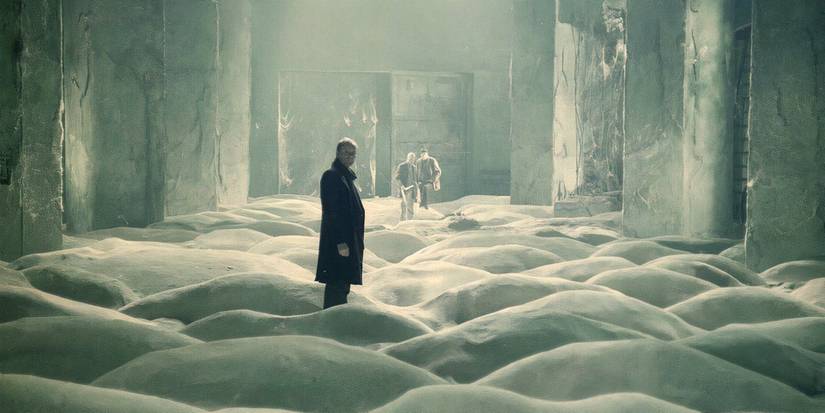 Image via Mosfilm
Solaris is phenomenal, but as far as Andrei Tarkovsky sci-fi movies go, it doesn't get any better than Stalker. In fact, it's one of the greatest feature films ever made, and thus the single best soft sci-fi masterpiece in movie history. It was written by Arkady and Boris Strugatsky, based on their own 1972 philosophical novel Roadside Picnic.
But though the Strugatsky brothers were the ones adapting their own book, Stalker actually deviates greatly from its source material in everything but concept. In the end, though, that turned out to be a good thing, because this is one of the most beautifully original sci-fi films ever created, a thought-provoking philosophical exploration of faith and those who lose it. It's poetically slow-burning, it's visually timeless, and it's a must-see for all those who enjoy arthouse science fiction. Never has a book produced a better sci-fi film.

Stalker
Release Date May 25, 1979
Runtime 161 Minutes
Director Andrei Tarkovsky
Writers Arkady Strugatsky, Boris Strugatsky






 English (US) ·