

Published Jun 15, 2026, 8:00 PM EDT
Memory Ngulube joined Screen Rant in April 2024 as part of the Movies and TV team. Since then, she has written for the Perennials and Streaming team, covering a wide range of topics from new releases to old movies and TV shows. Memory is currently a Classic TV writer.
Before joining Screen Rant, Memory was a freelance copywriter who specialized in email marketing and social media management. While she enjoyed her job, her true passion was always movies and TV.
When she isn’t writing for Screen Rant, Memory can be found reading, baking (which is one of her passions), or watching her favorite K-drama.
The 1990s are often remembered for a few towering sci-fi landmarks, but there are a few that slipped under the notice of mainstream recognition. These excellent sci-fi TV shows redefined television, included blockbuster effects that pushed the boundaries of what audiences were familiar with, and created a sense that the genre was undergoing an evolution. While sci-fi series like The X-Files are fondly remembered today, other entries in the genre that were released in the decade experimented far more boldly than their ratings ever rewarded.
Much of '90s sci-fi experimented with different concepts that were not only far ahead of their time but also represented what the future of the genre would be like. From artificial intelligence to parallel universes, these overlooked ‘90s science fiction TV shows did it all. As original stories become ever more scarce in today’s TV landscape, it's worth looking back on the decade that included some of the best and most intriguing sci-fi shows that were not afraid to be different but embraced their quirks with an admirable zeal.
Space: Above and Beyond (1995-1996)

Created by Glen Morgan and James Wong, the duo that produced The X-Files, Space: Above and Beyond is a gritty, military science fiction series. The show is set in the near future and follows a group of young U.S. Marines fighting in an interstellar war against a mysterious alien species known as the Chigs.
Military science fiction shows were not common in the 1990s, and that’s why Space: Above and Beyond was ahead of the curve. While most TV shows from the decade were optimistic, Space: Above and Beyond was often bleak and had a pessimistic tone. The best thing about the sci-fi series, however, is the fact that it felt like a war in space, which ultimately gave it a distinctive feel.
Nowhere Man (1995-1996)

Nowhere Man is one of the most slept-on sci-fi shows from the 1990s, and it's a shame that it didn’t really reach the level of popularity it deserves. The unsettling series chronicles Thomas Veil's journey, from a man living an unstable life to one who is running from a mysterious entity known as The Organization. From its first episode, Nowhere Man establishes that it is an interesting series.
Nowhere Man was hailed as one of the best shows of the 1990s, but not even critical and audience acclaim saved it from being axed after its great first season.
Each new entry in the TV show slowly answers the reason why The Organization targeted Thomas, but it never gives the full truth, thereby keeping audiences hooked. The series's dark tone and focus on a different kind of sci-fi story are still intriguing to this day. Nowhere Man was hailed as one of the best shows of the 1990s, but not even critical and audience acclaim saved it from being axed after its great first season.
Total Recall 2070 (1999)

By the time the 1990s rolled around, cyberpunk was becoming even more mainstream, particularly after the success of Blade Runner. Loosely inspired by the ideas of Philip K. Dick, the TV show is not a direct continuation of the Arnold Schwarzenegger movie, nor does it have the same type of story.
Total Recall 2070 is one of the best early AI partner stories that has inspired modern TV shows like Almost Human. The series is the perfect blend of sci-fi and crime, with the relationship between Detective David Hume and his partner Ian Farve being the glue that holds the show together.
VR.5 (1995)

The short-lived but highly inventive sci-fi series, VR.5 is a show about early virtual reality technology and the dangerous idea that digital worlds can become as real and, as a result, as consequential as physical ones. At the center of the show is Sydney Bloom, a woman who discovers she has an extraordinary ability: she can enter and manipulate virtual reality systems using her mind, rather than through conventional hardware like headsets or gloves.
VR.5 exploring something that wasn’t fully realized in the real world made it an exceptional TV show because virtual reality wasn’t as common back then as it is now. The TV show is undoubtedly one of the most underappreciated cyber-sci-fi series of the 1990s, but it has, thankfully, built a loyal fanbase.
Sliders (1995-2000)
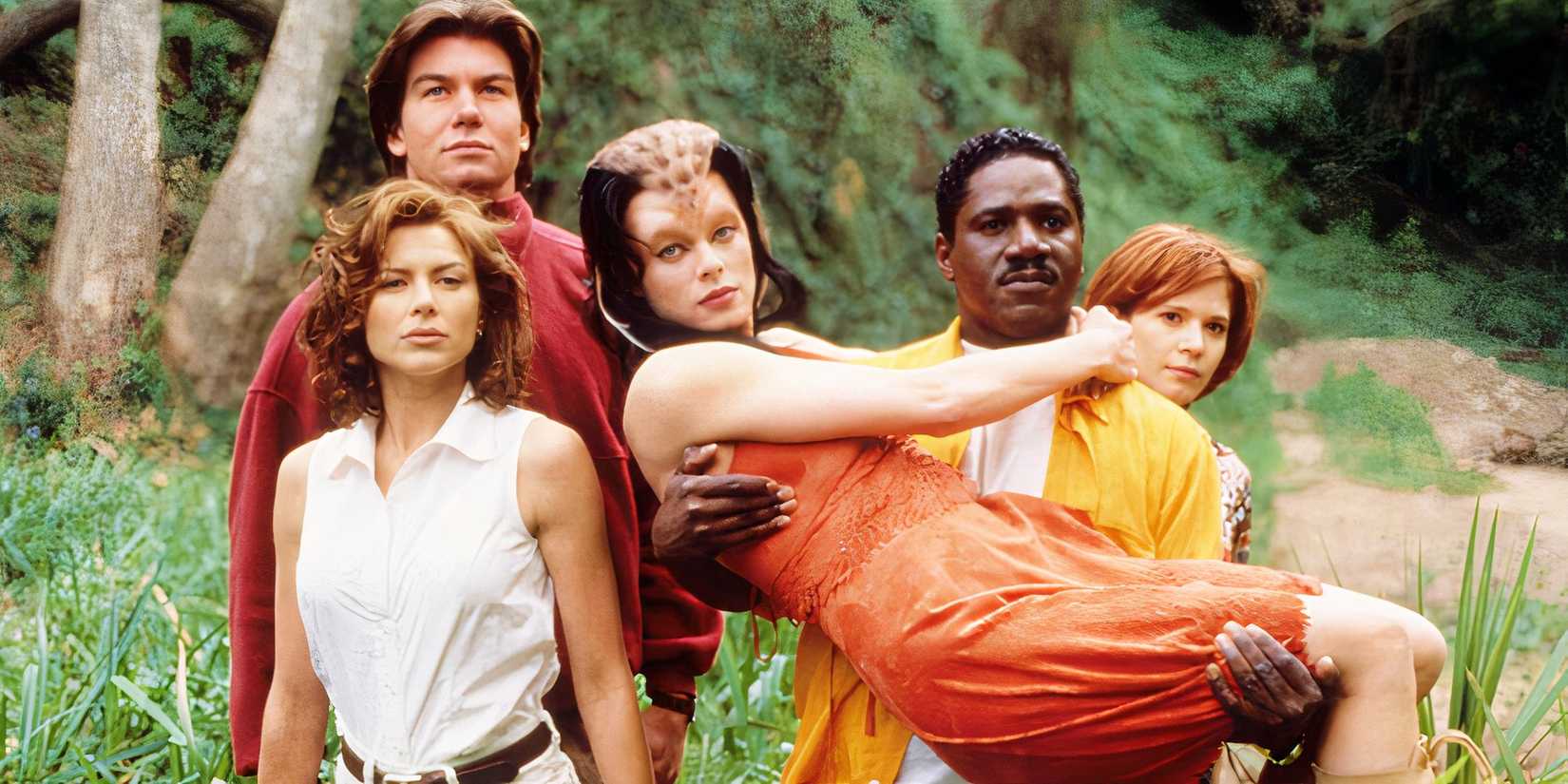
Sliders begins with brilliant physics student Quinn Mallory, who invents a device that opens a wormhole to alternate realities. He drags along his professor, Maximilian Arturo, his friend, Wade Wells, and a stranded soul singer, Rembrandt “Crying Man” Brown. But the experiment goes wrong, and they lose control of the device. Instead of returning home, they become trapped, endlessly “sliding” between Earths.
 Related
10 '90s Sci-Fi Shows That Defined The Era
Sci-fi shows can be tricky to master, but there were several from the '90s that blended procedural elements with new effects & defined a generation.
Sliders played a big role in popularizing parallel universes on TV. Sure, alternative realities existed before, but the series’s worldbuilding made it better than most sci-fi series on TV at that time. Sliders also ensured that it used science fiction as a vehicle to explore social issues by focusing on realities that were different from our own.
Dark Skies (1996-1997)

Dark Skies is a conspiracy-driven sci-fi drama that blends UFO mythology and alternate history into one story. Set in the 1960s, it imagines a chilling premise: aliens have secretly infiltrated human society, and the government knows about it. What Dark Skies does so well is how it homes in on one of the questions that humans have been pondering for years: Do aliens walk among us?
It really is admirable how Dark Skies is committed to its conspiracy premise, more so because of how it builds a whole alternate history around it. When it comes to sci-fi, audiences can never go wrong with a classic alien invasion story, and Dark Skies did a great job of reinventing the trope by focusing on a story where extraterrestrial creatures are living among us and silently taking over.
Earth 2 (1994-1995)
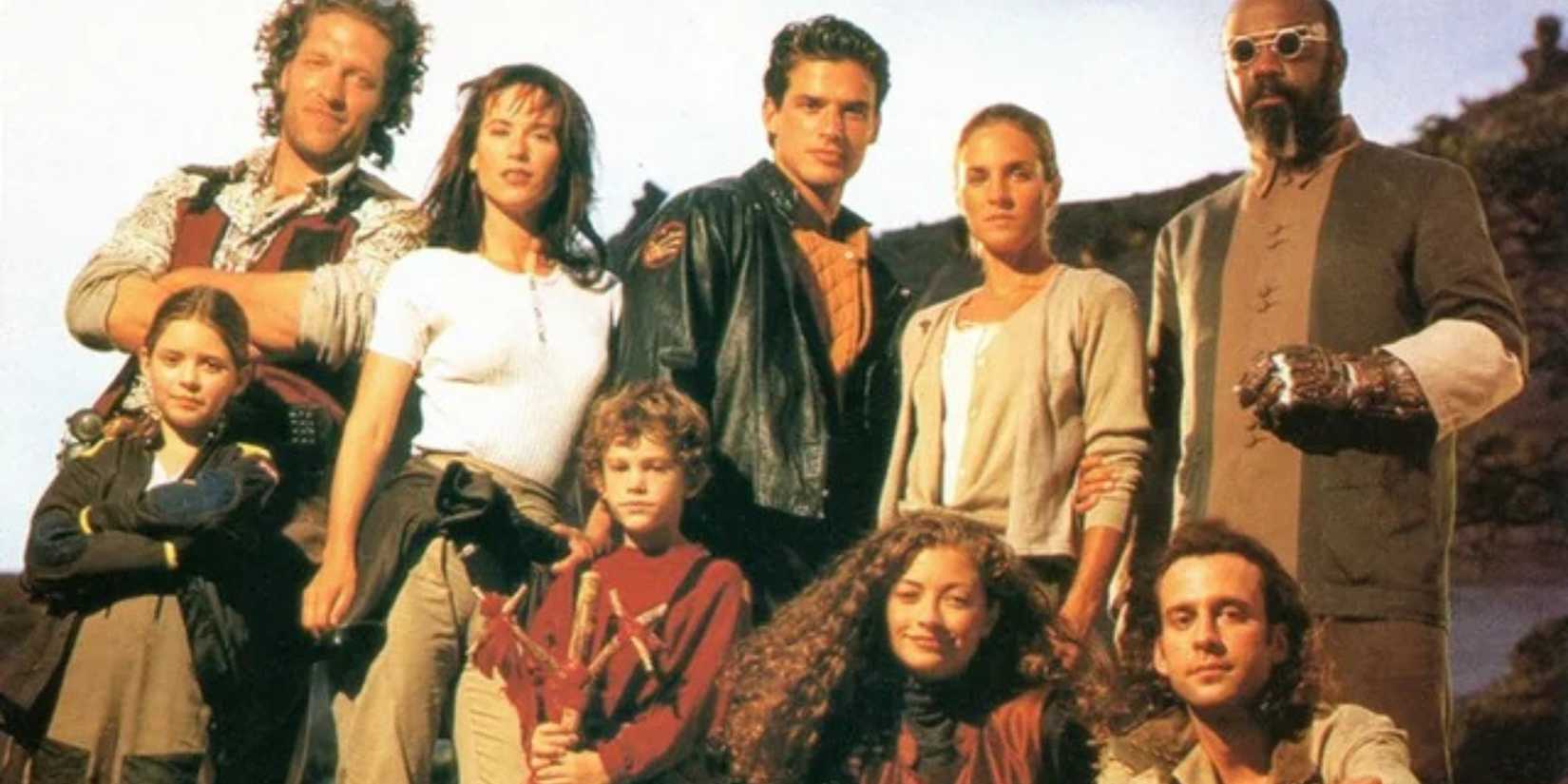
One of the most ambitious TV shows of the 1990s, Earth 2 is set in a future where Earth has become uninhabitable for most humans due to pollution and environmental collapse. The wealthy live in orbiting space stations, while the dream of returning to a natural planet feels almost impossible. The show centers around Devon Adair, who leads an expedition called the Eden Project to colonize a distant, Earth-like planet called G889 in hopes of curing her gravely ill son.
Long before modern sci-fi emphasized realism and world-building, Earth 2 delivered a fully realized alien ecosystem. In a way, Earth 2 mirrors The Expanse with its colonization of other planets and the political instability that results from the Eden Project’s expedition. Unfortunately, Earth 2 only lasted one season before it was canceled.
Seven Days (1998-2001)

Created by Christopher and Zachary Crowe, Seven Days is a high-concept sci-fi/action series built around one brilliant idea: what if the government could send someone back in time, but only by one week, to stop disasters before they happen? The story centers on Frank Parker, a reckless but highly capable former CIA operative. He’s recruited into a secret NSA program known as Backstep, which uses alien technology to power a time-travel device called the Chronosphere.
Science fiction has long been obsessed with time travel, but some of these shows tend to lean towards the fantastical as opposed to reality. Seven Days, however, is a whole different story. Frank’s jump into the past has real consequences, such as chrono fatigue. The time-travel sci-fi TV show took a simple concept and ran with it, making each episode feel like a puzzle with audiences guessing if Frank would be able to achieve his mission.
Millennium (1996-1999)
Millennium follows Frank Black, a former FBI profiler with a rare and unsettling ability: he can see the world through the eyes of killers, experiencing flashes that help him understand their motives and predict their actions. After leaving the FBI to protect his family, Frank joins a mysterious organization known as the Millennium Group, a secretive network of former law enforcement and scholars who investigate crimes tied to deeper, often apocalyptic forces as the year 2000 approaches.
Millennium is one of the perfect examples of sci-fi that blends well with other genres, particularly crime and supernatural. As the series went on, it became even darker, with its second and third installments leaning into supernatural elements. Not every fan of Millennium was happy with this particular change, but it deepened the series and helped it explore avenues that it couldn’t have if it had merely stuck to the sci-fi genre.
The Outer Limits (1995-2002)

The 1995 series, The Outer Limits, is a revival of a classic TV show of the same name that debuted in 1963. As an anthology series, each episode was a standalone story which featured new characters, new worlds, and stories like genetic engineering gone wrong, artificial intelligence, and alien invasions and encounters. While The Outer Limits is predominantly a sci-fi series, it also includes elements of horror and science fiction, making it the perfect blend of themes explored in Black Mirror and The Twilight Zone.
The 1990s redefined the sci-fi genre, and The Outer Limits remains a perfect example of how it was done successfully. The series was not only way ahead of its time, but it also featured future A-list actors like Alyssa Milano and Ryan Reynolds. While some sci-fi TV shows might lose their appeal over time, The Outer Limits still holds up today.







 English (US) ·