
 Image via Shochiku Fuji

Published Feb 12, 2026, 8:38 AM EST
Jeremy has more than 2300 published articles on Collider to his name, and has been writing for the site since February 2022. He's an omnivore when it comes to his movie-watching diet, so will gladly watch and write about almost anything, from old Godzilla films to gangster flicks to samurai movies to classic musicals to the French New Wave to the MCU... well, maybe not the Disney+ shows.
His favorite directors include Martin Scorsese, Sergio Leone, Akira Kurosawa, Quentin Tarantino, Werner Herzog, John Woo, Bob Fosse, Fritz Lang, Guillermo del Toro, and Yoji Yamada. He's also very proud of the fact that he's seen every single Nicolas Cage movie released before 2022, even though doing so often felt like a tremendous waste of time. He's plagued by the question of whether or not The Room is genuinely terrible or some kind of accidental masterpiece, and has been for more than 12 years (and a similar number of viewings).
When he's not writing lists - and the occasional feature article - for Collider, he also likes to upload film reviews to his Letterboxd profile (username: Jeremy Urquhart) and Instagram account.
He has achieved his 2025 goal of reading all 13,467 novels written by Stephen King, and plans to spend the next year or two getting through the author's 82,756 short stories and 105,433 novellas.
Sign in to your Collider account
Making any movie perfect is hard, if not impossible, and that feels especially so when it comes to the war genre. There are so many things that can go wrong when you're making a film about such a delicate and difficult subject, so the war movies that are essentially perfect (like Casablanca [if it counts], Lawrence of Arabia, and maybe Saving Private Ryan) are very much worth celebrating.
So too are the following films, none of which are quite perfect, but all of them are pretty close, or stand as great, at the very least. Some of these are also a bit overlooked, so if you consider any of them perfect personally, maybe you'll agree with the notion that those deserve a bit more attention, in any event. The whole ranking is an excuse to showcase some great – but not always 100% loved or well-remembered – war films, as well as a couple of high-profile heavy-hitters that might only have one or two flaws holding them back.
10 'The Battle of Okinawa' (1971)
 Image via Toho
Probably the most obscure movie here, The Battle of Okinawa, might well also be the most intense. It’s among the grisliest and most harrowing World War II films of all time, being about the titular battle from the Japanese perspective. It’s 2.5 hours long, and there’s never really any hope or sense that things will be okay for anyone, even if you're not aware of how the actual battle went in real life.
It’s all a foregone conclusion, and yet The Battle of Okinawa still finds ways to alarm and aggressively drive home an anti-war message. If it’s too much or too long for some, maybe that’s understandable, but this movie does really succeed at doing what it set out to do, and it’s considerably more full-on than most war movies made more than 50 years ago (especially if you compare it to the majority of English-language war movies made in the late 1960s or early 1970s).
9 'Warfare' (2025)
 Image via A24
Warfare is about as straightforward and blunt as modern war movies get, as there aren’t really character arcs here, nor any particular narrative focused on and developed. You're introduced very briefly to a large number of characters (all of them based on real-life people), and then much of the film ends up playing out in real time, showcasing a mission that goes wrong and the ensuing desperate battle to survive and escape.
It might sound like a weird thing to complain about, but Warfare ends on a somewhat strange note. Not so much the abruptness, which is in line with the no-nonsense and non-narrative focus of the film, but some of the things it chooses to show in the credits leave a weird taste in one’s mouth, or maybe they feel like they clash a bit with what the rest of the movie was going for. Though not the only potentially divisive part of Warfare, it has indeed been discussed/debated to some extent.
8 'Mrs. Miniver' (1942)
 Image via MGM
Released the same year as Casablanca first screened, Mrs. Miniver also won Best Picture, but did so for 1942 (the ceremony in 1943), while Casablanca competed against other films that got a wide release in 1943, winning at the ceremony in 1944. So, at best, it’s the second-best film that first screened in 1942 that was about World War II and made during World War II, but being second-best to something like Casablanca ain't all that bad.
Mrs. Miniver is interesting to watch from a historical perspective, seeing how filmmakers of the time tried to process and depict the then-ongoing war.
The movies also have a focus on civilian life as a shared trait, because Mrs. Miniver isn't really about showcasing combat, and is more centered on how the war impacts those not directly fighting in it. The approach works, and the film’s still interesting to watch from a historical perspective, seeing how filmmakers of the time tried to process and depict the then-ongoing war while offering catharsis to viewers also living through it.
7 'Macbeth' (1971)
 Image via Columbia Pictures
1971’s Macbeth really might be the grimmest of all the Macbeth adaptations, and that’s saying a lot when the source material is so timelessly gloomy, downbeat, and violent. The titular character is a warlord who has a ceaseless desire for power, and so he murders his king, and then a bunch of other people get killed, and the dying goes on and on, eventually becoming a full-on war.
That being said, calling it a war movie might be a bit of a stretch, since it’s not always focused on that, especially early on, when things are a bit more intimate, but it still counts. It’s one of the best movie adaptations of Macbeth, even if it pushes things almost too far with how miserable, dirty, and provocative it gets (or wants to be).
6 'The Last Valley' (1971)
 Image via Cinerama Releasing Corporation
The Last Valley is almost a great movie, and what it lacks is probably the reason it’s not as well-remembered. Not that it deserves to be totally obscure, necessarily, but you can also picture a universe where The Last Valley was just a little different, and subsequently so much more successful. To start with, it does look absolutely phenomenal throughout, and the score, by John Barry, is one of the most underrated of all time.
Then you’ve got Michael Caine and Omar Sharif giving good performances, even if the former’s accent is a little spotty, and it’s all helmed by James Clavell, who’s best known for writing the novel Shōgun and the screenplay for The Great Escape. There’s talent on both sides of the camera, and an intriguing story about a lesser-known conflict (the Thirty Years' War) being explored, but all the great pieces don’t coalesce into a great movie. Still, it’s worth checking out for all the stuff that does work, even if it’s ultimately less than the sum of its parts.
5 'Merry Christmas, Mr. Lawrence' (1983)
 Image via Shochiku Fuji
A Christmas war movie? Sort of. Merry Christmas, Mr. Lawrence is admittedly more of a war movie than it is a Christmas movie, and even then, it’s not entirely a war film, or at least not a traditional one. Even by the standards of movies about prisoners of war (so it’s another war movie without much by way of expected combat scenes), it’s offbeat and unique in the way it feels and flows.
You have to work a bit to get on the film’s wavelength, but once you do, Merry Christmas, Mr. Lawrence is rewarding, and it could well have David Bowie’s most impressive acting performance, too (with the rest of the cast also being great). There is one extended flashback sequence here that really drags the movie down pacing-wise, and feels a bit odd, even by the film’s odd standards, but other than that, Merry Christmas, Mr. Lawrence is largely excellent.
4 'Coming Home' (1978)
 Image via United Artists
1978 ended up being a big year for Vietnam War movies, or at least good/high-profile/successful ones. The Deer Hunter won Best Picture at the Oscars, and that’s part of the reason it’s remembered a little better than Coming Home, but Coming Home is still very good, not to mention a different sort of war movie, kind of going for, throughout most of its runtime, what The Deer Hunter went for in its final act.
Put in a cleaner way, The Deer Hunter’s final hour (it was a long movie) was about coming home after serving in Vietnam, and then Coming Home is about… well, it’s in the title. It’s well-acted, sometimes quite moving, and memorable with how it uses music, too, even if it’s paced somewhat awkwardly and feels a little choppy here and there (you get that with a few Hal Ashby-directed movies; maybe it was kind of just his style).
3 'The Dirty Dozen' (1967)
Almost qualifying as an epic with its runtime and the size of its cast, The Dirty Dozen has a tried-and-true premise that it handles well. There’s a dangerous mission to be carried out behind enemy lines during World War II, and a group of volatile prisoners are offered the chance to have their sentences commuted if they take part in said mission… and survive it, of course, which is the tricky part.
It goes through the motions, to some extent, as The Dirty Dozen is about assembling a team, training that team, and then carrying out the mission, but it works. Nothing is rewritten on a narrative front, so maybe it’s not the most ambitious thing in the world if you want to look at how it’s written and structured, but at least it’s an exciting and engaging watch, with much of the action holding up better than you'd expect; for its time, it was definitely visceral and fairly gutsy stuff.
2 'Gallipoli' (1981)
 Image via Paramount Pictures
Another heavy and emotionally upsetting war film, Gallipoli centers on the First World War, which might've been the last one in history where many young people were able to be convinced that fighting was glorious. Or so the narrative around World War I goes. It was massive, global, and went on longer than most people were expecting, so it being this massive loss of innocence on a global scale (more so than any prior conflict may have inspired similar feelings) is an understandable notion.
Broad, sure, but understandable. And Gallipoli is in line with all that, because it’s about two young Australian men who go off to serve what was then The Great War (later called World War I), but then they find it’s anything but an adventure, and certainly not “Great.” It’s blunt and maybe even a bit simple, and it largely does (narratively and thematically) what All Quiet on the Western Front had already done, but it’s hard to deny the emotional punch it packs regardless.
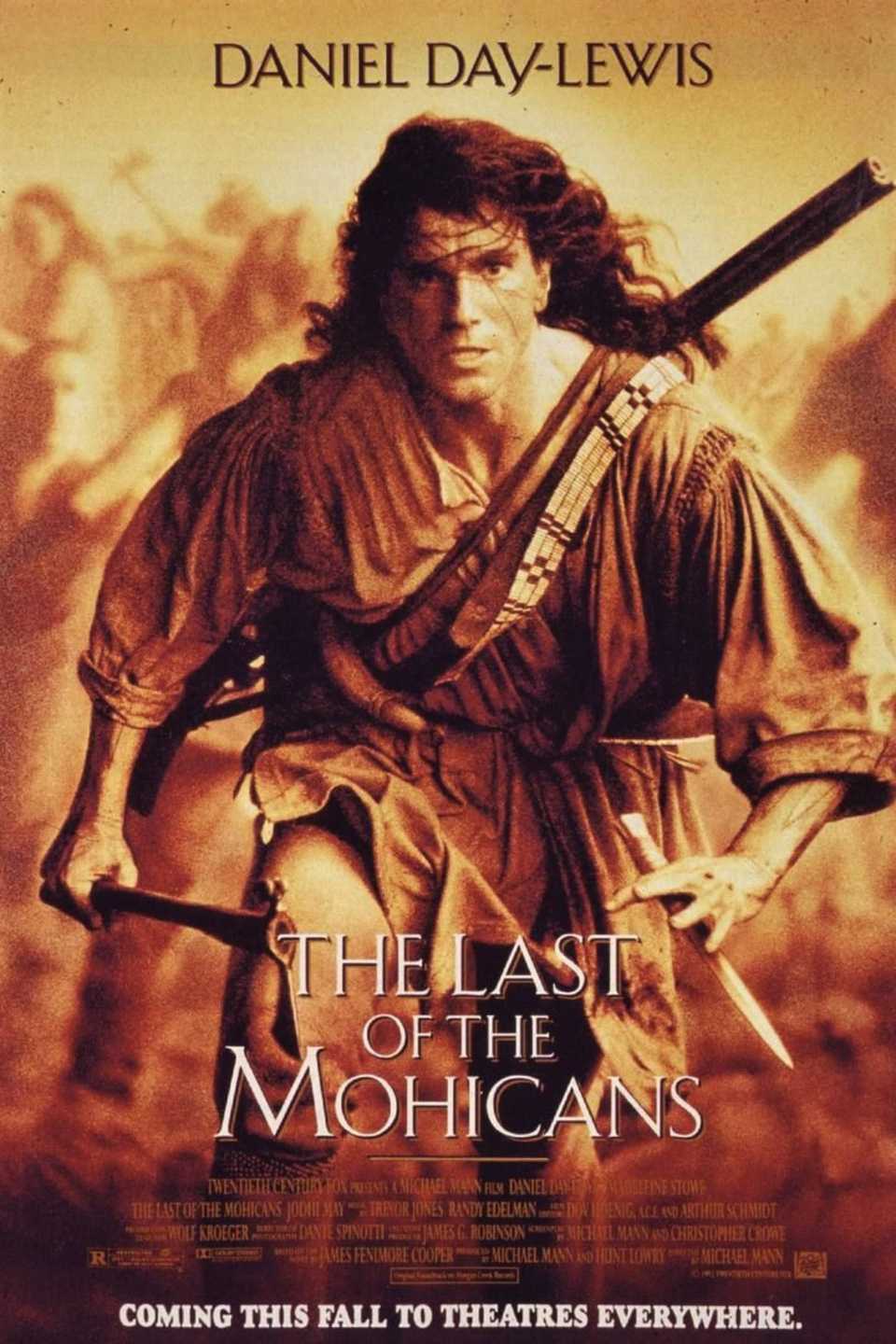
1 'The Last of the Mohicans' (1992)
 Image via 20th Century Fox
It’s more common to watch a long movie and wish it were a bit shorter than it is to watch a relatively short movie and find yourself wishing it was longer, but damn could The Last of the Mohicans benefit from a genuine epic-length runtime. It’s a huge movie, and there are lots of moving parts, with numerous characters and lots of dramatic things happening, and seemingly so little time afforded to it all.
What you get is still remarkable, and it is much more than just a war movie (about the French and Indian War, fought during the 1700s), but it’s a crowded and rushed film. The Last of the Mohicans really just has that one flaw: a lack of breathing room for everything it tries to do. There’s still lots to like, but an extended or director’s cut (if either even exists) feels like it could well make the whole thing perfect.
The Last of the Mohicans
Release Date September 25, 1992
Runtime 112 Minutes
Director Michael Mann
Writers James Fenimore Cooper, John L. Balderston, Paul Perez






 English (US) ·