
 Image via Prime Video

Published Feb 5, 2026, 5:07 PM EST
Sign in to your Collider account
Sci‑fi is my comfort genre, but I’m picky about it. It’s amazing when a show explains its big idea fast, then keeps turning that idea into real tension and real character choices. No filler episodes that stall the engine, no mystery boxes that forget to pay off, and no speeches that feel like homework. A sci-fi show that makes you feel that this could be possible in a near or far-off future, or at least brings up that what-if feel and keeps expanding it beautifully.
The ten shows below are the ones I can throw on and immediately fall back into. Each one has that clean pull where you say one more episode, and suddenly you’ve burned half the night. They hit different moods too: some are warm and human, some are paranoid, some are straight-up bleak.
10 'Dark Matter' (2015–2017)
 Image via SyFy
If you like sci‑fi that starts with a bang and stays fun, Dark Matter is a great bet. A crew wakes up on a ship with no memories and no idea whether they’re heroes, criminals, or both. The show immediately turns that into a game of trust: One (Marc Bendavid) wants a clean slate, Two (Melissa O’Neil) is ready for violence, and nobody knows who’s lying. It’s fast, clear, and easy to binge.
The best episodes are the ones where the crew has to choose who they are now, even when old evidence says otherwise. You also get a steady drip of clever twists without the story becoming confusing. When Dark Matter is on, it feels like a tight space‑opera hangout with real stakes. The whole waking up with no memories and having to decide who you are is a killer premise. However, it sometimes leans a little too comfortably into the “space crew adventure of the week” rhythm instead of digging as deeply as it could into the psychological weight of that identity crisis.
9 'The Peripheral' (2022)
 Image via Prime Video
 The Peripheral scratches that specific itch where sci‑fi feels like a thriller first. Flynne Fisher (Chloë Grace Moretz) is just trying to make it through daily life, then she slips into a high-tech “sim” that turns out to be connected to a future that wants her dead. The show is great at making every new piece of tech feel like it has consequences. However, instead of the mystery unfolding cleanly, it can feel like you’re catching up to the plot rather than being pulled through it. That slight friction keeps it from being totally immersive.
Another thing is that the emotional core (Flynne’s survival, her value as a target) is strong, but the show occasionally drifts into lore mode, where the bigger chessboard starts to overshadow the raw human tension that makes the premise hit so hard. It, does although nail a vibe most shows miss: the future isn’t clean, it’s political and predatory. Wilf Netherton (Gary Carr) pulls you deeper into the rules, while Flynne keeps it grounded in survival.
8 'Devs' (2020)
 Image via FX
Devs is what you put on when you want sci‑fi that feels quiet and dangerous at the same time. Lily Chan (Sonoya Mizuno) loses her boyfriend, and the trail leads straight into a secret division at Amaya, a company that makes every tech campus look harmless by comparison. Forest (Nick Offerman) runs the place with the calm of someone who already decided what reality is. Katie (Alison Pill) is especially unnerving.
'
The show’s biggest flex is how it builds dread without rushing, but once determinism is revealed, Lily’s actions often feel like the plot forcing her into Devs rather than her uncovering it through believable agency, so the central conspiracy loses some impact. And that’s exactly what gate-keeps it from becoming perfect. Scenes linger long enough for you to feel how trapped Lily is, and how helpless the people around her are. But the push-through and ending feel mechanically predetermined. By the end, Devs makes you argue with yourself.
7 'Altered Carbon' Season 1 (2018)
 Image via Netflix
Altered Carbon Season 1 is pure cyberpunk candy with an actual story behind the neon. In this world, your consciousness can be sleeved into new bodies, which turns identity into a commodity. Takeshi Kovacs (Joel Kinnaman) gets pulled back into life to solve a rich man’s murder, and the case forces him to walk through corruption, religion, and trauma like they’re all part of the same system.
What makes it stick is that the mystery keeps tightening while the worldbuilding stays readable. Kristin Ortega (Martha Higareda) brings a grounded, human anger to a setting that could’ve gone full gimmick. The show also asks real questions about what “immortality” does to empathy, love, and punishment. However, it isn’t fully perfect in the sense that the back half trades the tight noir mystery for heavier lore and spectacle, so the emotional and investigative momentum starts to blur.
6 'Fringe' (2008–2013)
 Image via Fox
Fringe is the one I recommend to people who want a long ride that still has heart. It starts like a monster-of-the-week show, then slowly reveals it’s been building a bigger puzzle the whole time. Olivia Dunham (Anna Torv) is the anchor, and watching her stay steady while the universe gets stranger is half the fun. Walter Bishop (John Noble) brings the messy genius energy that makes every episode feel alive.
The reason it stays nearly perfect is the balance between weird cases and a real found-family dynamic with Peter Bishop (Joshua Jackson) at the center. Even when the myth arc takes over, the show keeps the emotional throughline clear, so the stakes always feel personal. It’s gatekept from being fully flawless because once the story gets really big and cosmic, a little bit of that early magic slips away — the feeling of just hanging out with this crew solving impossibly weird cases before everything had to become end-of-the-universe important.
5 'Westworld' Season 1 (2016)
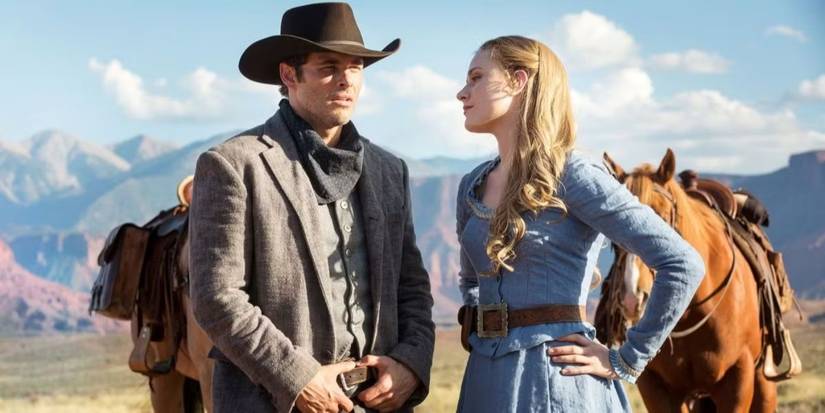 Image via HBO
Westworld’s Season 1 is the rare installment that feels expensive and precise at the same time. You walk into the park thinking it’s just a violent playground for rich people, then the story starts asking who’s actually being programmed. Dolores Abernathy (Evan Rachel Wood) is the center, and her shifts in awareness are handled with real patience.
What I love is how the season keeps changing what you think you’re watching. Bernard Lowe (Jeffrey Wright) becomes a key piece of the puzzle, and the deeper he goes, the worse it gets. Then you have The Man in Black (Ed Harris), who treats the park like a religion and a test at the same time. It isn’t perfect because the suspense is concealment-driven, not plot-driven. For example, the show would’ve been stronger if Dolores had discovered the maze through real investigation and confrontation with Ford.
4 'The Leftovers' (2014–2017)
 Image via HBO
The Leftovers is a show about what happens after the unthinkable, when the world keeps spinning anyway. Two percent of humanity disappears in an instant, and instead of chasing explanations, the series sits in the emotional aftermath — the way people fracture when reality stops making sense. Kevin Garvey (Justin Theroux) becomes the perfect center for that unease, a man trying to stay upright while everything around him feels quietly unreal.
The show is near-perfect, but it stumbles when some of its strangest detours (like Kevin’s extended afterlife/hotel arcs) pull focus away from the grounded emotional devastation that makes the series hit hardest. At the same time. The show is extraordinary. And it does that because of how intimate it is with pain. Nora Durst (Carrie Coon) is one of TV’s most devastating portraits of grief because she’s written as this sharp, funny, furious, and shattered person, all at once.
3 'Battlestar Galactica' (2004–2009)
 Image via Universal Media Studios
Battlestar Galactica is near-perfect because its story and characters still feel razor-sharp, but the early-2000s TV visuals and occasional dated effects can blunt the intensity in a way that wasn’t true when it first aired. The Cylons wipe out most of humanity, and what’s left is basically a fleet running on fear and hard choices. William Adama (Edward James Olmos) has to lead people who disagree with him every day, and the tension comes from watching leadership turn into compromise, then into regret.
It’s also packed with characters you argue about like they’re real. Kara Thrace (Katee Sackhoff) is reckless and brilliant in a way that makes you nervous, and Gaius Baltar (James Callis) is the most frustrating type of survivor, because he’s always half-right.
2 'Dark' (2017–2020)
 Image via Netflix
Dark is the show you start for the mystery, then you stay because you’re emotionally invested in the damage. A kid disappears, a small town starts unraveling, and suddenly time itself becomes the enemy. Jonas Kahnwald (Louis Hofmann) is the entry point, and the show does a great job making his confusion feel earned. Every episode gives you answers and makes you nervous about what those answers mean. The show, however, can be held back by how dense the later timelines and identities become.
It reveals that Jonas's (Hofmann) and Martha’s (Lisa Vicari) choices never really mattered because everything was always locked into the same loop. That undermined the plot for me a bit during the first watch. The thing that made it nearly perfect still is how seriously it took cause and effect despite its gaps. Martha isn’t just there to be Jonas’s love interest; she’s stuck in the same trap, breaking in her own way. Ulrich (Oliver Masucci) is what happens when a person can’t let go, when the need to fix one moment destroys everything else. All in all, Dark keeps reminding you that nobody gets out clean, and when it all finally connects, it hits because it feels like the show was always playing fair with you.
1 'The Expanse' (2015–2022)
 Image via Prime Video
The Expanse is the closest thing TV has to a fully lived-in space future. Politics, class, and physics all matter, and the show makes you feel that in every decision. It starts with a missing girl and a battered crew on the Rocinante, then keeps widening until the entire solar system feels like it’s held together by distrust. James Holden (Steven Strait) is the accidental moral center, but the show’s real strength is how every faction, Earth, Mars, the Belt, feels like it has a point. The future isn’t shiny, it’s stressed, unequal, and constantly on the edge of war.
What makes it nearly perfect is how it never forgets that all the space opera stuff is really just people trying not to break. Naomi (Dominique Tipper) carries the Belt like a wound, Amos (Wes Chatham) is terrifying because he’s calm about what survival costs, and Avasarala (Shohreh Aghdashloo) speaks like someone who’s been cleaning up humanity’s messes her whole life. Even when the protomolecule turns the story into something bigger than politics, the show keeps dragging it back to consequence — who pays, who gets used, who gets left behind. The only real knock is that the final stretch leaves you wishing it had a little more room to finish what it started.

The Expanse
Release Date 2015 - 2022-00-00
Showrunner Naren Shankar, Mark Fergus, Hawk Ostby
Directors Breck Eisner, Jeff Woolnough, David Grossman, Kenneth Fink, Rob Lieberman, Terry McDonough, Thor Freudenthal, Bill Johnson, David Petrarca, Jennifer Phang, Mikael Salomon, Sarah Harding, Marisol Adler, Anya Adams, Nick Gomez, Simon Cellan Jones



 English (US) ·