
The world of cinema forever changed when Peter Jackson introduced audiences to his version of Middle-earth. Bringing J.R.R. Tolkien’s novel to life in epic fashion, The Lord of the Rings trilogy was not just a great movie; it became the blueprint for filmmaking and the great achievements that can be made when your imagination runs wild. The three acclaimed films tell of the adventures of a meek hobbit named Frodo Baggins (Elijah Wood) who embarks on a perilous quest to destroy the One Ring, an artifact of immense evil. To save his world, Middle-earth, Frodo must journey to Mount Doom to prevent the Dark Lord Sauron from reclaiming the ring and conquering the realm.
The Lord of the Rings has a special place in the hearts of high fantasy fans, but the truth is, there are other fantasy flicks that just so happen to be more beloved. As scandalous as it may sound, The Lord of the Rings is not necessarily for everyone. And that’s OK! Jackson knows his demographic and caters to them. The 10 titles on this list are simply more universally beloved. From a whimsical wizard to a practically perfect nanny, from a trip somewhere over the rainbow to a tale that’s as old as time, these films unite movie lovers in a manner that The Lord of the Rings comes up short on.
1 'Beauty and the Beast' (1991)
 Image via Walt Disney Motion pictures
Though the Disney Renaissance may have retrospectively started with The Little Mermaid, the absolute game-changer was Beauty and the Beast. Based on the classic French fairy tale, Beauty and the Beast tells the tale of a selfish prince who is cursed by an enchantress into a hideous monster. To become human again, the Beast (Robby Benson) must learn to love while earning the affection of a provincial girl, Belle (Paige O'Hara), before his enchanted rose loses all its petals. The animated classic combines a timeless, empowering message with groundbreaking animation and a legendary Broadway-style soundtrack from Howard Ashman and Alan Menken. Though both Beauty and the Beast and The Lord of the Rings have been highly rewarded for their cinematic achievements, Beauty and the Beast directly appeals to a broader audience through its arc of redemption and transformational love.
As much as a hero's journey can be universal, there was something essential about the nuanced heroine that defied the damsel in distress trope that changed the Disney princess game for good. Belle is played as an intelligent, independent bookworm who doesn't fit in, but she most certainly won't back down. Her bravery is why she became such a beloved character in the Disney canon. Further, it was the unconventional romance that blossomed that gave the outsider hope that love can grow based on mutual growth and respect. The love-at-first-sight cliché gives way to something more authentic: a message of inner beauty. Comparatively, Beauty and the Beast is, shockingly, a more plausible story. The film is praised for its cinematic prestige, but its commercial reach has contributed to its everlasting legacy. It's all thanks to one of the greatest soundtracks in movie history. Every song is a hit, so much so that the spectacle they created set the bar astronomically high for every film that followed. Beauty and the Beast is a classic family favorite that willbe passed down for generations.
2 'Harry Potter and the Sorcerer's Stone' (2001)
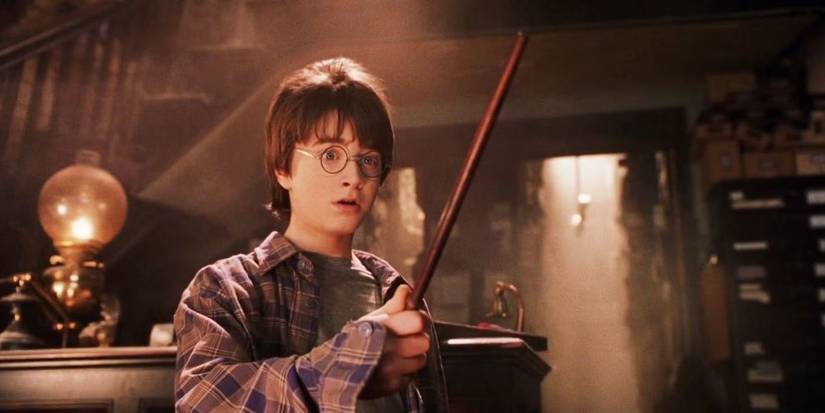 Image via Warner Bros.
Though the stock has certainly dropped in its beloved factor over time due to some non-book-related complications, at the end of the day, Harry Potter and the Sorcerer's Stone gave movie-lovers a chance to stretch their imaginations in newfound ways. The film that launched the franchise, Harry Potter and the Sorcerer's Stone, follows Harry Potter (Daniel Radcliffe), an orphaned boy who discovers that he is a famous wizard. Summoned from a miserable life with his cruel Muggle relatives, Harry attends Hogwarts School of Witchcraft and Wizardry, where he makes loyal friends—Hermione Granger (Emma Watson) and Ron Weasley (Rupert Grint)— and uncovers a plot to steal a magical, life-extending artifact. Harry Potter and the Sorcerer's Stone served as a universal magical awakening, in which a book literally came to life in perfect fashion.
The film served as a comfort tale for many of its biggest fans. By perfectly translating the book's wonder-filled world to the big screen, the faithful adaptation literally dropped audiences into the Wizarding World in a completely immersive fashion. Though The Lord of the Rings did the same in sweeping fashion, Harry Potter and the Sorcerer's Stone was a bit more tangible— especially now that you can literally visit the Wizarding World via theme park and London studio. Though you can take a visit to New Zealand to see The Lord of the Rings' iconic filming locale, it's just not the same as stepping inside Hogwarts. Harry Potter and the Sorcerer's Stone established incredible world-building that would be used in every subsequent film. The film also has a universal appeal with its themes, including the power of human connection over evil. The mythology and lore are a bit more accessible because they're catered to kids, young adults, and those at heart. The wonderment found in Harry Potter is simply nostalgic, giving it the upper hand in the beloved film department.
3 'Mary Poppins' (1964)
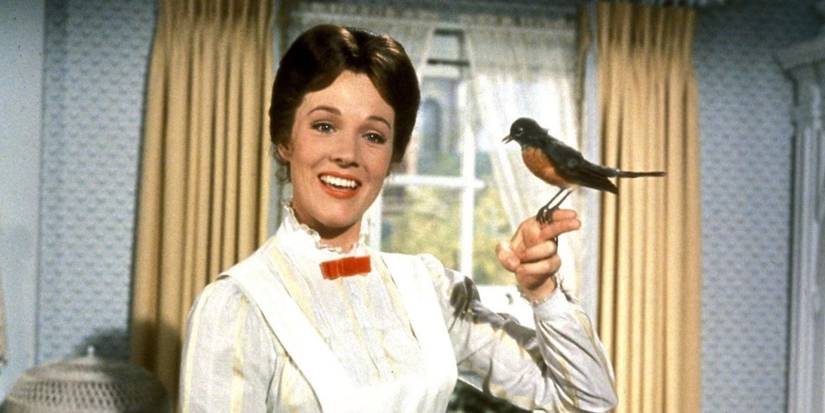 Image via Walt Disney Productions
We must thank Walt Disney himself for fighting so hard to get P.L. Travers to give her blessing in turning her beloved character into an instant Disney classic. Mary Poppins was more than just a movie musical; it was a cinematic game-changer that united animation and live action in a way we never thought possible. The film follows Julie Andrews as the titular magical nanny who visits a dysfunctional family in London, employing her unique and whimsical brand of life lessons to help reunite the family. Through the importance of finding a balance between adult responsibilities and childlike imagination, Mary Poppins, both the film and the character, taught parents to prioritize their children while helping kids appreciate the wonder in everyday life. Through the magic of imagination, Mary Poppins gave the mundane a reason to be fun.
Mary Poppins's timeless messages and themes inspired audiences to embrace joy and imagination through its incredible cinematography and unforgettable music. The iconic soundtrack brought to life by the Sherman Brothers remains one of the most important scores in movie history. Whether the toe-tapping "Step in Time" and "Supercalifragilisticexpialidocious," the profound "Feed the Birds," or the heartwarming "Let's Go Fly a Kite," every song not only served a purpose but was also filled with immense emotion that still resonates today. With a legendary score to build from, the musical sequences became truthful extensions of the imagination. Thanks to Mary Poppins, we all wish we could transport ourselves to distant lands via sidewalk chalk art to dance with animated penguins with Bert (Dick Van Dyke). Mary Poppins is a more beloved film because the relatable everyday magic and feel-good tone open up our hearts in a more universal way.
4 'Pirates of the Caribbean: Curse of the Black Pearl' (2003)
 Image via Walt Disney Studios Motion Pictures
Bringing a beloved theme park attraction to life on the big screen was a big ask. At first, the bar was set quite low. Then, upon meeting Johnny Depp as Captain Jack Sparrow, any doubts we may have had were washed away by the tides as the humorous swashbuckling adventures proved exactly what we always needed. Directed by Gore Verbinski and produced by Jerry Bruckheimer, the high-seas fantasy adventure Pirates of the Caribbean: Curse of the Black Pearl tells the tale of eccentric pirate Captain Jack Sparrow as he teams up with blacksmith Will Turner (Orlando Bloom) to rescue Elizabeth Swann (Keira Knightley) from the undead crew of the Black Pearl, which just so happened to be his old ship. Led by the treacherous Captain Barbossa (Geoffrey Rush), the crew is cursed to live as immortal skeletons. Pirates of the Caribbean: Curse of the Black Pearl is a thrilling genre-blending adventure that reignited the pirate stories we grew up with.
By defying expectations as a dreaded theme-park-ride flick, the film launched a franchise, proving we needed something mindless to serve as our necessary means of escapism. By effortlessly combining a swashbuckling pirate adventure with a ghost story, epic romance, and witty comedy, Pirates of the Caribbean subverted expectations by throwing everything against the wall and watching it all stick. Pirates of the Caribbean was daring in the sense that it was Disney's boundary-pushing PG-13 film. It took a risk by infusing darker tones through fantasy and the supernatural, proving that it doesn't need to sanitize its IP for a family-friendly film. Now, we're not here to diminish the iconic Hobbit, but there's simply no match in comparing Captain Jack with Frodo— Depp's character is one of the greatest film characters ever crafted. He was smartly unconventional and entertaining, dispelling the lore that pirates are destined to be the antagonists of every story. Instead, we were given an anti-hero we could champion. Pirates of the Caribbean: Curse of the Black Pearl is a more relaxed, rewatchable film, thanks to its perfect pacing. No offense to Lord of the Rings, but we'll take the high-stakes sea excursion over a long river voyage.
5 'Shrek' (2001)
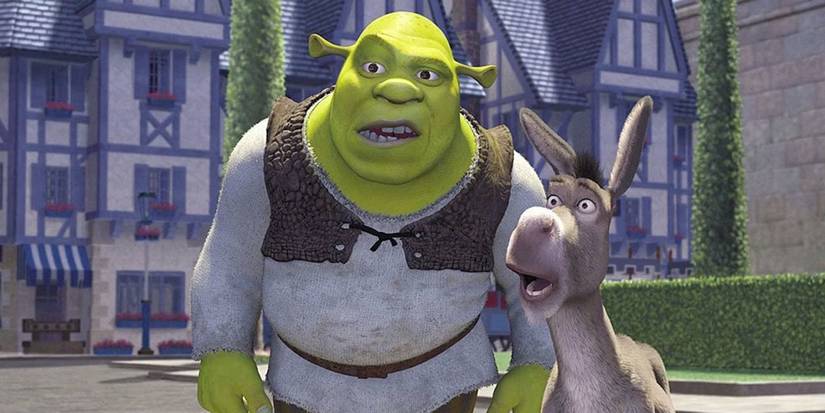 Image via DreamWorks Animation
Thanks to Shrek, we all became believers that love was, in fact, true in fairy tales. The hit DreamWorks animated film became an overnight hit and instant rival to the House of Mouse upon its release in 2001. With the perfect blend of kid-centric comedy with drops of adult humor layered in, Shrek was a fantasy film for the entire family. Based on the children's picture book by William Steig, the first film of the franchise was a satirical fairy tale about an embittered ogre named Shrek (Mike Myers) who sets out to rescue a rebellious princess named Fiona (Cameron Diaz) for an obsessive ruler named Lord Farquaad (John Lithgow) in exchange for regaining his swamp. Along the way, he befriends a talkative donkey named Donkey (Eddie Murphy) as they find an unlikely friendship. Shrek redefined happily ever after, launching a franchise that still thrives today.
Unlike its rivals, Shrek distinctly set out to subvert traditional fairy-tale tropes while delivering heartfelt, universally relatable messages. Shrek is ultimately a story about self-acceptance told through irreverent humor, self-deprecating comedy, and relatable characters who jumped through the screen. Because Shrek was largely a lesser-known IP, the film's ability to forge its own identity was a major factor in its rapid explosion. Animated films have always been revered for their voice casts; Shrek had one of the best. The dynamics and eccentricities that they brought allowed their animated counterparts to find a home in pop culture. Shrek made the meme before memes were part of our official lexicon. The film's ability to inject itself into pop culture through its commentary on pop culture gave it an accessible charm. In the world of animation, there's no denying the importance of Shrek in cinema.
6 'Spirited Away' (2001)
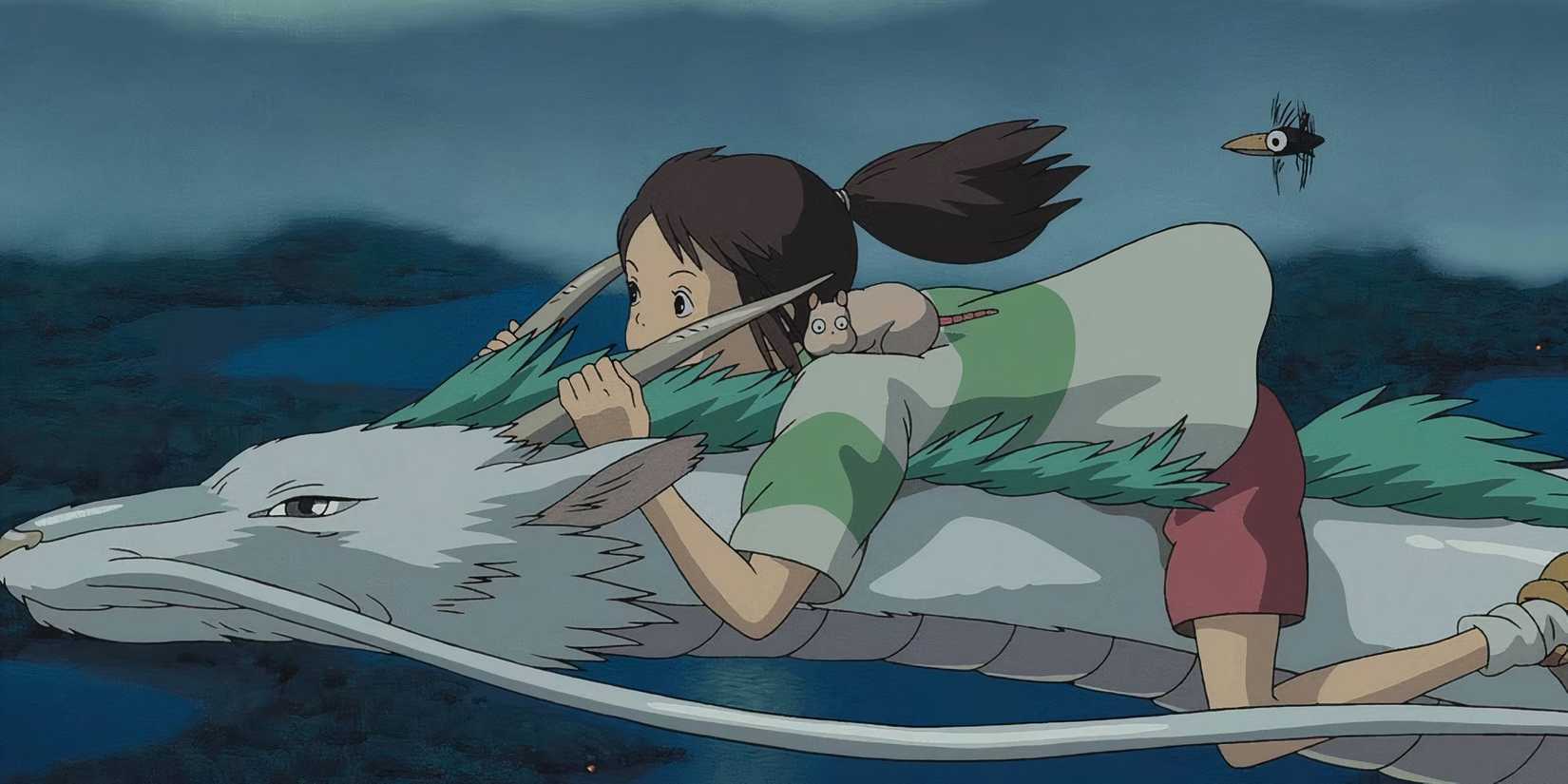 Image via Studio Ghibli
This one may be a bit tricky, as, like The Lord of the Rings, Spirited Away has a more niche fanbase, but the truth is, the way it transcended into the mainstream made Spirited Away a beloved animated classic. Written and directed by Hayao Miyazaki, the Studio Ghibli film tells the tale of 10-year-old Chihiro (Daveigh Chase/Rumi Hiiragi) as she inadvertently wanders into a magical spirit realm. After her parents are transformed into pigs by a greedy witch named Yubaba (Suzanne Pleshette/Mari Natsuki), Chihiro takes on a job at a mystical bathhouse in hopes of breaking the curse, learning courage, resilience, and the value of identity. Spirited Away is a brilliant coming-of-age hero's journey that captures how easily one can lose oneself in the pursuit of wealth and acceptance.
In a time when many studios were exploring 3-D animation, Spirited Away stuck with breathtaking hand-drawn animation that evoked traditional nostalgia. Instead of an easy story about good versus evil, the morality tale explored themes of identity, environmentalism, and loneliness. Spirited Away served as a bridge for that journey from childhood to adulthood, doing so via a dreamlike fantasy. Two decades removed, Spirited Away remains timeless. The emotional connection that audiences made at first watch continues on. Spirited Away transcends language and cultural barriers in a remarkable fashion.
7 'The Princess Bride' (1987)
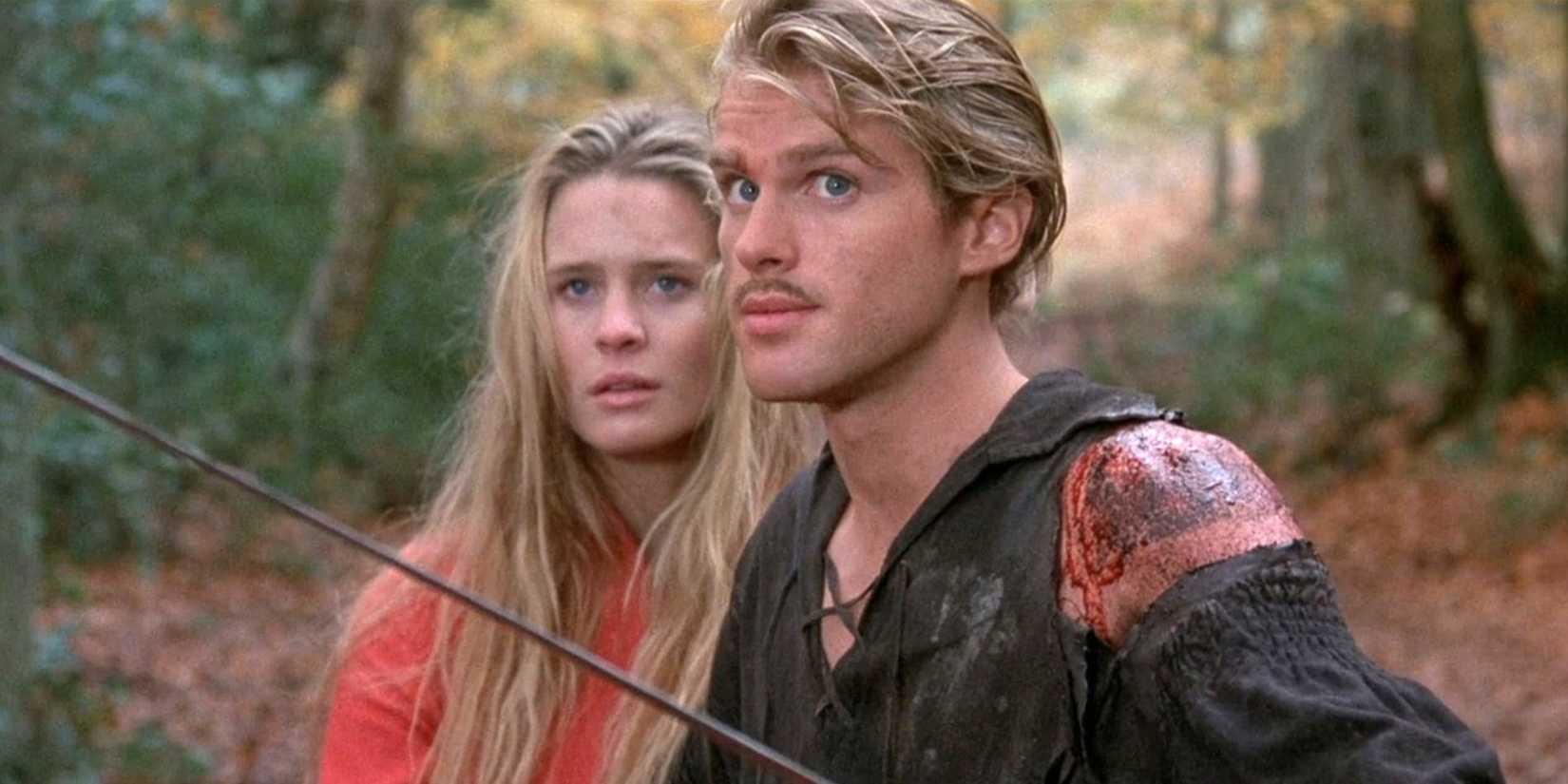 Image via 20th Century Studios
When it comes to the most romantic fantasy film of all time, many cinephiles point to The Princess Bride. And they have every reason to do so. The Rob Reiner classic tells the story of a young farmhand named Westley (Cary Elwes) who embarks on a daring quest to rescue his true love, Princess Buttercup (Robin Wright), from a forced marriage to the wicked Prince Humperdinck (Chris Sarandon). Along the way, Westley navigates a whimsical world of romance, swashbuckling sword fights, and eccentric characters. Brought to life from William Goldman's classic novel, The Princess Bride blends high-adventure with sharp, self-aware humor through a wonderfully meta framing device.
For many young fantasy fans, The Princess Bride became the entry point into the genre. It's an easy-to-consume universal story. It retains a timeless nostalgia because of its framing device of a grandfather (Peter Falk) reading the story to his grandson (Fred Savage). The generational connection of the beloved narrative gives it a leg up on many other fantasy flicks. The Princess Bride is also incredibly quotable. There's no doubt that you've quoted Inigo Montoya (Mandy Patinkin) at least once in your life. The Lord of the Rings thrives in its high-stakes adventure; The Princess Bride's simpler standards make it more appealing. It's a literal adventure story that can be enjoyed by all thanks to its perfect mix of romance, friendship, and adventure.
8 'The Wizard of Oz' (1939)
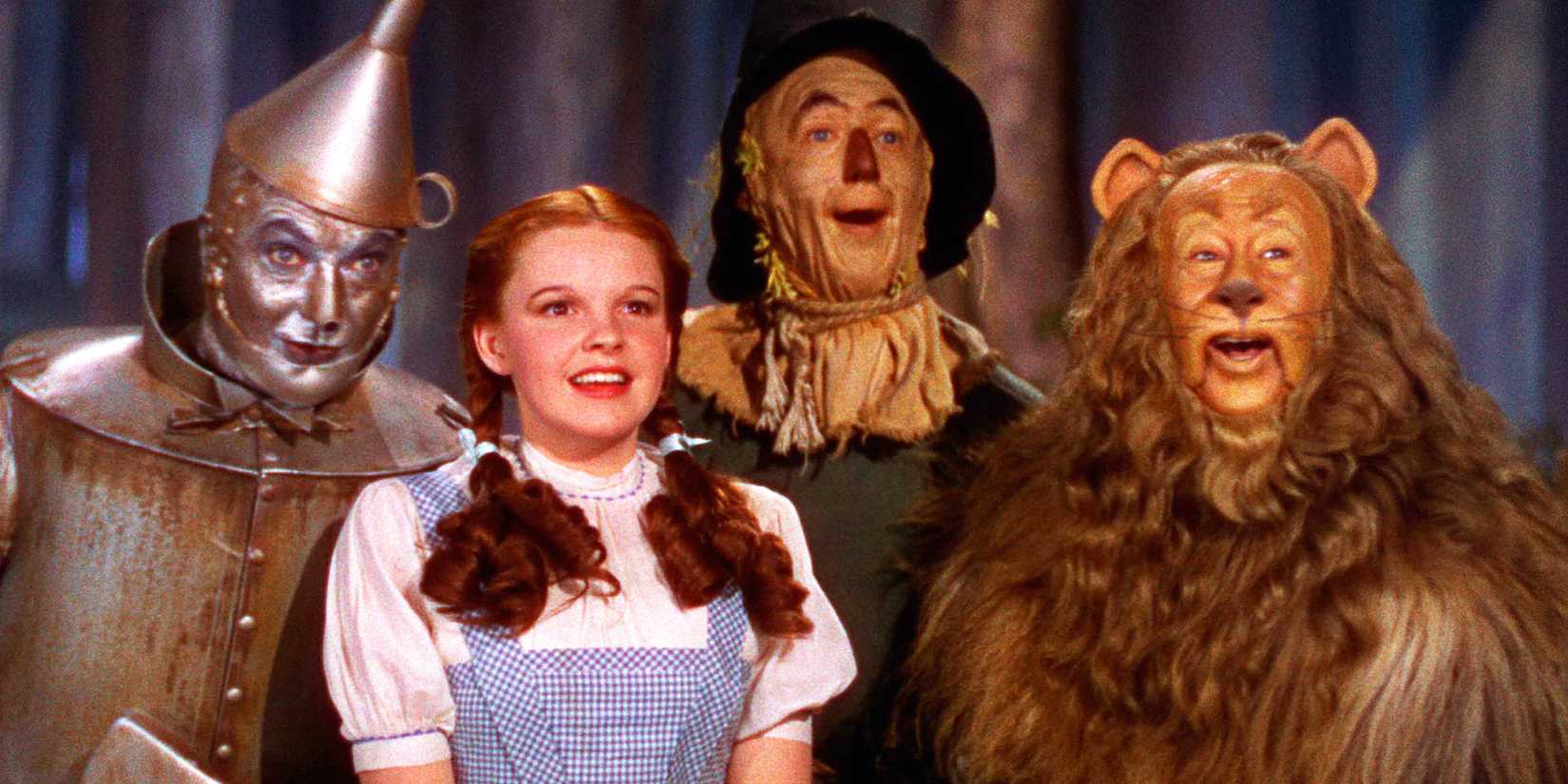 Image via Warner Bros.
There are very few films that have such a generational adoration as The Wizard of Oz. No film has been passed down from generation to generation, save maybe The Sound of Music or It's a Wonderful Life. Based on the L. Frank Baum's novel, the MGM musical film tells the story of Dorothy Gale (Judy Garland), a young Kansas farm girl, who is swept away by a tornado to the magical land of Oz. Dorothy sets off on a journey where she must seek the Wizard in hopes of returning home. Along the way, she meets a Scarecrow (Ray Bolger), a Tin Man (Jack Haley), and a Cowardly Lion (Bert Lahr), who teach her that the strength and courage she always sought were inside her all the time. An iconic film with a whimsical score, The Wizard of Oz changed the history of cinema by ushering movies into a world of Technicolor.
The Wizard of Oz explores themes of family, home, and self-discovery through its visionary storytelling. The film unites magical escapism with a relatable, heartfelt story. When you hear the classic Garland song "Over the Rainbow," you're instantly transported to the film, reminiscing about your own hopes and dreams. The film perfectly encapsulates an enduring message that there truly is no place like home. Since the film began airing early on CBS, The Wizard of Oz became appointment viewing for families. In the process, it created a shared cross-generational tradition—something that The Lord of the Rings hasn't had the good fortune to experience. Both films revolutionized movies in their own individual way; we wouldn't have The Lord of the Rings without The Wizard of Oz.
9 'Wicked' (2024)
 Image via Universal Pictures
We neglected to mention the Wicked Witch of the West in the previous entry because, well, her story is found here. Musical theater fans got their wish when the beloved Broadway show Wicked was given the long-awaited film treatment. Broken up into two parts in order to tell the complete story, with no songs cut, the Jon M. Chu films work together as one sweeping epic. And let's just say, they've changed us for good. The musical fantasy brings to life the origin story of Elphaba (Cynthia Erivo), the misunderstood, green-skinned outcast who becomes the Wicked Witch, as she forms an unlikely friendship with Galinda (Ariana Grande), the bubbly, popular blonde who would be known as Glinda the Good. Wicked questions whether people are born wicked or simply labeled as such by society. Filled to the brim with brilliant songs, stunning visuals, and a heartfelt message, Wicked defied gravity.
Whether you were a fan of the stage play or came to the film for the hype, Wicked was a blockbuster event like no other movie musical had ever seen. Thankfully, it was a brilliantly executed one at that. With sensational visual world-building, audiences were immediately immersed in the world envisioned by original novelist Gregory Maguire. The film may be colorful and bright, but it tackles real-world issues like discrimination, corrupt leadership, and peer pressure through an underdog lens. Elphaba became the fully realized character who reshaped how we view her counterpart in The Wizard of Oz. The brilliant character inspired its viewers to fight for what's right. Through song, of course. Both Wicked and The Lord of the Rings invite their audiences to fantastical worlds, but there was something extraordinary about the Oz we saw on the big screen. And let's be honest, Wicked's two films are easier to binge compared to The Lord of the Rings. That one requires a bit more than one short day.
10 'Willy Wonka and the Chocolate Factory' (1971)
 Image via Paramount Pictures
We've discussed many films that pushed our minds to venture to extraordinary places, but it was Willy Wonka and the Chocolate Factory that gave us a taste of pure imagination. Based on the novel by Roald Dahl, the Mel Stuart masterpiece follows a poor young boy, Charlie Bucket (Peter Ostrum), as he wins a Golden Ticket to tour the magical yet secretive chocolate factory of the eccentric Willy Wonka (Gene Wilder). Alongside four spoiled children—Augustus Gloop (Michael Böllner), Violet Beauregarde (Denise Nickerson), Mike Teevee (Paris Themmen), and Veruca Salt (Julie Dawn Cole)—Charlie must navigate a surreal test of character to ultimately prove himself an honest young man. A timeless adventure that perfectly balances a whimsical fantasy with a deliciously twisted cautionary tale, Willy Wonka and the Chocolate Factory was a magical experience that transcended generations.
One thing that Willy Wonka and the Chocolate Factory has that very few other kid-tinged films have is the ability to evolve as you grow up. How you see the film as a child will be vastly different from how you witness it as an adult. What was once silly leads to a much darker narrative. The fates the other children face are wonderfully bizarre, but over time, they become slightly gruesome. Then, you have a catchy soundtrack for the infamous Oompa-Loompas, but the deeper you go into their place in the story, the more unsettling it becomes. And yet, we forever pass on this film, even attempting to surpass it with two films with the titular character in the 21st century. At the end of the day, Willy Wonka and the Chocolate Factory is escapism. Wilder’s performance is something you come back to because it's so enigmatic. Willy Wonka and the Chocolate Factory teaches morality like no other family film.





 English (US) ·