
 Image via Orion Pictures

Published Feb 13, 2026, 3:57 PM EST
Luc Haasbroek is a writer and videographer from Durban, South Africa. He has been writing professionally about pop culture for eight years. Luc's areas of interest are broad: he's just as passionate about psychology and history as he is about movies and TV. He's especially drawn to the places where these topics overlap.
Luc is also an avid producer of video essays and looks forward to expanding his writing career. When not writing, he can be found hiking, playing Dungeons & Dragons, hanging out with his cats, and doing deep dives on whatever topic happens to have captured his interest that week.
Sign in to your Collider account
1984 was a solid year for the movies. Comedy became sharper and more self-aware. Horror grew more psychological. Blockbusters learned how to balance spectacle with character development. Prestige dramas proved they could be emotionally devastating without losing scale or accessibility.
More than forty years later, the best of these movies are still taught, quoted, imitated, and rewatched. With that in mind, this list looks back at the most enduring classics from that annus mirabilis.
10 'The Killing Fields' (1984)
 Image via Columbia-EMI-Warner
"Nothing prepared me for what I was about to see." The Killing Fields tells a true story of friendship and survival during the Cambodian genocide. American journalist Sydney Schanberg (Sam Waterson) and his Cambodian colleague Dith Pran (Haing S. Ngor) cover the fall of Phnom Penh to the Khmer Rouge. When foreign journalists are evacuated, Pran is left behind, beginning a harrowing struggle to survive forced labor camps, starvation, and political terror.
From here, the plot splits into two emotional tracks: Schanberg’s guilt-ridden efforts to locate his friend from abroad, and Pran’s endurance within an inhuman system designed to erase individuality. This is an urgent historical drama about a moment in time too seldom discussed. It's well-crafted on every level, from the writing and cinematography to the production design, anchored by a phenomenal performance by Ngor, for which he took home that year's Best Supporting Actor Oscar. Tough but essential viewing.
9 'This Is Spinal Tap' (1984)
 Image via Embassy Pictures
"This one goes to eleven." Rob Reiner's directorial debut kicked off a remarkable run of classics that included Stand By Me, The Princess Bride, and Misery. While not the most ambitious, This Is Spinal Tap is probably the most hilarious of them. It presents itself as a documentary following a fictional British heavy metal band on a disastrous American tour. As equipment malfunctions, egos clash, and audiences dwindle, the band members remain blissfully unaware of their own absurdity.
There are so many side-splitting moments here, including amps that go up to 11, the fine line between stupid and clever, and the mini Stonenge. The performances are so natural, the improvisation so precise, that the satire feels observational rather than exaggerated. Every joke emerges from character, specifically from the band’s sincere belief in their own importance. Over time, the film has transcended mere parody to become a foundational text of mockumentary comedy. Its influence is everywhere.
8 'Paris, Texas' (1984)
 Image via Tobis Film
"I knew these people. These two people." Paris, Texas is a rich neo-Western road movie from German filmmaker Wim Wenders, the mind behind The American Friend and Wings of Desire. It centers on Travis Henderson (Harry Dean Stanton), a drifter found wandering the desert after years of absence. Slowly reunited with his brother (Dean Stockwell) and young son (Hunter Carson), Travis attempts to rebuild a life while confronting the emotional damage he left behind.
The film’s emotional center arrives when Travis seeks out his estranged wife (Nastassja Kinski), leading to a devastating confrontation built almost entirely on confession. The plot moves patiently, allowing silences to speak louder than dialogue. Careful shot framing conveys a lot, too. This minimalist approach allows pain to feel unfiltered and sincere. Rather than offering reconciliation, the story focuses on responsibility and acceptance. The result is one of cinema's most poignant portraits of masculine grief.
7 'Once Upon a Time in America' (1984)
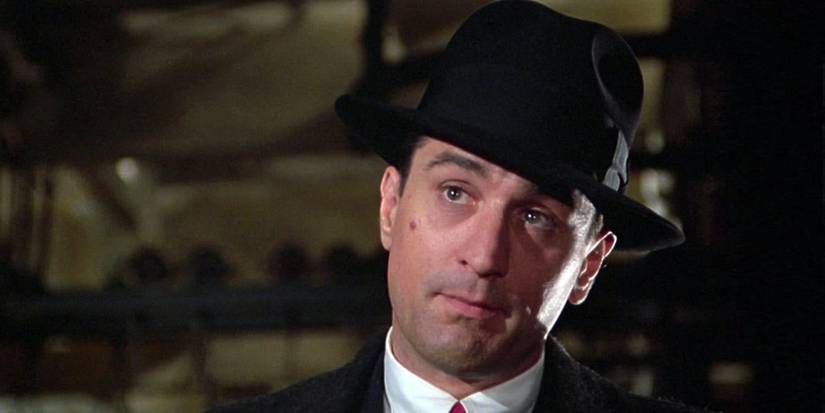 Image via Warner Bros.
"I slipped. I fell. It doesn't mean anything." This crime epic was Sergio Leone's swan song and, while it falls a little short of its sky-high ambitions, it's still one of the best gangster movies of the 1980s. Once Upon a Time in America traces the lives of two Jewish gangsters (played by Robert De Niro and James Woods) who rise from childhood poverty to criminal power in early 20th-century New York. Told through fragmented memories, the movie shifts between youth, success, betrayal, and old age, blurring nostalgia with regret. The nonlinear structure forces the audience to question the reliability of memory itself.
Through all this, the film engages with similar themes to The Godfather, but through an even darker and more grounded perspective. In particular, it treats ambition as unfailingly corrosive. Friendship erodes under greed, and violence leaves emotional scars that never heal. Initial reactions to the movie were mixed, in part because the studio-approved cut had a lot of problems. The restored director's version is vastly superior.
6 'Beverly Hills Cop' (1984)
 Image via Paramount Pictures
"Don’t fall for the banana in the tailpipe." The highest-grossing film of 1984 in the U.S. was Beverly Hills Cop. This beloved buddy cop comedy follows Detroit detective Axel Foley (Eddie Murphy) as he travels to Los Angeles to investigate the murder of his friend. Clashing with the rigid culture of Beverly Hills policing, Axel must get by with little more than improvisation, charm, and instinct to uncover a criminal enterprise. The premise blends fish-out-of-water comedy with straightforward detective work, allowing humor to arise organically from contrast.
The script is killer, jam-packed with great one-liners and character-driven momentum. For their efforts, the screenwriters earned an Oscar nod for Best Original Screenplay. That said, the movie is very much a star vehicle for Murphy, and he delivers. His energy, charisma, and pitch-perfect comedic timing significantly elevate the material. He makes for a deeply likable fast-talking underdog. In many ways, this was his defining role.
5 'Ghostbusters' (1984)
 Image via Columbia Pictures
 "We came, we saw, we kicked its ass." Another quintessential '80s banger. Ghostbusters follows a group of disgraced academics who start a paranormal extermination business in New York City. They are played by some of the decade's leading comedy lights: Bill Murray, Dan Aykroyd, and Harold Ramis. But what begins as a hustle escalates into a citywide supernatural crisis when an ancient god threatens reality itself. Director Ivan Reitman and his cast build on this premise perfectly, balancing s absurdity and threat with remarkable ease.
Here, sci-fi, comedy, and horror coexist without canceling each other out. Much of the movie's charm comes from the way it treats the fantastic as a bureaucratic inconvenience rather than a cosmic revelation. The protagonists approach the task of dispelling ghosts the way a plumber might approach a clogged toilet. While the sequels would offer diminishing returns, the original remains a treat.
4 'The Terminator' (1984)
 Image via Orion Pictures
 "I’ll be back." This role catapulted Arnold Schwarzenegger to the forefront of Hollywood, and for good reasons. He's perfectly cast as a cyborg assassin sent from the future to kill Sarah Connor (Linda Hamilton), whose unborn son will lead a resistance against machines. Protected by a soldier (Michael Biehn) from that same future, Sarah is forced to evolve rapidly or die. The threat is unstoppable, mechanical, and emotionless, every '80s technological anxiety rolled into one buff, gun-toting body.
The Terminator was a smash hit on release and quickly canonized as a sci-fi classic. It serves up a compelling mix of character development, ground-breaking special effects, big action set pieces, dystopian dread, and juicy time-travel story beats. Its sequel would double down on all of this and cement the franchise's classic status. James Cameron's direction is remarkably assured here, especially given that this was only his second feature and his first, Piranha II: The Spawning, was, well, not great.
3 'Indiana Jones and the Temple of Doom' (1984)
 Image via Paramount Pictures
"Fortune and glory, kid. Fortune and glory." Set before the events of Raiders of the Lost Ark, Temple of Doom follows Indiana Jones (Harrison Ford) as he becomes entangled in a cult practicing ritual sacrifice. Along the way, the plot shifts from globe-trotting adventure to dark fantasy, placing Indy in unfamiliar moral territory. Rather than nostalgia, the movie offers danger and discomfort, leaning into horror imagery and pulp intensity. Not everyone liked this on release, but that grimmer edge is a huge part of the film's appeal now.
The more recent Indiana Jones movies have been pretty dull, playing it safe and recycling old formulas. Temple of Doom, by contrast, boldly carved out its own identity, which is not easy to do when its predecessor was so beloved. The suspense is relentless, the adventure is compelling, and the big set pieces live up to the incredibly high expectations set by Raiders.
2 'Amadeus' (1984)
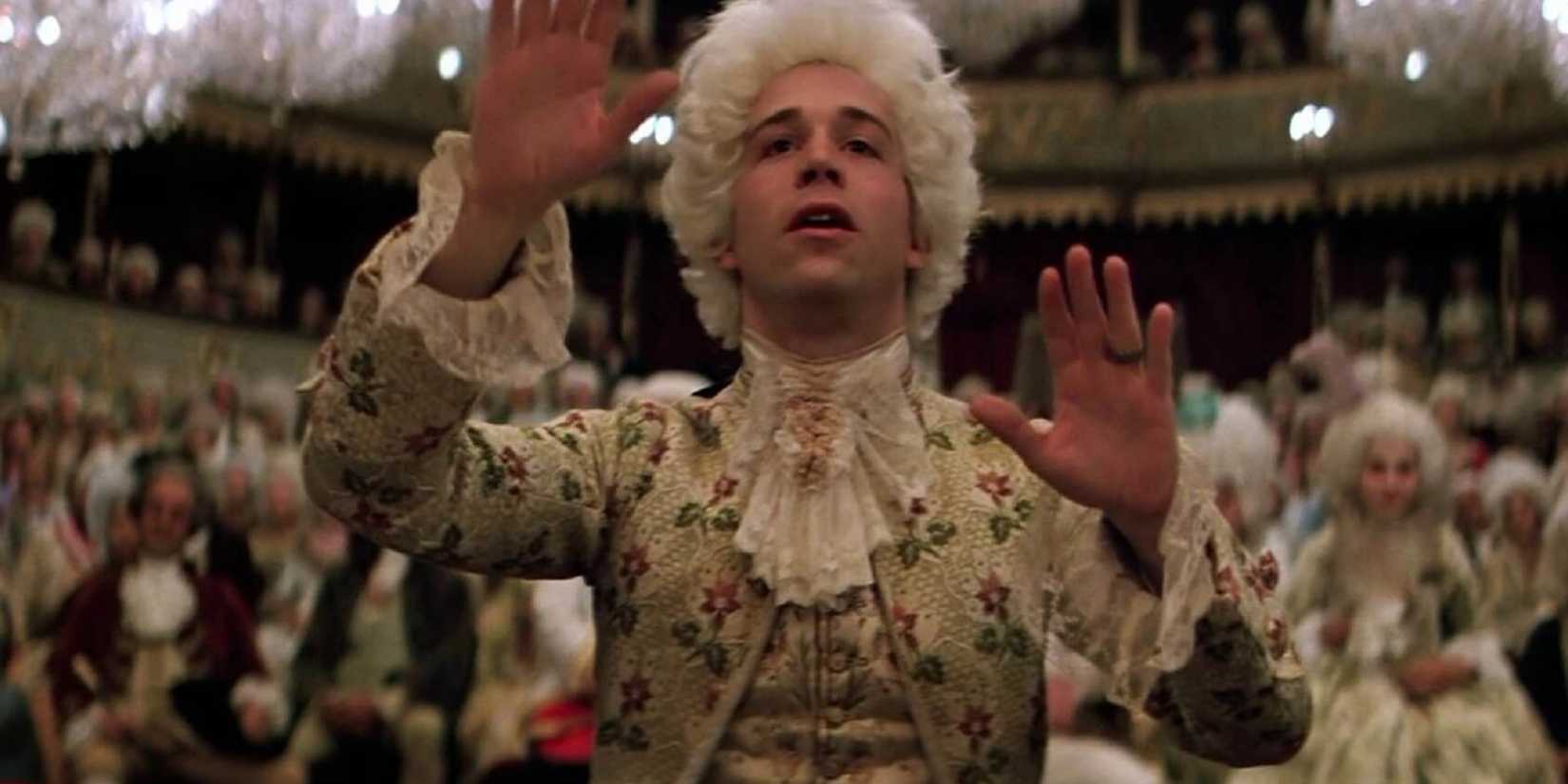 Image via Orion Pictures.
"Mediocrities everywhere. I absolve you." That year's Best Picture winner, Amadeus dramatizes the rivalry between composer Antonio Salieri (F. Murray Abraham in an Oscar-winning role ) and the genius Wolfgang Amadeus Mozart (Tom Hulce, also Oscar-nominated). Told from Salieri’s perspective, the movie delves deep into themes of envy, faith, and artistic resentment as Salieri witnesses talent he can never match. His jealousy curdles, Cain-like, into something truly dark.
Through these characters, the film frames genius as both gift and curse. Mozart’s brilliance is inseparable from his immaturity, while Salieri’s discipline yields only bitterness. Neither lives a smooth or problem-free life. Themes aside, Amadeus is simply a well-directed movie. Rather than being a stuffy period piece, it's dynamic, vibrant, and visually sumptuous. And that's without getting started on the stellar music, of course. Overall, it's perhaps the most well-rounded masterpiece from the great Miloš Forman.
1 'A Nightmare on Elm Street' (1984)
 Image via New Line Cinema
"Whatever you do, don’t fall asleep." A Nightmare on Elm Street sits near the top of the slasher pantheon, alongside the likes of Halloween and Friday the 13th. It took some tropes originated by those movies and gave them an even bolder and more surreal expression. The story follows teenagers stalked in their dreams by Freddy Krueger (Robert Englund), a killer who murders victims in their sleep. As dream and reality blur, survival depends on staying awake.
With this movie, Wes Craven emerged out of a creative slump guns blazing. He hugely innovated horror mechanics, getting more elaborate with the special effects and more intense with the frights. Freddy is terrifying not just because he kills, but because he follows you everywhere. His character expanded the possibilities for monster movies. Not for nothing, A Nightmare on Elm Street is now widely regarded as one of the greatest horrors of all time.

A Nightmare on Elm Street
Release Date November 9, 1984
Runtime 91 minutes
-

Heather Langenkamp
Nancy Thompson
-

John Saxon
Lieutenant Thompson






 English (US) ·