

Published Feb 13, 2026, 3:30 PM EST
Luc Haasbroek is a writer and videographer from Durban, South Africa. He has been writing professionally about pop culture for eight years. Luc's areas of interest are broad: he's just as passionate about psychology and history as he is about movies and TV. He's especially drawn to the places where these topics overlap.
Luc is also an avid producer of video essays and looks forward to expanding his writing career. When not writing, he can be found hiking, playing Dungeons & Dragons, hanging out with his cats, and doing deep dives on whatever topic happens to have captured his interest that week.
The 1970s represented a brief, volatile moment when filmmakers were granted extraordinary freedom, and audiences were willing to follow them into deeply uncomfortable territory. Studios greenlit projects driven by obsession, moral ambiguity, and outright provocation, trusting directors to confront taboo subjects without safety rails.
For this reason, the decade produced more than its fair share of classics, including some movies that are far too dark or intense to be made today. Rather than offering reassurance, the movies on this list forced audiences to sit with anxiety, contradiction, explicit content, and unresolved endings. They were provocative and transgressive, perfectly exemplifying this decade where it seemed like anything was possible.
10 ‘Don’t Look Now’ (1973)
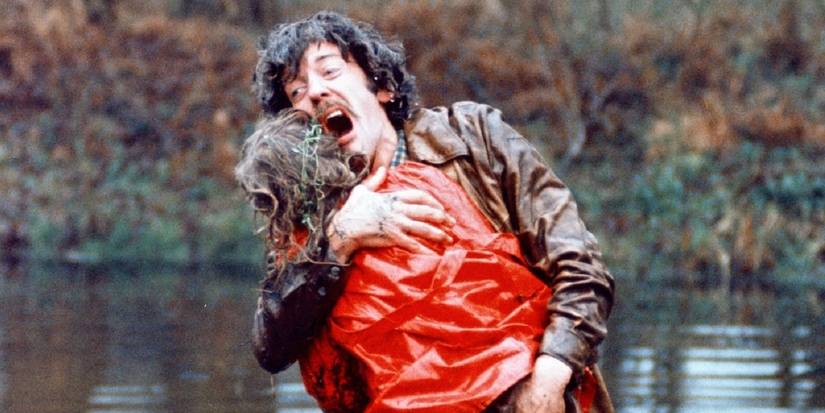 Image via British Lion Film Corporation
"Nothing is what it seems." Don’t Look Now is a psychological horror built entirely on grief and disorientation. Julie Christie and Donald Sutherland play a married couple who travel to Venice after the death of their young daughter, hoping for emotional recovery. Instead, the city becomes a labyrinth of memory, coincidence, and dread. Using groundbreaking editing, director Nicolas Roeg fragments time and perception, refusing to distinguish clearly between psychic experience and reality.
There's a lot in it that would be too much for mainstream audiences now: the depiction of violence, the shock ending, and that complex, controversial sex scene (unusually explicit for its time). Perhaps most importantly, the film is radically ambiguous. It withholds clear answers about fate, psychic phenomena, and coincidence. A lot of viewers would simply feel frustrated and unsatisfied by its third act (though this is also a big part of what makes the movie a classic).
9 ‘Last Tango in Paris’ (1972)
 Image via United Artists
"Words are unimportant." Last Tango in Paris is one of the most controversial movies released by a major studio, for a host of reasons. The plot alone was pretty bold for the era, centering on a relationship between two strangers (Marlon Brando and Maria Schneider) who meet in an empty apartment and agree to keep their interactions detached from personal identity. Their dynamic involves a stark age and emotional power imbalance. Here, sexuality is intertwined with domination, alienation, and psychological distress. These are exceptionally challenging roles to play, yet Brandon, in particular, is brilliant.
That said, the tone of the story is intense and confrontational, and the sexual content is startlingly explicit. Several countries censored certain scenes on release. A cloud of controversy hangs over the film due to its production as well. In particular, Schneider said she felt manipulated and humiliated during the filming of one infamous scene and that key details were not fully discussed with her beforehand.
8 ‘A Clockwork Orange’ (1971)
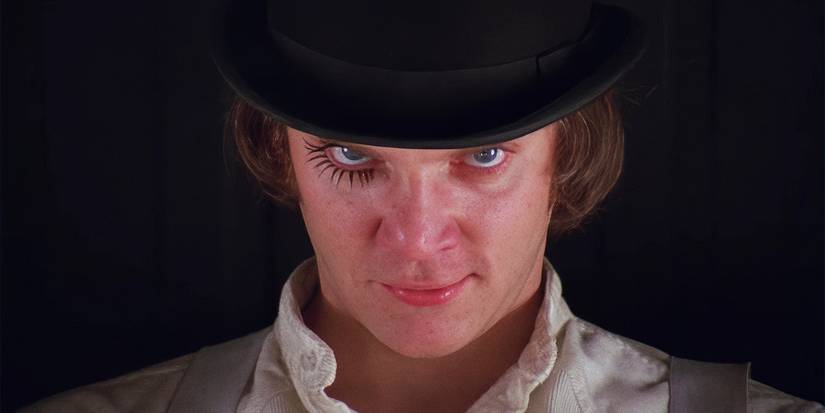 Image via Warner Bros.
"I was cured all right." Stanley Kubrick specialized in provocative masterpieces, and A Clockwork Orange is his most abrasive. Set in a dystopian near-future, it follows a violent young man (Malcolm McDowell) subjected to an experimental rehabilitation program designed to eliminate criminal behavior. He's a sympathetic antihero, charismatic and articulate. Through him, the movie pokes at thorny questions around morality and free will.
Beneath the sci-fi trappings, A Clockwork Orange is a bleak satire of social control. Its stylized violence sparked a lot of debate on release and remains something of a flashpoint even now. Detractors would accuse it of aestheticizing or sensationalizing brutal acts, including sexual assault. Some went so far as to blame the movie for inspiring copycat crimes. Kubrick himself withdrew it from circulation in the United Kingdom for years after threats and public uproar. If made today, a studio would likely dilute the movie's dark tone.
7 ‘Straw Dogs’ (1971)
"This is my house!" Dustin Hoffman gives one of his strongest performances in this lean, mean classic by director Sam Peckinpah, the master of gritty cinema. He plays an American mathematician who moves to rural England with his wife (Susan George), only to become embroiled in escalating local hostility. This setup leads to a slow erosion of civility, where resentment and repression eventually explode in an unsettling examination of violence and masculinity.
A lot of viewers now would find the movie's perspective to be morally uncomfortable. Here, Peckinpah presents violence as both horrifying and perversely cathartic. He refuses to clearly endorse or condemn its central acts, instead forcing viewers to wrestle with uncomfortable questions. However, most controversial of all is the central rape scene. The way it's shot and edited caused outrage on release, with some accusing the movie of being sadistic and voyeuristic.
6 ‘Taxi Driver’ (1976)
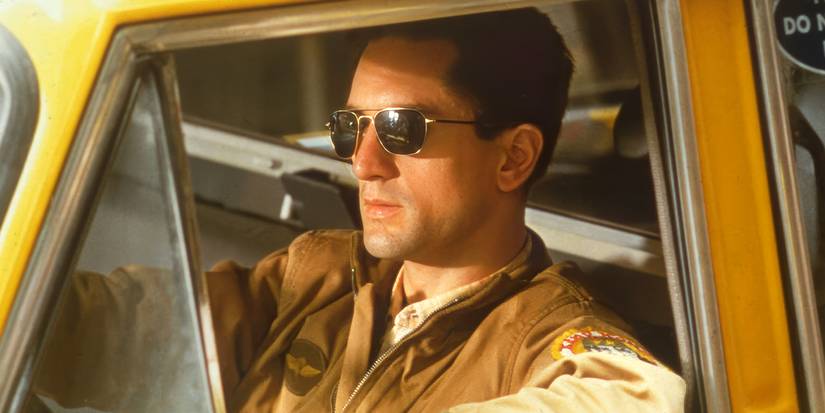 Image via Columbia Pictures
"You talkin’ to me?" So much of Taxi Driver remains incredibly relevant to our current cultural moment, so it's somewhat ironic that this movie would probably court significant outrage if it were released today. It's one of cinema's most disturbing portraits of alienation. At the heart of it, Robert De Niro is incredible as Travis Bickle, a lonely, insomniac veteran drifting through New York City, growing increasingly detached from social reality. On the directing side, Scorsese aligns the audience closely with the protagonist’s perspective, without endorsing it.
This complexity and ambiguity would be too much for some audiences today. For instance, Joker (a lesser Taxi Driver) was lambasted by some for not clearly condemning its protagonist. The storyline involving a teenage sex worker (Jodie Foster) would also be controversial, especially considering Foster was actually twelve while shooting the film. Taxi Driver treats the subject with seriousness and anger, but it still requires the audience to confront deeply uncomfortable material.
5 ‘The Devils’ (1971)
 Image via Warner Bros.
"Power corrupts the soul." The Devils is a historical horror-drama that doubles as a ferocious indictment of institutional power. Set in 17th-century France and drawing on real events, the film dramatizes a political and religious campaign to destroy a dissident priest (Oliver Reed). This story becomes a vehicle for a sharp commentary on corruption and sexual repression. Director Ken Russell uses stylization and excess to expose how authority manipulates morality for control.
Looking at it now, The Devils almost seems like a checklist of controversial elements: overt political allegory and religious provocation, scenes that deliberately fuse sexuality, violence, and religion. The line between the sacred and the profane is intentionally blurred here. Not for nothing, The Devils was censored in many places, with the most hardcore scenes trimmed down or removed entirely. Yet these sequences serve the story. As the director himself said of it: "The Devils is a harsh film - but it's a harsh subject."
4 ‘Salò, or the 120 Days of Sodom’ (1975)
 Image via United Artists
"Rules must be respected." Salò, or the 120 Days of Sodom has a reputation for being one of the most extreme movies of its era and a genuine challenge to watch. It's a political art horror movie directed by incendiary legend and provocateur Pier Paolo Pasolini. Set during the final days of Italian fascism, the story depicts authoritarian figures exerting total control over a group of young captives. The youths are subjected to humiliation, graphic violence, torture, sexual abuse, and even murder.
The film's depiction of cruelty and degradation holds little back, leading to censorship and bannings in many places. However, all this brutality isn't simply for shock value. Salò is an intelligent movie, full of political commentary and philosophical explorations. It draws on a rich vein of inspirations, including the writing of Marquis de Sade, Dante, and Friedrich Nietzsche. As a result, the film has been the subject of almost as much critical analysis as public condemnation.
3 ‘Deliverance’ (1972)
 Image via Warner Bros.
"You don’t understand what you’re dealing with." Another infamously brutal movie, Deliverance is a survival thriller that deconstructs the fantasy of masculine self-reliance. The plot follows four men (Jon Voight, Ned Beatty, Ronny Cox, and Burt Reynolds in a breakout role) on a canoe trip through remote wilderness that quickly turns catastrophic. The characters are not heroes; they are overwhelmed, frightened, and morally compromised.
The movie contains a notorious assault scene involving Beatty’s character that remains one of the most disturbing moments in 1970s cinema. What makes it especially volatile is that the scene is not stylized or distant, but intimate, humiliating, and central to the film’s psychological fallout. The lasting damage matters more than the immediate outcome. Deliverance's undercurrents of class tension and its depiction of rural America were also provocative, with some contemporary critics accusing the movie of trafficking in stereotypes.
2 ‘The French Connection’ (1971)
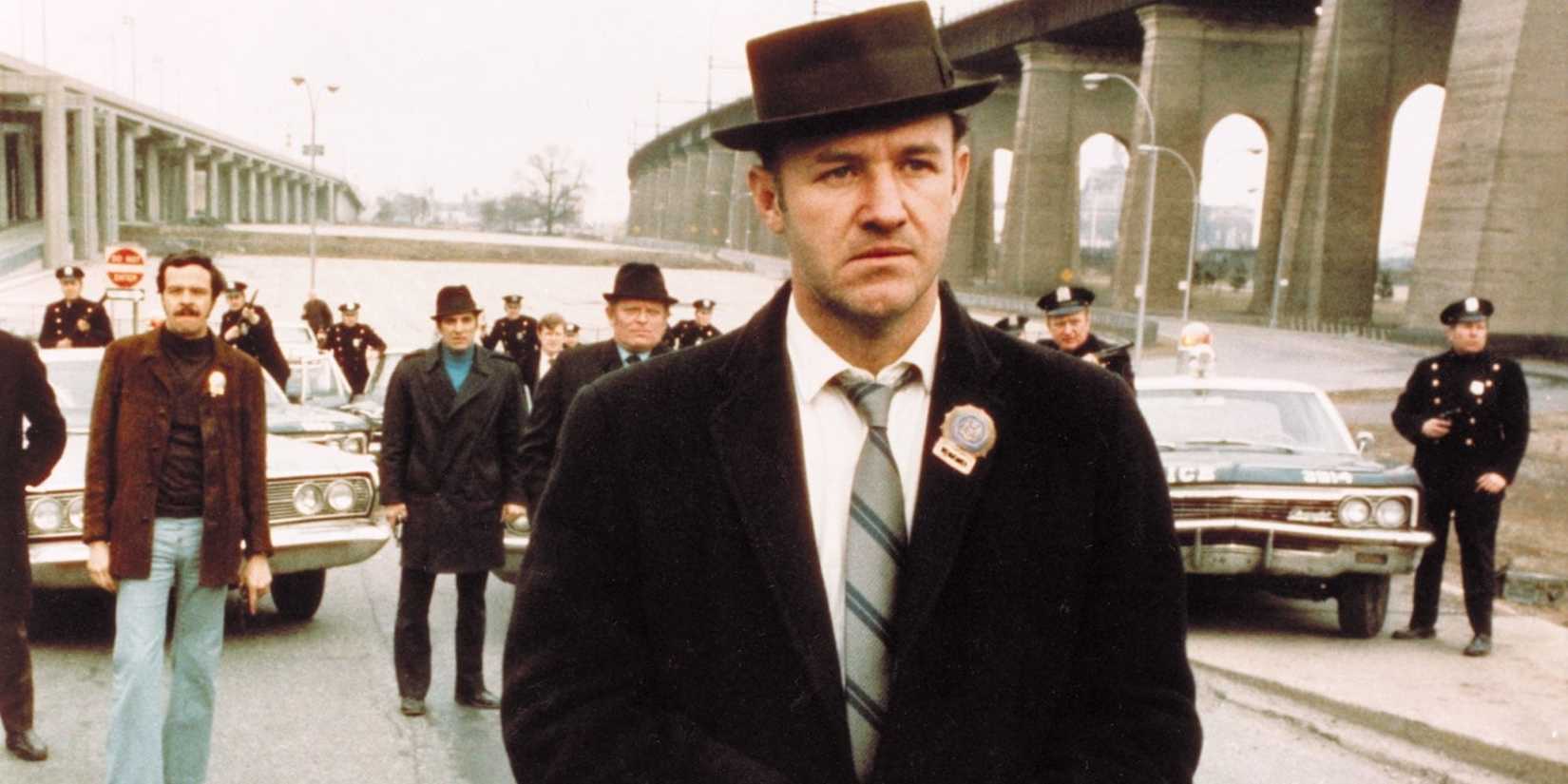 Image via 20th Century Studios
"Pick your feet up, Popeye." The French Connection revolutionized crime cinema through its raw, procedural realism, though it's unclear whether audiences would respond in the same way now. The story focuses on two obsessive detectives (Gene Hackman and Roy Schneider) pursuing an international drug operation. Their fixation gradually erodes their judgment, destabilizing the whole mission. The movie's portrayal of its protagonists as morally ambiguous and often reckless was striking for 1971, paving the way for a new kind of cop story. Indeed, Hackman's character, in particular, is deeply flawed and openly bigoted.
While The French Connection may not be as explicit or overtly shocking as some of the other entries on this list, its abrasive tone, inconclusive ending, and documentary style would probably be too much for most modern producers and even some audiences. They certainly wouldn't greenlight its famous chase sequence, which is thrilling partly because it feels dangerously uncontrolled.
1 ‘Apocalypse Now’ (1979)
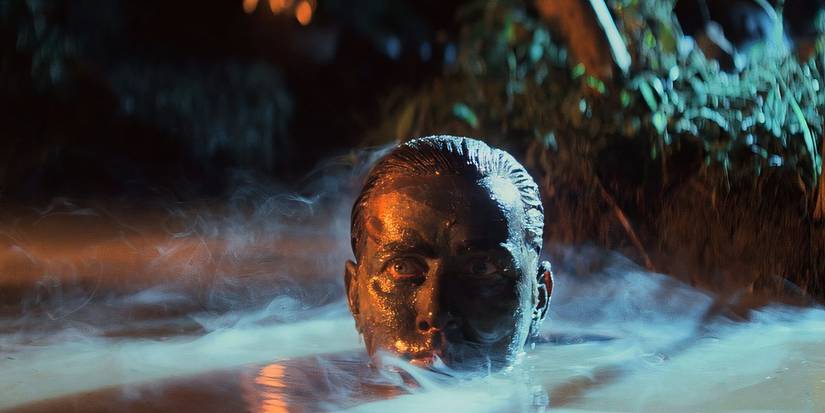 Image via United Artists
"The horror… the horror." Apocalypse Now represents the pinnacle of 1970s gonzo filmmaking. With it, Francis Ford Coppola turns a military mission into a towering exploration of madness, power, and moral collapse. He and his crew headed into the jungle with huge ambitions and a vast budget at their disposal, only to be nearly undone by the Herculean task they had assigned themselves. The production troubles (including cost overruns, on-set chaos, and creative improvisation) are brilliantly chronicled in the documentary Hearts of Darkness.
It's hard to imagine any major studio giving a filmmaker this much money to make a movie this dark, wild, and committed to openly challenging its audience. In this regard, Apocalypse Now was both the high point of its era's serious auteur-driven cinema as well as its death knell. Indeed, the window would shut almost immediately, and the '80s would be defined by a more conservative and corporate approach to filmmaking.






 English (US) ·